
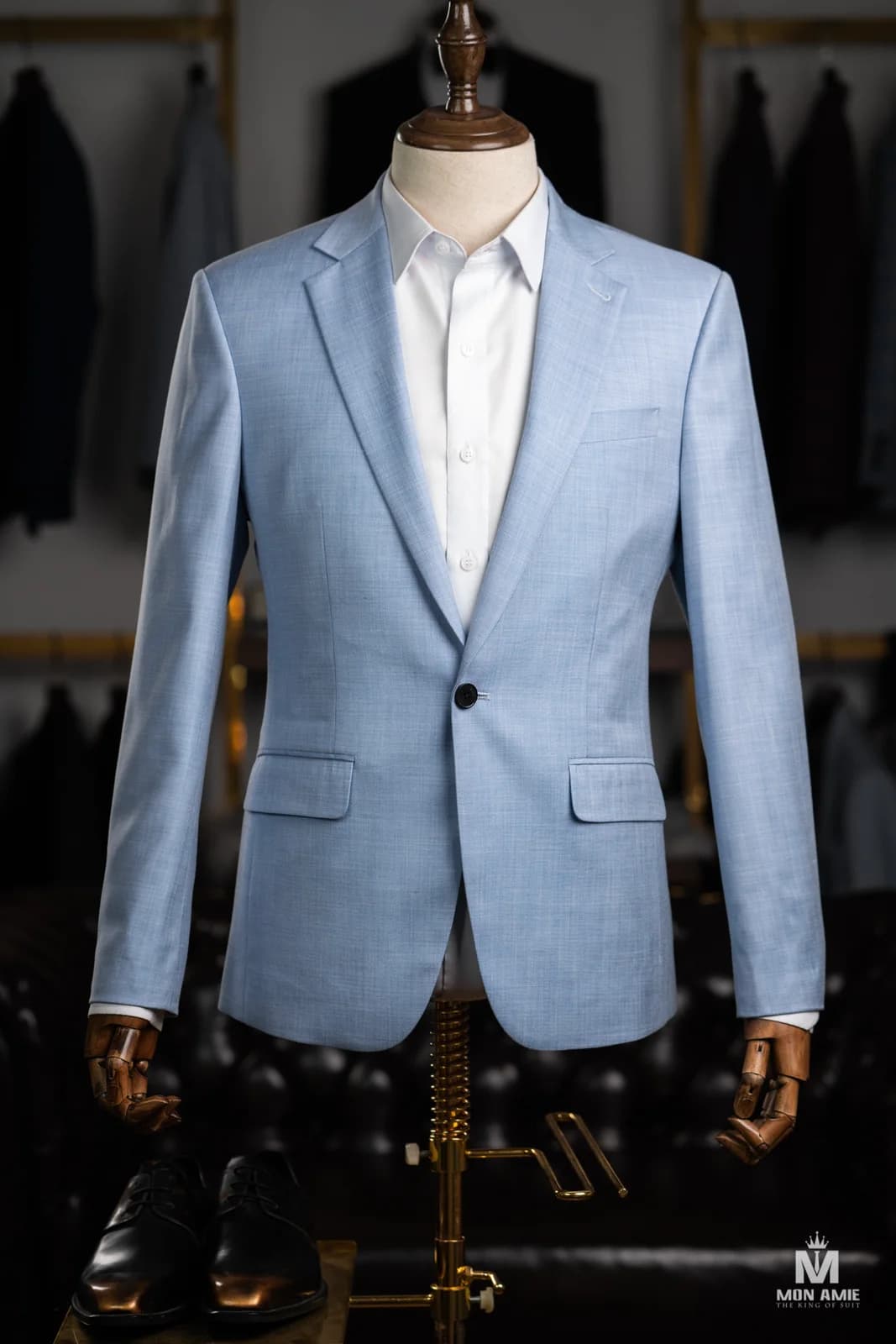
The name sounds like beach cloth, but tropical is a proper suiting wool, simply woven more openly and lightly for hot climates. It solves exactly one problem: it lets you wear a plain suit that looks like any other suit, and feel less stifled when you step out of an air-conditioned room. The price you pay is in creasing and durability.
The short answer
Tropical is worsted wool in a plain weave: light, with an open weave that breathes better than twill. Choose it when you need a plain, smart suit for hot weather and have to move in and out of the sun. In exchange, the thin cloth creases more behind the knee and wears out faster if worn daily, so you need to rotate it with another suit.
How tropical differs from ordinary wool
Two things decide it: the weave and the yarn.
- The weave: tropical is a plain weave, the warp and weft crossing one over, one under, which leaves tiny, even gaps. Most ordinary suiting is a twill weave (twill, serge), with a diagonal line on the surface and yarns packed closer together, so it blocks more air.
- The yarn: fine worsted wool, usually twisted tightly so the cloth stands up and springs back after creasing.
The result is a light cloth that air can pass through, with a flat, smooth surface. From a distance, a tropical suit does not look any different from a wool work suit. That is why it is chosen for daytime weddings and meetings in hot climates, where linen would be too casual.
Set beside three other hot-weather options
The table compares them at the weights commonly used for each, based on how they feel to sew and to wear.
| Criterion | Tropical | Ordinary twill wool | Fresco | Linen |
|---|---|---|---|---|
| Weave | Plain weave, fine yarn | Twill, tight yarn | Plain weave, multi-ply yarn | Plain weave, flax yarn |
| Weight | Light | Medium | Medium to heavy | Light to medium |
| Breathability | Good | Medium | Good | Very good |
| Creasing | Yes, especially behind the knee and at the elbows | Little | Little, the tightly twisted yarn springs back fast | A lot |
| Daily wear | Wears at the rise and inner thigh | Durable | Durable | Rumples and frays easily |
| Surface | Flat, smooth | Smooth, with a diagonal twill line | Slightly rough, dry to the touch | Coarse, with slubs |
| Formality | Like a work suit | Like a work suit | A little more relaxed | Relaxed |
On the figures: suiting is usually quoted in grams per running metre at a width of about 1.5 m (g/m), the way Italian mills quote it; English mills quote ounces per yard, with 1 oz about 31 g/m. Tropical usually sits in the group of thin, warm-weather cloths at about 230–270 g/m (about 8–9 oz). Some sources quote per square metre, so comparing numbers from two sources is easy to get wrong; holding two swatches in your hands to compare weight is still more reliable. The article how many grams of cloth for an everyday work suit goes into weight in more detail.
Choose tropical when
- You need a plain, smart suit for meetings, daytime weddings and events, and have to move in and out of the sun.
- You are travelling on business somewhere hot and humid, such as Singapore, Bangkok or Dubai in summer.
- You will wear it one or two days a week, with another suit to rotate.
- You want a flat, smooth surface, and dislike the rougher feel of fresco or the slubs of linen.
Choose another cloth when
- You wear a suit three or more days a week and sit in air conditioning for long periods: a medium-weight twill wool is more durable and creases less. That frequency suits the 60–70% wool tier of the Kevinlli line.
- You travel a lot and the jacket spends much time in a suitcase: fresco creases less than tropical, thanks to its multi-ply yarn.
- Outdoor parties, weekends, and you accept creases: linen or a linen blend is cooler and more relaxed.
- A separate blazer for hot weather: an open weave with texture, such as hopsack, usually suits a blazer better than tropical, because the cloth has its own character next to trousers in another colour.
How to weigh wool, tropical and linen blend for the hot season in Ho Chi Minh City specifically is in the article wool, tropical wool or linen blend.
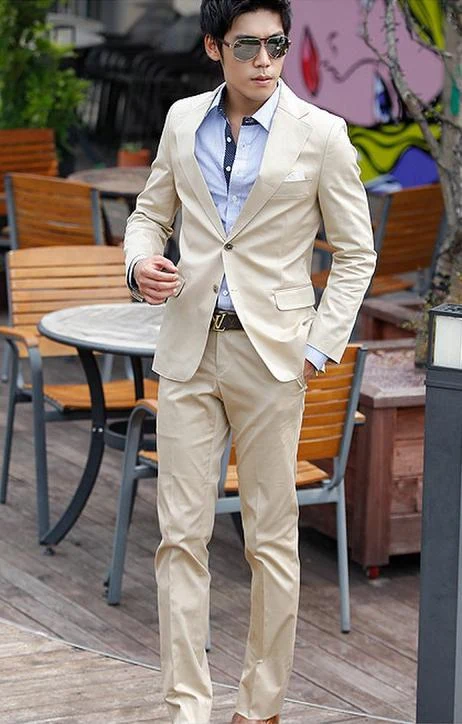
Recognising tropical when you choose a swatch
- Look closely at the surface: tiny, even squares, with no diagonal line running across as in twill.
- Hold it to the light: you should see light passing evenly through the small gaps. If the cloth is closed and uniformly dark, it is tightly woven.
- Crush it lightly in your palm for a few seconds, then release: good wool relaxes back and loses most of the crease. A deep crease that stays tells you it will crease when worn.
- Ask the composition: true tropical is wool. A cloth labelled tropical but blended with a lot of polyester loses its breathability.
- Ask the Super number: tropical in Super 150s or above is very fine but delicate. For frequent wear, Super 100s to 130s lasts longer.
The name "tropical" is not always printed on the swatch. What you need to know is the weave, the composition and the weight; the name is just a reference.
What Mon Amie recommends
In Saigon, a person wearing a suit to work mostly sits in an air-conditioned room and steps into the sun for short stretches. For them, the first suit should be a medium-weight wool in a twill weave, durable and not prone to creasing. An open-weave cloth such as tropical is worth making as the second suit, for the days you must stand outdoors or travel somewhere hot.
Three things let a light cloth do its job:
- A thin or partial lining. A breathable cloth with a full lining loses most of its advantage. Which lining suits the cloth you choose, your stylist will tell you at measuring.
- Light or neutral colours such as light grey, beige or pale blue if you must stand in the sun.
- Rotation. Hang the suit to rest for at least one night after each wearing. If you wear it a lot, consider a second pair of trousers in the same cloth if there is cloth left, because trousers usually wear out before the jacket.
Mon Amie has open-weave cloths and linen. When you come in, say that you need a light, breathable cloth for hot weather and the occasion you will wear it for; your stylist will show the swatches currently available. To look at the ranges beforehand, visit the cloth library page.
Frequently asked questions
Does a tropical suit go shiny when pressed?
It can, like any thin wool. Do not press directly on the surface; always use a cloth. Most creases only need hanging overnight and a steamer held a few centimetres from the cloth to relax.
Can I wear tropical in an air-conditioned room?
Yes, it is just a little cooler than twill wool. People who feel cold in the office can wear the jacket all day without feeling underdressed. In a deeply chilled room all day, a medium-weight wool is more comfortable.
Is tropical suitable for a wedding suit?
Yes, for a daytime or outdoor wedding, or a ceremony somewhere hot. For an evening reception in a hotel with strong air conditioning, a slightly heavier cloth holds its shape better in photographs. If you will wear it again for work after the wedding, tropical is also a choice that lasts.
Should I choose tropical for a company uniform?
Usually not. A uniform is worn many days in a row and dry cleaned often, and thin cloth will wear out fast. A more durable twill that creases less suits a uniform better, even if it is slightly warmer. See also the article does wool wrinkle for choosing a cloth that holds its shape over long wear.
Keep it for the second suit
Tropical is worth considering once you already have a durable wool suit for ordinary days and need another for the heat. If you want to hold the open-weave swatches next to the twill ones, book an appointment and visit a showroom.