
The tie knot sits right below your chin, exactly where the eyes of the person across from you settle when you speak. A crooked knot, a flat one, or one that is oversized for the collar shows immediately. Know the five tie knots below and you can handle almost any situation: from thick wool ties to thin silk ones, from standard collars to wide spread collars.
Quick answer
The five tie knots worth knowing: the Four-in-hand is compact, slightly off-centre and easy to tie; the Half Windsor is balanced and fits every occasion; the Windsor is large and symmetrical for wide spread collars; the Prince Albert is long and refined for thin ties; the Pratt is neat, smooth and easy to make. Choose the knot by tie width and collar style.
1. Four-in-hand: a small, slightly off-centre knot that is easy to tie
A slim, teardrop-shaped knot that is not perfectly symmetrical, and that slight asymmetry is precisely its charm. The knot has only one wrap, so it works with thick ties such as wool, flannel and knit without the knot bulging. This knot suits standard collars, button-down collars and beginners learning to tie a tie.
How to tie it: place the wide end on your right, about 30 cm lower than the narrow end; cross the wide end over the front of the narrow end, bring it around behind, wrap it across the front again, then pass it up through the neck loop and down through the knot at the front. Before you tighten, pinch both sides just below the knot to form a dimple, a small detail that gives the knot depth.
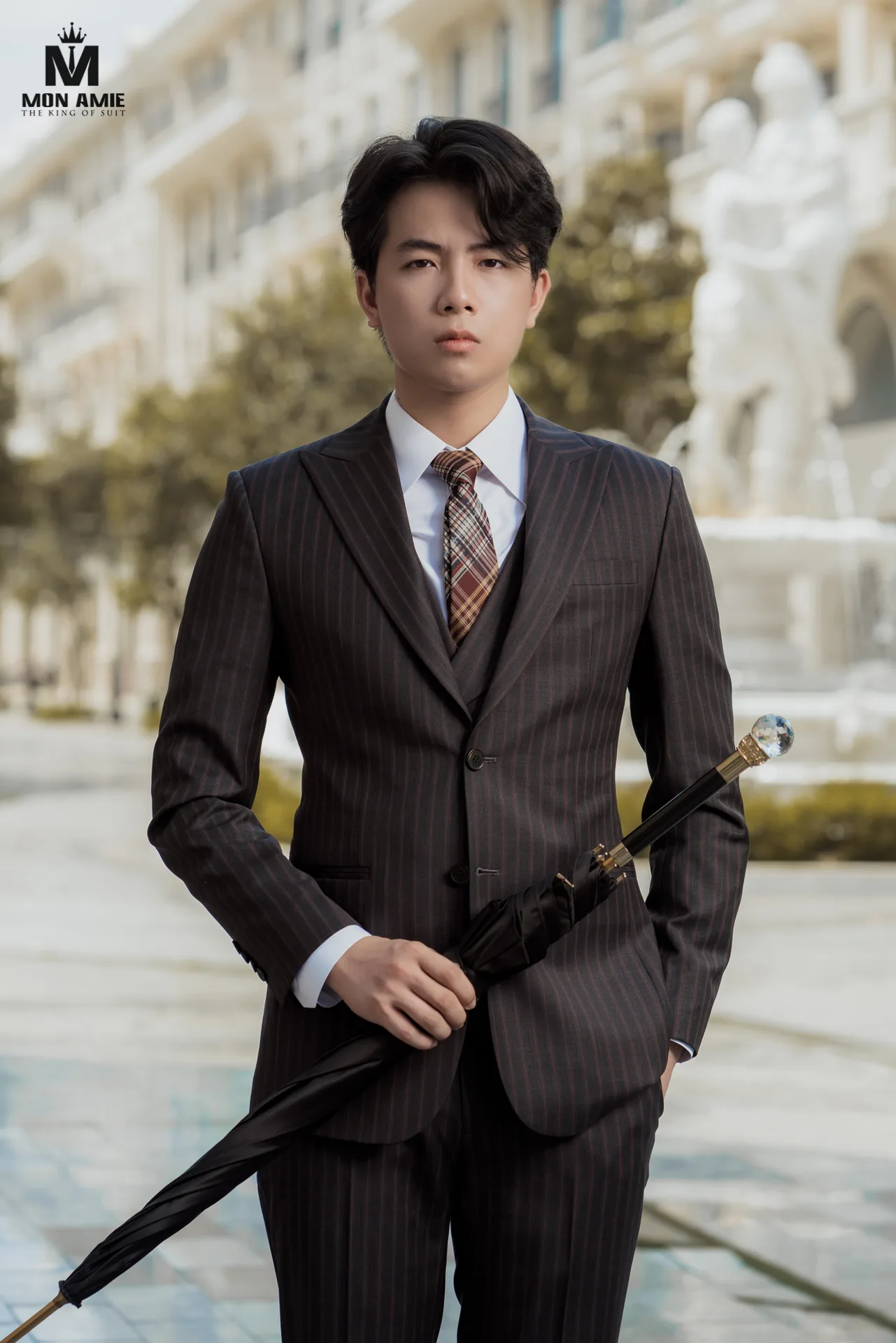
With a three-piece suit and waistcoat like the one above, a compact knot is especially fitting, because the waistcoat covers the rest of the tie and leaves only a small patch below the knot. Narrow ties tend to make a flat knot; this one, with its single wrap, still keeps the knot full.
2. Half Windsor: balanced, and right for every occasion
A balanced, medium-sized triangular knot: larger than the Four-in-hand, smaller than the Windsor. Compared with the Four-in-hand, it has one extra pass through the neck loop, so it is fuller and more symmetrical. A 7–8 cm tie with a standard or medium-spread collar is its natural match; it works for the office, meetings and interviews.

With a navy suit and a red-and-white striped tie as in the photo, a balanced knot keeps the stripes from distorting; with a crooked knot, stripes running at a slant show immediately. Note: tighten with a firm hand but don't yank; the knot should sit snug against the collar with no gap. The article how to tie a Half Windsor walks through each step along with the common mistakes.
3. Windsor: large, symmetrical, for wide spread collars
The Windsor (also called the Full Windsor) is a large, fully symmetrical triangular knot with two passes through the neck loop. The big knot fills the gap between the two points of a wide spread or cutaway collar, so it suits this type of collar, as well as men with a long neck or a long face. The tie needs to be long enough and of moderately thin fabric, such as silk, so the knot doesn't balloon.
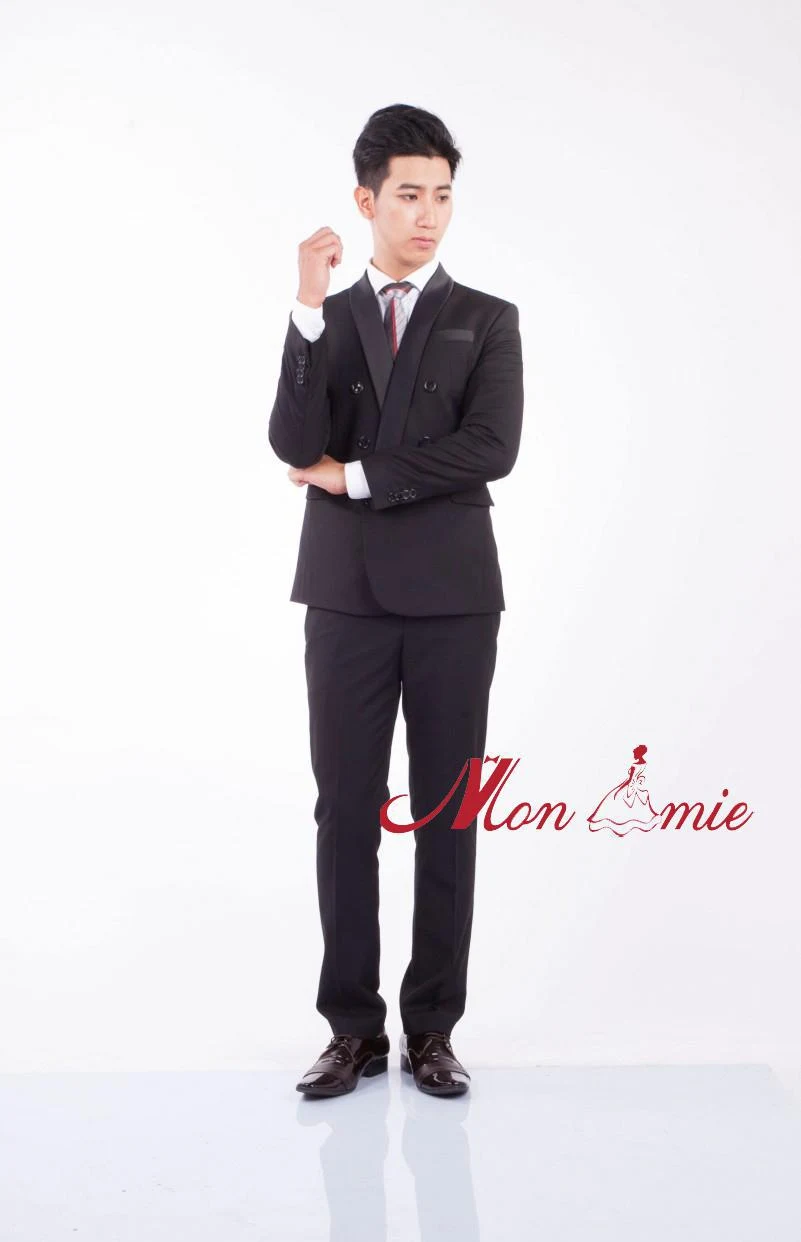
A double-breasted jacket has a substantial chest, and a large symmetrical knot balances exactly that width; the Classic Double-Breasted Suit in the photo is one example. A common mistake is tying a Windsor with a thick tie: the knot ends up the size of a fist and pushes the collar outward. The step-by-step method is in the article on tying a Windsor knot.
4. Prince Albert: a long, refined knot for thin ties
The Prince Albert (also called the double knot) is a Four-in-hand with one extra wrap, so the knot is longer and thicker, yet still slender and upright. It suits thin silk ties, narrow ties, and standard or narrow-spread collars. With a thick tie, this knot looks coarse right away.
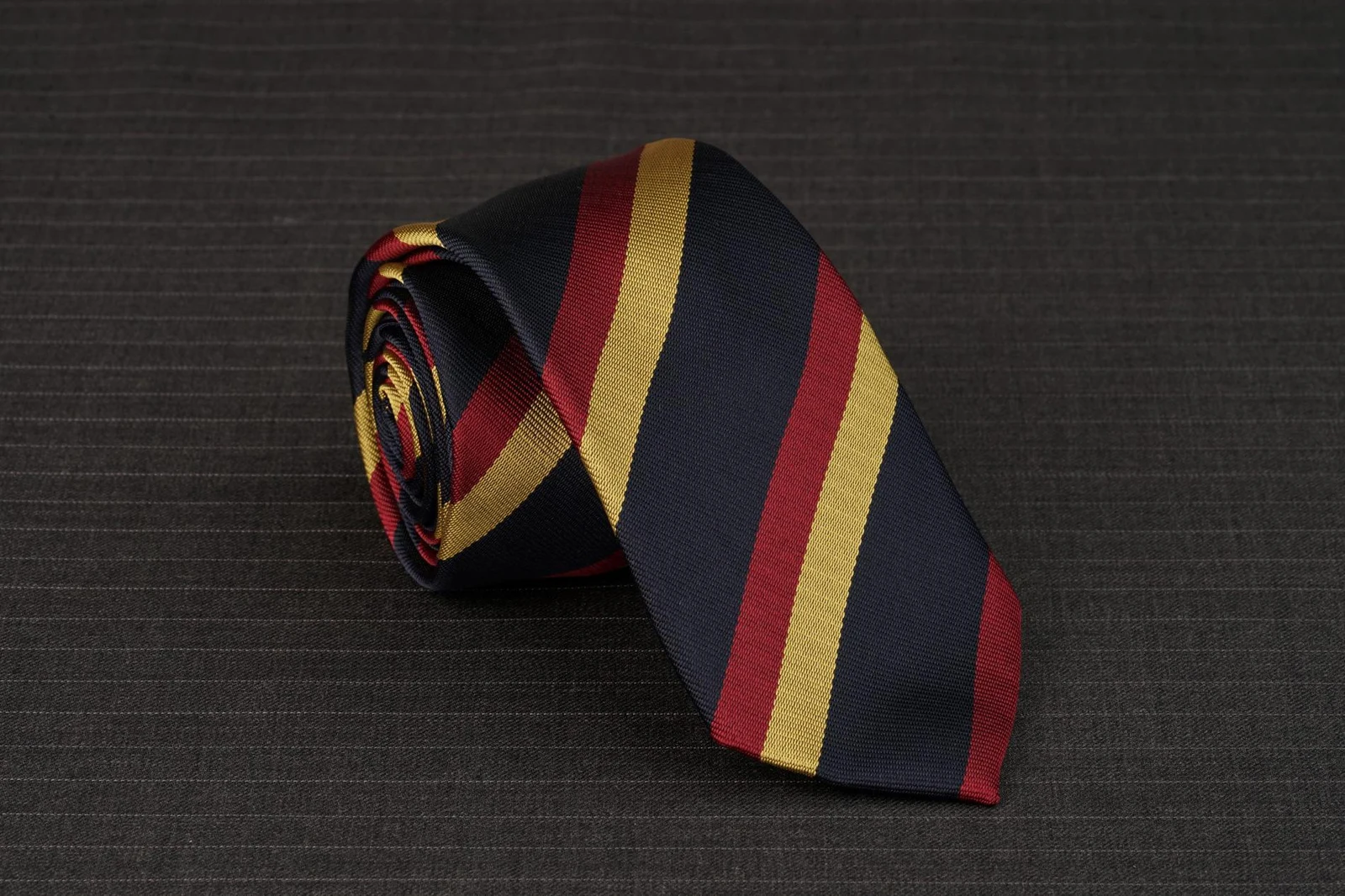
A dark navy diagonal-stripe tie with ruby-red and gold stripes, like the one in the photo, looks neat with a long knot, because the knot doesn't break up the stripes. This knot gives you a more refined look, but it also demands a tie of sufficient length: if the length is a little short, the tip of the tie won't reach the belt buckle. See also how to tie a Prince Albert to get the knot even.
5. Pratt (Shelby): a medium, neat knot tied from the reverse side
The Pratt is tied with the back side of the tie facing outward, so once finished the seams are hidden inside. The knot is balanced and medium-sized, sitting between the Half Windsor and the Four-in-hand, rarely goes crooked and looks very clean. It suits every tie material from silk to thin wool; and it suits men who need a polished knot with little time.
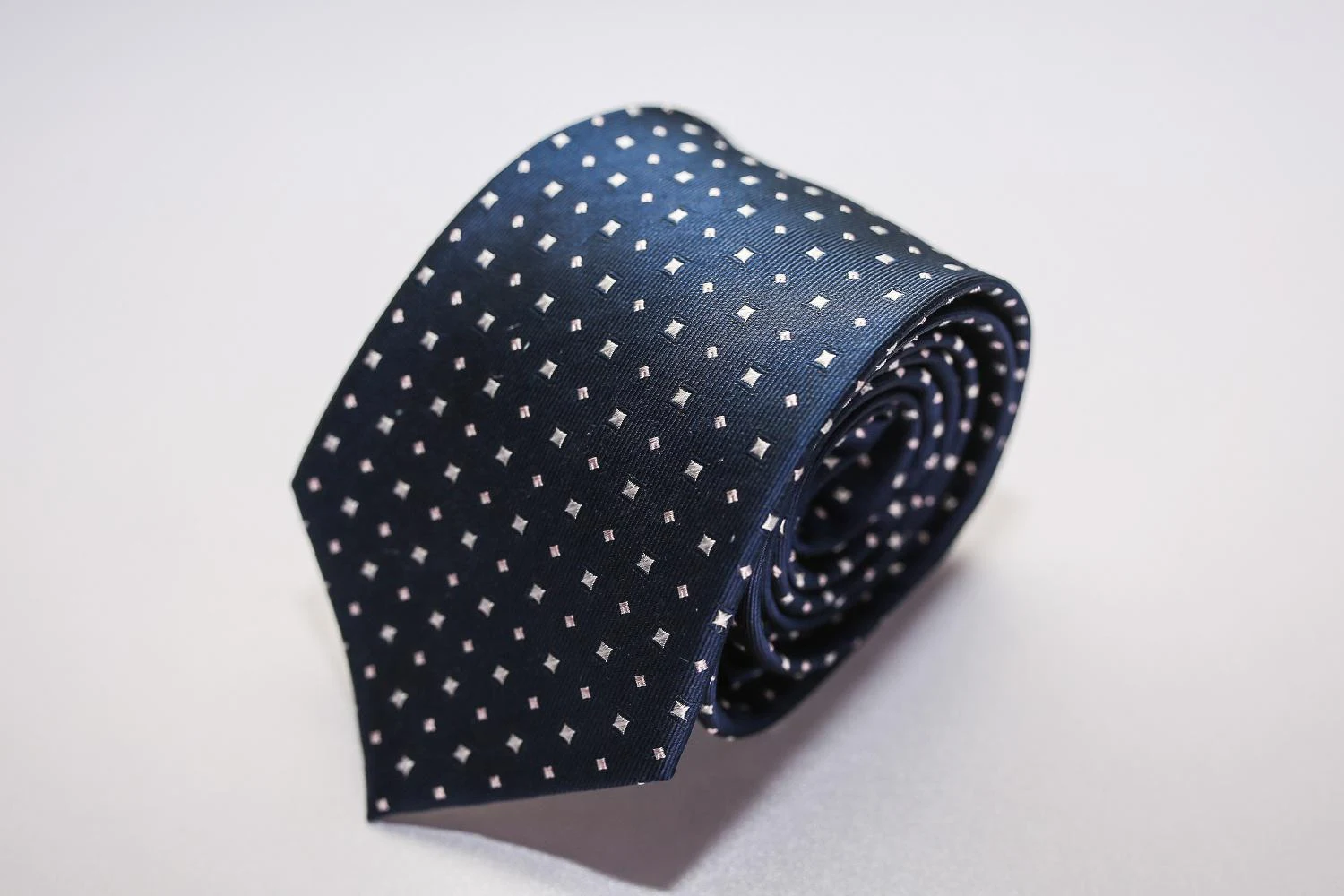
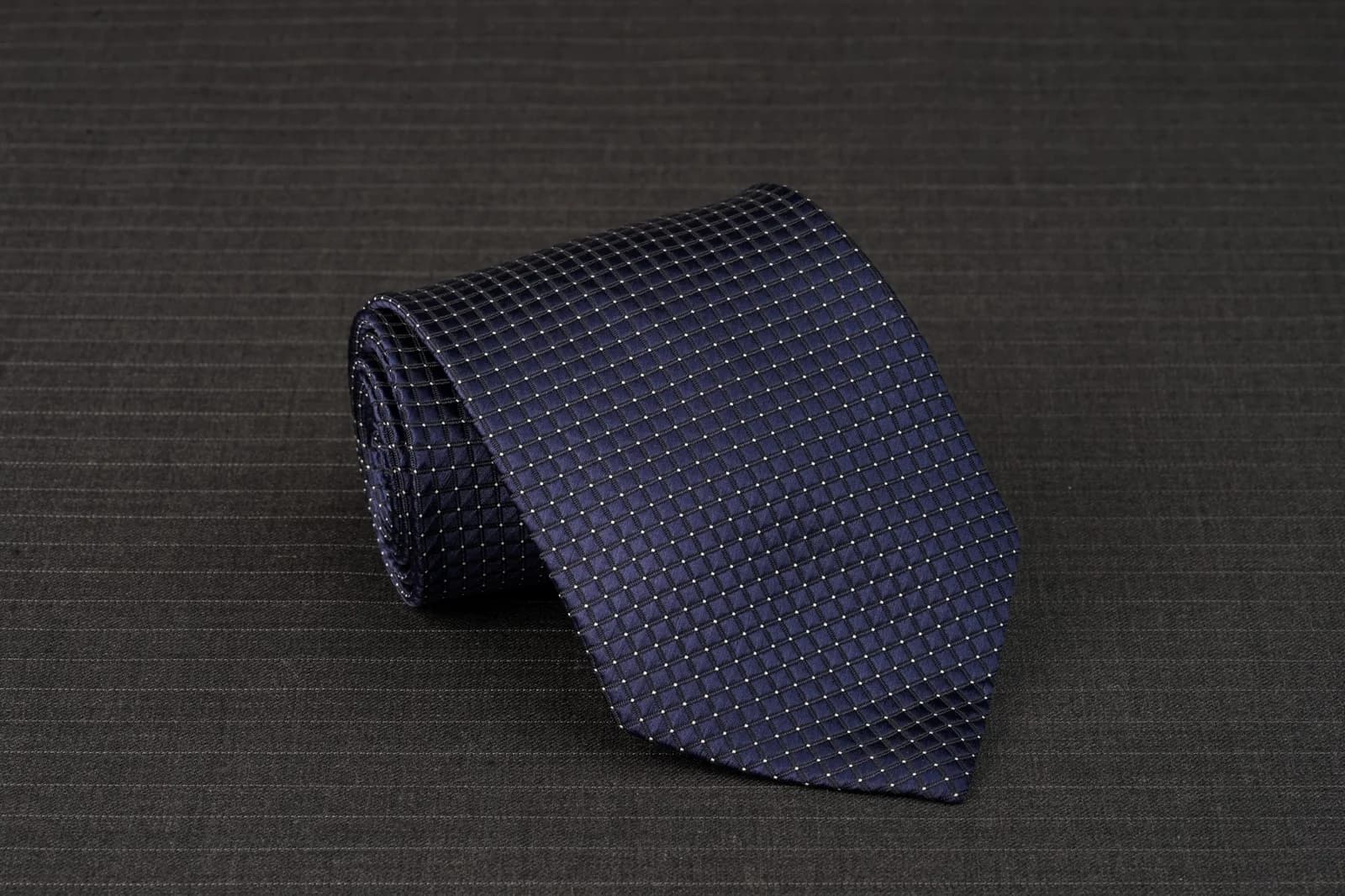
A plain tie or one with a small pattern, like the silver-flecked navy in the photo, is what the Pratt is made for: a smooth knot that shows off the colour without muddling the pattern. Just remember to flip the back side outward from the start; many people only notice the seam showing after the knot is done. The Pratt uses less tie length than the Windsor, so it also suits slightly short ties, or tall men whose ties come up short.
Quick summary table
| Knot | Best for | Key point |
|---|---|---|
| 1. Four-in-hand | Thick ties, standard collars, beginners | Slightly off-centre knot; pinch a dimple before tightening |
| 2. Half Windsor | Every occasion, 7–8 cm ties | Balanced knot, snug against the collar |
| 3. Windsor | Wide spread collars, thin silk ties | Needs a long tie; avoid thick ties |
| 4. Prince Albert | Thin, narrow ties | Long knot, needs tie length |
| 5. Pratt | Silk, thin wool, a clean knot needed | Start with the back side facing outward |
Tips from Mon Amie's master tailors
- The tip of the tie should reach about the belt buckle. Too long and it pokes out below the waistband; too short and it looks like a bib. The narrow end always sits behind the wide end.
- The knot must match the collar. A wide spread collar needs a big knot; a narrow collar needs a small one. A knot that strays from this proportion is a flaw that even someone looking from a distance will notice.
- Match the tie width to the lapel. A wide lapel goes with a 7–8 cm tie; a narrow lapel goes with a 5–6 cm tie. Stray from these two sizes and the proportions are lost.
- Undo the knot by reversing the steps. Don't yank the tie over your head; doing so damages the fibres and leaves creases in silk.
- Hang your ties; don't roll them tightly. Let the fabric rest for a day between wears; silk will recover its loft.
Frequently asked questions
What should you pay attention to for a well-tied men's tie?
Three things: a length that reaches the belt buckle, a balanced knot that sits snug against the collar, and a small dimple just below the knot. Choose a knot that suits the tie width and collar style and any way of tying looks good; choose wrong and no matter how skilfully you tie it, the proportions will still be off.
Which knot should a beginner start with?
The Four-in-hand, since it has only one wrap and a few movements. Practise in front of a mirror a few times and your hands will get used to it. Once you have it down, the Half Windsor is the next step because the knot is more symmetrical.
Which shirt collar goes with which knot?
Standard and button-down collars go with the Four-in-hand or Half Windsor; wide spread collars go with the Windsor. The general rule: the wider the collar, the bigger the knot. The article men's shirt collar styles spells out which knot and which face shape each collar suits.
Which knot suits a narrow tie?
The Four-in-hand or Prince Albert, since a compact, long knot suits a narrow tie. A Windsor would make the knot larger than the tie's width, throwing off the balance.
A tie knot only looks good when a well-fitting collar, lapel and shoulders come with it. You can book a measuring appointment at Mon Amie so a stylist can check the proportions of your shirt collar and jacket lapel before choosing a tie, instead of choosing the knot first and adjusting everything else afterwards.