
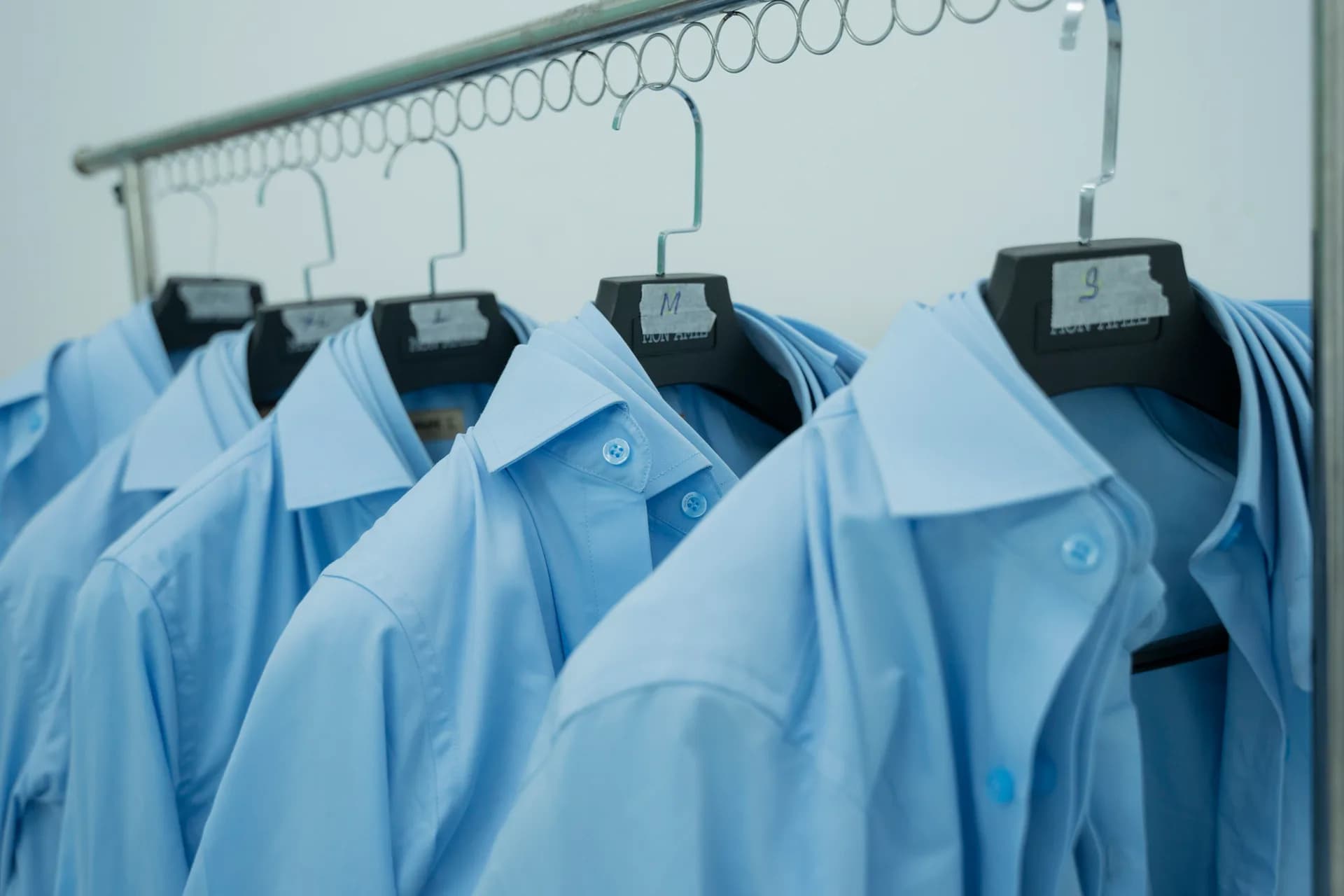
At a restaurant or a gala night, the uniform is the backdrop: guests do not admire it, but they notice at once when it is wrong. A rumpled front, a sleeve too long when carrying a tray, a black that has drifted to grey under stage lights; small details like these lower people's expectations of the whole evening. For upscale restaurant and event uniforms, the challenge is not elaboration but staying neat through six to eight hours on your feet. Below are five styles by position, from the floor to the stage.
Quick answer
Upscale restaurant and event uniforms should be built on dark suit jackets and waistcoats in washable cloth, measured for each person. Five styles: a black suit or tuxedo for floor managers, a waistcoat with a white shirt for waitstaff, a mid-grey suit for greeters, a women's suit for stage support, and a set that follows the event's colour theme.
1. Black suit jacket or tuxedo: for floor managers and shift leaders
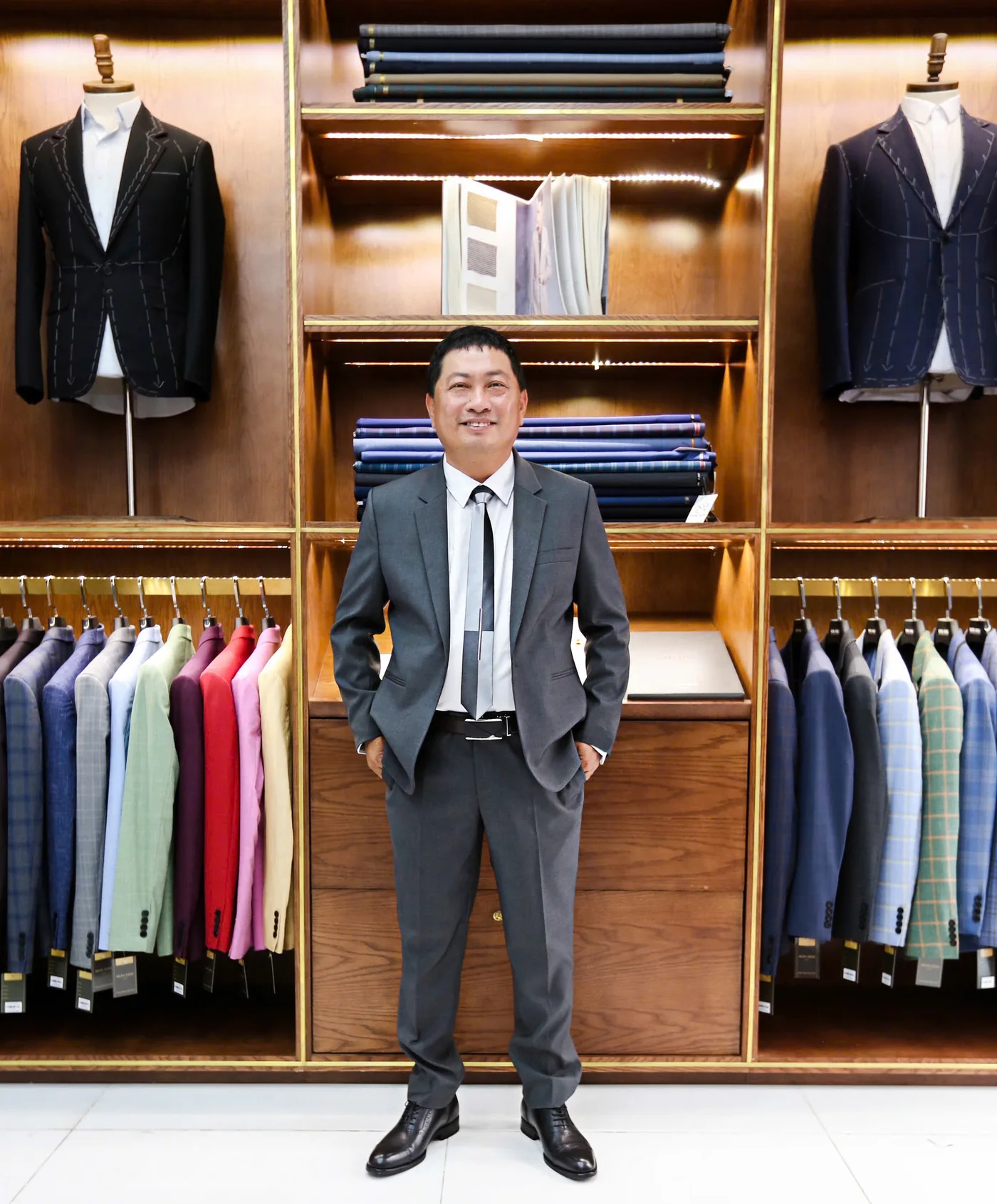
The person coordinating needs to stand out just enough for guests to find them and staff to see them, without overpowering the rest of the team. A two-button black suit jacket with a bow tie or black tie is the familiar answer; for a formal evening, a made-to-measure tuxedo (silk or satin lapels, trousers with a side stripe) gives a more composed look. Choose a black wool in a matte twill, avoiding shiny cloth that catches camera flash. Black also drifts to grey under yellow light, so test the cloth swatch on the spot under lighting like that of the workplace. A note on lining: people who stand and walk continuously need a breathable lining; poor lining makes the jacket stuffy and cling to the shirt after a single shift.
2. Waistcoat with a white shirt and bow tie: for the waitstaff
The waistcoat suits waitstaff because there are no jacket tails to brush against glasses and plates as they bend to carry a tray. Pair it with a white shirt with a classic collar, and a bow tie or a short tie with a clip so the tie does not fall into the food. The waistcoat should have an adjustable strap at the back to fit both slim and fuller builds, but the chest and shoulders still need to be measured for each person so the front does not bulge. Choose a wool-polyester blend that withstands frequent washing, because restaurant uniforms are washed far more than office uniforms. A common mistake is choosing a thin shirt: standing near the kitchen all shift, sweat shows through at once, so choose a closely woven cotton that is thick enough.
3. Mid-grey suit jacket: for reception and guest greeting
Mid-grey (medium grey) is lighter than charcoal, helping the greeting team be recognised among a crowd dressed in black; it suits conferences, exhibitions or daytime receptions. Pair it with a black tie or the event's brand colour, and a white or very pale blue shirt. A point to weigh: mid tones show stains easily, so choose a twill or a tone-on-tone stripe to disguise the surface. Jacket length matters for people who must raise an arm to point the way: the jacket should cover the seat fully, and the armhole should be wide enough that lifting an arm does not drag the whole body of the jacket up. If the greeting team includes both tall and short people, try the jacket on each person rather than trying one sample and duplicating it.
4. Fitted women's suit with straight-leg trousers: for stage support and assistant MCs
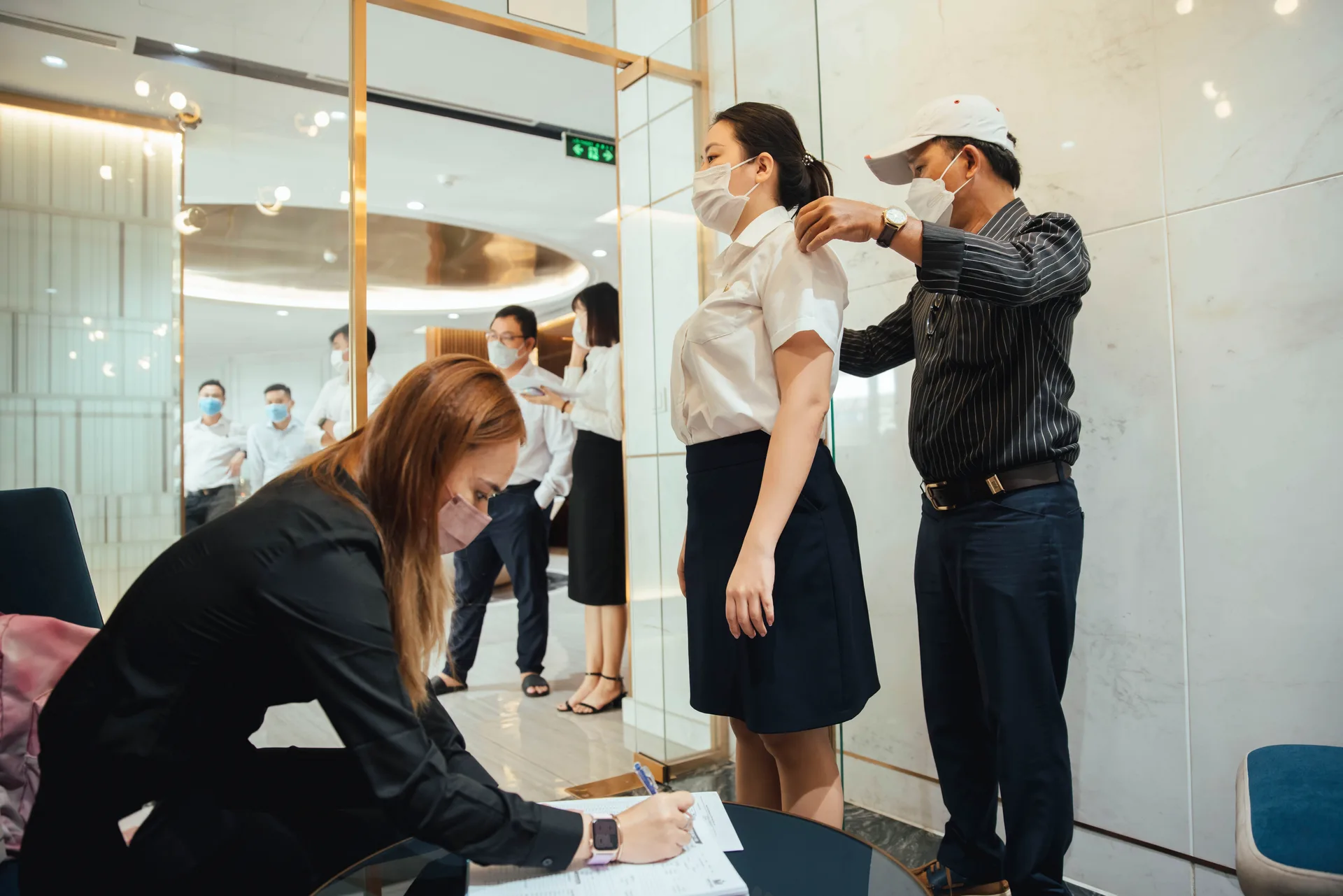
Women's stage-support or greeting teams often stand in 3–5 cm heels for the whole event, walk fast backstage and step onto the stage within seconds. A one-button women's jacket, fitted just enough at the waist, combined with straight-leg trousers in the same cloth (or a pencil skirt with a rear vent) gives an easy stride. The measurements to take specifically for the female figure: bust, waist, hip, shoulder, sleeve length, and trouser length based on the very shoes to be worn on show day. Note the trouser hem: one pair of shoes off is the whole hem off, so measure with the shoes on.
5. A set following the event's colour theme: keep the cut, change the accent
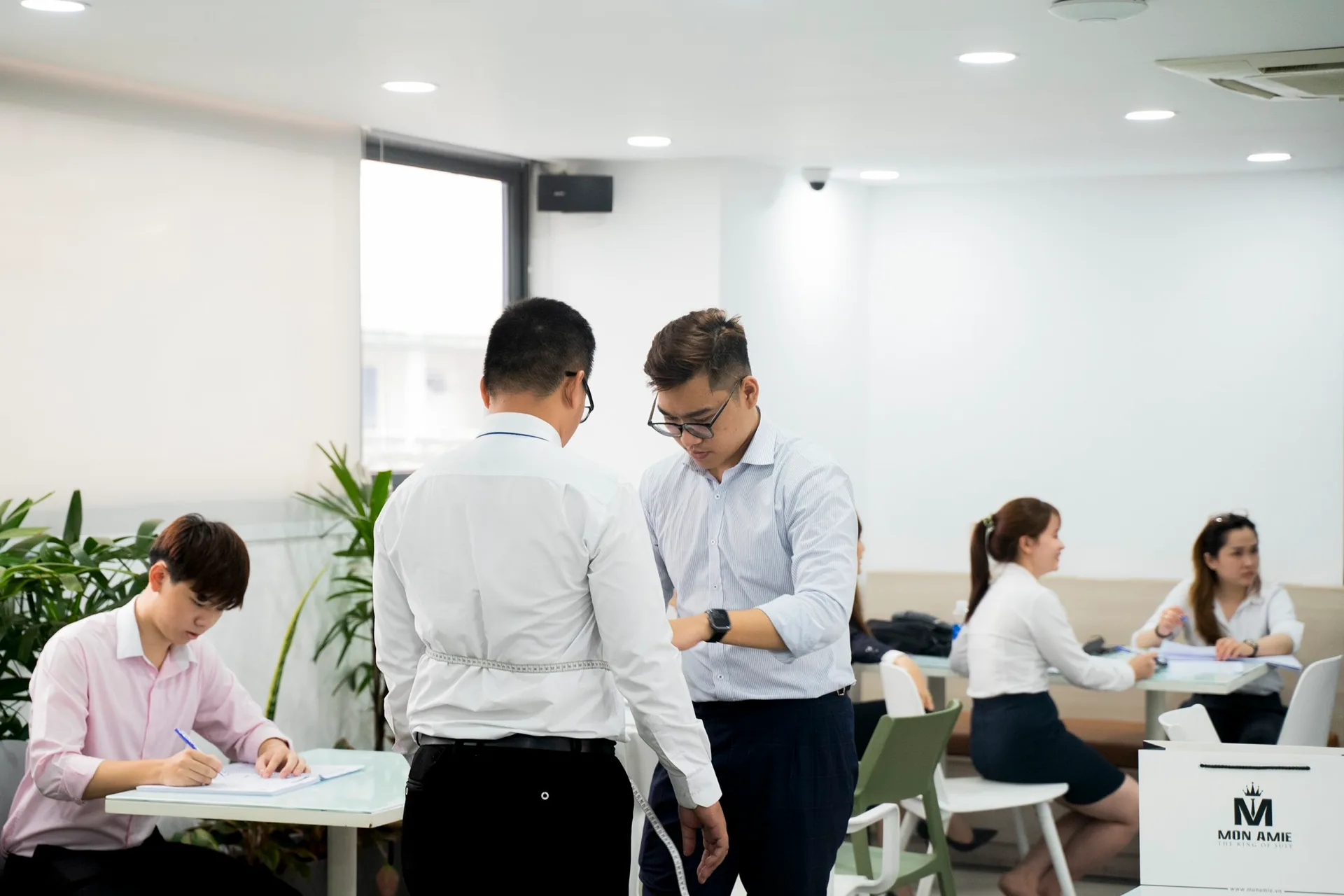
Events change by season and by client, but the uniform budget does not change with them. The way to save while still matching the mood: keep the base set (a black or navy suit jacket or waistcoat) and let the colour theme enter through the tie, bow tie, pocket square or lapel flower. The choice of palette is discussed in detail in the article What Is a Color Theme. If you need an identifying mark, a small embroidered logo on the chest or on the waistcoat is much neater than a large print. With a large team, measuring several pairs in parallel on site shortens the session, and writing each sheet with the right name and position avoids mix-ups when handing out. For an event held only once, you may consider renting a suit for the occasion; the rental price is quoted by style on contact.
Quick summary table
| Style | Suited to | Key points |
|---|---|---|
| 1. Black suit jacket or tuxedo | Floor managers, shift leaders | Matte twill wool; test colour under real lighting |
| 2. Waistcoat, white shirt, bow tie | Waitstaff, sommelier | Washable cloth; shirt thick enough; waistcoat with adjustable strap |
| 3. Mid-grey suit jacket | Reception, event greeters | Twill hides stains; armhole wide enough |
| 4. Fitted women's suit, straight-leg trousers | Stage support, assistant MCs | Measure with shoes on; skirt or trouser option |
| 5. Set by colour theme | Gala, launches, conferences | Dark base, accent colour in accessories |
Tips from Mon Amie's master tailors
- Two suits in rotation for each position, washed and pressed in turn. A jacket worn every evening shift loses its shape much faster than one that gets a day off.
- For seasonal teams, print measurement sheets by position in advance and have the person on duty tick "measured / not yet measured", since in a large team it is very easy to miss people close to the show date.
- Settle from the start who sits, who stands and who moves around a lot: these three groups need different armhole widths and jacket lengths.
- Kitchen, cleaning and security teams need polo shirts or shirts in large quantities; Mon Amie takes this part through maydongphuc.vn so that the service team can still wear individually measured suits.
- Ask for a sample set so the whole organising committee can approve it under real lighting before mass production.
Frequently asked questions
How do premium office uniforms differ from restaurant and event uniforms?
Offices involve more sitting and little strenuous movement, so the focus is on flatness and resistance to creasing; restaurants and events involve standing and moving a lot, so they need cloth that withstands washing, a breathable lining and durable seams. The office side is discussed in the article on premium office uniforms in suits.
Do yellow or blue bank uniforms apply to restaurants and events?
The principle applies: the brand colour should sit in the accessories while the base set stays dark. Deep blue is sombre enough to make a whole suit; yellow and red should be accent colours. See the article on bank uniform suits to see how roles are divided by position.
Should we make a dedicated uniform for a seasonal event team?
If the same team takes on many events during the year, yes; Mon Amie keeps each person's measurements so that supplementary batches match the earlier suits. For an event held only once, renting a suit for the occasion may make more sense.
What does an upscale restaurant uniform usually include?
For the service team: a waistcoat or suit jacket, shirt, trousers, bow tie or tie, a long apron (depending on the restaurant), a belt and dark leather shoes. Floor managers add a two-piece suit or a tuxedo.
Upscale restaurant and event uniforms succeed when guests do not need to notice them. If you are preparing for a restaurant brand or a series of events, book a site survey or message Zalo 0888.111.118; the stylist will look at the space, the lighting and the positions to propose a suitable plan, along with the uniform suit service.