

“I have a grey suit. What colour shirt should I wear so I don't look dull?” is a familiar question at the showroom, and the answer usually lies in lightness rather than in the name of the colour. Suit and shirt colour combinations really revolve around three things: whether the shirt is lighter or darker than the suit, whether the two colours share a warm or cool tone, and which patterns are allowed to appear. The ten combinations below run from safe to characterful, and work for both men's and women's suits.
The short answer
The ten combinations: navy with white, navy with pale blue, grey with white, grey with pale lavender, black with white, black with blush pink, a dark suit with a black shirt, beige with a check shirt, pastel with white, and a plain suit with a plum check shirt. The base rule: the shirt should be one step lighter than the suit.
1. Navy suit with a white shirt: the foundation pair for every meeting
Navy is a deep blue, white is almost absolute brightness; this contrast reads clearly from a distance and in photographs. This pair stands up in meetings, interviews and daytime weddings, and is also the pair to choose when you are unsure which colour suits you.
Choose bright white or ivory white depending on your skin: ivory is gentler on darker skin. The shirt cloth should be thick enough that no undershirt shows through. A common mistake is keeping a white shirt that has yellowed at the collar and cuffs; against a clean navy, stains show immediately. The tie is flexible: plain, polka dot or striped all work.

2. Navy suit with a pale blue shirt: the same colour family, a different lightness
A pale sky-blue shirt under a navy suit is a same-family pairing: a softer contrast, easier on the eye than bright white. The Blue Winchester Shirt with White Collar, a sky-blue body with a white collar, is a style that works for the office when you want something light but still neat.
What to avoid: a pale blue that sits almost at the same shade as the suit. Two colours that are “close but off” look like a wrong choice. Keep the shirt and suit at least two steps apart in lightness. The tie that suits is deep navy, burgundy or a blue deeper than the shirt.
3. Grey suit with a white shirt: clean, put the colour elsewhere
Light grey goes with crisp white to preserve brightness; charcoal grey suits both white and pastel colours. This pair is “closed”, so it is the place to let the tie and pocket square draw attention; you do not need to try anything more with the shirt. If you are undecided between shades of grey, the article what colour shirt goes with a grey suit breaks it down shade by shade.
Note: light grey with a pale white easily looks washed out, so add a deep point such as a navy or plum-red tie. Black shoes suit charcoal grey; brown shoes suit light grey.
4. Grey suit with a pale lavender shirt: gentle, with character
Grey and lavender both belong to the cool palette, so they sit very gently next to each other. The pale purple shirt with a white collar (lavender paired with white) has a white collar that gives the purple a resting beat, so it does not turn too sweet. It suits creative offices, light parties and daytime events.
This leans toward personality, so think twice before very formal meetings. The tie should be deep grey or navy; do not add a purple tie, because three layers of the same colour family become one hard-to-read block. If you are still shy of purple, start with a very pale purple, almost a pinkish grey.
5. Black suit with a white shirt: ceremony and evening
Black with white is strong contrast, and it belongs to the evening, signing ceremonies and formal events. With a tuxedo, this is the standard pair: a black suit with a shawl lapel, a pleated-front shirt and a black bow tie create a complete formal look, right for the hour of the party.
This pair needs spotless white; a single yellowish mark shows up more on a black ground. Choose a medium point collar or a small spread collar for a tie, and an upright collar for a bow tie. A common mistake is a shirt whose sleeves are shorter than the jacket sleeves: when you raise your arm, a bare wrist shows and the white line at the cuff is lost.
6. Black suit with a blush pink shirt: softening a black suit
Blush pink on black is a warm opposition: still strong contrast, but it softens the severity of the black suit. The Elegant Black Three-Piece Suit in the collection is exactly such an example: smoky black paired with a blush pink shirt. It suits weddings, evening parties and meetings that call for a friendly air.
Choose a pale blush pink, not a deep pink; a tie in black, charcoal or wine red all work. Do not use a pink tie of the same shade as the shirt, as two layers of pink will swallow each other.
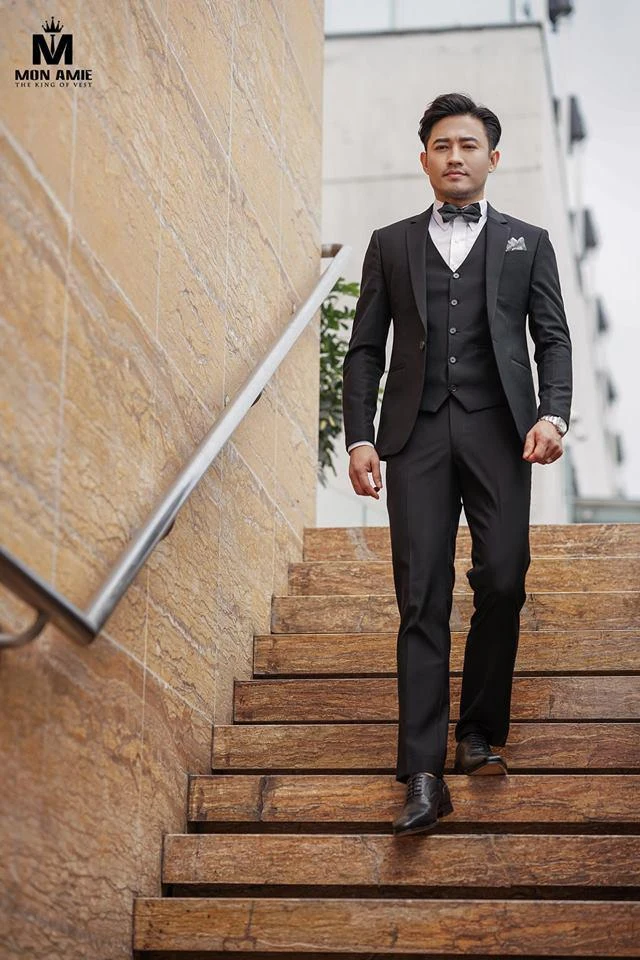
7. Dark suit with a black shirt: dark on dark
This is the “dark on dark” way: a navy or black suit with a black shirt pulls the whole body into one vertical line, looking neat and modern. To make it work, you need one accent: a flower on the lapel, a light-coloured pocket square, or metal cufflinks.
A tip to avoid a flat, heavy look: use different materials, for example a matte wool suit with a cotton or soft satin shirt. It suits evening parties, fashion events and dinners; it is not so right for daytime meetings or interviews.

8. Beige or cream suit with a check shirt: warm, right for daytime
Beige and sand cream are warm light grounds. A small check shirt in deep tones such as blue or brown gives depth without glare. The sand-cream suit with a check shirt in the photo below shows this: a light ground colour, the pattern in the shirt, and the tie can be dropped to keep things relaxed.
Rule: only one layer of pattern. With a plain beige suit the shirt may be check; if the suit already has a check, choose a plain shirt. Brown or beige shoes suit this pair; black shoes are usually too heavy.

9. Pastel blue suit with a white shirt: light, right for sunny days
A pastel blue suit is the colour of mornings, outdoor weddings, holiday days and daytime parties. A white shirt keeps the whole neat; however, “light on light” easily looks faded, so you need one deep detail: brown shoes, a dark belt or a navy tie.
Pastel is a colour that needs good cloth and clean sewing, since pale colours show every crease. Do not choose a shirt with too many details if the suit is already the accent. Loafers or light brown or beige leather shoes feel lighter than black shoes and suit a pastel ground.
10. Plain suit with a plum check shirt: one layer of pattern
A plain charcoal or navy suit combined with a large-check shirt in white and plum purple, like the large-check plum shirt in the made-to-measure shirt collection, gives an overall look with life that still stays office-appropriate. You can drop the tie to look more relaxed, or add a plain tie in a grey tone.
The secret is scale: if the shirt check is large, the suit must be plain and the tie plain too. The collar, the cuff and the fit of the shirt strongly influence this pair; the article how to wear a shirt with a suit covers collar, sleeve and fit in detail.
Quick summary table
| Combination | Suits | Remember |
|---|---|---|
| 1. Navy – white | Meetings, interviews, daytime parties | Clean white, no stained collar |
| 2. Navy – pale blue | Office, gentle on the eye | At least two steps from the suit in lightness |
| 3. Grey – white | A safe base | Add a deep accent in the tie |
| 4. Grey – lavender | Creative offices | Do not add a purple tie |
| 5. Black – white | Evening parties, ceremonies | Spotless white |
| 6. Black – blush pink | Weddings, evenings | Pale pink, not deep pink |
| 7. Dark – black | Evening parties, events | Needs an accent, vary the materials |
| 8. Beige/cream – check | Daytime, relaxed | Only one layer of pattern |
| 9. Pastel – white | Outdoors, sunny days | Add a deep detail |
| 10. Plain suit – plum check | Casual office | Large check, plain suit |
Tips from Mon Amie's master tailors
- Try the shirt next to the suit cloth in daylight. Showroom lights warm up colours; outdoors, the two colours can drift apart entirely.
- Let about one to one and a half centimetres of shirt cuff show beyond the jacket sleeve. That small detail lets the shirt colour appear and makes the suit look made for you.
- Choose the shirt to the suit first, and the tie to the shirt after. Going in the reverse order easily gives an outfit of many ideas with no lead idea.
- Three base shirts are enough to start with: white, pale blue and pale grey. From those three, you can pair with most dark suits.
Frequently asked questions
What colour shirt goes with a black suit?
White for evening and formal occasions; blush pink or pale blue for a friendlier occasion; black when you want dark on dark. See also what colour shirt to wear with a black suit.
How do I match a suit with a tie and trousers?
The tie should be as deep as or deeper than the shirt, in the same colour family or a moderate contrast with the suit. With separate trousers, keep trousers and jacket at least two steps apart in lightness, for example a navy jacket with grey trousers, or a beige jacket with brown or grey trousers.
Can a jacket-collar shirt be worn under a suit jacket?
A jacket-collar shirt, with a lapelled collar like a suit jacket, is usually worn outside, with trousers or a skirt. Worn under a suit jacket, two layers of lapel overlap and tangle at the neck. Under a suit, choose a spread collar or a regular point collar.
Should I choose a plain shirt or a patterned one?
Plain is a safe, easy base; a patterned shirt looks good when the suit is plain and the tie is plain too. A quick rule to remember: one outfit has only one dominant layer of pattern.
Colour matching is a matter of the eye, but it is the stitching that keeps those colours looking good. Once you have chosen a few pairs you like, you can book a measuring appointment so a stylist can advise you one-on-one and choose real cloth with you.