

A navy suit is an easygoing ground: almost any tie colour laid on it will not look chaotic. But easygoing does not mean right everywhere. Whether you pair a tie with a navy suit skilfully or clumsily comes down to three small details: the shade of the tie against the shirt, the scale of the pattern, and the width of the tie. The ten ways below run from discreet to striking, with the shirt to go with and the occasion that fits.
The short answer
Ten ties worth considering with a navy suit: tonal navy, blue polka dot, burgundy, purple, small pattern, mustard yellow, brown, pink, silver-grey and black. The tie should be as deep as or deeper than the shirt, its width roughly that of the lapel, and the whole outfit should carry only one accent.
1. Tonal navy in a different texture: discreet and assured
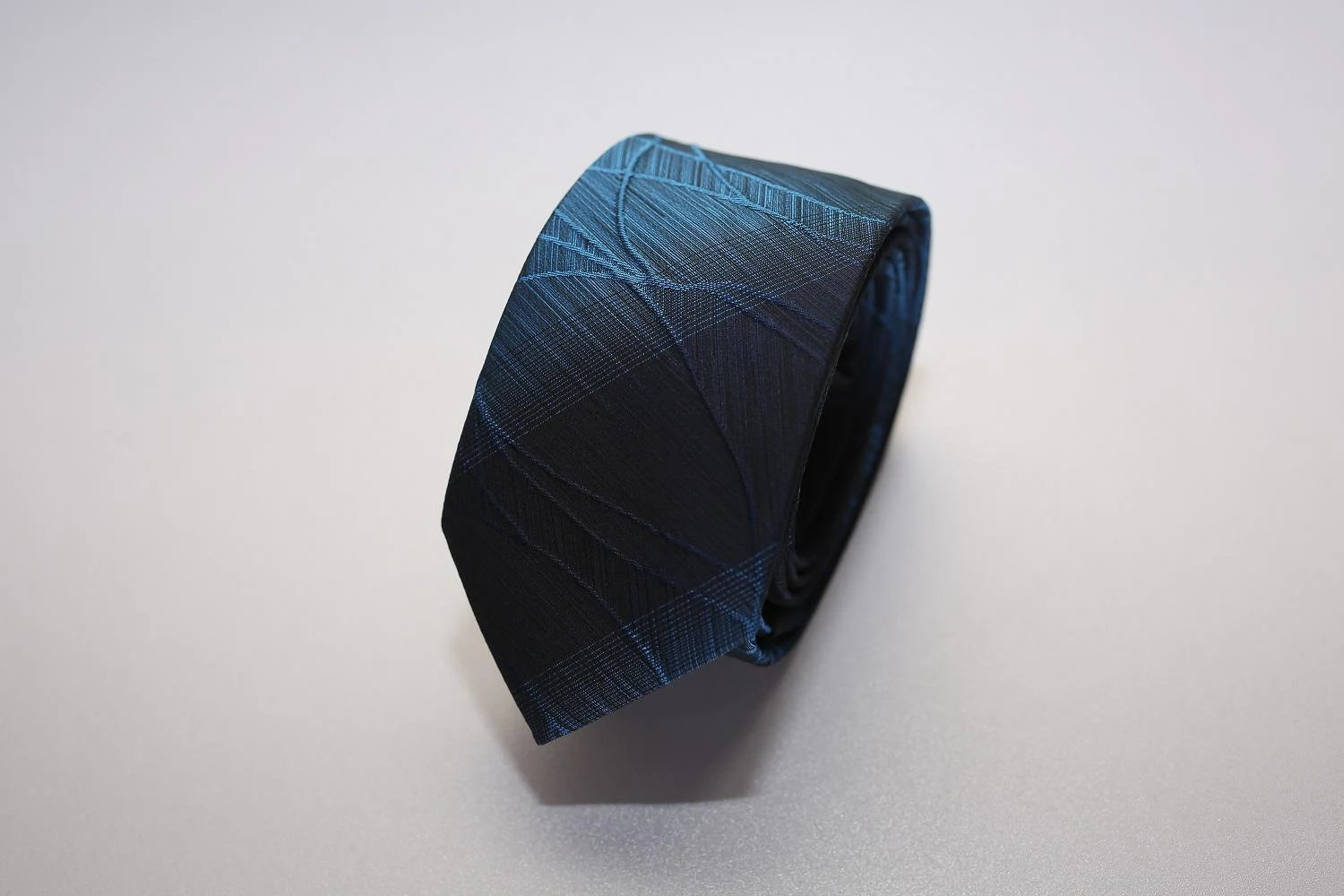
A navy tie under a navy suit is the safe way, but it only looks good when the two surfaces differ. The navy tie with tonal cobalt stripe uses its weave to create depth: the same colour but a different sheen of cloth, so it does not look flat. If the tie is plain, choose a shade slightly deeper than the suit so the tie still separates from the shirt.
It suits important meetings, interviews and partner meetings, with a white or very pale blue shirt. A common mistake is choosing a navy that is “nearly the same” but off in shade: in daylight the two colours argue, looking like a wrong choice.
2. Blue polka-dot tie: office-friendly, low risk
A small polka dot on a blue ground reads from afar almost as a plain colour, and only up close do you see the pattern. That is why it suits the office and events that call for polish without wanting an austere look. Dots that are too large look flashy; evenly spaced, sparse dots are a sign of a good tie.
A white shirt is the standard pairing; a pale blue shirt is also fine, as long as the tie is darker. A navy suit with a small stripe needs a tie with smaller dots or a plain tie, so the two patterns do not “fight”.

3. Burgundy or red polka-dot tie: just enough authority
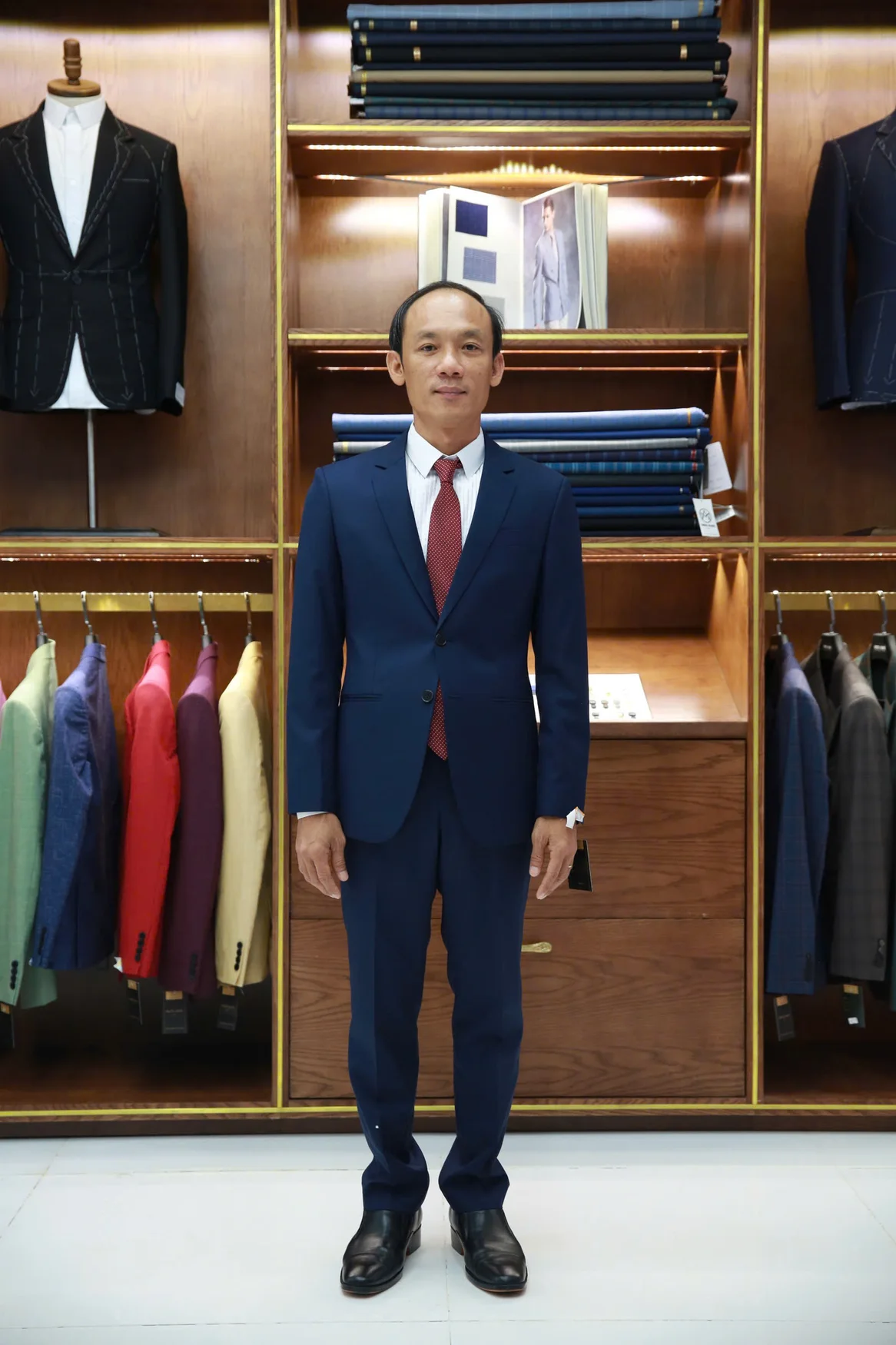
Red on navy is a pair with weight: warm, clear, giving a sense of taking the initiative. Choose burgundy for a deep, polished look; a small red polka dot for a younger, more energetic one. It suits presentations, signings, shareholder meetings, the moments when you need presence.
A crisp white shirt keeps the red from competing. Do not wear a pink or orange shirt with a red tie. The pocket square should be white or pale blue, not exactly the same red as the tie, because two identical details look like a ready-made set, lacking the wearer's intent.
4. Purple tie: evening parties and events
Purple on navy sits in the cool group of colours, so it harmonises well and still has character. Plum is deeper, suiting middle-aged gentlemen; lavender is lighter, suiting younger men and daytime parties. A white or pale blue shirt is a good ground. With a navy three-piece, a plum tie with a white pocket square makes an evening outfit elaborate enough without showing off.
What to avoid is a purple that is too vivid under a deep navy suit, because high saturation pulls the viewer's eye away from the whole suit. Nor should you pair a purple tie with a pink shirt: two colours that both carry red will compete over a very small patch of chest.
5. Small-pattern tie: pairing with a waistcoat
Small motifs (paisley, floral, tiny geometrics) add depth without overpowering the suit. Placing a small-pattern tie on a navy three-piece with a waistcoat, the chest has two layers of colour side by side and one clear focal point, so it suits parties that call for polish.
The “one large, one small” rule: with a plain suit, the tie may carry a bold pattern; with a striped or checked suit, choose a tie with a different scale of pattern, smaller. A white shirt, a metal watch and polished leather shoes serve as the ground for the tie.

6. Mustard yellow tie: fresh, right for daytime
Mustard yellow is the opposite of navy: one warm, one cool, so both stand out. It suits daytime weddings, weekend gatherings and outdoor events. A white or pale blue shirt; adding brown shoes is the final beat of the whole.
Choose a muted, slightly deep yellow, not a harsh lemon yellow. Avoid solemn occasions. If you want it lighter, switch to a tie with small yellow stripes on a navy ground: the yellow is still there but does not take over the whole tie. A yellow tie is also a way to change the mood of a navy suit you have worn many times, because with just one detail changed, the whole looks different.
7. Brown tie: in step with shoes and belt
Chestnut or chocolate brown on navy makes a warm, deep pair, very right for fine days. What matters is pairing the whole set of accessories: brown shoes, a brown belt and a brown tie standing in the same colour family so it looks deliberate.
A white or cream shirt; avoid a deep blue shirt, since two cool colours will crowd the tie. Note the material: a wool or textured-weave tie suits the cold season, while smooth silk suits the evening. A navy suit, a chestnut brown tie, a white shirt and dark brown shoes is a tidy formula for a weekend working day or a meeting with clients outside the office.
8. Pink tie: softening the severity of navy
Blush pink or peach pink on navy keeps the contrast moderate, softer than red but clearer than other pastels. It suits weddings, anniversaries and purposeful dates. A white shirt is the standard ground; a pale blue shirt also works. Do not wear a pink shirt with a pink tie: two layers of the same colour will swallow each other.
The pink tie should be of a smooth cloth, not too glossy. In addition, the article blue tie with a pink shirt discusses the opposite direction, when a pink shirt meets a blue tie.
9. Silver-grey tie: weddings and formal ceremonies
Silver-grey and pearl give a sense of formal dress, suiting weddings, award ceremonies and evenings that call for a sheen of cloth. A silver tie under a navy three-piece, a white shirt and a white pocket square is a classic outfit. It is also a colour often chosen for a line-up of groomsmen because it photographs well under lights.
A point to remember: a glossy silver tie shows creases easily, so roll it for storage rather than folding it. Avoid it in the early morning or in office meetings, because its brightness makes the tie lean toward evening wear.
10. Black tie: only when the occasion is truly solemn
A black tie on a navy suit belongs to solemn occasions: funerals and memorials. Black absorbs light, and next to navy it gives a stern, subdued look; wear a white shirt, and skip the pocket square or use only a white one folded flat.
Outside those occasions, black on navy easily makes the whole outfit heavier and darker than needed, especially in daylight. If you need a dark tie for a party, deep navy or deep charcoal is the lighter choice. The material should be a matte weave, not glossy, and the knot compact: a solemn occasion is not the place for an elaborate knot.
Quick summary table
| Tie | Suits | Remember |
|---|---|---|
| 1. Tonal navy | Meetings, interviews | Different weave, avoid a “nearly the same” navy |
| 2. Blue polka dot | Office | Small, even, sparse dots |
| 3. Burgundy / red polka dot | Presentations, signings | White shirt, no identical red pocket square |
| 4. Purple | Evening parties, events | Plum is deeper than vivid purple |
| 5. Small pattern | Parties with a waistcoat | “One large, one small” |
| 6. Mustard yellow | Daytime, outdoors | Muted yellow, not lemon yellow |
| 7. Brown | Sunny days, cold season | Match shoes and belt |
| 8. Pink | Weddings, anniversaries | Not with a pink shirt |
| 9. Silver-grey | Weddings, ceremonies | Roll to store, avoid mornings |
| 10. Black | Funerals, memorials | Only when the occasion is solemn |
Tips from Mon Amie's master tailors
- Tie width roughly the lapel width. For a slim suit, about 7–8 cm; for a classic cut, 8–9 cm. A big lapel with a small tie is out of step.
- Length reaching the waistband. A tie that stops short mid-belly or hangs below the belt both spoil the proportions of the whole suit.
- Knot to suit the shirt collar. A small point collar goes with a small knot (four-in-hand); a wide spread collar goes with a larger knot such as the half-Windsor.
- One accent only. A patterned tie takes a plain pocket square; a plain tie may take a pocket square with a small pattern.
- Stand in front of the mirror in outdoor light. The colour of a tie differs between the showroom and the sun, especially with navy.
Frequently asked questions
Is a blue-black suit the same as a navy suit?
When people say “blue-black”, they usually mean navy: a very deep blue, close to black. “Charcoal blue” is a similarly deep shade but leans greyer. Tie pairings for the two shades are almost the same; the article how the charcoal-blue suit colour differs from navy distinguishes them in detail.
Do ties for a grey suit and a black suit work the same as for a navy suit?
Not entirely. Navy is an easygoing ground that accepts most colours. A grey suit suits burgundy, pink, navy and blue stripes; a black suit suits burgundy, terracotta orange, chocolate brown or cream. Details are in 8 ways to pair a tie with a grey suit and 8 ways to pair a tie with a black suit.
What colour tie should I wear with a navy suit to a wedding?
Burgundy, blush pink, silver-grey or a small pattern are four familiar choices. For a daytime party, add mustard yellow; for an evening party, lean toward silver or burgundy.
Does the tie need to match the pocket square?
No. The same colour family or a harmonious rhythm is enough; if the tie has a pattern, a plain pocket square taking one colour from the pattern is neater than an identical one.
Pairing a tie with a navy suit is a subtle test: the colour of the tie is only half of it; the other half lies in the shirt, the weight of the cloth and the knot. When you want to try each colour on real cloth, you can book a measuring appointment so a stylist can advise you one-on-one and choose cloth with you.