
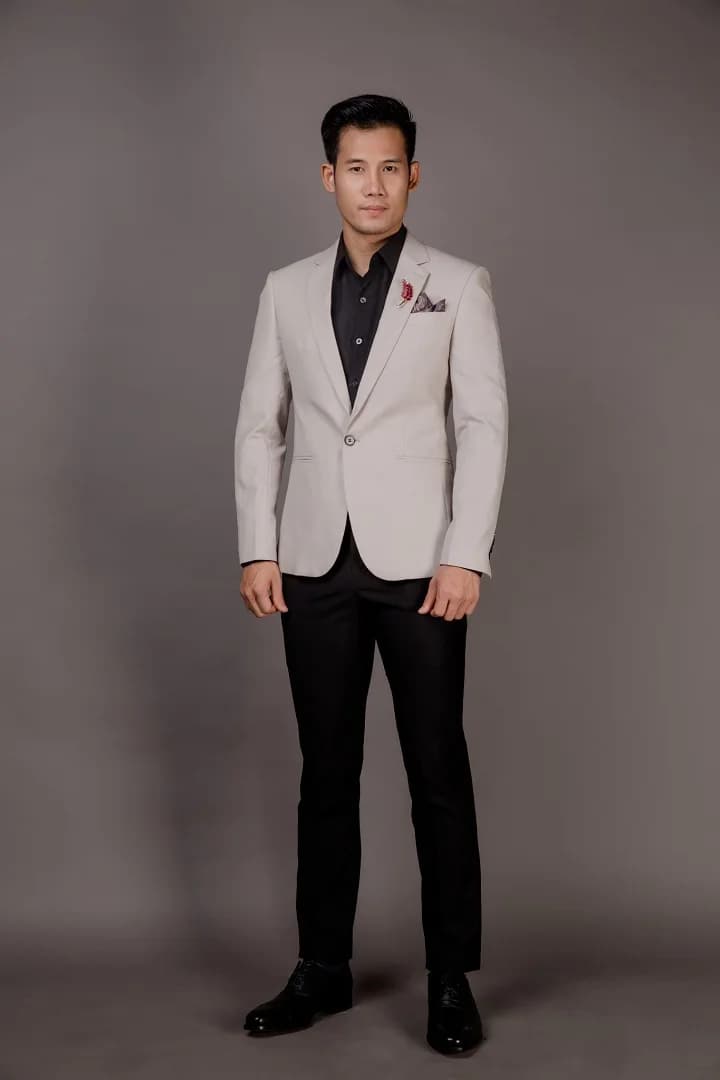
A blazer in a pale cream-grey, a white shirt open at the top button, grey trousers, polished brown leather shoes. Four items, no tie, not a single unnecessary detail. That is the closest picture of the smart elegant dress code: polished without being stiff, refined without showing off. When an invitation says these two words, you will know exactly how dressed up you need to be.
Quick answer
The smart elegant dress code calls for clothing more polished than smart casual but more relaxed than business formal. Men wear a structured suit or blazer, shirt, tailored trousers and leather shoes, and may skip the tie. Choose neutral or deep colors, smooth wool and restrained accessories; avoid jeans, athletic sneakers and T-shirts.
What is smart elegant, and where does it sit on the dress code scale?
Picture dress codes as a ladder from relaxed to formal: casual, smart casual, smart elegant, business formal, cocktail, black tie. Smart elegant sits between smart casual and business formal.
The easiest ways to tell the difference:
- More than smart casual in that: the outer layer must be a suit or a structured blazer, shoes must be leather, and there is no room for jeans or sneakers.
- Lighter than business formal in that: a tie isn't mandatory, colors and patterns can be looser, and there is room for a little personal "taste".
Smart elegant is common at company parties, product launches, evening dinners in hotel restaurants and partner events. It is also the "safe" level when an invitation uses a phrase that is hard to read, because adding a little emphasis takes you up to cocktail, and dropping one item takes you down to smart casual.
The five-item formula for the smart elegant dress code
| Item | Good choices | What to avoid |
|---|---|---|
| Outer layer | Suit or blazer, single- or double-breasted, fitted at the shoulder, smooth wool | Baggy blazer, wrinkled fabric, drooping shoulders |
| Shirt | White, light blue, cream, twill or textured weave | Shirt with a large pattern, limp soft-collar shirt |
| Trousers | Suit trousers or tailored trousers in a neutral contrasting color, slightly tapered | Jeans, worn khakis, trousers that are too short |
| Shoes | Oxford, derby, plain leather loafers, polished | Athletic sneakers, dull suede loafers |
| Accessories | Pocket square, leather-strap watch, belt matching the shoes | Crossbody bag, backpack, chunky chains |
General rule: if you drop the tie, something else has to step up. The pocket square, the fabric, polished shoes and a good fit carry the "elegance" that the tie has just handed over.
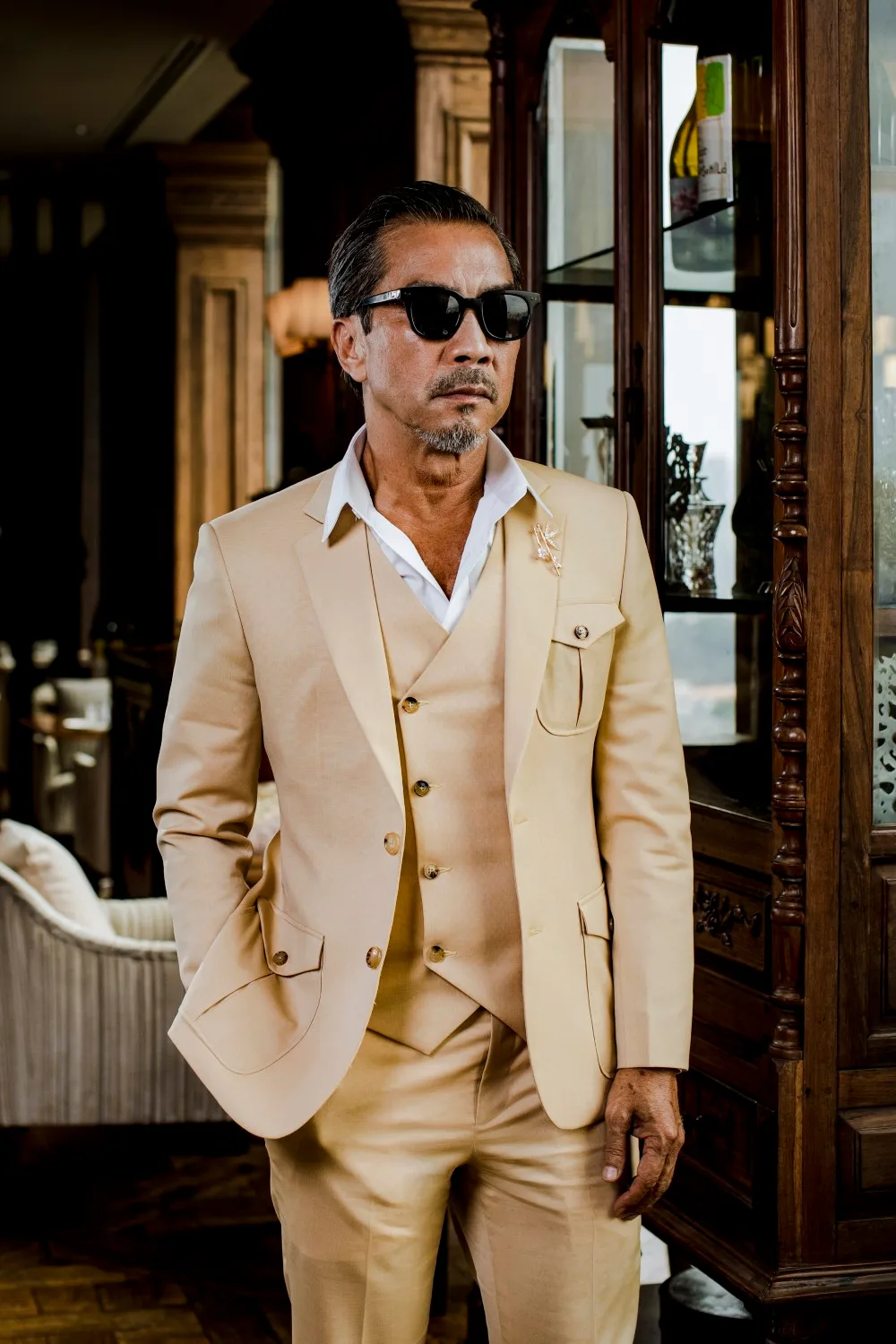
4 smart elegant outfits for men
- Company party in the evening. Navy or charcoal suit, white shirt open at the top button, white pocket square, black or dark brown oxford shoes.
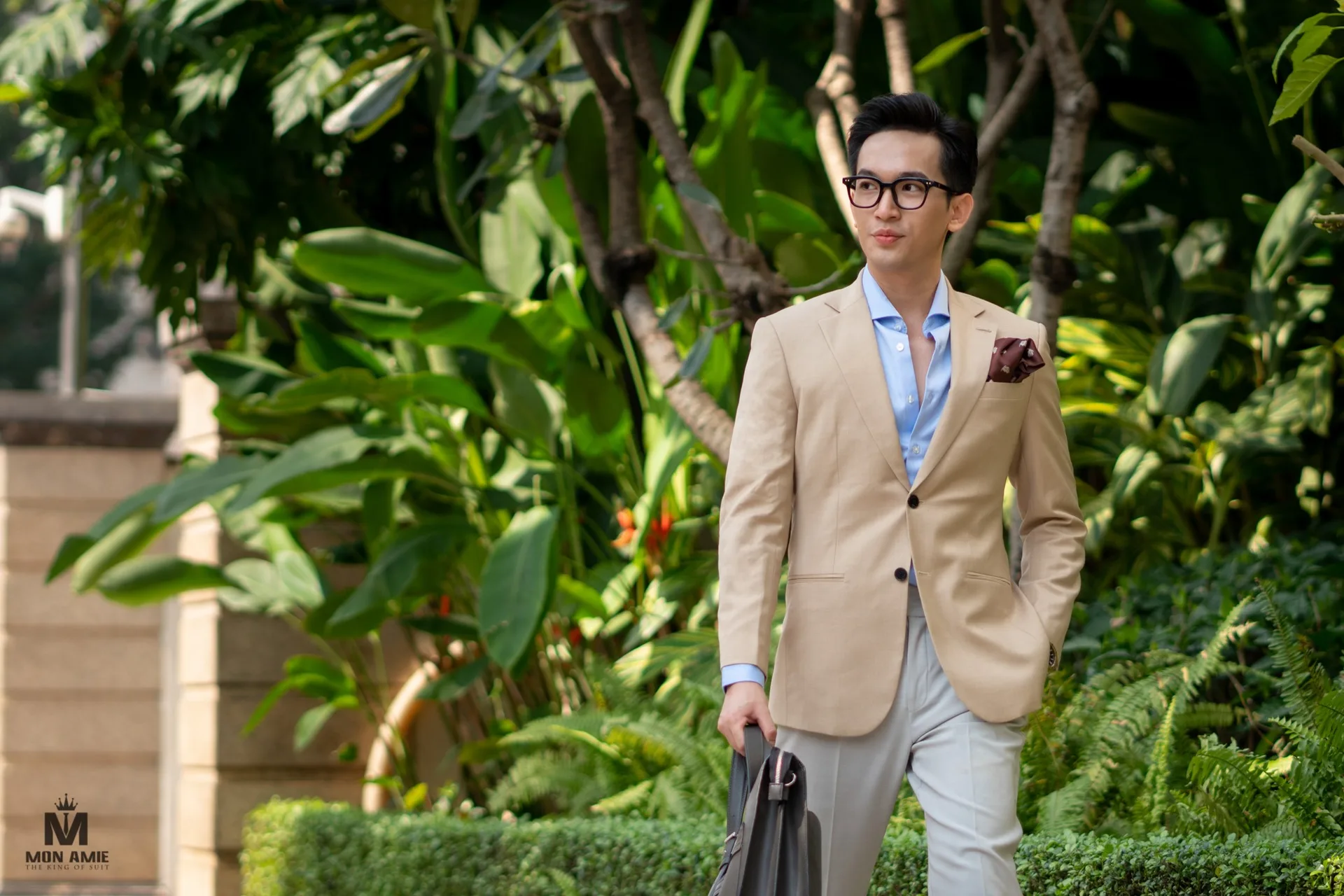
- Hotel restaurant. Beige or cream-grey blazer, light blue shirt, grey trousers, brown leather loafers, leather-strap watch.
- Conference, partner meeting. Light grey suit, white shirt, a tie with a subtle woven pattern, or no tie if the atmosphere is relaxed. You should check with the organizers if you are unsure.
- Weekend party, brand event. Moss green or brown blazer, cream shirt, beige trousers, plain leather shoes.
How does a "smart" dress code differ from smart casual and business formal?
The keyword "smart dress code" usually refers to the whole group. The table below lets you quickly compare the three closest levels.
| Criterion | Smart casual | Smart elegant | Business formal |
|---|---|---|---|
| Outer layer | Blazer, light jacket | Polished suit or blazer | Full suit, usually dark |
| Shirt | Shirt, polo | Shirt with a structured collar | White or light blue shirt |
| Trousers | Chinos, tailored trousers | Straight or tapered tailored trousers | Trousers matching the jacket |
| Shoes | Loafers, plain leather sneakers | Plain leather shoes, polished | Oxfords, dark leather shoes |
| Tie | No | Optional | Yes |
To read more about the higher level, see business formal dress code. And if you want to know how to drop the tie and still look formal enough, the article on wearing a suit without a tie goes through the details.
Luxury and glam dress codes: how is smart elegant different?
These two terms often appear side by side on high-end invitations, and both sit a step "higher" than smart elegant in how striking the look is.
- Luxury leans on materials and fit: premium wool, made-to-measure, deep colors, few logos, fine detailing. The "luxe" feel comes from how the suit falls on the body rather than from showiness.
- Glam leans on light: velvet, satin, metallic sheen, deep colors or bold patterns. Suited to evening parties and entertainment events.
- Smart elegant sits below both: it doesn't need very expensive materials or sheen, just the right cut and the right fabric.
To lift a smart elegant outfit to luxury, invest in the fabric and the stitching. To lift it to glam, add one material with a sheen, such as velvet or satin, on the lapel, pocket square or bow tie.
Fabrics and colors to choose
- Jacket colors: navy, charcoal, light grey, beige, cream-grey, deep moss green, brown. Avoid neon or overly loud colors.
- Shirt colors: white, light blue, cream, pale pink (with warm tones).
- Fabrics: smooth wool, wool-silk blends, wool-linen blends for hot climates. The fabric should hold its shape and resist creasing.
- Patterns: plain or striped, small checks, tonal woven patterns. A large pattern should appear on one item only.
In hot, humid Saigon, breathable wool or a linen-wool blend lets you wear it all evening without feeling stuffy. You can ask the stylist about the breathability of each type when choosing fabric at the showroom.
Common mistakes and tips from Mon Amie's master tailors
- Thinking that no tie means you can be careless. Precisely because there is no tie, the shirt has to hold its collar all the more, buttoned neatly, with at most one button open.
- Choosing a blazer that doesn't go with the trousers. A blazer and trousers are allowed to differ, but they should have the same depth of tone and the same kind of fabric; don't pair one shiny item with one matte item.
- Wearing sneakers "for comfort". At the smart elegant level, shoes must still be leather.
- Wrinkled fabric. A crumpled blazer ruins the whole outfit. Choose low-wrinkle fabric and hang it well after each wear.
- No finishing touch. A plain outfit with no pocket square and no watch easily looks like ordinary work clothes.
Tip from the master tailor: a blazer cut properly at the shoulder can carry across three dress code levels if you change the shirt and shoes. So when having something made, prioritize one well-cut neutral blazer or suit over many pieces in unusual colors.
Frequently asked questions
What should men wear for a smart elegant dress code?
A structured suit or blazer, shirt, tailored trousers and leather shoes, with the tie optional. Neutral or deep colors, smooth wool, plus a pocket square or watch are enough to look polished.
Do you have to wear a tie for smart elegant?
No. A tie is optional. If you skip it, make sure the shirt has a structured collar and is buttoned neatly, and add a pocket square or polished shoes to compensate.
What are the luxury and glam dress codes?
Luxury emphasizes premium materials and fit, deep colors and few logos. Glam emphasizes light and accents: velvet, satin, metallic sheen, bold colors. Both sit above smart elegant.
Can you wear jeans for smart elegant?
You shouldn't. Jeans belong to the casual group, so when an invitation says smart elegant, choose tailored trousers and leather shoes to be at the right level.
In closing
Smart elegant is the "just enough" level that everyone should have ready in their wardrobe: one structured blazer, a few shirts, one pair of leather shoes. If you would like to build a wardrobe like that from scratch, we invite you to book a measuring appointment or browse the blazers and suits in Mon Amie's product collection. You can also read blazer with a shirt to choose a collar, color and pattern that go together.