
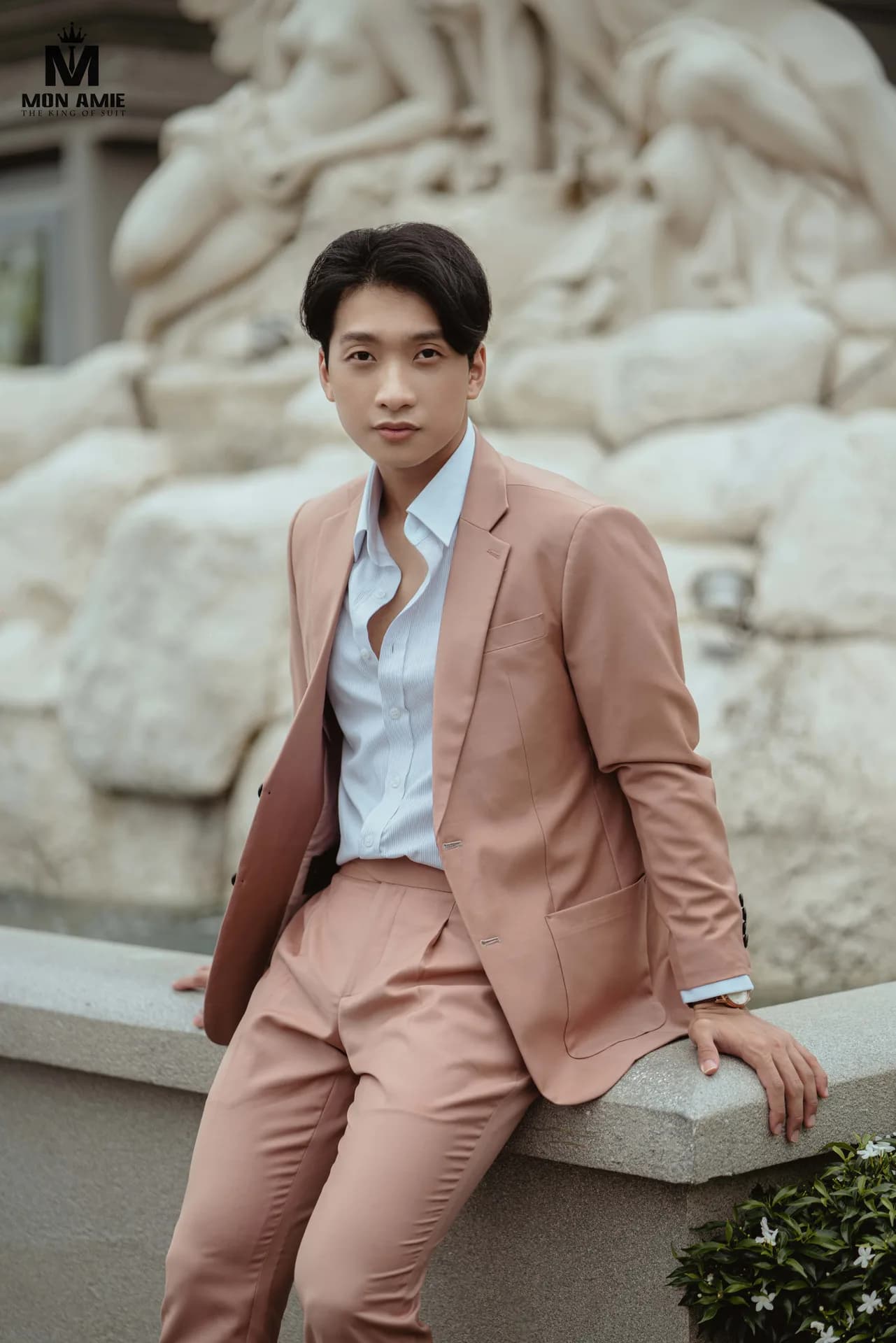
A lovely blazer, a lovely shirt, but worn together the shirt collar gets pressed under the lapel and crumples like a dry leaf. It happens so often that we consider it the “default mistake” of anyone new to wearing a blazer with a shirt. Two good-looking pieces do not automatically become a good-looking outfit: the collar, the color and the pattern have to talk to one another.
Quick answer
When pairing a blazer with a shirt, choose the shirt collar to suit the blazer's lapel: a medium notch lapel suits a semi-spread collar, peak lapels or a double-breasted jacket suit a spread collar, and a relaxed blazer suits a button-down collar. White and light blue shirts suit every blazer. For pattern, one plain piece and one patterned piece; with no tie, undo one button.
Which shirt collar suits which blazer lapel?
The shirt collar and the blazer lapel sit right next to each other at the neck, so they have to balance in size and opening angle. The table below is how we usually guide customers at the showroom:
| Blazer lapel | Suitable shirt collar | Feel | Note |
|---|---|---|---|
| Medium notch lapel (most common) | Semi-spread (medium opening) | Balanced, versatile | Suits every business occasion |
| Peak lapel, wide lapel, double-breasted jacket | Spread or cutaway (wide opening) | Formal, strong | Suits a large tie knot |
| Narrow notch lapel, modern blazer | Small to medium collar or button-down | Clean, young | Avoid an oversized collar that crowds out the lapel |
| Relaxed blazer, soft fabric | Button-down (collar fastened with buttons) | Casual, easygoing | Suits wearing no tie; the collar rolls nicely on its own |
| Band-collar blazer or no lapel | Band-collar shirt or T-shirt | Minimalist | See also our article on the mandarin collar suit |
If you would like to go deeper into each collar style, the article Men's Shirt Collar Styles: Match Your Face and Tie Knot covers them in full.
Shirt color with a blazer
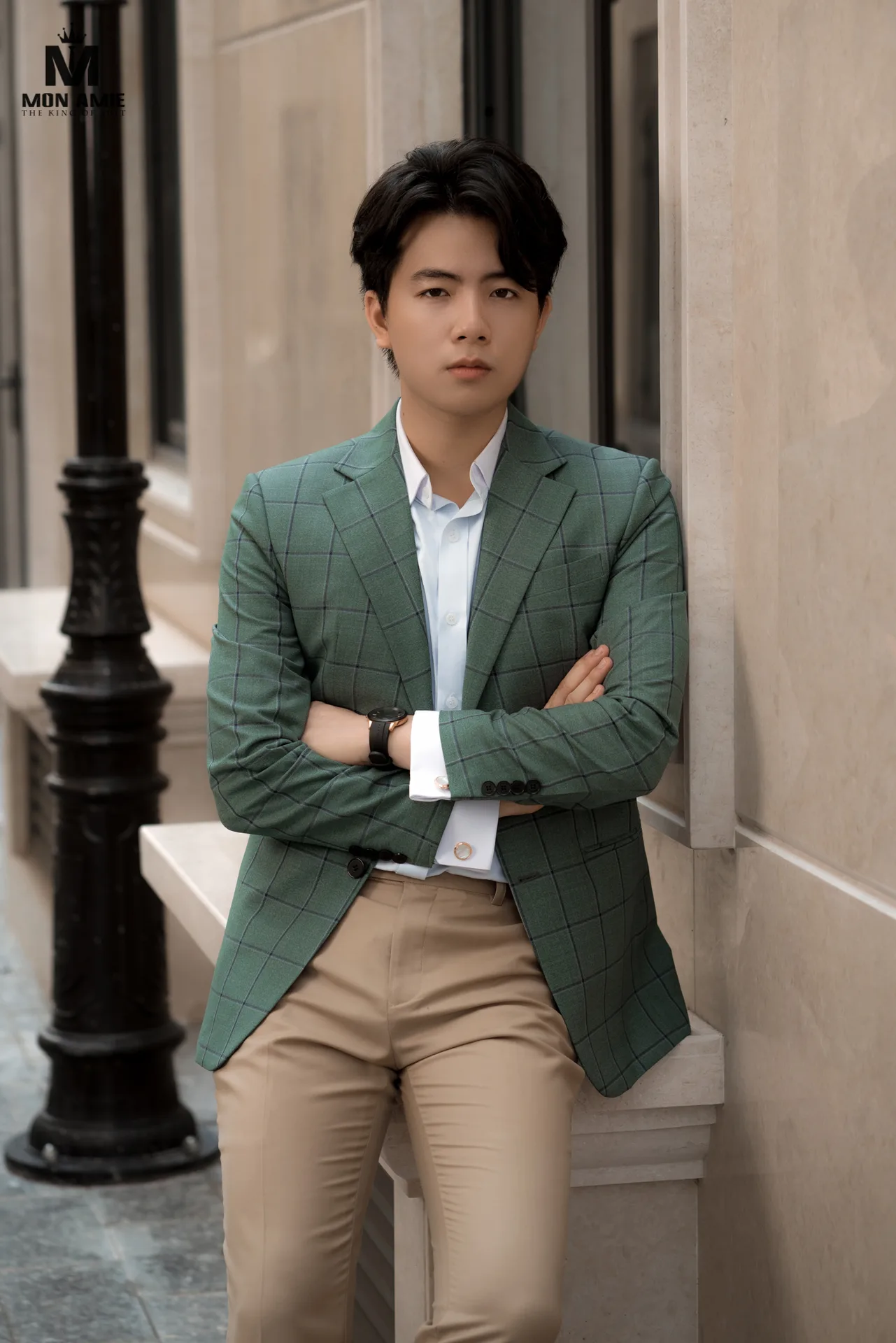
Choose the shirt color according to the blazer color and your skin tone. A few easy formulas:
| Blazer color | Shirts to choose | Shirts to think twice about |
|---|---|---|
| Navy | White, light blue, pale pink, blue-and-white stripe | Dark navy in the same tone (it easily disappears) |
| Grey | White, sky blue, pale pink, a hint of lilac | Grey in the same tone (looks washed out) |
| Beige, cream | Light blue, white, pale pink | Cream in the same tone (looks pallid) |
| Brown | Cream, white, light blue | Dark brown in the same tone |
| Black | White, light blue; black for a minimalist look | Shirts in colors that are too bright |
| Check pattern | Plain: white, light blue, a color taken from the pattern | Another patterned shirt |
A white shirt is the safest “companion,” but if you find the overall look easily turns flat, try sky blue. This color suits most skin tones and brightens any blazer. With a white shirt, the quality of the fabric matters more than the color: medium-thick cloth, not see-through, pressed flat. Do not skip our article How to Choose a Men's White Shirt if you are looking for a foundation shirt.
Pattern: stripes, checks, oxford
The simplest rule: one plain piece, one patterned piece. A plain blazer with a striped shirt, or a check blazer with a plain shirt. If you want to risk two patterns, make sure they differ in scale: a large pattern with a small one, and never two patterns of the same size.
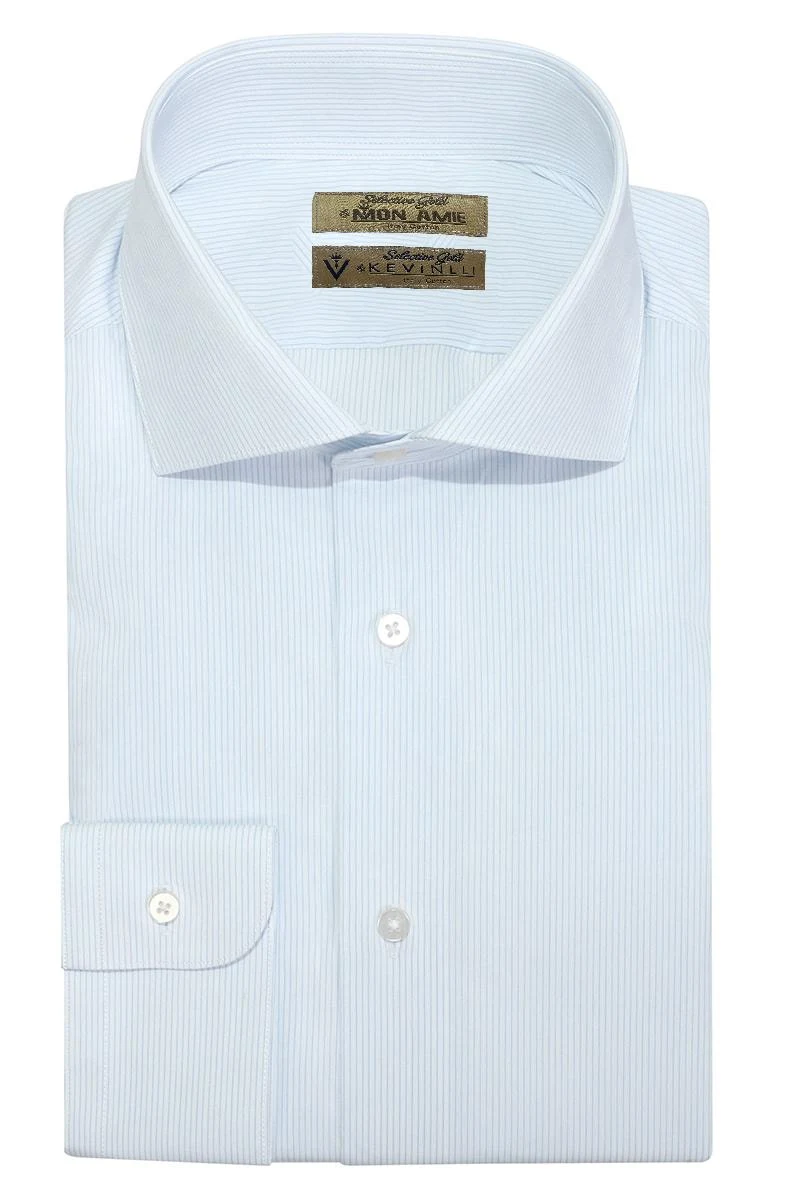
- Fine-striped shirt (pinstripe, blue-and-white stripe): elegant and suited to the office; with a plain blazer it is a safe way to add some life.
- Small-check shirt: suits a navy or grey blazer and creates a relaxed feel.
- Oxford shirt (textured basket weave, usually with a button-down collar): suits a relaxed blazer, chinos and loafers; the classic “weekend” piece.
- Bold-pattern, bright shirt: use only when the blazer is very plain and dark.
Wearing a blazer with a shirt: with a tie and without
With a tie
Choose a semi-spread or spread collar with collar stays so that the collar stands upright. Fasten the top button and knot the tie to balance the collar opening. The shirt collar sits neatly inside the lapels and is not pressed under them.
Without a tie
Undo the top button (two if the collar is very tall) and let a soft collar lie flat on the lapels. A button-down collar or one in a soft fabric suits this better than a stiff collar. Make sure the collar does not “pop up” like two wings: if the shirt collar stands up on its own, use a collar with moderate stays or switch to a button-down.
Hem and sleeves
- Untucked shirt: choose a shirt with a moderately short hem so that it does not extend past the hem of the blazer.
- Tucked-in shirt: suits the office; the blazer should be long enough to cover the waistband.
- Shirt sleeves: they should show about 1–1.5 cm beyond the blazer sleeve for a clean line.
If you need wider guidance on wearing a shirt with a suit, the article How to Wear a Shirt with a Suit: Collar, Cuffs and Fit Done Right is a good companion.
Common mistakes when pairing a blazer and a shirt
- A shirt collar too small, “swallowed” by the blazer lapel. Choose a collar that suits the lapel, as in the table above.
- A shirt that is too loose. Under a blazer, loose shirt fabric wrinkles and billows, and the blazer loses its line.
- Two patterns of the same scale at once. It creates a busy effect.
- A stiff-collar shirt with no tie. A stiff collar stands up by itself and looks lopsided when left open.
- Shirt sleeves much longer or shorter than the blazer sleeves. Too long and they hide the whole blazer sleeve; too short and the wrist looks cut off.
- Forgetting to press the collar and shoulders. A crumpled collar under a blazer is often what makes people mark you down.
Tips from Mon Amie's master tailors
When trying on a blazer, wear the very shirt you plan to bring with it. A blazer shoulder that looks great over a thin shirt can feel tight when you switch to a thicker one. And if you often wear a tie, try both ways, tied and untied, to see whether the blazer “tolerates” more than one formula. You can choose from more fabric samples and blazer styles in our fabric library or preview them on the product page.
If you want a blazer that fits the shoulder precisely and a collar that sits nicely with a shirt, the bespoke tailoring journey lets the master tailor adjust to each shoulder line and neckline.
Frequently asked questions
Which collar should I choose for a blazer with a white shirt?
A semi-spread collar is the safe choice for most lapels, with or without a tie. If the blazer has peak lapels or is double-breasted, choose a spread collar. With a relaxed blazer, a button-down collar in oxford cloth will look the most natural.
Does a shirt worn with a blazer need to be tucked in?
Not necessarily. With a business blazer, tucking in is neater. With a relaxed blazer, you can wear the shirt out, but its hem needs to be moderately short. Choose a shirt with a straight or slightly curved hem, and avoid a long, drooping tail.
How is wearing a shirt with a suit different from wearing one with a blazer?
A suit generally calls for a more formal shirt: a collar with stays, long sleeves of the right length, often with a tie. A blazer allows a more relaxed shirt such as an oxford, a button-down or an open collar. The general principles (the collar sitting neatly, the sleeves showing about 1–1.5 cm) are the same.
Does a striped shirt work with a blazer?
Yes, if the blazer is plain or has a very small pattern. With a check blazer, choose a plain shirt. If you want to combine two patterns, they must clearly differ in scale.
Closing thoughts
A blazer with a shirt is the most basic pair in a gentleman's wardrobe, but also the one most easily thrown off. Choosing the collar by the lapel, the color by the blazer and keeping to the rule of “one plain, one patterned” is enough to keep your blazer looking neat. If you would like to try several collar styles with a blazer, visit the Mon Amie showroom.