
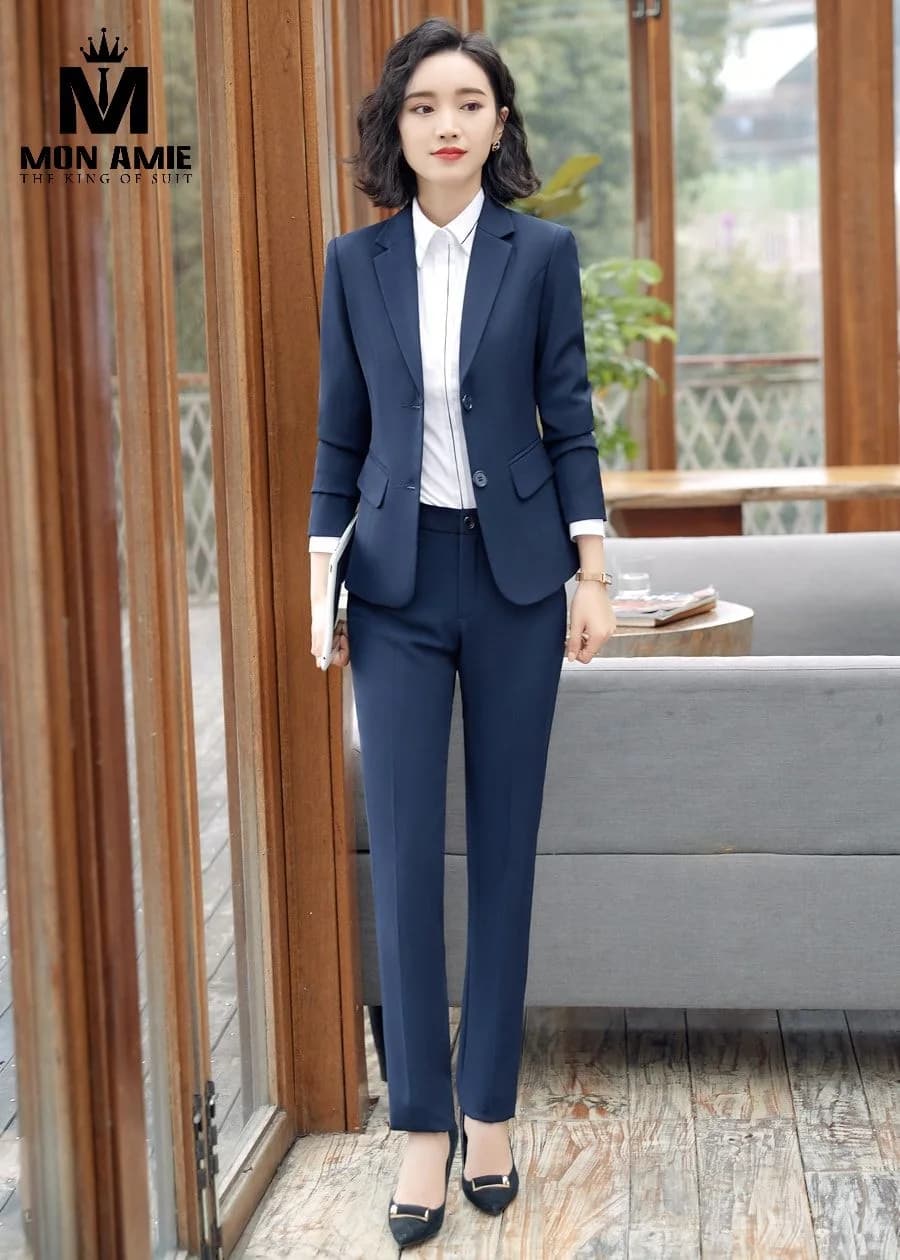
The navy blazer looks flawless on the hanger. But after a three-hour meeting, both elbows are creased like crumpled paper, the shoulders have sagged and the back has started to “break” into folds. The fault rarely lies in the stitching; most of the time it lies in the cloth. Choosing the right premium women's suit fabric from the start decides how elegant your suit looks and how long it holds its shape.
Quick answer
Premium women's suit fabric should be wool or a wool blend with a fine yarn, a firm weave, a soft drape and 2–5% stretch. Wool crepe and stretch wool suit everyday work, tweed suits events, and silk-wool blends suit evening occasions. A weight of about 220–280 g/m² is the comfortable range for Saigon's climate.
Four criteria for judging women's suit fabric
A women's suit follows the body, with many darts and many curves. That is why the criteria for choosing cloth differ a little from those for a men's suit.
Drape. Cloth that is too stiff feels “boxed in” at the shoulders and bust; cloth that is too soft loses its shape after a few wears. Test it by holding up one corner of the cloth and letting it fall: good cloth drops into soft folds and does not balloon outwards. Drape comes mainly from tightly twisted yarn and the weight of the cloth.
Stretch. You reach for documents, sit in cars, climb stairs. Cloth with 2–5% elastic fibre (elastane) lets the jacket move with your body while still holding its shape. Beyond that level, the surface tends to turn shiny, stuffy and quickly “tired”.
Low creasing, quick recovery. Real wool recovers its creases by itself thanks to the natural crimp of the fibre. There is a five-second test: clench a corner of the cloth in your palm, count to five, then let go. Good cloth will flatten out almost completely within a few dozen seconds.
Breathability. Saigon is hot and humid, yet meeting rooms are cold. The cloth has to be able to “breathe”: fine yarn, an open weave, a light lining. That is why a thick polyester cloth, however well it holds its shape, still leaves the wearer sweltering after a morning.
What weight suits Saigon?
Fabric weight (g/m²) is the number few people ask about, yet it decides how a suit feels on the body. Cloth below roughly 200 g/m² is light and cool, but it creases easily and struggles to hold the shoulder line. Cloth above 300 g/m² holds its shape very well, but it is hot. The 220–280 g/m² range balances both: firm enough to stand as an outer jacket, light enough not to stifle you as you move around at midday. When you try a jacket on, imagine yourself waiting for a ride outdoors, not only sitting in an air-conditioned room.
Five premium women's suit fabrics worth considering
| Fabric | Feel and look | Suits | Notes |
|---|---|---|---|
| Wool crepe | Fine, matte, softly pebbled surface that drapes beautifully | Work, meetings, interviews | Low creasing, fairly breathable, no shine |
| Stretch wool blend | Soft, close-fitting, easy to wear all day | People who are on the move a lot | Choose a moderate share of elastane |
| Tweed (bouclé) | Thick, textured, classic look | Events, cool seasons, cold rooms | Heavy and warm, less suited to the sun |
| Silk-wool blend | Smooth sheen, soft drape | Evening parties, events | Needs more careful handling |
| Wool-linen blend | Breathable, natural texture | Hot days, relaxed office | Light creasing is a trait, not a flaw |
Wool crepe: the safe choice for work
Crepe is a weave that uses very tightly twisted yarn, so the surface has a faint ripple like fine grains of sand. As a result the cloth drapes softly, resists creasing and hides small wrinkles. For businesswomen who attend meetings and get around a lot, this is the first fabric worth trying. Black, navy and charcoal look very refined thanks to the matte surface.
Stretch wool blend: comfortable from morning to night
If you often ride in cars, sit for long periods or dislike a jacket that feels “tight”, wool blended with a little elastane is the right choice. Just remember: stretch is for comfort, not for wearing a jacket smaller than your measurements.
Tweed: for occasions that call for classic beauty
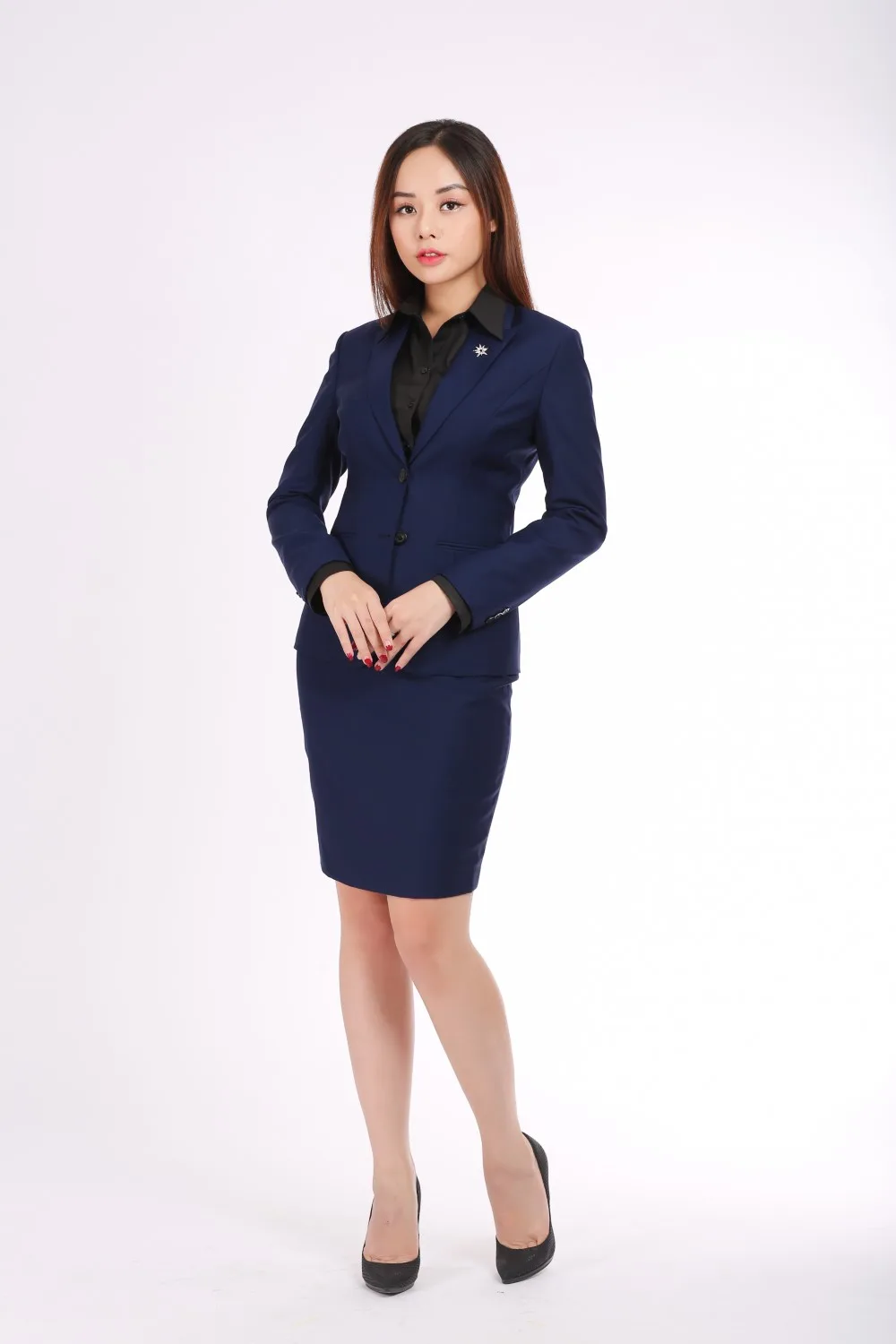
Tweed has a raised, nubby texture and many yarn colours woven together, so it looks full of “depth”. A short jacket paired with a pencil skirt is the familiar formula. Just mind the weight: in Saigon, tweed suits events in cold rooms better than workdays in the sun.
Silk-wool blends and wool-linen blends
A silk-wool blend gives a smooth sheen and a soft drape, which suits an evening suit. A wool-linen blend is the opposite: breathable, light, with a relaxed air. Both need more careful handling, so ask how to look after them before you decide. If you are torn between the types, the article what fabric women's suits are made from explains each material in more detail.
Choosing fabric by your situation
- Everyday office work: wool crepe or stretch wool in a deep colour. Wearable for many occasions and rarely needs cleaning.
- Business travel, lots of flights: stretch wool blend, preferably a type that creases little when folded into a suitcase.
- Evening events, year-end parties: silk-wool blend or tweed, with a standout accessory.
- Hot days, meeting clients outdoors: thin wool or wool-linen blend, with a light lining.
On colour, you can read how to choose the colour of women's suit fabric to find a tone that suits your skin and your work.
Where to buy good women's suit fabric?
There are two routes, each with a gain and a loss.
Buy cloth by the metre at a fabric market or fabric shop, then take it to be sewn. You get a wide choice of colours and flexible prices. In return you must control the fibre content, shrinkage, cloth width and how well it suits the design yourself, which is easy to get wrong.
Choose the cloth at a made-to-measure tailor. The cloth and the tailor are in the same place: if the cloth does not suit the design, the cutter will tell you before cutting. At Mon Amie, you choose cloth from the fabric library and a stylist advises you according to your figure, the occasion and your budget. Our made-to-measure price list is divided into three lines, Essential, Signature and Heritage, which you can see at the price list; the exact price for each women's design is quoted at the measurement appointment.
Wherever you buy, bring these five checks with you:
- Read the composition label: what are the percentages of wool, polyester and elastane?
- Do the five-second crush test described above.
- Look at the cloth in natural light, not only under shop lighting.
- Stroke against the direction of the yarn to see whether the surface fuzzes or pills.
- Ask about cloth width and shrinkage, especially for cloth containing linen or silk.
Common mistakes when choosing women's suit fabric
- Choosing by the colour on a screen. Photos always shift the tone. Touch and look at the real cloth.
- Favouring shiny cloth because it seems luxurious. A business suit looks refined thanks to a matte surface and smooth yarn, not thanks to shine.
- Choosing cloth that is too thin for an outer jacket. Cloth that is too thin cannot hold the shoulder line and easily shows the inner structure.
- Forgetting the lining. A poor lining makes the suit hot and makes it cling to the layer beneath. Ask clearly about the lining material before you commit.
Frequently asked questions
Which cloth should I choose for a made-to-measure women's suit to wear year-round in Saigon?
Wool crepe or a thin stretch wool blend, at about 220–280 g/m², is the most comfortable choice. Add a breathable lining and you can wear it both in cold rooms and out on the street.
Does good women's suit fabric have to be 100% wool?
No. Wool blended with a moderate share of synthetic fibre can be more durable, crease less and be easier to care for. What matters is that the wool share is high enough and the fibre quality is good, not that it reaches 100%.
Should I choose tweed to wear to the office?
Yes, if your office is cold and your work does not require much movement outdoors in the sun. Tweed suits important meetings, events and the cool season best.
Where should I buy women's suit fabric, and should I buy cloth myself and take it to be sewn?
Buying cloth yourself gives you more choice, but you have to control the quality and how well it suits the design yourself. Choosing cloth at a made-to-measure tailor lets the tailor check the cloth before cutting and avoids mismatched expectations.
Closing thoughts
A premium women's suit fabric does not need to show off. It drapes correctly, creases little, and lets you forget you are wearing a suit. If you want to feel each material before deciding, you can book a measurement appointment at a showroom and ask a stylist to lay the cloth samples side by side for easy comparison.