
Monday's stand-up, Wednesday with a regular client, Friday at a partner's office. Five days, five kinds of work, yet you can get through all of them with just two jackets. That is the strength of a well-chosen men's office blazer: serious enough to earn respect, comfortable enough that you never feel boxed in.
Quick answer
A blazer can stand in for a suit when the dress code is business casual, or on days without formal client meetings. Choose a navy or charcoal blazer in tightly woven wool with a semi-structured cut, worn with trousers in a different colour. For board meetings, signings and formal ceremonies, a full suit is still the right call.
How a blazer differs from a suit
A suit is a jacket and trousers cut from the same cloth and worn as a set. A blazer is a standalone jacket, usually with more relaxed details such as dark metal buttons, patch pockets or a soft shoulder, and designed to be worn with trousers in a different colour. That is why a blazer can be worn on its own, whereas the jacket of a suit, worn separately, often looks as if it is “missing its trousers”.
When a blazer can replace a suit in the office
| Situation | Can a blazer replace a suit? | Notes |
|---|---|---|
| Internal meetings, stand-ups | Yes | Pair with trousers, no tie needed |
| Meeting a regular client | Yes | Clean shirt, leather shoes, a tie if you like |
| Meeting a new partner for the first time | Depends on the industry | In finance and law, wear a suit |
| Job interview | Depends on the industry | Fine in creative fields, wear a suit in traditional ones |
| Board meetings, signings | No | Wear a full suit |
| Opening ceremonies, formal events | No | Wear a suit or tuxedo according to the dress code |
A small rule: if you are unsure, ask again about the dress code. To understand the levels of dress code, you can read about business formal dress code.
Five formulas from Monday to Friday
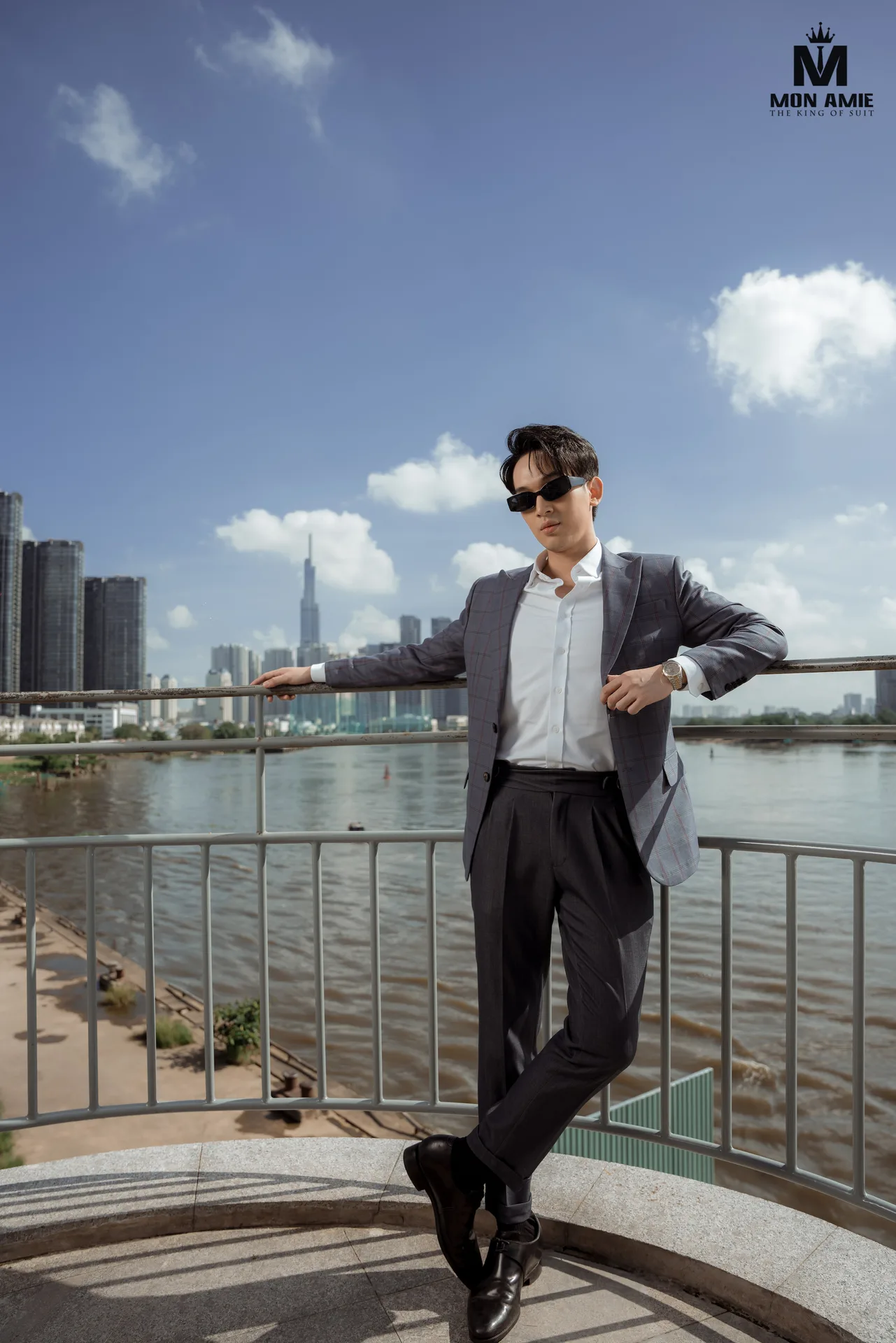
With just two blazers (navy and charcoal) and a few pairs of trousers and shirts, you have the whole week covered:
- Monday (stand-up): navy blazer, white shirt, charcoal trousers, black derby shoes. Neat and trustworthy.
- Tuesday (desk work): charcoal blazer, light blue shirt, navy trousers, dark brown loafers.
- Wednesday (receiving clients): navy blazer, fine-striped shirt, beige trousers, plain tie. Polished yet approachable.
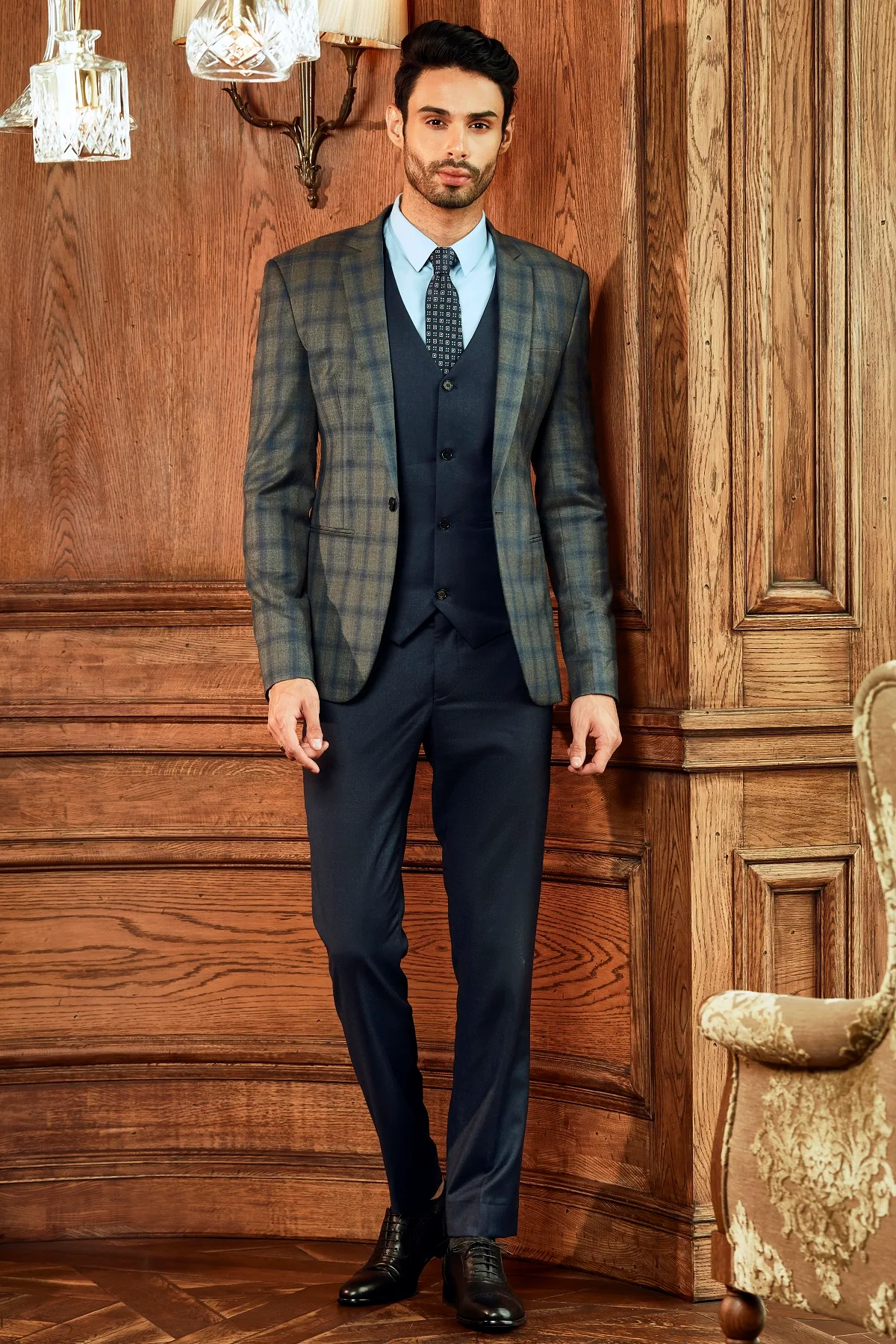
- Thursday (an easier day): light check blazer in brown or grey, plain shirt, grey trousers, no tie.
- Friday (relaxed): soft-shouldered blazer, oxford shirt or polo, chinos, loafers or minimalist white sneakers.
Colours and fabrics that hold their shape
A work blazer is worn several times a week, so fabric matters more than looks.
- Colour: navy, charcoal, mid-grey and dark brown. These four are the easiest to pair. Black is for evenings more than for daytime office wear.
- Fabric: tightly woven wool (worsted) holds its shape and recovers creases well. Cloth with a lot of polyester turns shiny and breathes poorly, so you should avoid it.
- Hot season: open-weave wool or a linen-wool blend, with a half lining to keep from overheating.
- Pattern: plain or very fine stripes for the office. Large checks and bold stripes are for relaxed days.
You can browse many fabrics in the cloth library to choose one that is both cool and durable.
The men's office blazer in Saigon's climate: how to wear it without overheating
Wearing a blazer in hot, humid weather is a real puzzle for city office workers. A few practical fixes:
- Choose the cloth first, the style second: open-weave wool or a linen-wool blend is light yet still holds its shape.
- Half lining instead of full lining: one fewer layer to trap heat, without changing how the jacket looks.
- Hang the blazer at work: travel in a T-shirt or shirt and only put the blazer on once you reach the office, so you are not drenched in sweat before meeting a client.
- Carry a spare shirt if your schedule has several meetings back to back.
These details are small, but they help a men's office blazer last longer and keep you more comfortable on the sticky days.
Details that make a blazer look professional
- Notch lapel of medium width: classic, easy to pair with a tie, suits every build.
- Two buttons: balanced and easy to fasten when seated.
- Jetted pockets, with or without flaps: neat, not bulging at the hips.
- Natural or lightly padded shoulder: polished yet comfortable.
- Length that covers the seat, sleeve reaching the wrist bone: the foundation of every blazer.
- Dark plastic or horn buttons: discreet, not showy.
A tip from Mon Amie's master tailors
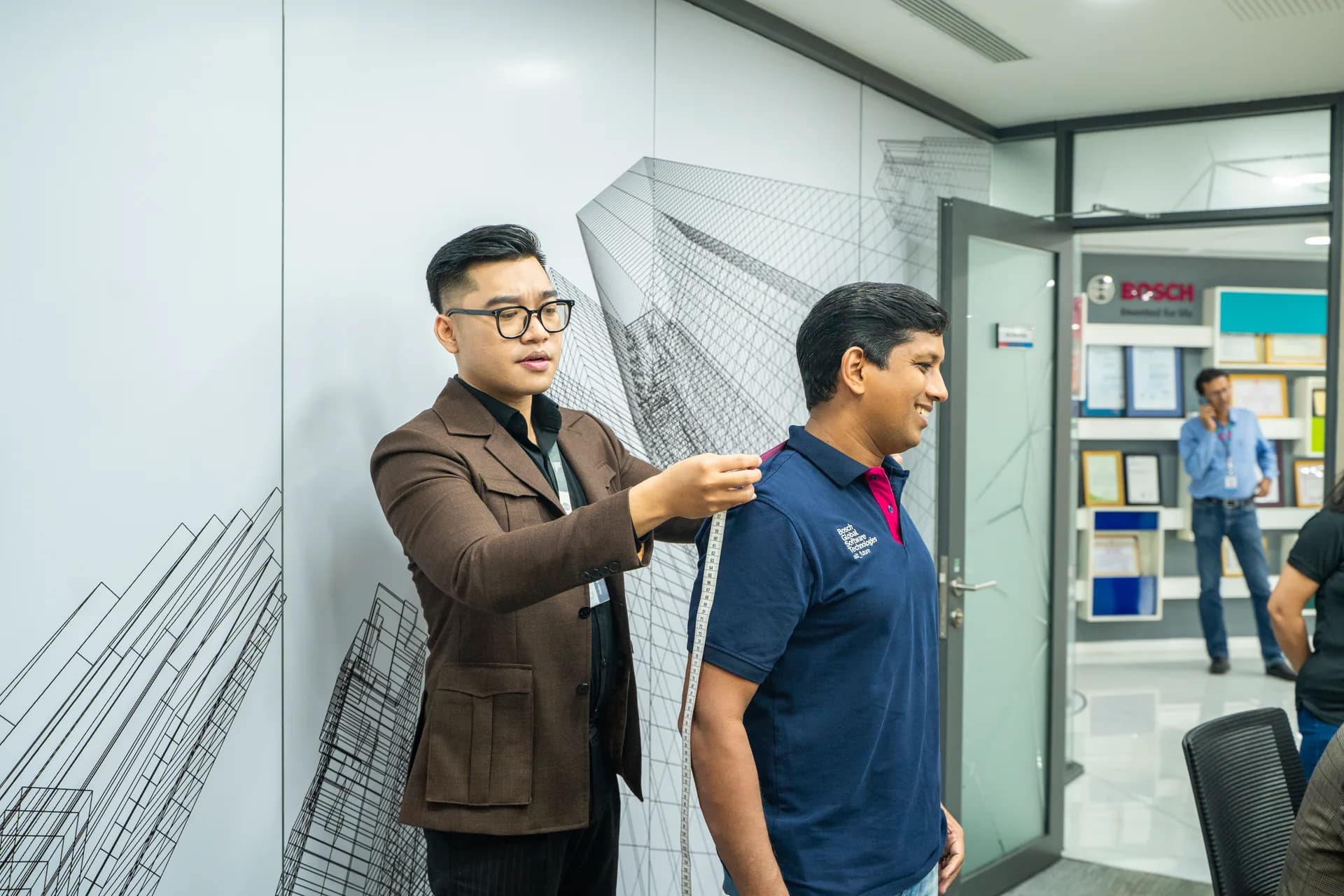
A work blazer is a jacket you sit in more than you stand in. So at the baste fitting, sit down, reach forward as if driving, and type on a keyboard. A jacket that looks good standing but pulls tight when you sit is the wrong jacket. Second: do not wear one blazer all week. Alternate two so the wool can rest, and the jackets will last longer. With bespoke tailoring, you have a baste fitting directly with the master tailor to check exactly these points. For businesses that want to train a whole team in how to dress, Mon Amie also runs a dressing etiquette workshop, in which an expert shows people how to choose the cut, match colours and select accessories right in the room.
Common mistakes
- Choosing a blazer that is too short or too loose “for comfort”, which ends up looking unprofessional.
- Shiny metal buttons that make the jacket look like a uniform.
- Stuffing the pockets, which throws the cut off.
- Pairing the blazer with trousers that are close to the same colour but not quite, which looks like a suit that has gone out of tune.
- Owning just one blazer and wearing it again and again all week.
Frequently asked questions
Can an office blazer replace a suit?
Yes, on days without formal meetings. If the dress code is business casual, a blazer with tailored trousers is entirely appropriate. For serious occasions, wear a suit.
How is a men's blazer different from an ordinary jacket?
A blazer has structure: shoulders, lapels, a lightly built-up chest, buttons and pockets like a suit jacket. An ordinary jacket has no canvas and no classic lapel.
What is a men's blazer-style suit jacket?
It is a general name for a blazer cut like a suit jacket. The difference is that a blazer is made separately and does not come with trousers in the same cloth, as a suit does.
Is a men's blazer too hot in Saigon?
It can be, if the cloth is thick and fully lined. Choose open-weave wool or a linen-wool blend, a half lining, and a slightly lighter colour.
Can I wear a blazer with jeans to work?
Yes, if the office allows it. Choose dark blue jeans with no rips, worn with a plain shirt and leather shoes, and avoid faded jeans.
Start with two blazers
If you are building a wardrobe around a men's office blazer, navy and charcoal are two sensible starting points. You can read more about how to choose a men's blazer, or make an appointment through the booking page so a master tailor can measure your shoulders and advise on a cut suited to your work.