
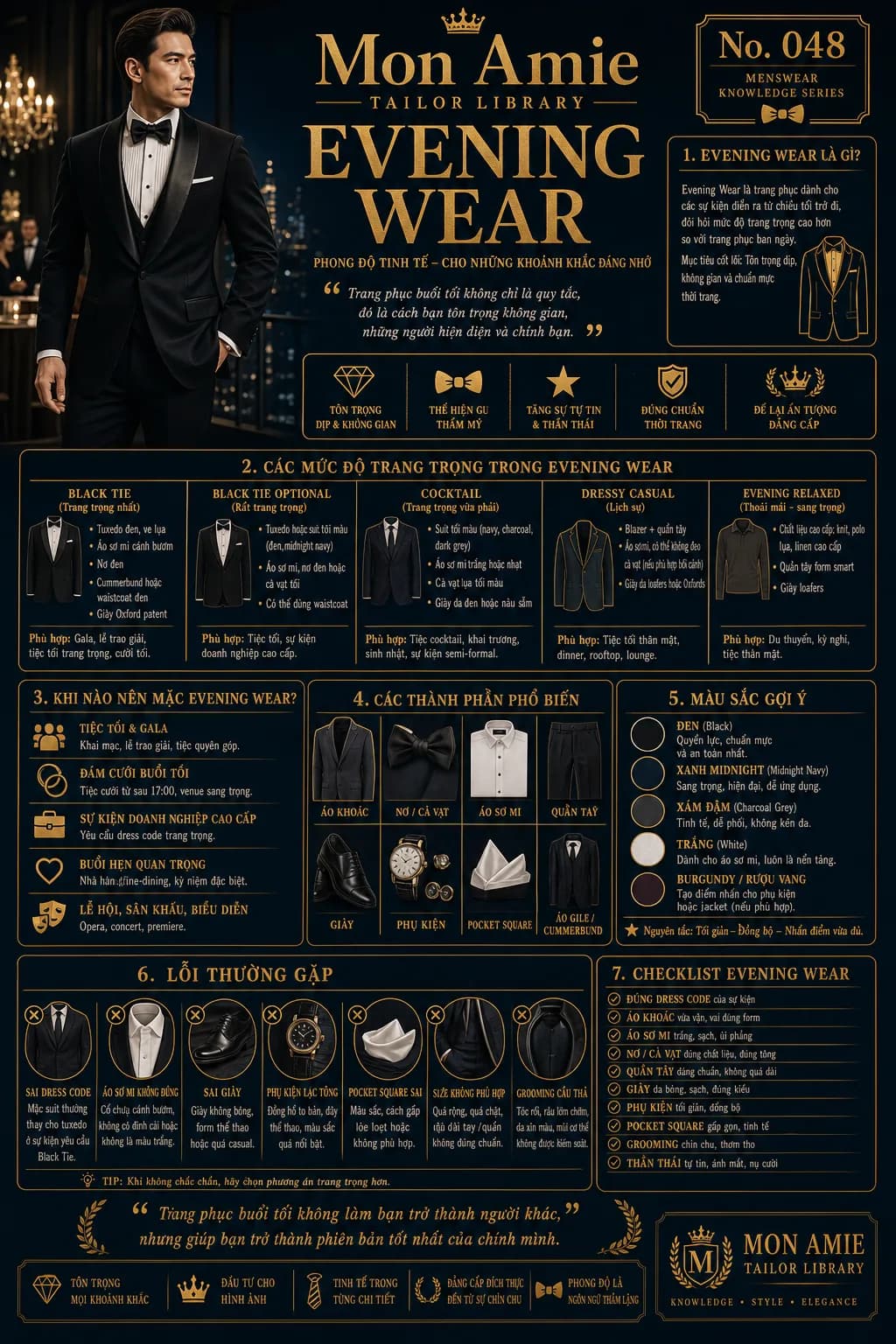
Evening wear is what you put on for occasions that begin in the late afternoon or after, and it asks for a higher degree of formality than daytime dress. Its purpose is not display but respect — for the occasion, for the room, and for the conventions of dress. As Mon Amie often tells clients: evening dress is not merely a set of rules, it is how you honour the room, the people in it, and yourself.
Why evening dress matters
A correctly judged evening outfit does several things at once:
- It shows respect for the occasion and the venue.
- It expresses your personal taste with restraint.
- It lends confidence and bearing as you enter the room.
- It meets international convention and spares you the discomfort of being out of place.
- It leaves a considered impression on partners, friends and everyone present.
Evening is when the light softens and cloth and cut show themselves more plainly than by day. A well-made suit therefore carries far more weight at night than the same suit does at noon.
The levels of formality in evening wear
Evening dress is not a single standard. The trade recognises five levels, from the most formal down:
- Black Tie (the most formal): black tuxedo with silk lapels, wing- or pleated-front shirt, black bow tie, black cummerbund or waistcoat, patent Oxfords. For galas, award ceremonies, formal dinners and evening weddings.
- Black Tie Optional (very formal): a tuxedo or a dark suit (black, midnight navy), shirt with a black bow tie or a dark tie, a waistcoat if you wish. For evening receptions and senior corporate events.
- Cocktail (moderately formal): a dark suit in navy, charcoal or dark grey; white or pale shirt, dark silk tie, black or dark brown leather shoes. For cocktail parties, openings, birthdays and semi-formal events.
- Dressy Casual (smart): blazer with tailored trousers, shirt with or without a tie depending on the setting, leather loafers or Oxfords. For intimate dinners, rooftop gatherings and lounges.
- Evening Relaxed (relaxed but refined): fine materials such as knitwear, silk polos or high-grade linen; smart tailored trousers, loafers. For yachts, holidays and informal gatherings.
One rule above all: read the dress code on the invitation and never dress below it. When in doubt, choose the more formal option.
When evening wear is called for
Prepare properly for these occasions:
- Dinners and galas: opening ceremonies, award nights, fundraising evenings.
- Evening weddings: receptions beginning after 17:00 at a refined venue.
- Senior corporate events: functions with a stated formal dress code.
- Important private occasions: fine-dining restaurants, significant anniversaries.
- Culture and performance: opera, concerts, premieres.
The components of a complete evening outfit
A full evening look is built from these pieces: the jacket or tuxedo, a bow tie or tie, the shirt, tailored trousers, leather shoes, accessories (watch, cufflinks), a pocket square, and a waistcoat or cummerbund. Every element must match the chosen level of formality — an impeccable tuxedo loses all its value alongside trainers or a rubber-strap watch.
The classic evening palette:
- Black: authoritative, correct, the safest choice of all.
- Midnight navy: refined, modern, easy to wear — under party lighting it can read deeper than black itself.
- Dark charcoal: subtle, easy to combine, kind to every complexion.
- White: for the shirt, always the foundation.
- Burgundy: a point of interest in accessories or, where appropriate, a jacket.
The governing principle: restrained, coordinated, with just enough emphasis.
Common mistakes in evening dress
- Misreading the dress code: an ordinary suit where Black Tie was specified.
- The wrong shirt: a wing collar without studs, or a shirt that is not white.
- The wrong shoes: unpolished, athletic in shape, or simply too casual.
- Out-of-key accessories: oversized watches, sports straps, colours that shout.
- A poorly judged pocket square: garish colour or an unsuitable fold.
- The wrong size: too loose, too tight, sleeves or trousers off the mark.
- Careless grooming: untidy hair, uneven stubble, dull skin — the finest suit counts for nothing if the wearer is unkempt.
Before leaving the house, run a quick check: correct for the event's dress code; jacket fitting cleanly with shoulders in place; shirt white, clean and pressed; bow tie or tie in the right material and tone; trousers well cut and not too long; shoes polished, clean and of the right style; accessories minimal and coordinated; pocket square neatly and discreetly folded; and finally your bearing — confidence, eye contact, a smile.
A word from Mon Amie's artisans
For clients commissioning evening wear, Mon Amie attends first to the fit through the shoulders and chest, because evening lighting reveals every surplus fold in the body of a jacket. If you are starting out, a made-to-measure midnight navy suit is the wisest investment: it answers Black Tie Optional, Cocktail and corporate evenings alike. And when you are torn between two options, take the more formal one — being slightly overdressed is never a fault.
Evening dress does not make you someone else; it helps you become the best version of yourself. If you are preparing for an important occasion, we invite you to book an appointment at one of Mon Amie's five showrooms in Ho Chi Minh City, or read about the tailoring process beforehand so your first visit is a fuller one.