
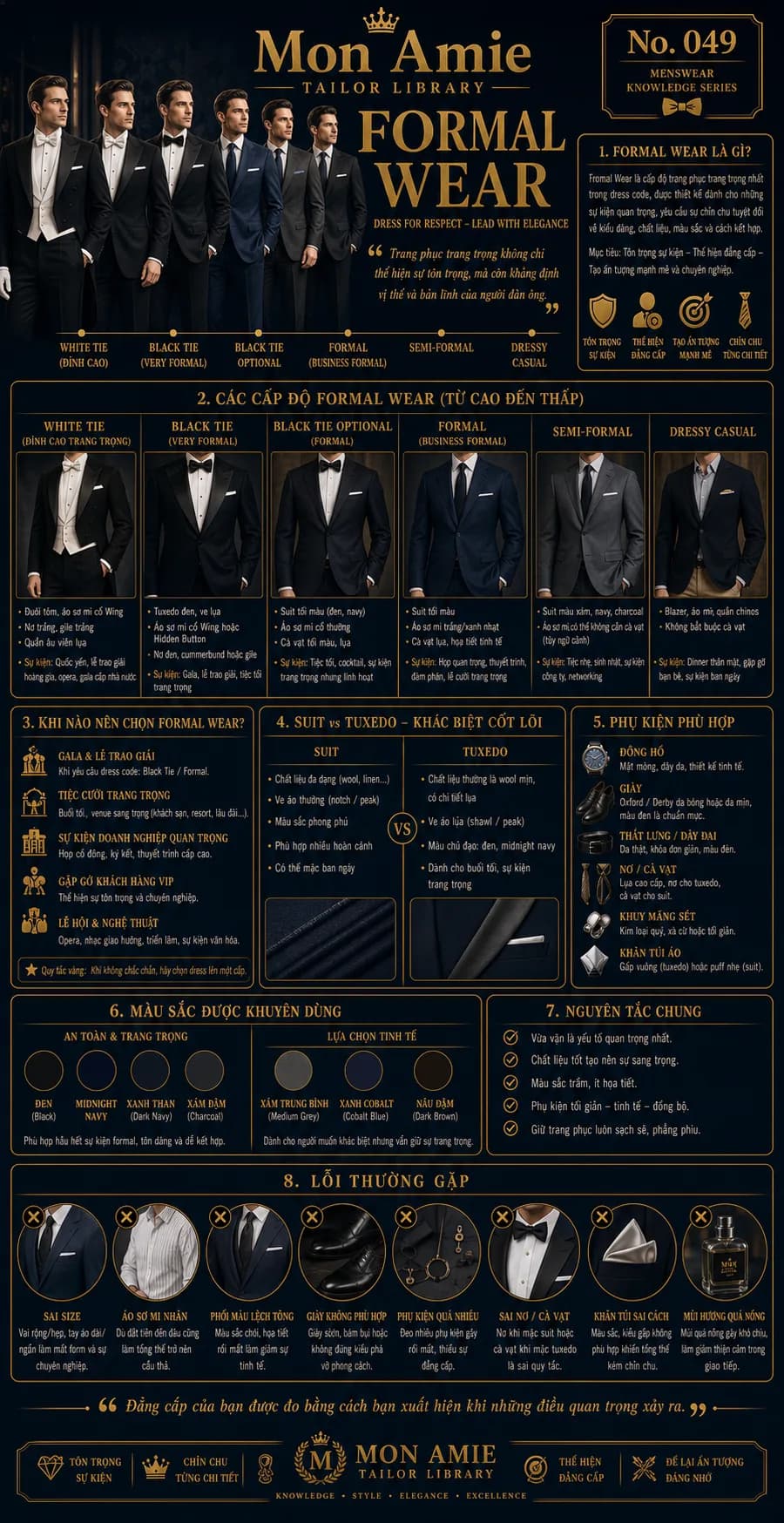
Formal wear is the highest tier within the dress code system, intended for significant occasions that demand complete precision in cut, cloth, colour and combination. Wearing formal dress correctly not only shows respect for the occasion, it affirms a man's standing and self-possession. In this article, Mon Amie walks you through every level of formal wear, the difference between a suit and a tuxedo, and the mistakes worth avoiding.
The levels of formal wear, from highest to lowest
Formal dress is not one uniform block but a clear hierarchy. Understand it and you will never turn up out of step with the occasion:
- White Tie — the pinnacle of formality. Tailcoat, wing-collar shirt, white bow tie, white waistcoat, trousers with silk braid. For state banquets, royal award ceremonies, opera and state galas.
- Black Tie — very formal. Black tuxedo with silk lapels, wing-collar or hidden-placket shirt, black bow tie, cummerbund or waistcoat. The standard for galas, award ceremonies and formal dinners.
- Black Tie Optional. A dark suit (black, navy), standard-collar shirt, dark or silk tie. For evening receptions, cocktails and formal but more flexible occasions.
- Formal (Business Formal). A dark suit, white or pale blue shirt, silk tie with a discreet pattern. For important meetings, presentations, negotiations and formal weddings.
- Semi-Formal. A suit in grey, navy or charcoal; a tie is optional depending on context. For light receptions, birthdays, company events and networking.
- Dressy Casual. Blazer, shirt, chinos, no tie required. For intimate dinners, meeting friends and daytime events.
Mon Amie's golden rule: when in doubt, dress one level up. Being slightly more formal is always safer than being underdressed.
When to choose formal wear
Not every occasion calls for a tuxedo, but some make formal dress all but obligatory:
- Galas and award ceremonies — when the invitation specifies Black Tie or Formal.
- Formal weddings — particularly evening receptions at refined venues: hotels, resorts, châteaux.
- Significant corporate events — shareholder meetings, signing ceremonies, senior presentations.
- Meetings with VIP clients — a mark of respect and professionalism.
- Culture and the arts — opera, symphony, exhibitions, cultural occasions.
How a suit differs from a tuxedo
This is the question Mon Amie is asked most often. At a glance the two look similar, but the essential differences lie in the details:
- Suit: a wide range of cloths (wool, linen and more), notch or peak lapels in the same fabric as the body, a broad colour range, appropriate to many settings and wearable by day.
- Tuxedo: usually fine wool, with distinctive silk detailing — shawl or peak lapels in silk, a silk braid down the trouser leg. Predominantly black or midnight navy, reserved for evening and formal occasions.
In short: a suit is versatile dress, a tuxedo is ceremonial dress. You can wear a suit to the office every day, but a tuxedo should appear only once the evening lights come on.
Accessories and correct colours
Formal wear calls for coordinated, restrained accessories:
- Watch: a slim case, leather strap, refined design — avoid bulky sports watches.
- Shoes: Oxfords or Derbies in polished or fine leather, black being the standard.
- Belt: real leather, a simple buckle, matched to the shoes.
- Bow tie or tie: fine silk — a bow tie with a tuxedo, a tie with a suit.
- Cufflinks: precious metal, mother-of-pearl or a minimal design.
- Pocket square: a flat square fold with a tuxedo, a gentle puff with a suit.
On colour, the safe and formal group comprises black, midnight navy, deep blue and dark grey — right for most formal occasions, flattering and easy to combine. If you want distinction while keeping the formality, consider mid-grey, cobalt or dark brown. The general principles: fit matters more than anything else, good cloth creates the sense of luxury, keep colours deep and patterns few, keep accessories minimal and coordinated, and keep everything clean and pressed.
Common mistakes in formal wear
Many gentlemen invest in expensive clothes and still lose ground to small errors:
- The wrong size: shoulders too wide or too narrow, sleeves too long or short — the shape and the professionalism go together.
- A creased shirt: however expensive, a wrinkled shirt makes the whole look careless.
- Clashing colours: harsh tones and busy patterns undercut the refinement.
- Unsuitable shoes: scuffed, dusty or simply the wrong style breaks the entire look.
- Too many accessories: piling them on looks cluttered rather than distinguished.
- The wrong neckwear: a bow tie with an ordinary suit, or a tie with a tuxedo, breaks the rules.
- A mishandled pocket square: the wrong colour or fold undoes the polish.
- Overpowering fragrance: a heavy scent is uncomfortable for others and works against you.
A word from Mon Amie's artisans
After years of making formal wear for gentlemen in Ho Chi Minh City, Mon Amie has found that what decides the result is not the price of the suit but the fit. A made-to-measure suit cut to your exact measurements, with the shoulders sitting correctly and half a centimetre of shirt cuff showing, will always look finer than an expensive suit worn loose. Before any significant occasion, try the complete outfit at least a week ahead so there is time for adjustments. And remember: your standing is measured by how you appear when the important things happen.
Formal wear is not complicated once you understand the hierarchy and respect the fundamentals. If you are preparing for an important occasion, book an appointment with Mon Amie at one of our five showrooms in Ho Chi Minh City, or look through our pricing — full suits from VND 4.8 million in the Kevinlli line up to the Canonico, Holland & Sherry, Dormeuil and Scabal collections, each with post-delivery alterations and measurements kept on record for life.