
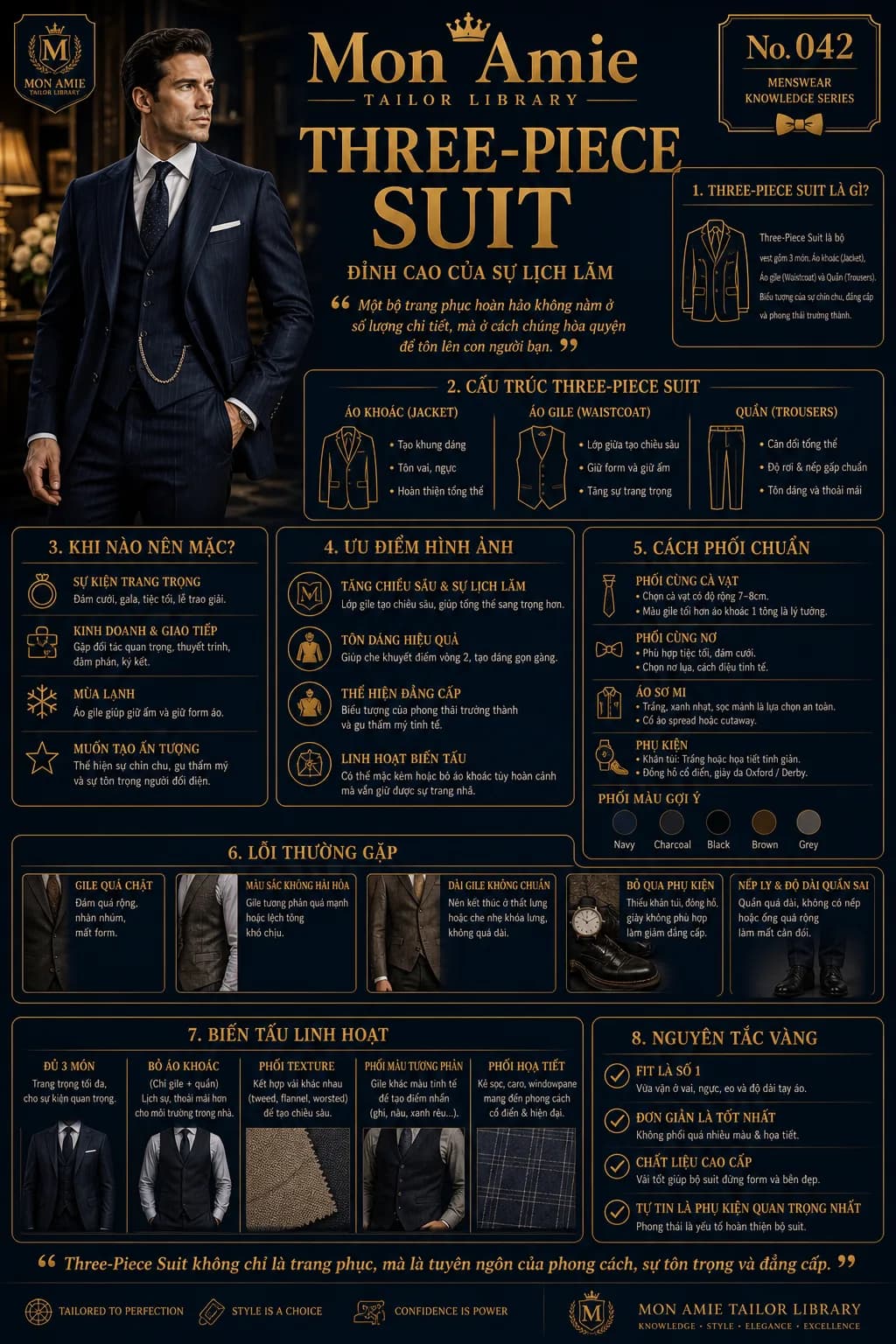
Wearing a three-piece suit well is not a matter of owning a jacket, a waistcoat and trousers. It is a matter of knowing when to wear it, how to pair it, and which mistakes rob the suit of the composure it was built to have. A perfect outfit is never about the number of details, but about how they combine to show the man wearing them. In this article, Mon Amie goes straight to the practical part: the right occasions, the right pairings, and the errors to avoid.
When should you wear a three-piece suit?
A three-piece suit sits one step above a two-piece in formality, so it does not suit every occasion. Reserve it for the following:
- Formal events: weddings, galas, evening receptions, award ceremonies — settings where composure is noticed.
- Important business meetings: major partners, presentations, negotiations, contract signings. The waistcoat lends an air of seriousness and reliability.
- Cold weather: the waistcoat is a natural extra layer, and it also helps the jacket hold its line.
- When you want to make an impression: a three-piece suit signals attention to detail, taste, and respect for the person across from you.
Conversely, for everyday office life or an informal gathering, a two-piece suit — or the same suit worn without its jacket — will feel more natural.
Styling a three-piece suit correctly
Because the three-piece is already a layered outfit, the rule is restraint and harmony:
- Necktie: a blade of 7–8cm in a shade about one tone darker than the jacket is the safe and ideal choice. Ties that are too bright or too narrow break the classical whole.
- Bow tie: right for evening receptions and weddings. Choose silk with quiet detailing rather than busy patterning.
- Shirt: white, pale blue or a fine stripe are all dependable. A spread or cutaway collar gives the knot room and balances the lapel.
- Accessories: a white or plainly patterned pocket square, a classic watch, Oxford or Derby shoes. With a three-piece suit, accessories should be grace notes, never the headline.
- Colours: navy, charcoal, black, brown and grey are the five standard grounds — easy to pair and suited to most formal occasions.
Five mistakes that ruin the line of a three-piece
These are the faults Mon Amie sees most often when clients bring an old suit in for alteration:
- A waistcoat that is too tight or too loose: too loose and it wrinkles and loses shape; too tight and the buttons pull, opening gaps over the shirt.
- Colours that do not agree: a waistcoat that contrasts too sharply or sits off-tone from the jacket looks pieced together and unsettles the eye.
- The wrong waistcoat length: it should finish at the waistband or just cover it — never short enough to show shirt, and never overlong.
- Skipping accessories: no pocket square, no watch, or the wrong shoes, and the whole outfit drops a class.
- Wrong trouser crease and length: trousers that are too long, uncreased, or too wide in the leg unbalance an already layered upper body.
Adapting the three-piece to the occasion
The greatest strength of a three-piece suit is its versatility — which is also why it repays the investment more than a two-piece:
- All three pieces: maximum formality, for occasions that matter.
- Waistcoat and trousers, jacket removed: polished but comfortable, right for indoor settings and semi-formal parties.
- Mixing textures: a waistcoat in a different cloth — tweed, flannel, worsted — adds depth to the whole.
- Controlled contrast: a waistcoat in a quietly different shade (grey, brown, moss green) creates interest while keeping the outfit refined.
- Pattern: stripes, checks or windowpane give a look that is both classical and current — but only one piece in the outfit should carry a pattern.
Four golden rules to remember
- Fit comes first: shoulders, chest, waist and sleeve length decide 80% of how a suit looks.
- Simplicity wins: do not combine too many colours and patterns in one outfit.
- Fine cloth matters: good fabric holds its shape and stays handsome for years.
- Confidence is the most important accessory: bearing finishes a suit, not the label in the lining.
A word from Mon Amie's artisans
With a three-piece suit, Mon Amie always advises you to settle the fit of the waistcoat first — it is the layer closest to the body, and the place where a poor fit shows most clearly. If this is your first, have all three pieces cut from the same navy or charcoal cloth; once you are accustomed to it, move on to a waistcoat in a different cloth or colour. And remember: a correct waistcoat covers the waistband when you stand upright, even with the jacket unbuttoned.
A three-piece suit is not simply clothing; it is a statement of style, of respect, and of standing. If you would like one cut precisely to your own measurements, we invite you to book an appointment at one of Mon Amie's five showrooms in Ho Chi Minh City, or to read about the tailoring process beforehand — hotline 0888.111.118.