
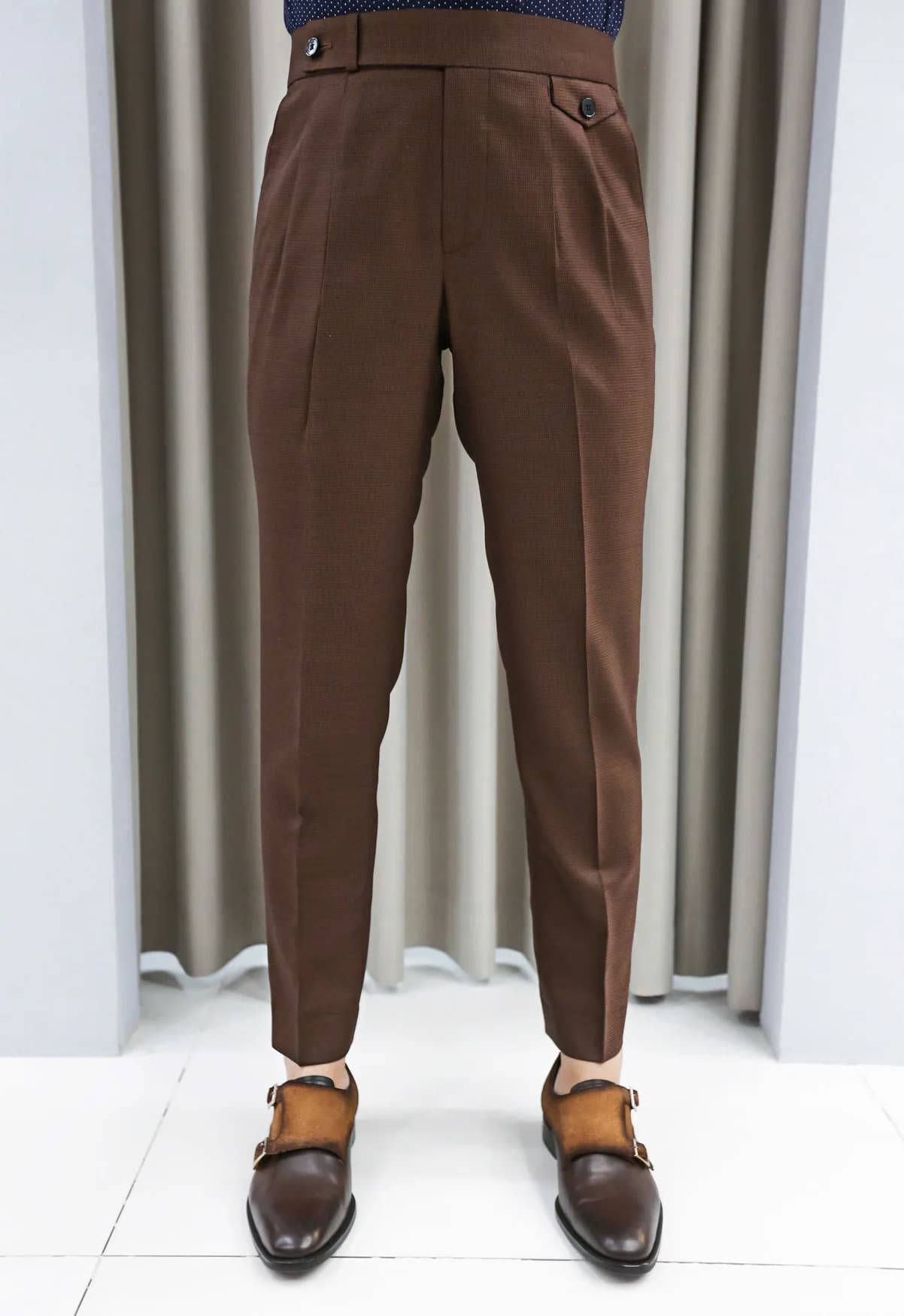
A pair of trousers slung beneath the belly like a hammock: the waistband drooping, the crotch sagging, and a tug upward every ten minutes. Sit down and the belt digs into the softest spot; stand up and the waistband drifts back to the hips. It is a familiar scene for many men searching for trousers for men with a belly who ended up buying a fashionable low-rise pair. The problem is not the belly, but where the trousers have put the waistband.
Quick answer
Trousers for men with a belly should have a moderately high rise (at or slightly above the navel), one to two front pleats, side adjusters or adjustment buttons instead of a belt, a straight leg and matte wool that holds its shape. Avoid low rises, tight tapered legs and glossy, thin cloth that shows every line.
Why the waistband slips below the belly
The body has a natural point of narrowing, the waist, which sits higher than the peak of a rounded belly. A high-rise pair sits exactly at that narrowing, so nothing makes it slide down. A low-rise pair puts the waistband below the peak of the belly, where the body widens, so the waistband always tends to slip and the belt has to be cinched tight. Together, those two things create discomfort all day and make the belly push out more. Putting the waistband in the right place solves the root problem; the other details only support it.
Trousers for men with a belly: a moderately high rise, at the navel, is the standard
High-waisted trousers are coming back, but for a man with a belly, “high” does not mean pulled up to the chest. The sensible position is at the navel or slightly above it, enough to wrap around the belly rather than sit beneath it. The benefits:
- The trousers do not slip, and the crotch does not sag.
- A jacket or shirt covers more neatly, because there is no break between the waistband and the top.
- The legs look longer and the torso neater, because the horizontal dividing line is pushed higher.
A rise that is too high, up to the chest, makes the belly stand out as a separate block and looks dated. Try them on, stand in front of the mirror both side-on and sitting down to see whether the waistband is in the right place.
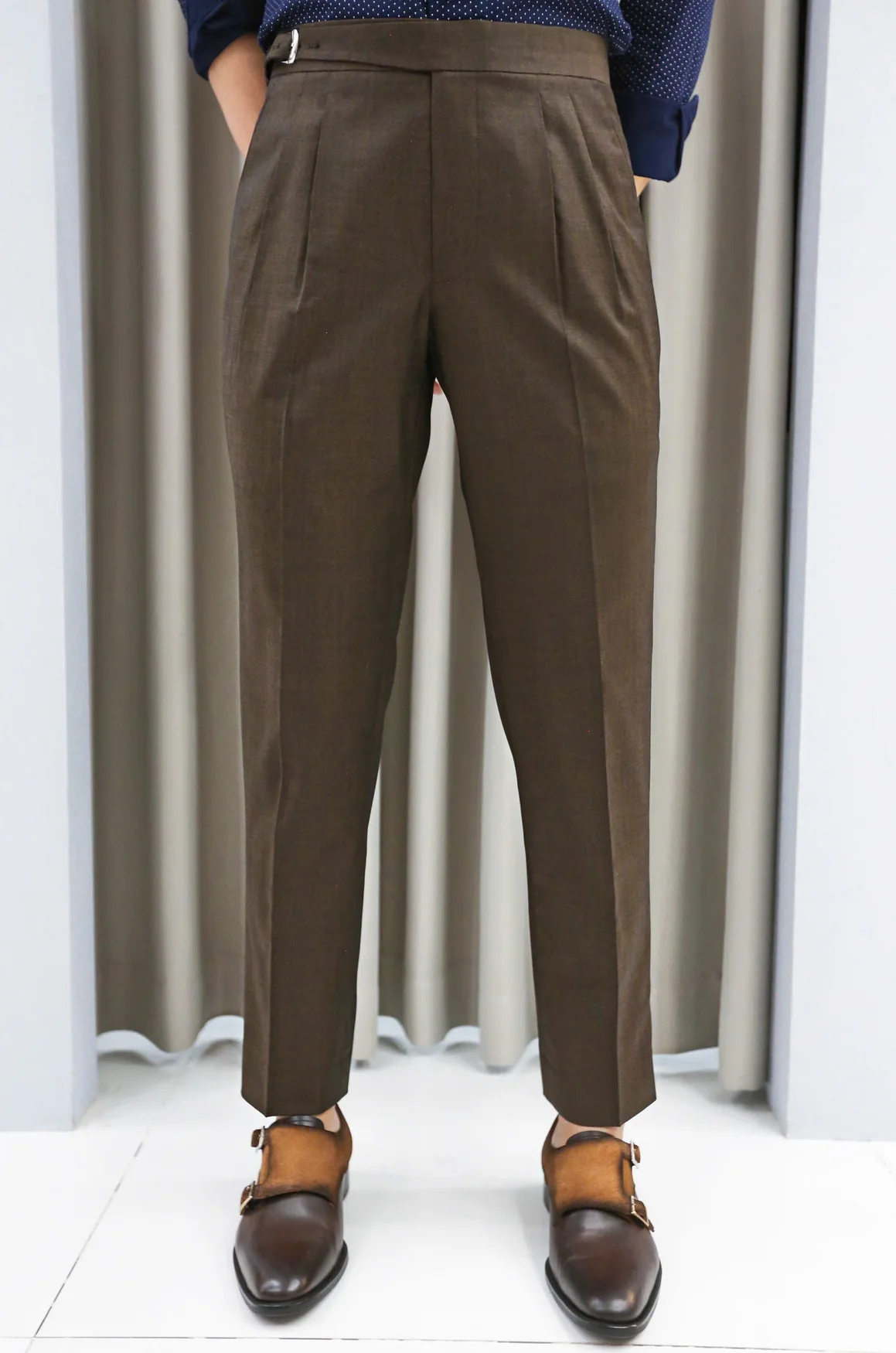
Pleated trousers: front pleats make sitting comfortable
A pleat is a fold in the front of the waistband. One to two pleats add cloth exactly where the belly and thighs need it, so the trousers do not pull tight when you sit or walk. On a man with a fuller belly, flat-front trousers often pull into X-shaped creases across the belly and thighs, while pleated trousers drape far better. A simple test: standing straight, the pleats should lie flat and closed. If the pleats spring open like a fan, the trousers are too tight and need more room in the waist.
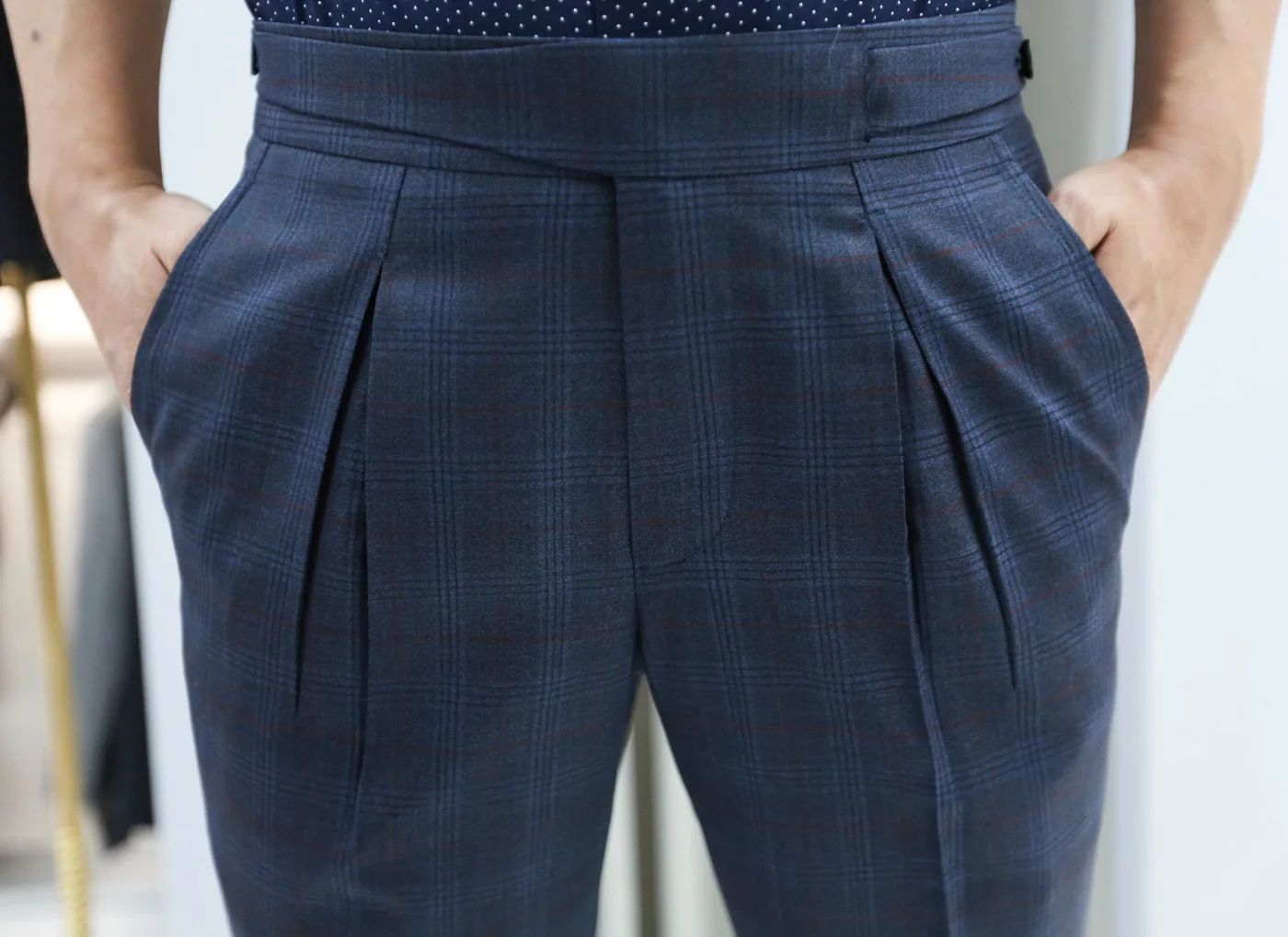
Side adjusters, adjustment buttons and suspenders instead of a belt
A belt cinched across the belly divides the body into two sections. There are three neater alternatives:
- Side adjusters: two small cloth tabs with a buckle at either side of the waistband, fine-tuning the waist by a few centimetres when needed, with no belt required.
- Adjustment buttons: extra buttons at the hips, adjusted day by day, especially after a party.
- Suspenders: attached to buttons inside the waistband, holding the trousers up from the shoulders so they do not slip and do not squeeze the belly.
When you use suspenders, the trousers need a moderately high rise and buttons in the right place. This is a detail that is easy to request in made-to-measure.
The leg: straight and relaxed, not tight
A tight leg makes the belly and thighs look more prominent. A leg that is too wide turns the whole body into one block. The ideal choice is a straight leg, or one tapering slightly from the knee to the hem, wide enough for the cloth to drape straight down to the shoe. The hem just touches the top of the shoe, with one small break or none. To understand the different leg shapes, the article men's trouser fits: straight, tapered or wide leg analyses each style.
Rise and seat: the detail few people notice
Whether trousers sit comfortably depends greatly on the rise (the crotch depth). A man with a belly needs a long enough rise (full rise) so that the waistband wraps the waist without pulling the crotch upward. A rise that is too short is the root cause of that feeling of trousers that squeeze, slip and “bite” into the body. A made-to-measure tailor takes the rise measurement separately instead of using a default as ready-to-wear does.
Fabric and colour to choose
- Fabric: matte wool in a medium weave and weight, which holds its shape and drapes well. A cloth with a little elastane helps with comfort when sitting. Avoid glossy cloth, cloth that is too thin and cloth that creases easily.
- Colour: dark blue, charcoal, dark brown, black or deep beige. Trousers in the same colour or colour family as the suit jacket create an unbroken vertical line.
- Pattern: plain or a very fine stripe. Avoid large checks and horizontal lines.
Plus-size trousers and trousers for heavier men: why they bag at the thigh
Ready-to-wear trousers for heavier men are usually graded evenly by size: a bigger waist means the thigh, leg and seat all grow with it. But a man with a belly often has a large belly while his thighs and seat are not necessarily larger to match. The result: trousers that fit the belly are baggy at the thigh, and trousers that fit the thigh will not fasten at the waist.
| Problem | Solution in made-to-measure |
|---|---|
| Large belly, average thighs | Take belly and thigh measurements separately and draft to each circumference |
| Front waistband sits lower than the back | Raise the back waistband so the back is not exposed when sitting |
| Short rise | Lengthen the rise and seat to the real measurement |
| Baggy leg | Take the leg in just enough, keeping a straight drape |
| Perspires easily, trousers cling | Choose breathable wool and a soft waistband lining |
If you need trousers to go with a suit jacket, the article suits for men with a belly: 7 cuts that make the waistline look slimmer covers the jacket.
Common mistakes
- Buying by a belly measurement taken over clothes. Measure the belly close to the body, at the fullest point.
- Choosing a low rise because it is in fashion. Fashion passes quickly; the hammock effect stays a long time.
- Wearing tight-legged trousers, which make the belly and thighs both stand out.
- A belt that is too tight, pushing belly fat up over the waistband.
- Trying them on standing only. Always sit down for at least a minute before deciding.
Tips from Mon Amie's master tailors
When measuring trousers, do not suck in your belly to “improve the number”. Stand comfortably and breathe normally; that is the belly measurement you carry all day. Mon Amie takes more than 30 measurements for the bespoke tailoring experience, including separate measurements for the lower body, so the waistband, rise and leg are all drafted to you and not to a size.
Frequently asked questions
Which leg should heavier men choose in trousers?
A straight leg or one tapering slightly. Avoid tight legs and legs that are too wide. Choose a leg where the cloth drapes straight from the knee to the hem without clinging to the thigh.
Should plus-size trousers be made to measure?
Worth considering, because ready-made plus sizes usually just enlarge every circumference evenly, while every body distributes weight differently. Made-to-measure lets the belly, thighs, rise and leg be adjusted separately.
Do high-rise trousers make the belly look bigger?
No, provided the waistband sits at or slightly above the navel and there are side adjusters or suspenders. A moderately high rise makes the belly look neater than a low rise does.
Are pleated trousers suitable for a man with a belly?
Suitable, even recommended. One to two pleats add cloth at the belly and thighs, making sitting comfortable and letting the trousers drape well, as long as the pleats lie flat when you stand.
In closing
Trousers for men with a belly, done right, do not hide the body but respect it: a waistband at the narrowing, pleats with enough cloth, a long enough rise and a leg that drapes straight. If you want to try them in person, book a fitting at a Mon Amie showroom so that a master tailor can measure your lower body separately.