
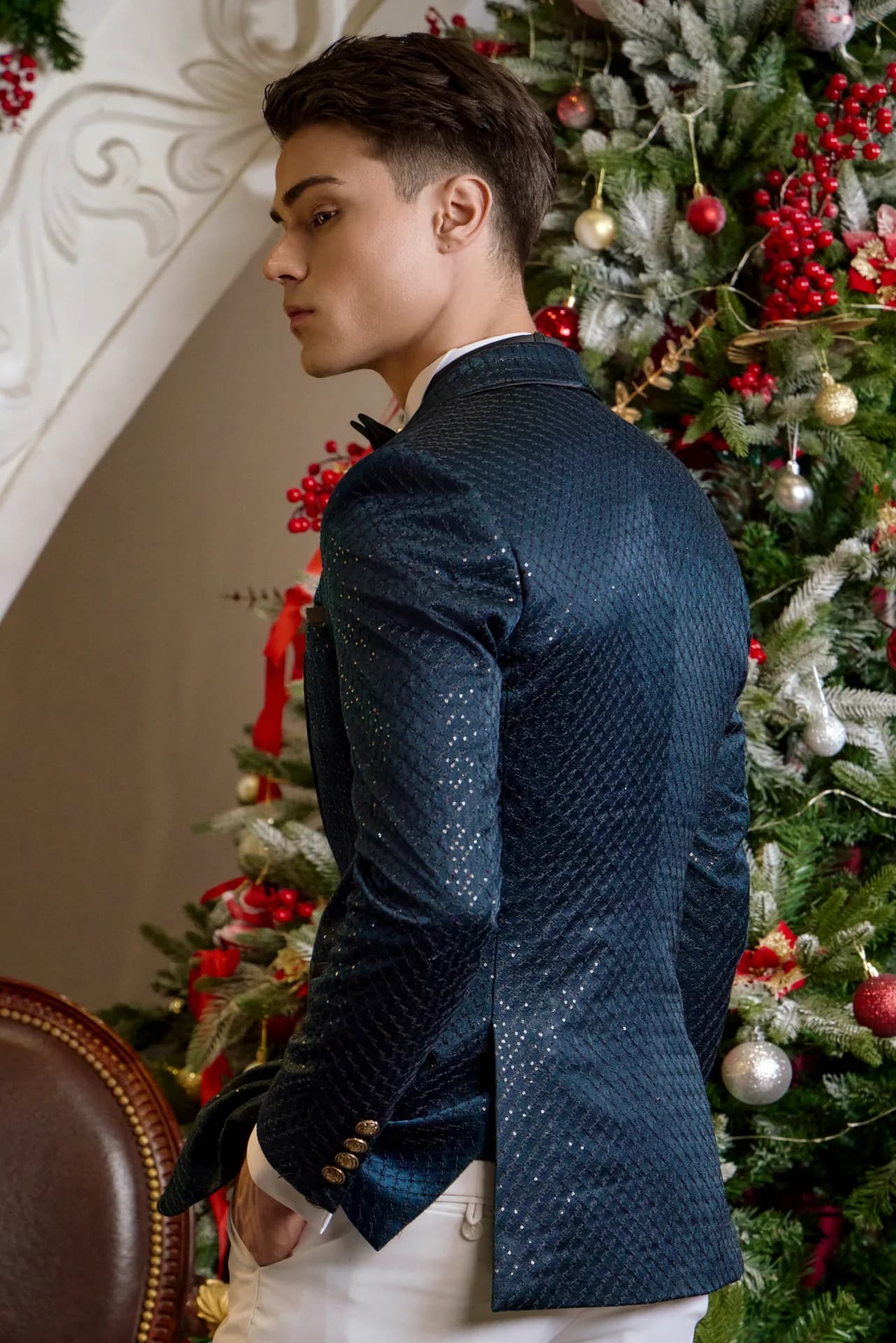
Put two things side by side on a table: a winter sweater and a piece of wool cloth used to make a suit. Both come from sheep's fleece, and both are called "wool". Yet one stretches like a spring while the other is firm and holds its shape. The question "is wool knit or woven" sounds like a matter for people in the trade, but it decides what you should wear as a sweater and what you should have a suit made from.
The short answer
Wool is the name of a material (fibre from sheep's fleece), not a type of weave. Wool fabric can be knitted, like a sweater, which is stretchy and soft, or woven, like suiting, which holds its shape and keeps a crease. A suit is made from woven wool, because only this kind can keep a structured line.
What is wool, and what is wool fabric made from?
The word "wool" refers only to the raw material, that is, fibre taken from animal fleece or hair. The most common is sheep's wool, but there is also wool from cashmere goats, mohair goats or alpacas. From wool fibre, manufacturers can produce a great many fabrics using different construction methods.
This explains why the question "what is wool fabric made from" has two layers of answer. On the raw material: sheep's fleece or other animal hair. On how the cloth is made: knitting or weaving, and this is what decides the final character of the fabric.
For the wool yarn used in suiting, people also distinguish between worsted and woollen. Worsted yarn is straight and smooth, and produces flat, crisp suiting. Woollen yarn is fluffier, and produces soft, warm cloth such as flannel or tweed. You can read what wool is, the foundation of the suit to learn more.
Is wool knit or woven? How they differ
The difference is one of structure:
- Knit: one or several continuous yarns are looped through one another, like knitting with needles. The loops can stretch in every direction, so the fabric is stretchy and soft.
- Woven: two sets of yarn interlace at right angles: warp yarns run along the length of the roll, and weft yarns pass back and forth between them. This structure is stable and firm, stretches little and holds its shape well.
| Criterion | Knit wool | Woven wool |
|---|---|---|
| Structure | Interlooped yarn loops | Warp and weft yarns interlaced at right angles |
| Stretch | Stretches a lot in every direction | Almost no stretch along the straight grain |
| Shape retention | Sags and stretches out over time | Holds its shape and keeps a crease well |
| Feel | Soft, warm, close to the body | Firm, flat, with some "weight" |
| Typical products | Sweaters, cardigans, scarves, hats | Suits, trousers, wool overcoats |
| Care | Prone to snagging and unravelling | Needs steam pressing, hang straight |
Telling them apart by eye and hand in one minute
You don't need to be a weaver to know which kind you are holding. Three quick tests:
- Look closely at the surface. Knits show rows of small V-shaped loops one after another, like knitting stitches. Woven cloth appears as a grid of warp and weft yarns, or as an even twill or herringbone pattern.
- Pull the cloth at both ends. Knitted fabric visibly stretches and springs back. Woven fabric barely stretches along the straight grain, giving only slightly when pulled on the diagonal.
- Look at a cut edge, or try pulling out a yarn. In woven cloth, pulling out a weft yarn gives single straight threads, and the edge frays neatly. In knitted cloth, pulling a single yarn can make a whole row of loops run into a long ladder.
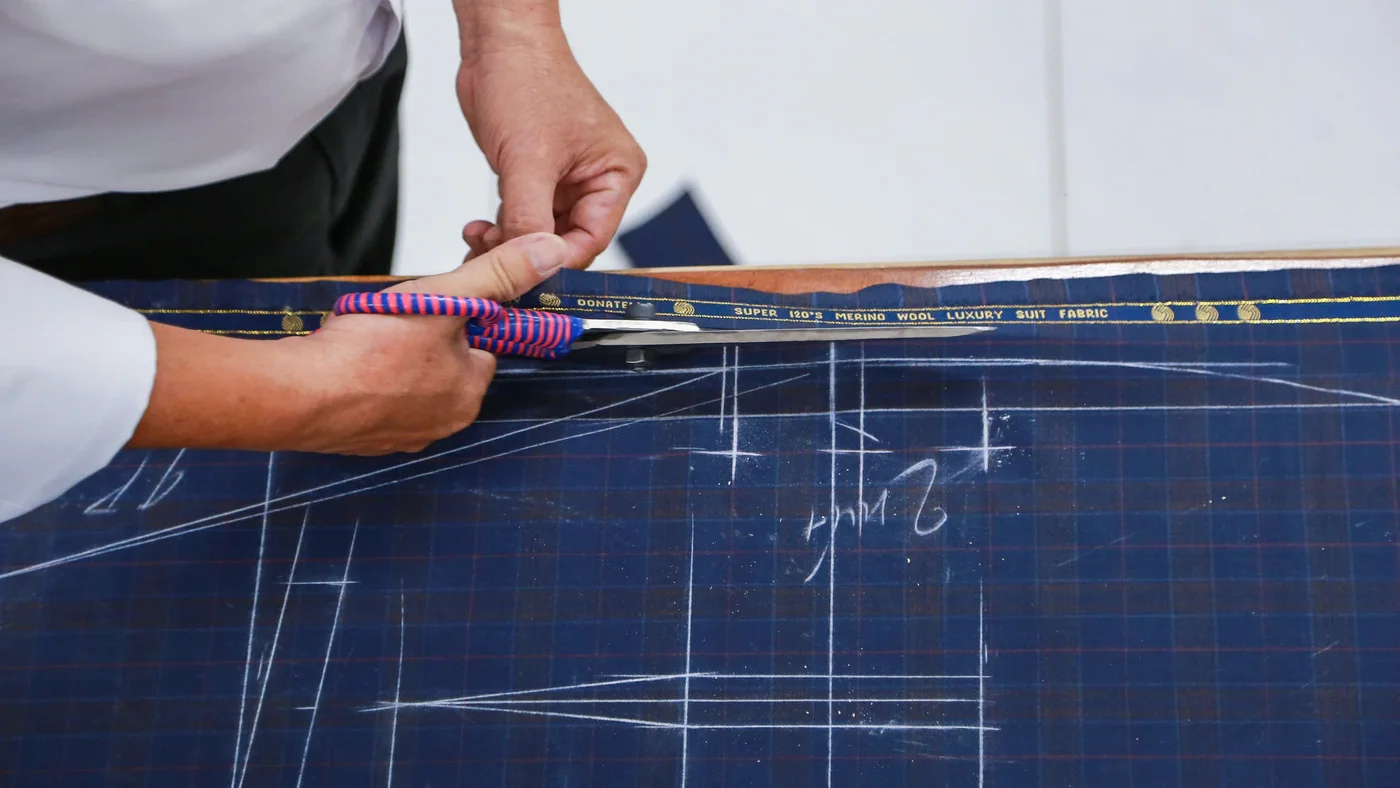
Why must a suit be made from woven wool?
A good suit jacket is not just cloth cut and sewn back together; it is a layered construction: outer cloth, interlining, shoulders, collar and lapels. These stages require the cloth to:
- Hold its shape when cut from the pattern. Knitted fabric distorts as soon as it is laid on the cutting table.
- Withstand steam pressing to form the lines. Lapels, shoulders and trouser creases need cloth that can "remember" its shape after pressing. Woven wool does this well.
- Not sag on the hanger. A suit jacket hangs on a hanger every day. Knitted fabric will stretch under its own weight and lose its shape.
- Work with the interlining. The interlining inside a jacket holds the line, but it is only stable on a cloth with a firm structure.
That is why Mon Amie's suiting library, from Kevinlli to Canonico, Holland Sherry and Dormeuil, consists of woven wool or woven wool-blend cloths in plain weave, twill, herringbone or hopsack. You can see the details of each material in the fabric library.
Styles such as the "knit blazer" do exist, but that is a relaxed, soft, body-hugging garment without the definition of suit construction, so it is hard for it to achieve the formality of a suit.
Knit wool still has a place in a suit wardrobe
This does not mean knit wool is "inferior". It simply belongs in different roles:
- Thin crew-neck or V-neck sweaters worn under a blazer in the cooler months.
- Knitted cardigans or waistcoats in place of a waistcoat made from woven cloth, when you want a relaxed look.
- Wool scarves wrapped outside an overcoat.
Layering tip: a thin, fine knit (such as merino), worn over the shirt and under the blazer, makes a warm layer that stays neat.
Common mistakes
- Assuming any "wool fabric" can be made into a suit. Only woven wool, in the right weight and fineness, is suitable.
- Buying a "wool" blazer without checking the weave. Some knits are very comfortable and body-hugging, but cannot hold a structured shape.
- Mistaking thick wool for good wool. Thickness tells you only the weight, not the quality of the fibre or its durability.
- Washing suiting like a sweater. Woven suit cloth needs dry cleaning or specialist treatment, while knitted wool usually tolerates a gentle hand wash.
- Hanging a sweater on a hanger. Knitted wool should be folded to avoid stretching at the shoulders.
A tip from the Mon Amie master tailor
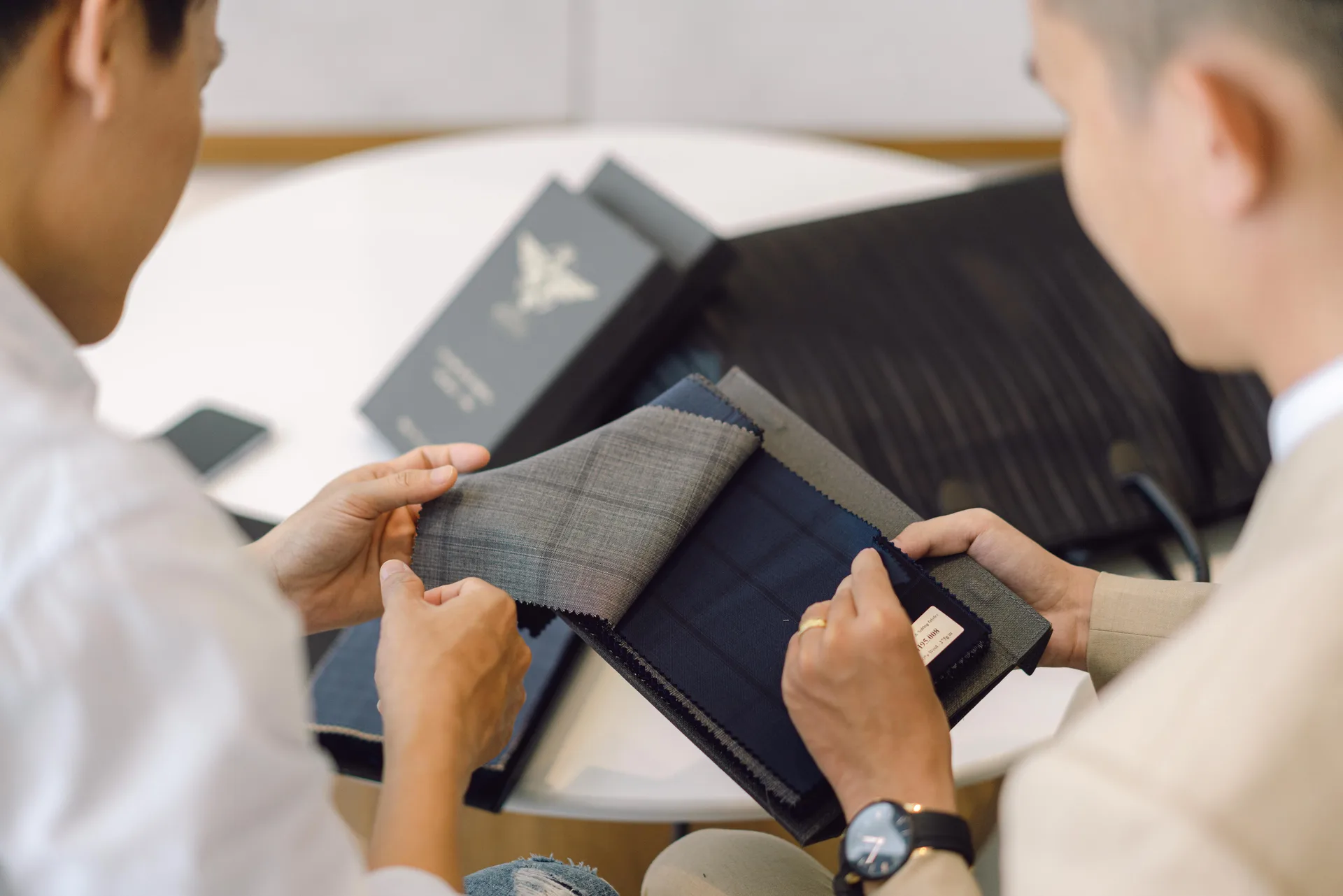
If you are still asking yourself "is wool knit or woven" when you stand in front of a particular swatch, do it the way tailors do. When you hold a swatch in the showroom, try two movements right away: gently pull both ends, and squeeze it firmly for a few seconds, then let go. Good woven suiting will barely stretch and will spring back flat quickly. If you want to understand more about crease resistance when travelling, you can see does wool crease, or learn about lightweight cloth in what tropical wool is.
Frequently asked questions
What is knit wool fabric?
Fabric made from wool yarn looped through itself, the way a sweater is knitted. It is stretchy, soft and warm, but it sags easily, so it is typically used for sweaters, cardigans and scarves, not for making suits.
How is wool woven to make suiting?
Worsted wool fibre is twisted into fine yarn, then interlaced as warp and weft at right angles on a loom. Weaves such as plain, twill or herringbone give suiting that is firm, flat and holds its shape.
What is wool fabric made from?
Mostly sheep's fleece. Some premium types use cashmere goat hair, mohair or alpaca, or are blended with silk and other fibres to add softness and sheen.
Can knit wool fabric be used to make a suit?
Technically you can make a soft, blazer-style jacket, but it will lack the line and shape retention of a suit made from woven wool. If you need a formal business suit, choose woven wool.
An invitation
If you want to feel the difference between cloths with your own hands, visit a Mon Amie showroom or book a fitting. A stylist will bring woven wool swatches that suit your needs and budget.