

You leave on a business trip tomorrow morning, the suitcase is packed, and the suit is wrinkled as if it had just come through a small storm. The most familiar fix is to hang it in the bathroom and run the hot tap until steam rises. That works, but only to the level of “somewhat better”. If you want to steam and iron a suit at home properly, with a garment steamer or a steam iron, there are a few small rules that tailors advise following, because they decide whether the jacket ends up flat and neat or loses its shape within ten minutes.
Quick answer
To steam and iron a suit at home, favour steaming over ironing directly when the suit is wool. Keep the steamer head 2 – 3 cm from the cloth, steam the sleeves, then the back, the front and finally the lapels, smoothing gently by hand. When you do need to iron, always use a pressing cloth, set the heat to the wool setting, then hang the jacket to cool for 20 – 30 minutes.
Steaming or pressing: how they differ for a wool suit
The two actions sound alike, but they are quite different in nature:
- Steaming: the steam dampens the wool fibres and lets them relax, so creases ease out without the cloth being compressed. This is the right method for a suit jacket, because the jacket has interfacing, shoulder padding and a shaped lapel.
- Pressing: heat with pressure flattens the cloth and creates a sharp crease. This suits trouser creases, but with a jacket, pressing directly easily leaves shiny marks and flattens the lapels.
So the simple rule is: steam the jacket; steam the trousers, then press the crease. When a tailor wants to shape a jacket, they press on damp cloth, over a purpose-made shoulder block, and never hold the iron too long in one spot.
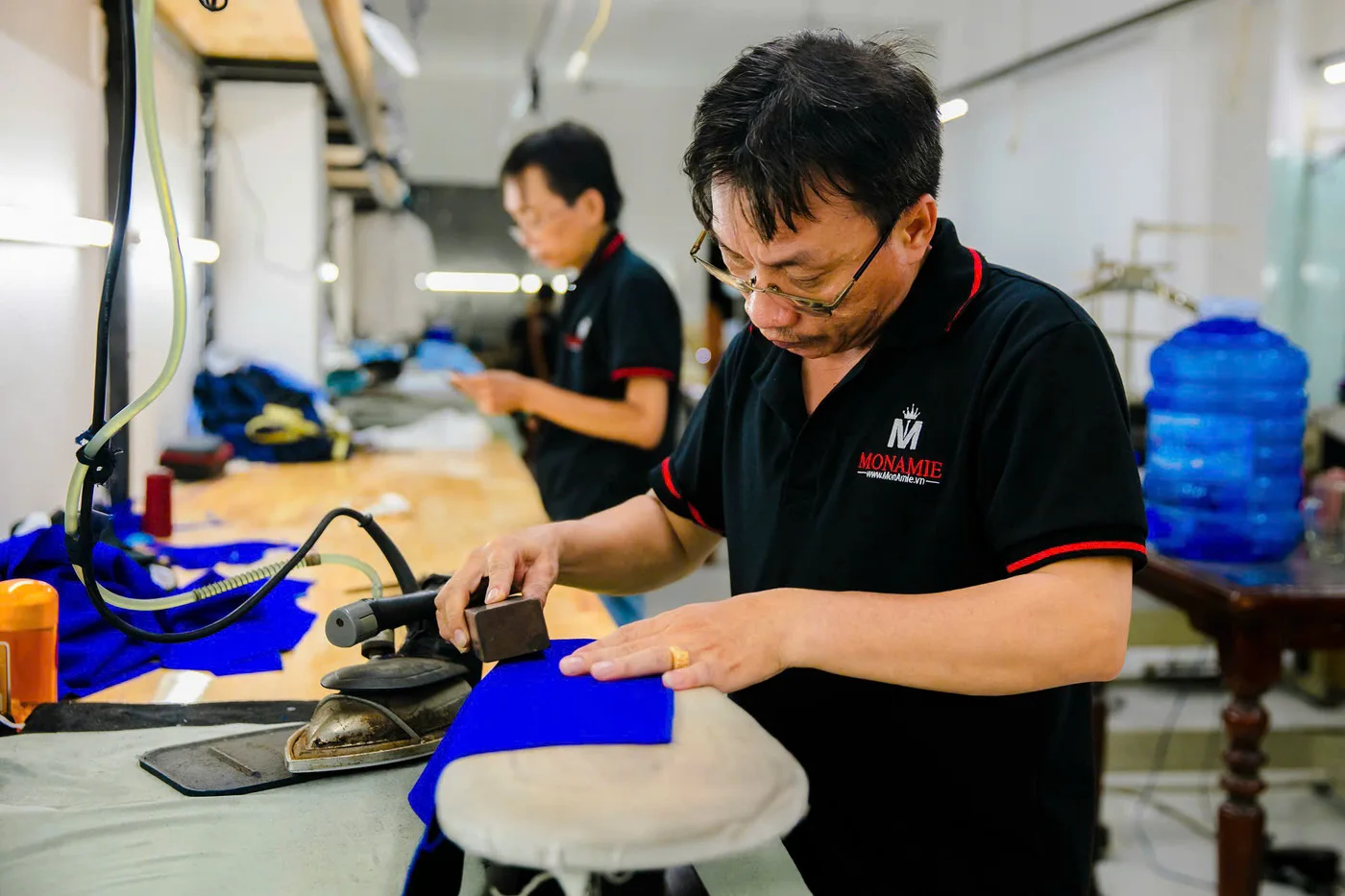
Preparing before you steam and iron a suit at home
You will need:
- A garment steamer, or a steam iron with a vertical steam setting.
- A wide-shouldered hanger, so the jacket keeps its shoulder line while hanging.
- A thin piece of cotton cloth (a large handkerchief or an old shirt) to use as a pressing cloth when you need to press.
- Clean water. Tap water with a lot of mineral deposit can spot the cloth, so use filtered or purified water in the steamer.
- A soft-bristle brush, to brush off dust before steaming.
Before you begin, hang the jacket in an airy place for a day if you have just worn it. Steaming cloth that is still damp with sweat only makes the smell stronger. Brush off the dust, empty all the pockets and fasten one button so the jacket keeps its shape.
Steps for steaming a suit jacket
- Switch on the steamer and wait for the steam to settle, about one to two minutes.
- Start with the sleeves. Use one hand to smooth the sleeve taut, and with the other hold the steamer head and move it from the shoulder down to the cuff, 2 – 3 cm from the cloth.
- Steam the back, working from the shoulder down to the hem, letting the steam pass over each spot only briefly before moving on.
- Steam the front and chest. Let the cloth hang naturally and do not pull it taut, so you do not distort the chest interfacing.
- Steam the lapels and collar. Steam only lightly, then use your hand to smooth the lapel along its roll line. Never press the lapel flat.
- Steam the pockets and hem, and smooth the front panels straight.
- Hang to cool for 20 – 30 minutes in an airy place before wearing or storing the jacket. Only when the moisture has fully escaped will the jacket hold its flatness.
For office workers, a quick five-minute routine is to steam the sleeves, the back and the lapels, then let the jacket cool on the hanger while you brush your teeth and change your shirt.
Ironing a man's suit jacket: a simple method that keeps the shape
If all you have is a steam iron, it can still be done, as long as you follow a few rules:
- Set the heat to the wool setting, usually around 150 °C. Too hot and the wool scorches and dulls.
- Always use a pressing cloth between the iron and the jacket to avoid shiny marks. On dark cloth the shine shows up even more.
- Iron from the reverse side where possible, such as the lining and the pockets.
- Don't hold the iron on one spot. Keep the iron moving, lifting it rather than dragging it.
- Place a rolled bath towel under the shoulder when pressing the shoulder, so the shoulder is not pressed flat.
And if you ask for the simplest way to iron a man's suit jacket, the answer is: steam instead of ironing whenever you can. Pressing is only for places that need a sharp crease, and a jacket hardly needs any.
Wrinkle-free dress trousers: steam first, then press the crease
Trousers are the part of a suit that needs the most pressing, because the crease has to stay straight and sharp from thigh to hem:
- Steam both legs lightly to remove creases at the knees and seat.
- Turn the trousers inside out or lay a pressing cloth over them, align the inseam and outseam, then press along the old crease.
- Press each leg only once, lifting the iron rather than dragging it, so the crease does not shift.
- Hang the trousers upside down from a trouser clip so gravity keeps the crease. This helps dress trousers stay less wrinkled in the wardrobe.
Polyester-blend trousers crease less than pure wool, but they also shine easily when pressed hot, so the pressing-cloth rule still applies.
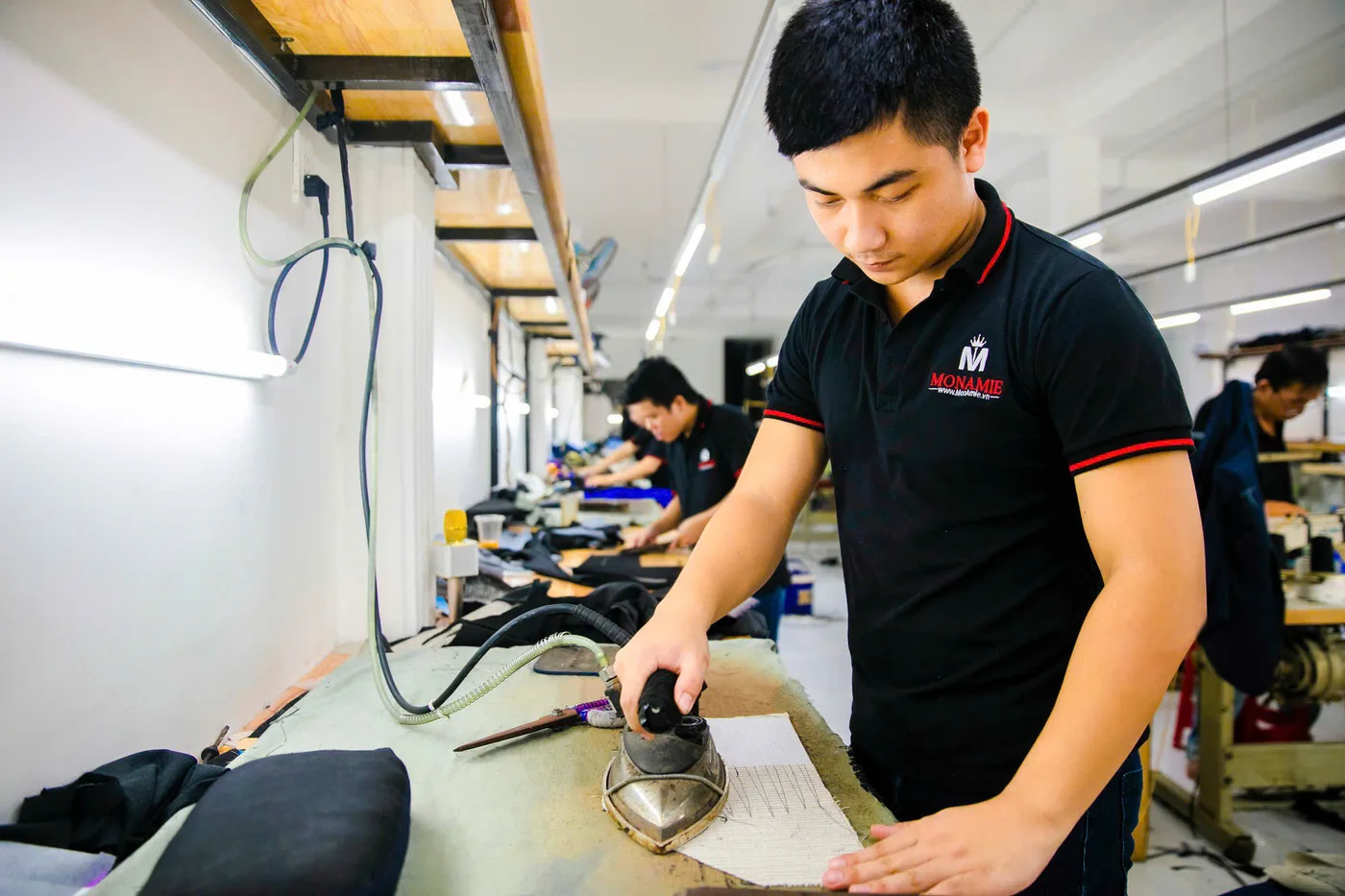
Common mistakes when steaming and ironing a suit at home
- Ironing directly on the lapels. The lapel loses its roll line and turns flat and shiny. This is the hardest mistake to fix.
- Steaming too wet, so the steam condenses into droplets and the shoulders collapse because the cloth is too damp.
- Folding the jacket straight after ironing while it is still hot, which sets a new crease right on top of the old one.
- Using tap water with a lot of deposit in the steamer, which leaves white spots on dark cloth.
- Ironing over the fused chest interfacing too many times, which can cause bubbles to form on the chest.
- Steaming and putting the jacket away at once, trapping moisture in the wardrobe, which causes odour and mould.
Tips from Mon Amie's master tailors
- Steaming often but lightly is better than occasionally steaming very thoroughly. Wool needs to “breathe” regularly.
- Steam the day before you wear it, so the jacket has time to settle into shape.
- With fine, expensive cloth, keep a slightly larger distance and never press the iron down. If you are unsure, test first on a hidden spot such as the inside of a pocket.
- If the jacket has deep creases, shine, delaminating interfacing or a distorted lapel, don't try to fix it at home. Take the suit to a tailor. A made-to-measure suit from Mon Amie comes with a long-term alteration warranty, so you can ask a master tailor to look at it and advise.
To learn more about cleaning schedules and overall care, read should a suit jacket be washed. And if you are more interested in shiny shoulders caused by ironing, the article how to iron a suit without shiny shoulders goes into more detail.
Frequently asked questions
Do you need a pressing cloth when ironing a suit jacket?
Yes. Place a thin piece of cotton cloth between the iron and the jacket to avoid shiny marks, especially on dark wool. If you can, steam instead of applying the iron directly.
What is the simplest way to iron a man's suit jacket?
Use a garment steamer: steam the sleeves, the back, the front and then the lapels and collar, 2 – 3 cm from the cloth, smooth gently by hand and hang to cool for 20 – 30 minutes. This is the lowest-risk method for anyone who is not used to it.
Do wrinkle-free dress trousers need ironing every day?
No. Steaming lightly and hanging them upside down from a trouser clip after each wearing is enough. Press the crease when it fades, usually after several wearings, and always use a pressing cloth.
Is steaming a suit with hot water in the bathroom effective?
Yes, to the extent of easing light wrinkles and reducing odour, which is useful on a business trip. But bathroom steam is weak and uneven, so it cannot replace a steamer. After hanging, let the jacket dry completely before wearing it.
A final word
Knowing how to steam and iron a suit at home is like brushing your teeth every day, for a suit: little effort, and it saves a great deal of trouble later. If you need a master tailor to look at a jacket that has already been creased or become shiny, you are welcome to visit one of the Mon Amie showrooms.