
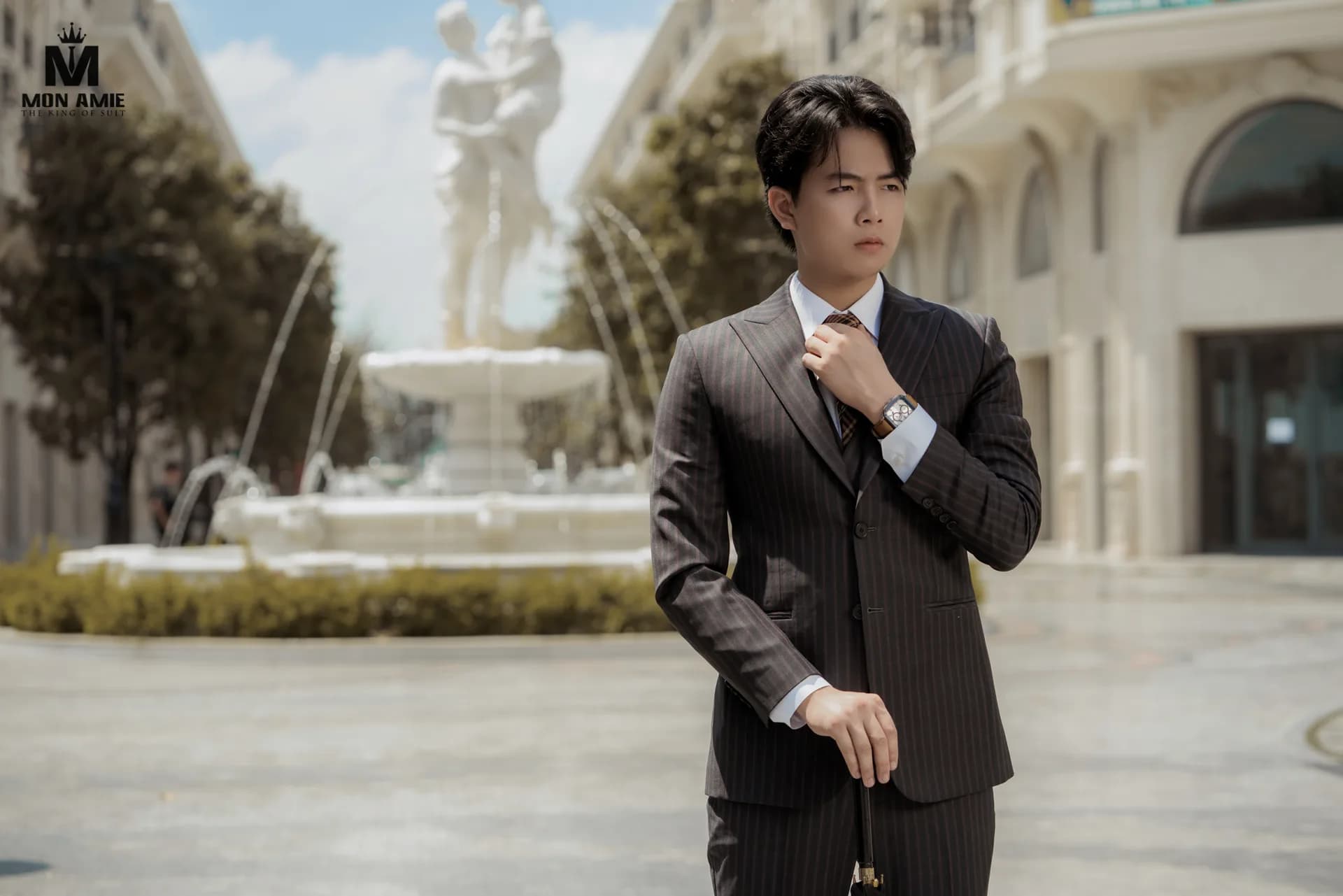
“I'd like a European suit made” sounds perfectly clear, but the person measuring you can take it three ways. Some people want the shape of an English jacket, some want a size 50 like the jacket they once bought abroad, and some simply want cloth woven in Italy. If the meaning is misread at this step, the finished suit will match your measurements and still miss the point.
The short answer
“European suit for men” usually carries one of three meanings: a cut in the English or Italian manner, a European size number such as 48, 50 or 52, or cloth from an Italian or English mill. The English cut has square shoulders, a defined waist and a longer jacket; the Italian cut has soft shoulders and a lighter, shorter jacket. For everyday wear in Ho Chi Minh City, lean toward the Italian cut.
Three meanings of “European”
Before your measuring session, work out which sense of a European suit for men you mean. The three meanings are independent of one another: a suit can be cut in the Italian manner in Kevinlli cloth, or in the English manner in Italian cloth.
| When you say “European suit”, you may want | What it really is | What to tell the tailor |
|---|---|---|
| The shape of the suits you see in Europe | A cut: the English or the Italian manner | Describe the shoulders, waist, length and pocket style you want; bring photos if you have them |
| A size 48 or 50 jacket like one you once bought | A European size number, based on half the chest circumference | Made-to-measure doesn't use size numbers; bring a jacket that fits you now so the tailor can look at it |
| Cloth imported from Europe | Cloth from an Italian or English mill, or elsewhere | Ask the mill's name, the wool percentage, the Super number |
English and Italian cuts side by side
In Italy, a jacket made in Milan holds its shape more than one from the south; what people usually mean by “the Italian style” is the soft southern manner. The Korean and American silhouettes are compared separately in the article on four suit silhouettes: Korean, Italian, English, American.
| Detail | English cut | Italian cut (soft manner) |
|---|---|---|
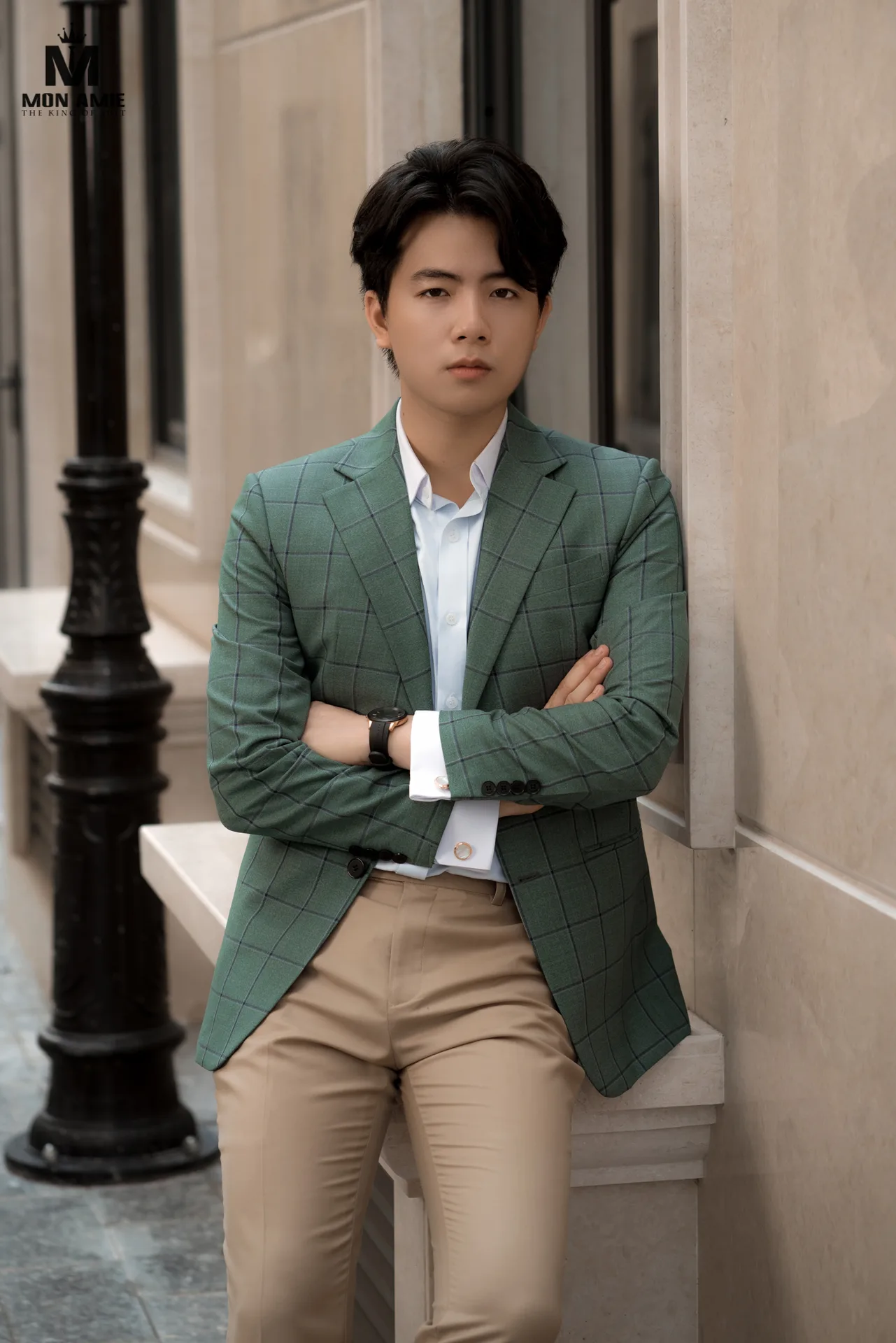
| Shoulders | Padded, square, a clear shoulder line | Little or no padding, following the wearer's own shoulder, sometimes a slight ripple at the sleeve head |
| Chest and interlining | Firm canvas, a full chest | Light canvas, a soft jacket, less stiffness |
| Waist | Clearly suppressed | Moderate waist |
| Length | Longer, covering the seat | Usually a little shorter |
| Vents | Two vents, one on each side | Two vents or none |
| Pockets | Flap pockets, sometimes slanted, perhaps a small ticket pocket above the right pocket | Curved boat-shaped breast pocket, patch pockets on casual jackets |
| Cloth often used | Heavier and firmer | Lighter |
| How it feels to wear | Polished, serious | Relaxed, easy |
The pocket styles in the table are described in more detail in the article on 5 pocket styles for men's suit jackets.
And what is the “German style”
In tailoring there is no school called German in the clear way there is an English or Italian one. When someone says “German style”, they usually mean one of two things: a serious business suit, dark in colour, structured and with few details; or the cut of a German fashion brand they have worn and found a good fit. The quickest way is to bring that very jacket, or a photo of it, to the measuring so the person measuring can look at the shoulders, the length and how close the fit is.
Choose the English cut when
- You work mostly in air-conditioned rooms and need a serious look: banking, law, board meetings.
- Your shoulders slope and you want them to look squarer and more defined.
- You are tall and slim and want more fullness in the body of the jacket.
- It is a three-piece suit for a wedding or an evening event.
Choose the Italian cut when
- The jacket is worn for many hours, you move around outdoors, and you get in and out of cars constantly.
- Your shoulders are already broad and square, with no need for padding.
- You like wearing a blazer with trousers in a different colour, even when you are not wearing a tie.
- You dislike the feel of a stiff chest.
Advice for Ho Chi Minh City's climate
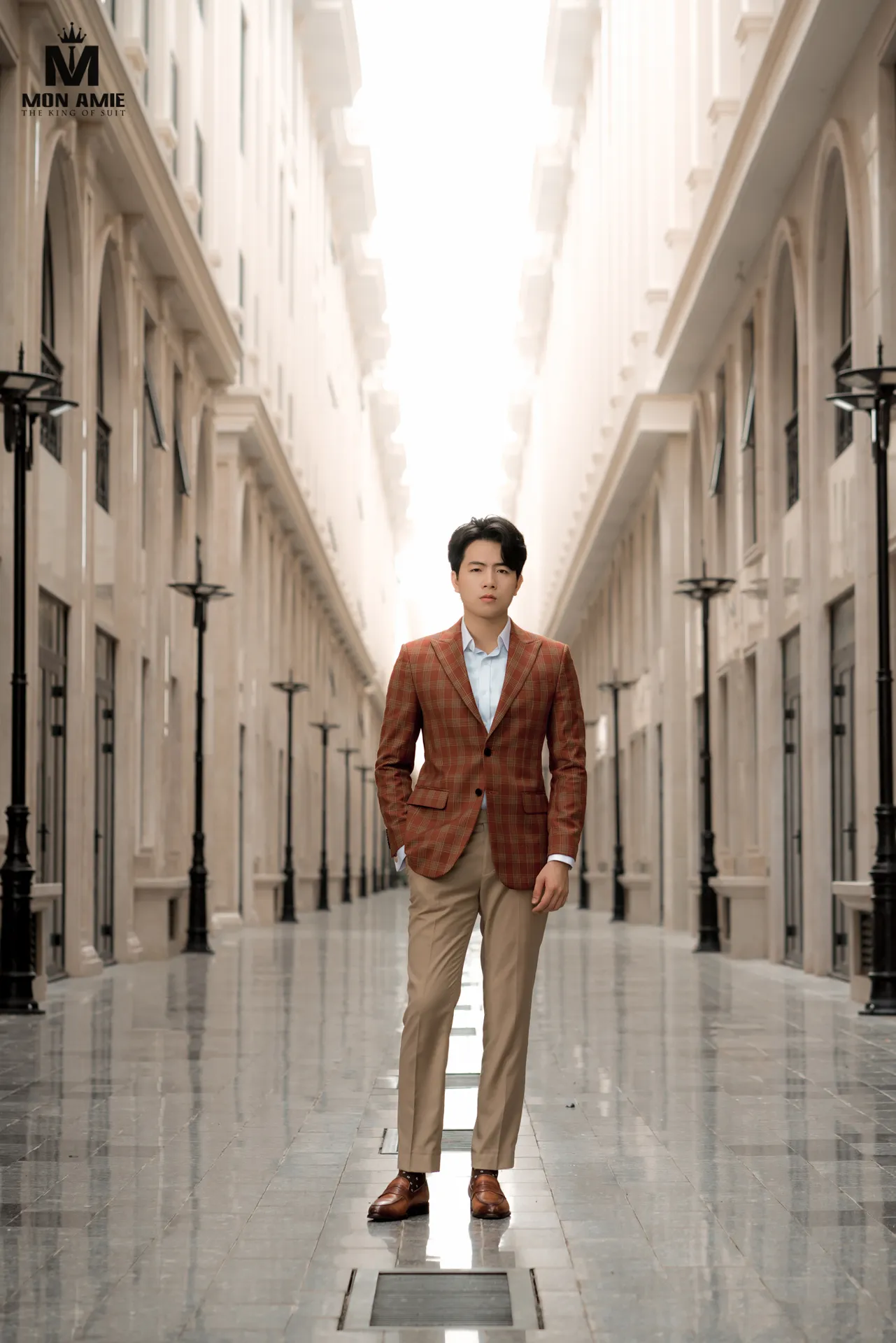
With the heat outside and air conditioning in the office, a work suit often suits a hybrid cut: light shoulders and light canvas as in the Italian cut, a moderate waist and length as in the English. A light lining or partial lining makes the jacket more breathable; the stylist advises on the lining according to the cloth you choose. The full English cut, with square shoulders and a full chest, is best kept for wedding and evening suits.
At the measuring session, instead of saying “European style”, instruct the tailor with specific phrases like the ones below, choosing whichever suits you:
- “Soft shoulders, little padding” or “square shoulders, a clear shoulder line”.
- “A long jacket that covers the seat” or “a slightly shorter, neat jacket”.
- “A clearly suppressed waist” or “a moderate waist, not close-fitting”.
- “Two vents at the back” or “no vents”.
- “Flap pockets” or “patch pockets, casual wear”.
These five phrases are enough for the person measuring to picture the jacket, and make it easy for you to check against it at the fitting.
If “European” to you means cloth, Mon Amie has Vitale Barberis Canonico and Vercelli from Italy, Holland & Sherry from England, plus Dormeuil and Scabal; a two-piece suit costs from VND 19.8 million with Vercelli up to VND 60 million, excluding 8% VAT. Some ranges are chosen from the cloth swatch book at the showroom; the list is on the cloth library page.
Frequently asked questions
What is a European size 50 in Vietnam?
A European suit size is based on half the chest circumference, so size 50 corresponds to a chest of about 100 cm. How to read and convert sizes 44–58 is in the article on European men's suit sizes and conversion. With made-to-measure you don't need size numbers.
Is Italian cloth hotter than Kevinlli?
Whether it is hot or cool depends on wool content, weight, weave and lining; origin doesn't decide it. A heavy Italian cloth with a full lining is still stuffier than Kevinlli 70% wool with a light lining. Ask the stylist about the weight and hold the swatch in your hand before choosing.
Is a double-breasted suit a European style?
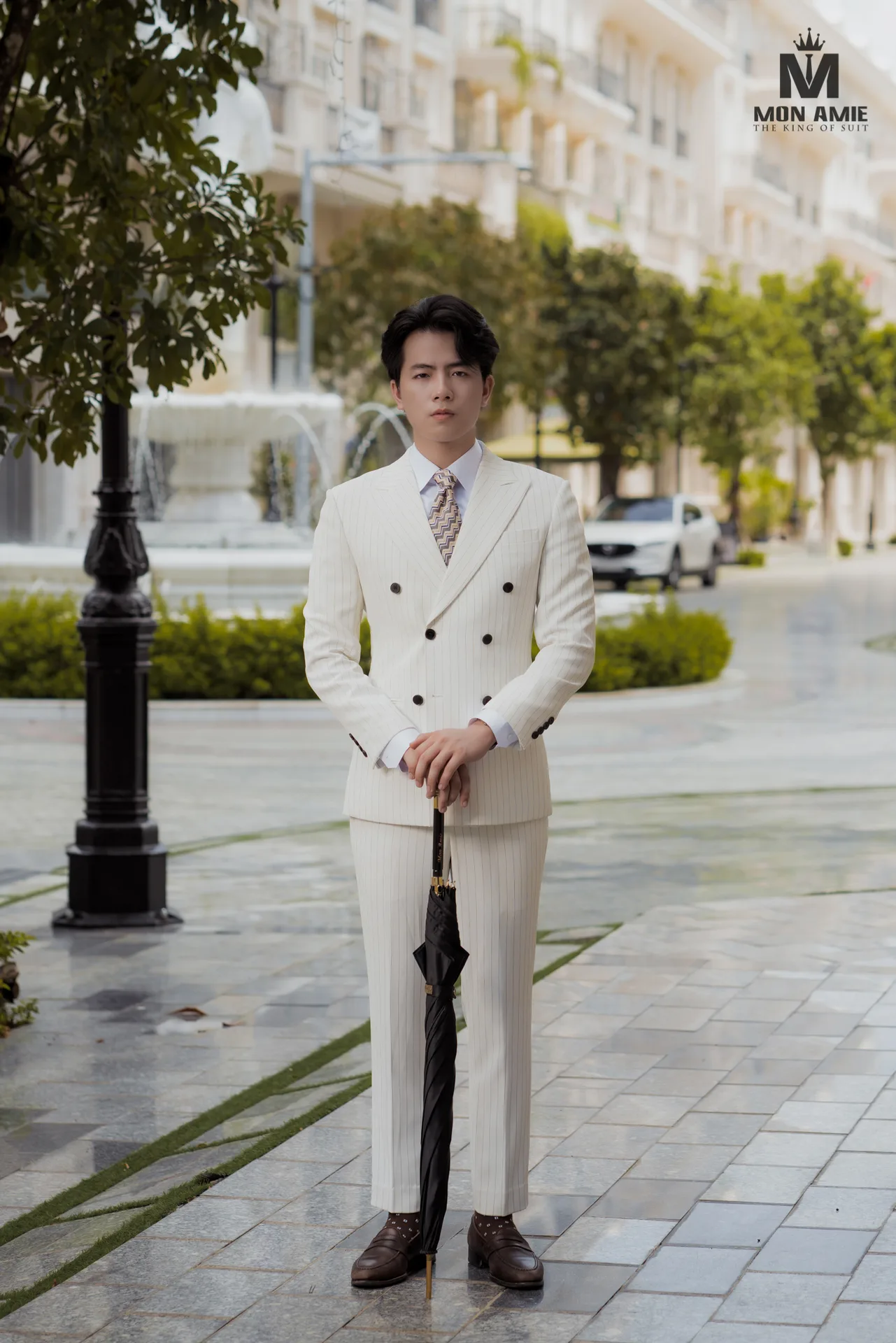
Both the English and Italian manners have double-breasted jackets. A double-breasted jacket is more formal and is usually kept buttoned even when sitting. It suits a straight build and broad shoulders; shorter men and those with a large stomach should think twice.
Does the English cut have to include a waistcoat?
No. A three-piece suit is a familiar part of the English manner, but in Ho Chi Minh City a waistcoat suits only air-conditioned rooms, weddings and evening events. A two-piece work suit in the English style is still serious enough.
Say the right meaning, get the right suit
Before the measuring session, settle which sense of “European” you want: the cut, the size or the cloth, and bring photos or a sample jacket. Book an appointment so the stylist can look at them with you and settle the cut before cutting.