
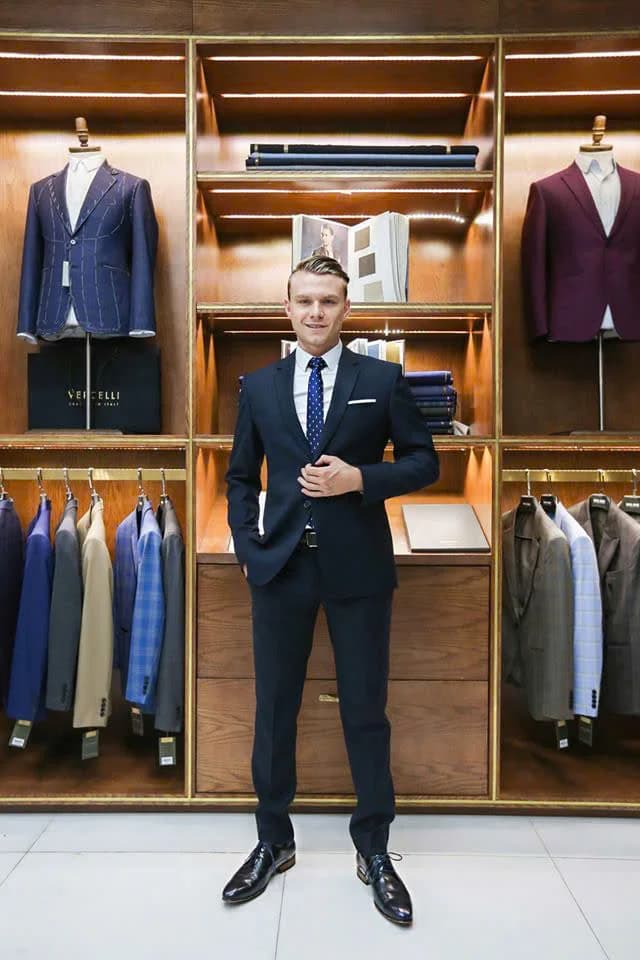
A single suit jacket can be decided by more than fifteen small choices, from the width of the lapel to the colour of the buttonhole thread. Most first-time made-to-measure clients think only of the colour of the cloth and their measurements, then are surprised when the artisan asks further: “Would you like a peak lapel or a notch lapel? One vent, two vents or none?” This article helps you walk into the showroom with the answers already in mind, because a made-to-measure suit jacket is the only way to get a jacket that is truly your own.
The short answer
A made-to-measure suit jacket lets you customise about 15 main details: lapel style and width, number of buttons, pocket style, vents, cuff buttons, button material, buttonhole thread colour, shoulder cut, length and fit, lining, monogram, trouser waistband and pleats, trouser leg and hem, and waistcoat. Most are matters of style and do not change the price; the details that add cloth or labour, such as a waistcoat, a double-breasted front or a full lining, are the ones that usually affect the quote.
Group 1: The first things people see
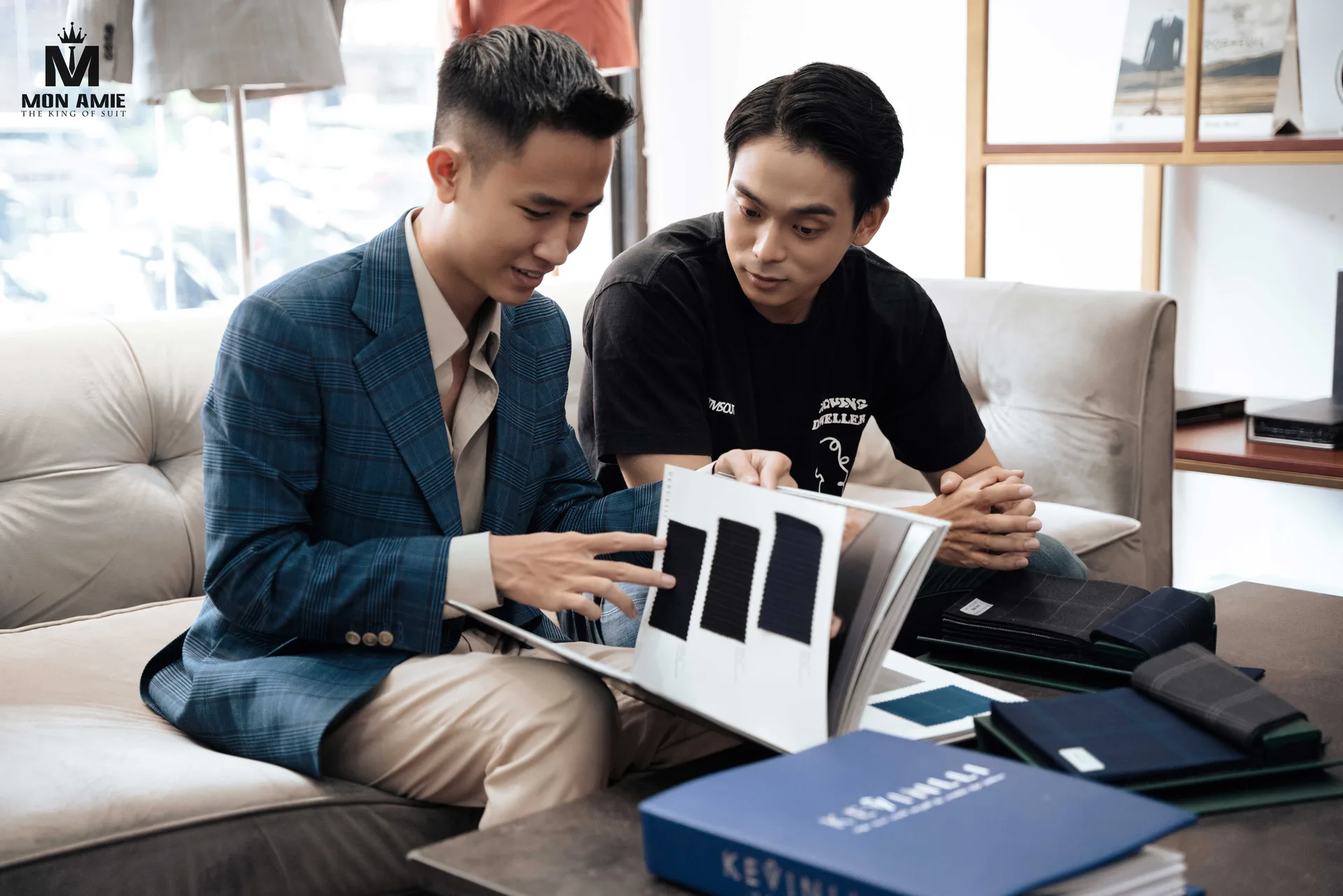
1. Lapel style. There are three main types. The notch lapel is the everyday choice. The peak lapel is more formal, usually seen on double-breasted jackets. The shawl lapel is a continuous rounded collar, characteristic of the tuxedo.
2. Lapel width. Narrow, medium or wide. A narrow lapel is youthful and suits slim men. A wide lapel is classic and makes the shoulders look larger. The lapel width should be in proportion to your shoulders and the ties you usually wear.
3. Number of buttons and closure. One button is slightly fashion-led, two buttons is the most common, three buttons is classic. Double-breasted gives a strong presence but requires a well-proportioned figure.
4. Pocket style. The jetted pocket is the neatest and most formal. The flap pocket is the default for the office. The patch pocket is casual, suited to blazers. There is also the slanted pocket, which gives a waist-slimming effect.
5. Vents. No vent gives a clean, formal line. A centre vent is the classic American style. Side vents are the British style, easy to move in and lying flat over the seat.
Group 2: Sleeve details and buttons
6. Cuff buttons. Usually three or four. Working buttonholes show handcraft skill, while non-working “kissing” buttons are purely decorative.
7. Button material and colour. Horn, wood, plastic, metal. Brown horn buttons suit navy and brown suits. Brass or gold buttons suit blazers. Black plastic buttons are the neatest default for an office suit.
8. Buttonhole thread colour. Matching the cloth is discreet; a contrast colour (burgundy, royal blue) creates your own accent. It is the smallest detail, but very much a “fingerprint”.
Group 3: Cut and silhouette
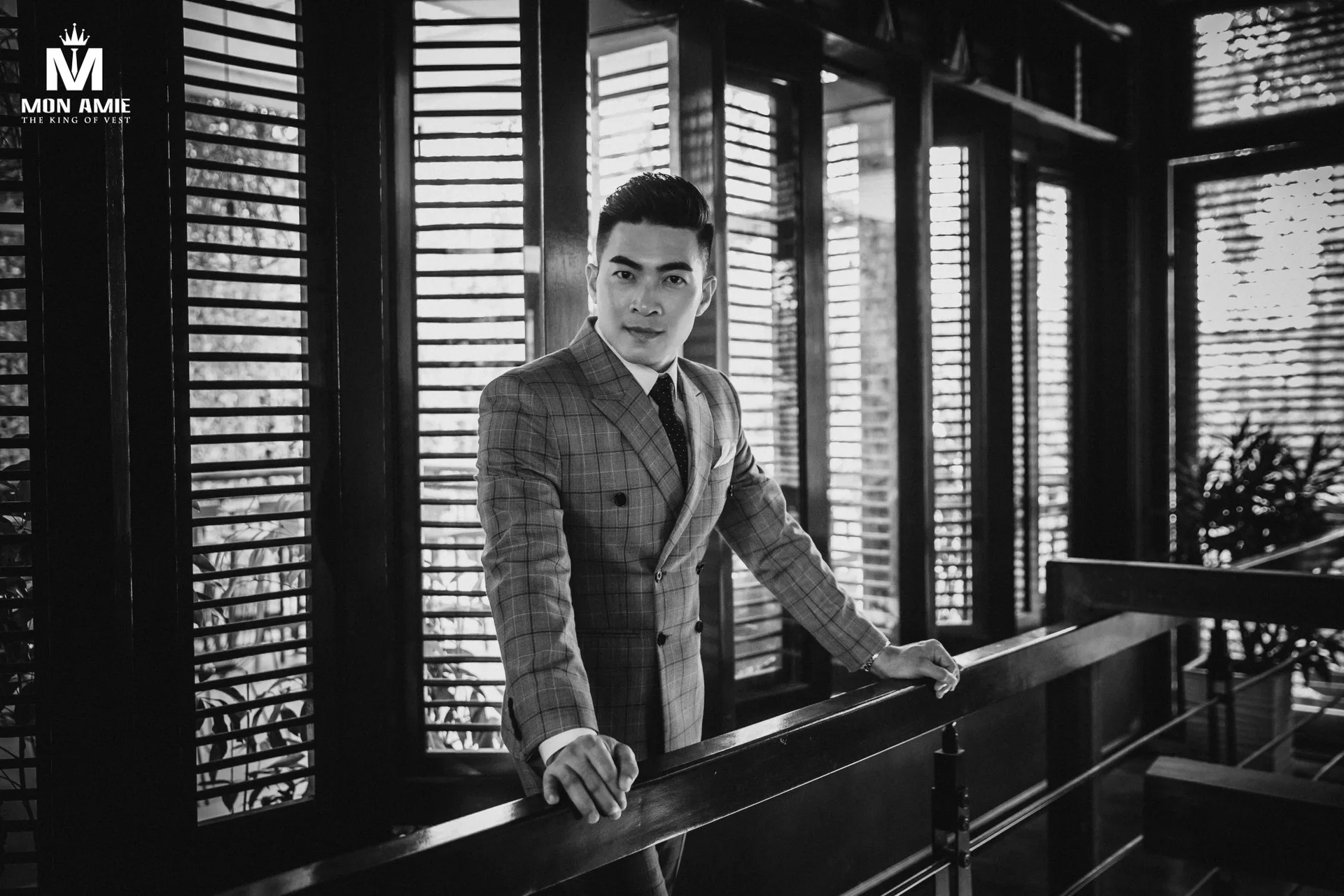
9. Shoulder cut. A soft (natural) shoulder follows the real shoulder and is comfortable. A lightly padded (structured) shoulder creates a square line, and is often chosen for sloping shoulders.
10. Jacket length and waist fit. A jacket usually covers the seat; shorter looks more youthful. A fitted or straight waist is a matter of taste. However, whichever you choose, you still need enough ease to move.
Group 4: Inside the jacket
11. Lining. You can choose a full lining (enclosed, warm, lies flat), a half lining (light, cool, suited to a hot climate), and a lining colour or pattern: a piece of patterned silk is where you “hide” your personality.
12. Monogram. Your name or initials embroidered on the chest lining or the inside label. A small detail so that the jacket feels unmistakably your own.
Group 5: Trousers and waistcoat
13. Waistband and pleats. No pleats for a clean look. One or two pleats for roomy thighs. You can choose a regular or a high waistband; a high waistband suits men with a stomach.
14. Trouser leg and hem. A straight leg, a lightly tapered leg or a wide leg. A plain hem (cut straight) or a cuffed hem with a double fold. The length of the hem determines the “break” of the trouser.
15. Waistcoat. Adding a waistcoat turns a two-piece suit into a three-piece. The waistcoat can be in the same cloth or a different one, with one or two rows of buttons.
Which details change the price, and which do not?
The general principle of made-to-measure is: choosing a style is free, while adding cloth or adding craftsmanship may be charged. Mon Amie has three full-suit lines by quality of cloth: Essential from VND 4.8 to 10 million, Signature from VND 10 to 20 million, Heritage above VND 20 million. The final price is quoted by the stylist when the design is confirmed, but as a general rule of thumb in the trade:
| Usually no change in price | May affect the quote |
|---|---|
| Lapel style, lapel width | Waistcoat (extra cloth, extra labour) |
| Number of buttons, pocket style | Double-breasted jacket (more cloth) |
| Vents | Full lining or patterned silk lining |
| Buttonhole thread colour, button colour | Horn buttons, special buttons |
| Shoulder cut, length | Premium imported cloth |
Three sample configurations for a made-to-measure suit jacket
If you do not know where to start, the three “recipes” below are the starting point for many clients:
- Everyday office: medium-width notch lapel, two buttons, flap pockets, side vents, soft shoulder, half lining, plastic or horn buttons matching the cloth, one-pleat trousers with a medium rise. Neat, durable, never out of fashion.
- Parties and events: peak lapel or a wider notch lapel, two buttons or double-breasted, jetted pockets, patterned silk lining, buttonhole thread matching the cloth, plus a waistcoat. Serious, but with a touch of personality in the lining.
- Wedding suit, ceremonial dress: peak or shawl lapel, three-piece, jetted pockets, covered buttons, high-waisted trousers with no pleats or one pleat, light-coloured lining. The accessories that go with it decide the rest.
These three configurations are only starting points. Once you have chosen, the stylist will adjust further for your build: for example, sloping shoulders need light padding, a fuller stomach needs a high-waisted trouser, and a shorter man should choose a medium lapel and a jacket of moderate length.
Tips from Mon Amie’s master tailors
Do not try to customise everything on the first order. For your first suit, keep a notch lapel, two buttons, side vents and buttons in the same colour as the cloth. Once you are used to wearing it, the second suit is the time to try a peak lapel, a patterned lining, burgundy buttonhole thread. Also, bring a photo of a suit you like; one picture says more than ten descriptions.
To preview a design, you can try combinations on the online suit designer, then bring the result to the bespoke tailoring service so the artisan can refine it on your real measurements.
Frequently asked questions
How is a custom suit different from an ordinary suit?
A custom-made suit lets you choose every detail and the jacket is cut to your own measurements, whereas ready-to-wear lets you choose only a size. Mon Amie takes more than 30 measurements in its bespoke service and keeps them for life.
Do I need to choose all 15 details for a custom suit?
No. If you are unsure, simply let the stylist propose according to your build and the occasion. You need only decide the details you truly care about.
What is a made-to-measure suit, and how is it different from buying ready-made?
A made-to-measure suit is a jacket cut to your measurements, in the cloth and style you choose. A ready-made suit is mass-produced in standard sizes, and only the sleeves and trouser hem can be lightly altered. More detail is in the article what to know about made-to-measure men’s suits.
Where can I get a made-to-measure suit with this full choice of details?
Any place that offers baste fittings and adjustments on your own measurements will let you choose every detail. At Mon Amie, the customisation step takes place with a stylist in a one-to-one consultation.
In closing
Made-to-measure is not about choosing as much as possible, but about choosing what suits you. If you would like someone to sit with you and turn over each lapel, button and lining sample, simply book a measuring appointment at the nearest showroom, or have an artisan come to your home.