
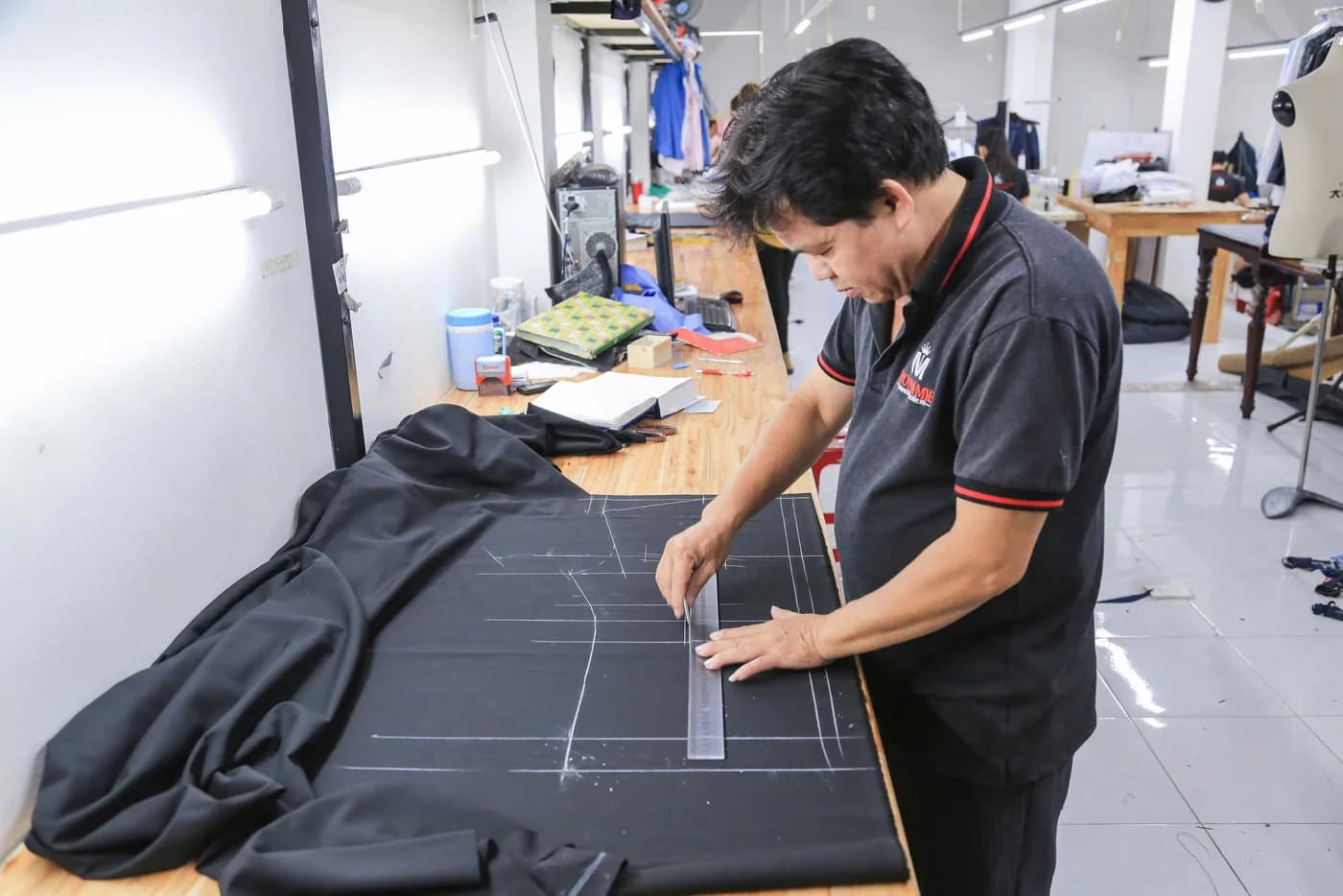
Most disappointing made-to-measure experiences do not come from a poor tailor. They come from a vague instruction: "make it fit nicely", "a little close", "moderately long". Each person understands those three phrases in a different way, and when the jacket arrives nobody is wrong; nobody simply understood each other. To get a made-to-measure suit exactly right the first time, you need to know a few things before you step into the showroom.
The Short Answer
Before ordering your first made-to-measure suit, set a budget by price tier, decide the occasion and how you will wear it before choosing cloth, begin with an easy-to-wear navy or charcoal grey suit, brief the tailor with measurements and photos rather than adjectives, check the shoulders carefully at the baste fitting, and ask clearly about the alteration warranty.
Nine Things to Know Before Ordering a Made-to-Measure Suit
1. Set your budget by price tier, not by a round number
Mon Amie divides its made-to-measure price list for a complete set (jacket and trousers) into three tiers, each tied to a group of fabrics:
| Tier | Price per full set | Fabric |
|---|---|---|
| Essential | VND 4.8 – 10 million | Kevinlli 40–70% wool (100s–140s) |
| Signature | VND 10 – 20 million | Kevinlli 80–100% wool 140s–150s, Dolce & Taylor, Luciano, Salford, Vercelli |
| Heritage | Over VND 20 million, up to VND 60 million per set | Canonico, Holland Sherry, Dormeuil, Scabal |
Signature is the tier chosen most often. Once you know which tier you are in, choosing cloth goes twice as fast. See the made-to-measure price list for details.
2. Think about the occasion before you think about colour
A suit worn to the office five days a week is very different from one worn only at events. Answer three questions: where will you wear it, how many hours a day, and how do you travel. Someone who rides a motorbike needs extra breathability; someone who sits in meetings all day needs ease at the back and underarms.
3. Choose cloth for the climate and the way you wear it
In Ho Chi Minh City, lightweight wool for a hot, humid climate is popular. The numbers 100s, 120s, 140s indicate the fineness of the yarn: the higher the number, the smoother and lighter the cloth, but also the more delicate it is for daily wear. For a suit you wear often, choose the middle range; move up to the finer range only for a suit for important occasions.
4. Your first suit should be the easiest one to wear
Most master tailors will suggest a navy or charcoal grey suit, two buttons, notch lapel, with a moderate layer of canvas. This is a suit that goes with almost any shirt and tie. Unusual colours, bold patterns or a double-breasted style are saved for the second suit.
5. Measurements: the more, the better
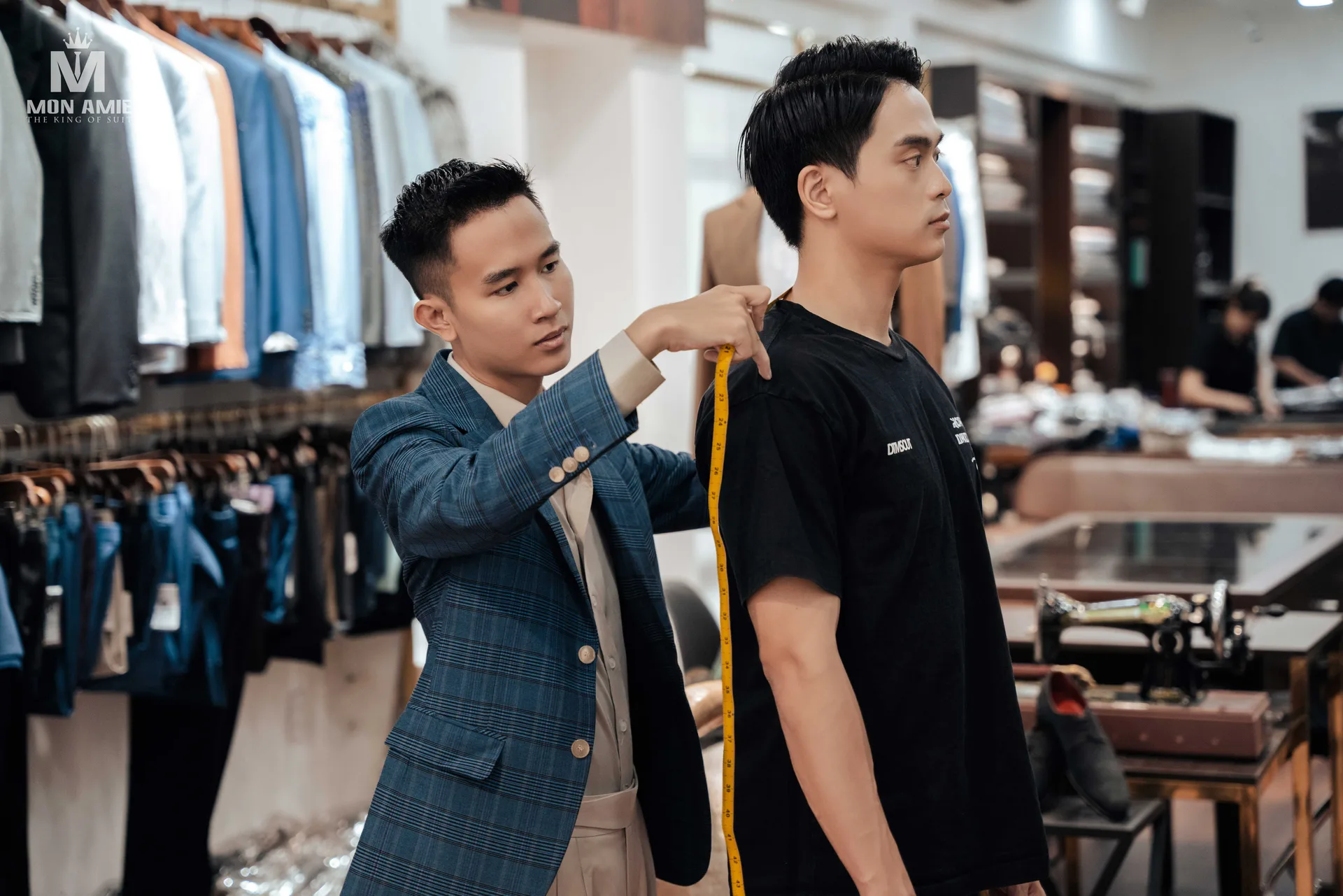
With the Bespoke service, the artisan takes more than 30 measurements and keeps them for life, so later orders need almost no re-measuring from scratch. When you are measured, wear a thin shirt, stand naturally and empty your pockets. Tell the tailor in advance the things that are hard to see: uneven shoulders, a slightly rounded back, whether you often keep a wallet in your jacket pocket or roll up your sleeves.
6. Brief the tailor with numbers and pictures, not adjectives
Instead of saying "a little close", say "about 8 cm of ease at the chest". Instead of "moderately long", say "the jacket covers the seat completely". Instead of "sleeves just right", say "about 1 to 1.5 cm of shirt cuff showing". Bring two or three photos of suits you like, and point out exactly which detail you like: the lapel, the closeness, the length, the waistline.
7. The baste fitting is the moment to speak honestly
The baste is a jacket tacked together temporarily, not yet finished, so the tailor can check the fit. The number of fittings depends on your build and the complexity of the suit; Mon Amie's process is to hold baste fittings and adjust until the suit fits well. At the fitting, check the shoulders first, then whether the collar hugs the shirt collar, whether the underarms are tight, and whether the front hangs flat. If anything feels off, say so immediately. Once the jacket is finished, many details are hard to change.
8. Ask clearly about the alteration warranty
A good suit will stay with you for many years. Bodies change and cloth relaxes with the habits of wear. Mon Amie offers a long-term alteration warranty after you receive the suit. Wherever you order, ask: how long are alterations covered, which items can be altered, and is there a charge.
9. Count backwards from the day you need to wear it
Do not order too close to a wedding, an interview or the day you take up a post. Order early so there is at least some room for alterations. If there is an important event, give the date at the first meeting so the tailor can plan the fitting schedule accordingly.
Choosing How to Be Measured: Showroom, At Home or Online
Mon Amie has three ways for you to begin, depending on your schedule and location:
- Bespoke at the showroom: the fullest experience. You meet the artisan in person, choose from the Italian and English cloth stock, have baste fittings and finish until the suit fits well. There are 5 showrooms in Ho Chi Minh City.
- Made-to-measure at home: the artisan comes to your home, office or hotel in Ho Chi Minh City, bringing cloth samples and a tape measure. Suited to busy people.
- Made-to-measure online: consultation and measuring guidance by video call, cloth chosen from a photo library, delivered to your door across Vietnam and internationally.

Tips From Mon Amie's Master Tailors
Bring what you actually wear. Bring the shirt and shoes you will wear with the suit, because trouser length and collar fit depend on them.
Do not be measured right after a big meal or a large party. The stomach changes by a few centimetres between morning and evening. Be measured when your body is in its most normal state.
Choose one suit for your life, not for a photograph. The most handsome suit is the one you wear most often. If you want to understand more about the nature of made-to-measure, read what is bespoke to tell bespoke apart from made-to-measure.
Frequently Asked Questions
How does a made-to-measure men's suit differ from a ready-to-wear suit?
A made-to-measure suit is cut to your own measurements, so the shoulders, chest, waist and length all match your body. A ready-to-wear suit is sized to an average, fitting many people but seldom fitting any one person completely. The difference is clearest at the shoulders and the shape of the back.
What colour should a first made-to-measure suit be?
Navy or charcoal grey, in plain cloth or a very subtle pattern. These two colours go easily with a white shirt, a light blue shirt and most ties, and suit both the office and parties. Bold colours or elaborate styles are saved for the second suit.
Is a made-to-measure suit expensive?
Price depends mainly on the cloth. At Mon Amie, a full jacket and trousers comes in three levels: Essential from VND 4.8 to 10 million, Signature from VND 10 to 20 million, and Heritage above VND 20 million. You can choose the level that fits your budget instead of ordering a suit at either end of the price list.
How many fittings does a made-to-measure suit need?
It depends on your build and the complexity of the suit. Someone with uneven shoulders, an unusual back, or a suit with many details needs more careful fitting. What matters is not the number of fittings but fitting until the jacket is right; if something does not look right, ask for it to be adjusted.
Where can I have a suit made to fit without many visits?
Choose the format that suits your schedule: the showroom if you live nearby, a tailor coming to you if you are busy within Ho Chi Minh City, or a video call if you are far away. Saved measurements make later orders much quicker.
In Short
Having a suit made to measure is not difficult; you only need to know what you want and be able to say it in measurements instead of adjectives. If you want to begin, book a measuring appointment at a showroom or have a tailor come to you, and bring the photos and questions you prepared above.