

A darker skin tone is not a limitation — quite the opposite. It carries suit colors better than almost any other complexion, provided you pick from the right palette. In Mon Amie's fitting rooms, clients with tanned skin are often surprised at how their face lights up in deep navy or light beige compared to the washed-out grey they had been wearing.
The short answer
Men with darker skin should favor deep navy, cobalt blue, light beige or cream, tobacco brown and off-white — colors that either contrast clearly with the skin or share its warmth, both of which brighten the face. Be cautious with pale silvery greys, muddy olives and any mid-tone that sits too close to your own skin depth, as they blur the contrast and dull the complexion.
Why a suit color brightens or dulls your skin
It comes down to contrast. Darker skin sits in the medium-to-deep range, so:
- Colors clearly darker than the skin (deep navy, midnight blue) frame the face and make it appear brighter by comparison.
- Colors clearly lighter than the skin (beige, cream, off-white) create the reverse contrast, making the complexion look fresh and healthy.
- Colors that match the skin's depth (neutral grey, muddy olive) are the danger zone: without contrast, face and fabric blur together.
Undertone matters too. Darker Vietnamese skin usually carries a warm golden base, so warm shades like tobacco brown and burgundy harmonize naturally, while cool bluish greys can leave the skin looking sallow.
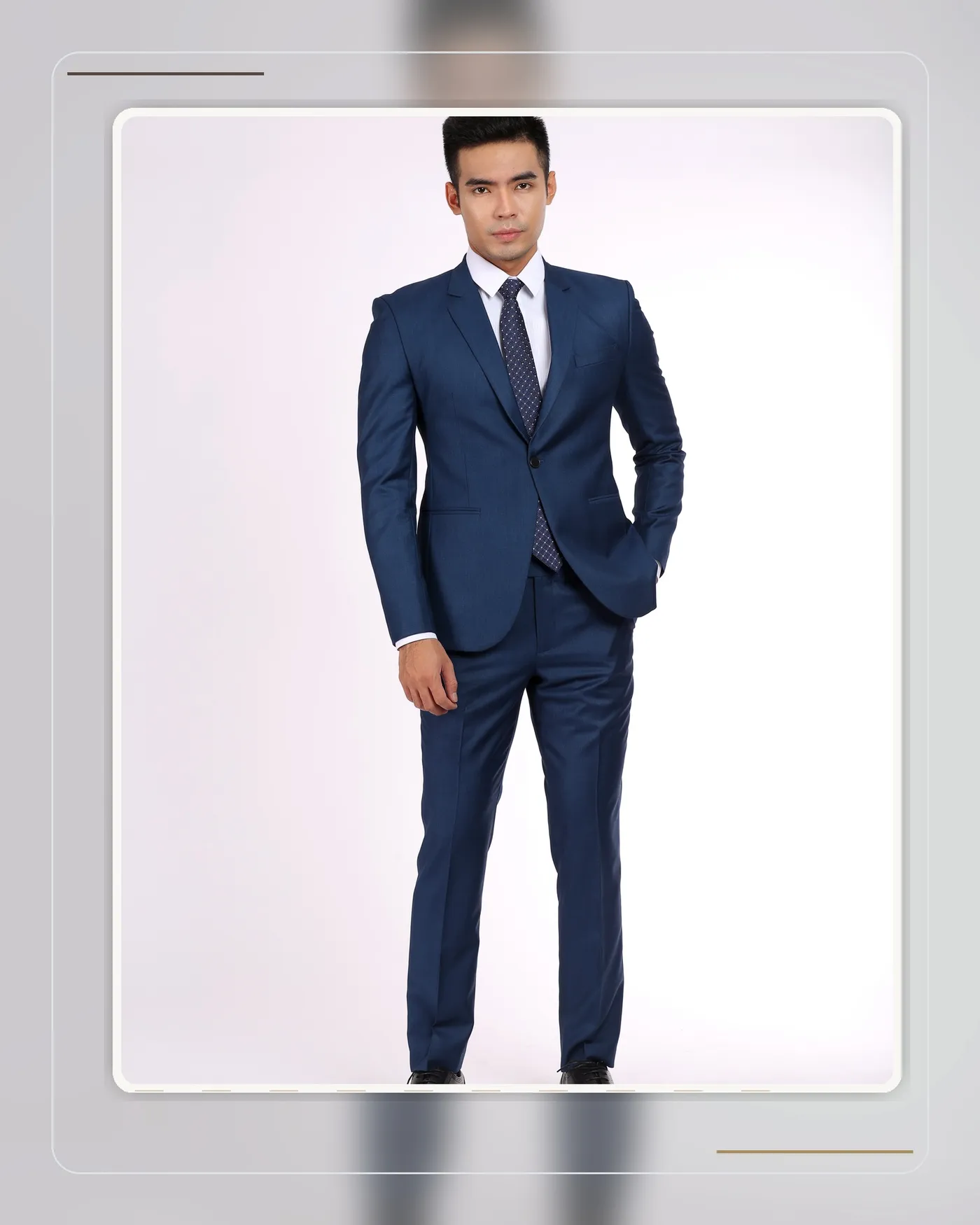
A suggested palette by occasion
- Work and client meetings: deep navy or midnight blue — classic, flattering, easy to pair with white or pale blue shirts.
- Weddings and daytime events: light beige, cream, cobalt blue — vibrant and extremely photogenic against darker skin.
- Evening functions: midnight blue or deep burgundy; solid black also works well thanks to the strong contrast, unlike on very fair skin where it can look harsh.
- Handle with care: pale silvery grey, muddy olive, washed-out mustard — always test in natural light before committing.
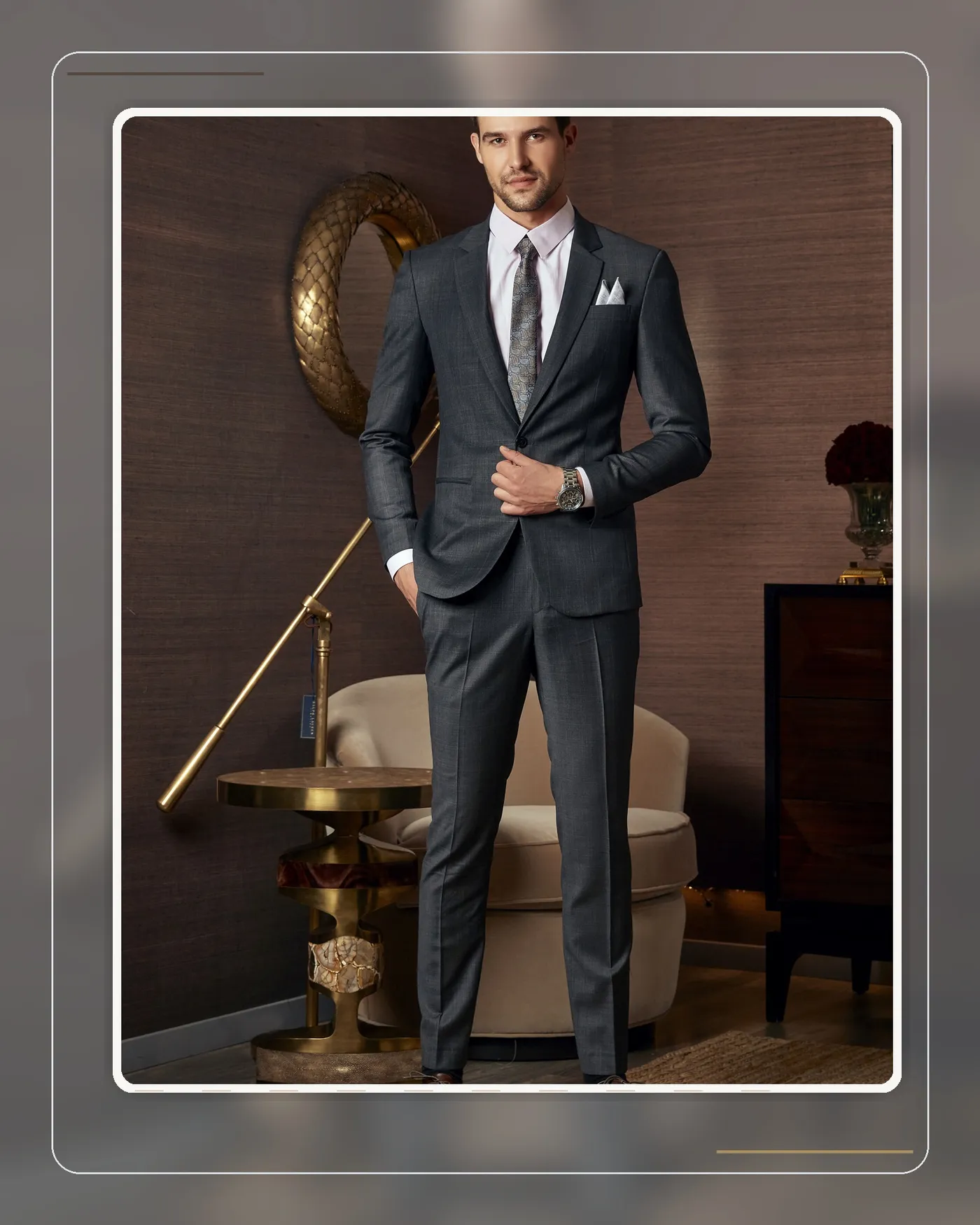
Your shirt and accessories decide the other half
The right suit color is only half the equation; the shirt is the layer closest to your face. On darker skin, crisp white or pale sky blue is almost never wrong — it reflects light up onto the jaw and neck, evening out the complexion in photographs. Avoid dull tan or beige shirts right against the face. For ties, warm dark tones — burgundy, navy with polka dots — lock the whole look together.
A small trick from Mon Amie's tailors: when trying on a suit, stand under warm restaurant-style lighting, not just the showroom's white lights — many colors look great in store but turn muddy under warm bulbs, and vice versa.

Common mistakes
- Choosing light grey on the logic that "light color means brighter skin" — cool pale grey usually dulls darker skin instead.
- Wearing a shirt in the same muted warm tone as your skin, erasing the boundary between face and clothing.
- Trying suits only under white light, without checking photos or warm lighting.
A word from Mon Amie's artisans
At Mon Amie, before any fabric is confirmed, our tailors drape the bolt over the client's shoulder and check it under two different light sources — the same navy reads completely differently on warm versus cool undertones. For clients with darker skin, we usually steer the first suit toward deep navy and the second toward light beige: one dark, one light, enough contrast to cover nearly every occasion of the year.
Frequently asked questions
Can darker skin wear a black suit? Yes — darker skin has enough contrast to carry black well, especially at evening events. Just pair it with a white shirt so the face doesn't sink into the look.
Should darker skin avoid grey entirely? No — simply choose deep charcoal instead of pale silvery grey; dark grey still creates enough contrast to flatter the complexion.
Do pastels like light pink or mint suit darker skin? Very much so, especially at daytime celebrations — light pastels contrast beautifully with darker skin, as long as the rest of the outfit stays minimal.
If you're unsure whether your skin runs warm or cool, the fastest answer is to test fabric in person — book an appointment with Mon Amie and our consultants will drape the cloth against your skin before you decide anything. You can also read about the tailoring process to see how a suit in the right color and cut comes together.