
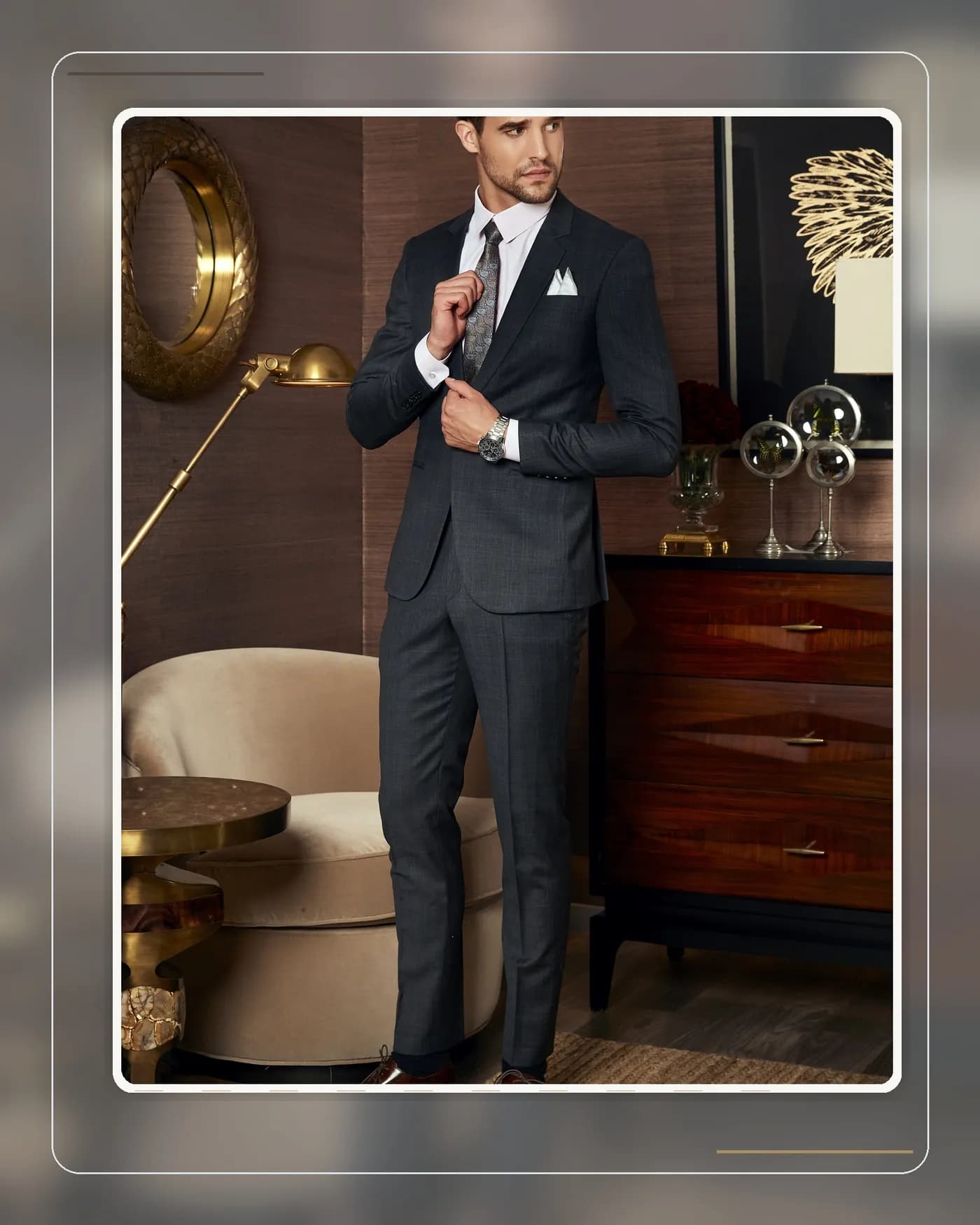
Slim men tend to wear suits beautifully — straight shoulders, a flat stomach, almost any cut falls into place. The one thing that needs real thought is color: choose the wrong direction and the suit makes you look thinner than you are; choose well and it fills out your frame naturally, with no shoulder padding or oversizing required.
The short answer
Slim men should favor light and neutral suit colors — light grey, beige, soft blue, light brown — because lighter surfaces reflect light and create a sense of volume through the upper body. Dark colors like black and deep navy have a slimming effect that makes a thin frame look thinner; if work demands a dark suit, choose a textured cloth (flannel, tweed) or a check pattern to restore visual weight.
Why light colors fill you out and dark colors shrink you
The eye reads volume through light: bright surfaces reflect more, so the body's outline shows clearly and appears fuller; dark surfaces absorb light, lines sink into each other, and the silhouette contracts. That's exactly why men carrying weight love black suits — and exactly why slim men should head the other way.
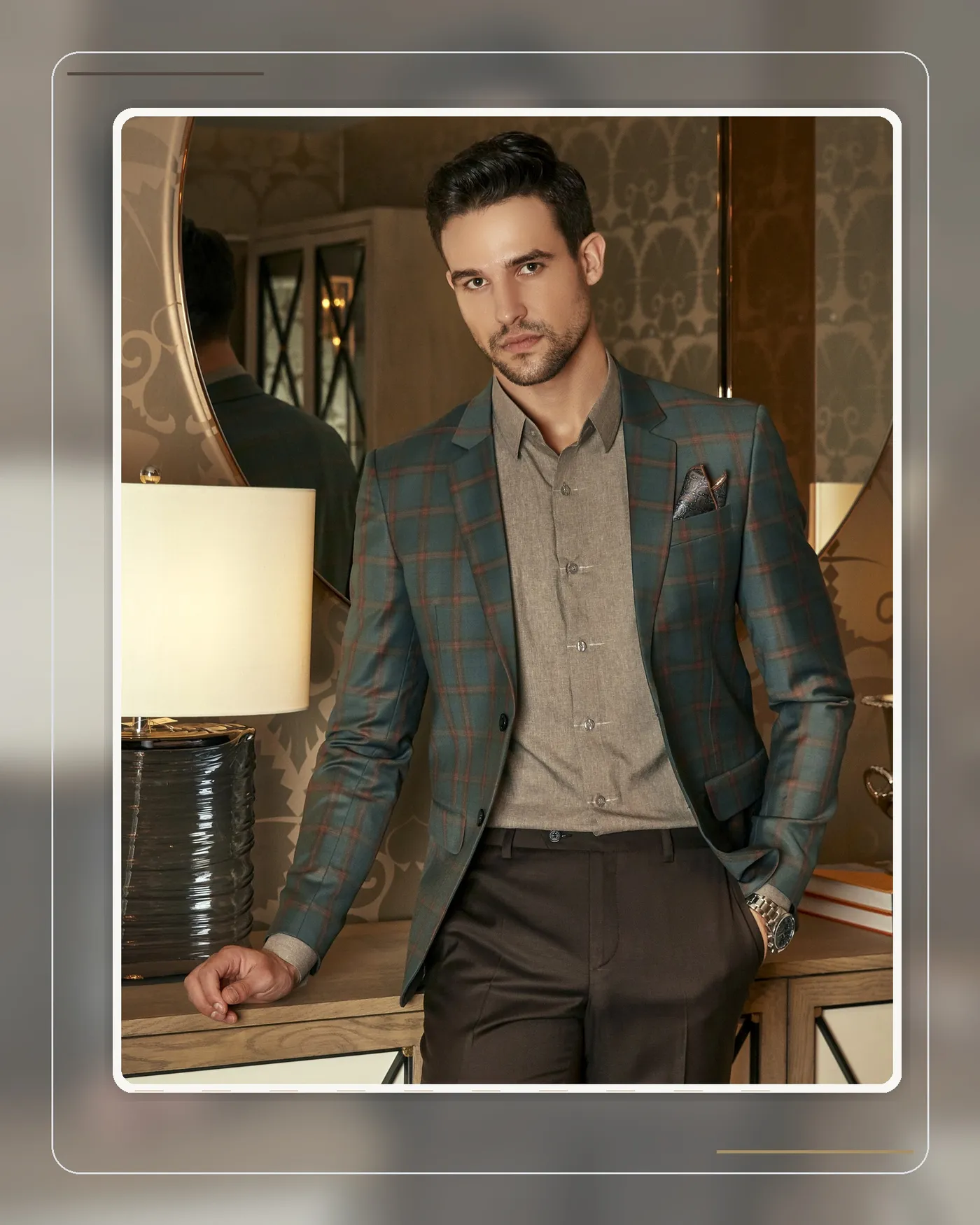
Beyond color, fabric texture adds mass of its own: a light grey flannel suit reads noticeably "fuller" than a smooth worsted wool in the same shade. Check patterns (glen plaid, windowpane) widen the frame horizontally — precisely what a slim build needs — while pinstripes elongate and slim it further.
Choosing color by occasion
- Everyday office wear: light or mid grey is the number-one choice — bright enough to broaden, still perfectly professional.
- Weddings and daytime events: beige, cream, soft blue — festive and flattering on a slim build.
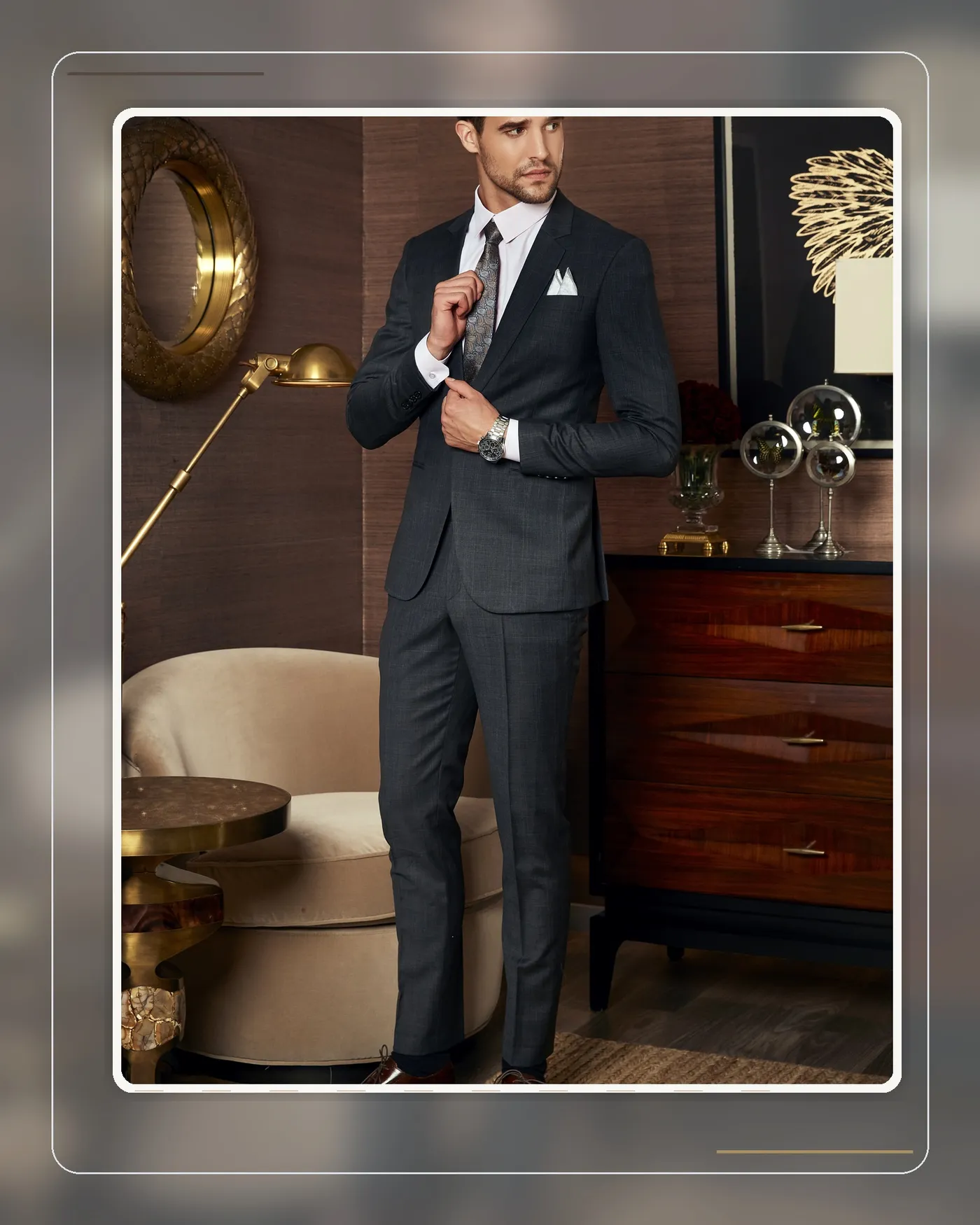
- Important meetings that call for a dark suit: swap plain navy for a subtle navy check or charcoal flannel; the texture and pattern give back the volume the dark color takes away.
- Best kept to a minimum: smooth plain black and fine pinstripes — both stretch the figure longer and thinner.
Small tailoring adjustments that fill out a slim frame
Color is half the story; the cut finishes it. For slim clients, Mon Amie usually recommends a medium-to-slightly-wide lapel to balance the shoulders, a canvassed chest that adds natural fullness, and straight-leg trousers rather than an aggressive taper. A three-piece is also the slim man's secret weapon: the waistcoat adds a middle layer that visibly thickens the torso, especially with the jacket off.
Common mistakes
- Wearing a tight plain black suit on the theory that "slimmer is sharper" — the result is an even thinner silhouette.
- Choosing pinstripes hoping to look taller, when a slim frame lacks width, not height.
- Judging fabric by a small swatch's color alone, without draping the full bolt against the body.
A word from Mon Amie's artisans
In Mon Amie's fitting rooms, slim clients are often handed two bolts at once: a plain navy and a textured light grey — and almost every time, the client sees the difference in the mirror before the tailor has finished explaining it. Tailoring for a slim build isn't about hiding anything; it's about using color, cloth and structure to show the body at its best proportions.
Frequently asked questions
Can slim men wear a black suit? Yes, but save it for evening events and choose a cloth with some texture; don't make plain black your everyday suit, as it thins the frame further.
Are light-colored suits hard to keep clean? Slightly more than dark ones, but good wool naturally resists dirt; brushing after wear and dry-cleaning on schedule will keep the color fresh for years.
Should a slim man choose a two-piece or three-piece? A three-piece is well worth considering — the waistcoat fills out the torso and keeps you looking sharp even with the jacket off.
If you'd like to know exactly which colors and cuts suit your frame, book an appointment and Mon Amie's tailors will measure and advise you in person — or browse our pricing to plan your first made-to-measure suit.