
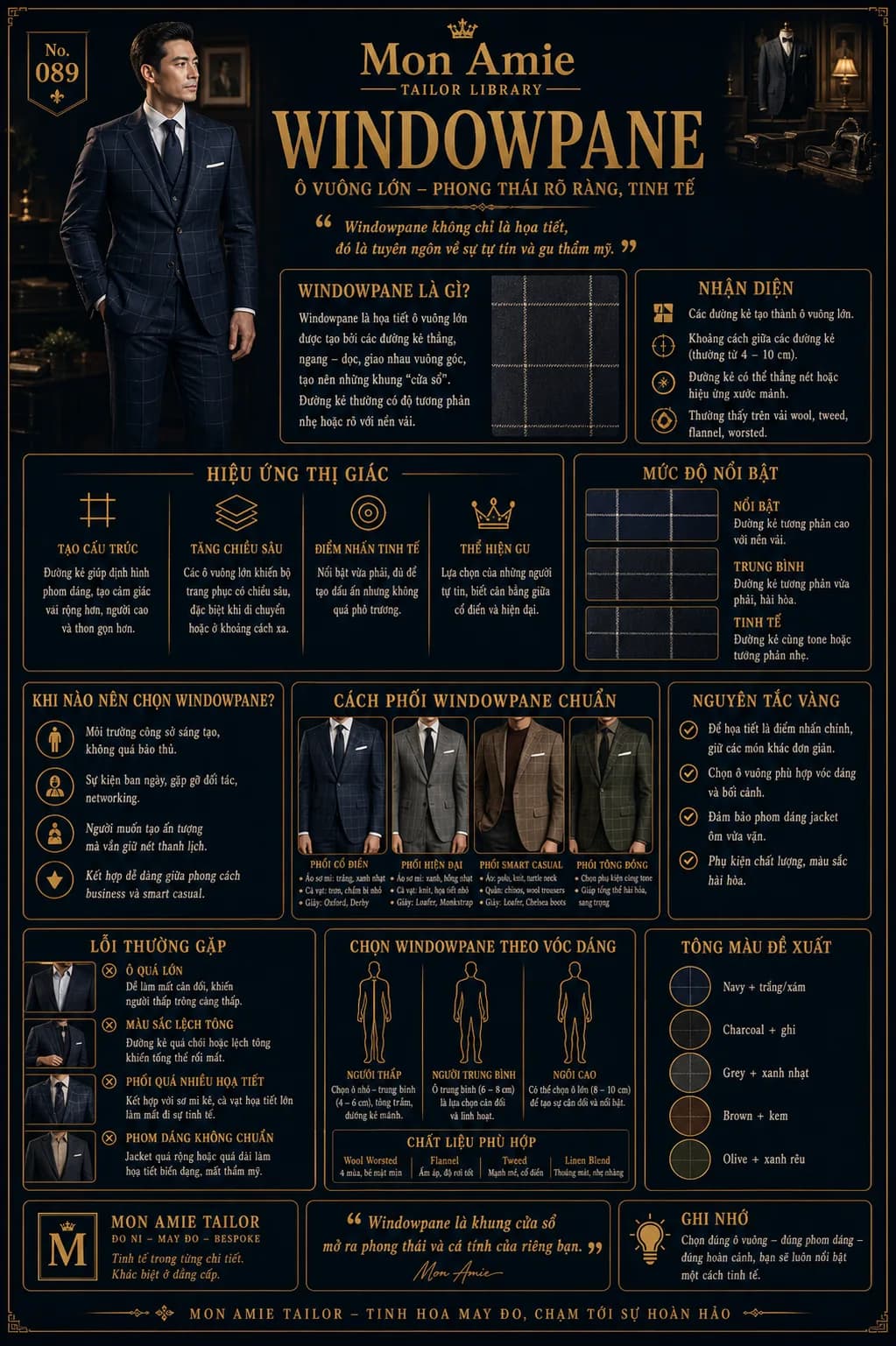
Windowpane is a large square check formed by horizontal and vertical lines crossing at right angles, evoking window frames drawn across the cloth. In a windowpane suit, a man wears more than a pattern; he wears a statement of confidence and taste. In this article, Mon Amie will help you recognise, choose, and wear windowpane so that it reads clearly yet remains refined.
What windowpane is and how to recognise it
Unlike small, dense checks such as gingham or glen check, windowpane has large, open squares and is unmistakable:
- The lines form large squares, usually spaced 4 to 10 cm apart.
- The lines may be crisp or slightly broken, which softens the effect.
- Contrast between line and ground may be gentle or pronounced, depending on the version.
- Windowpane appears most often on wool, tweed, flannel, and worsted — the familiar cloths of classic English tailoring.
Precisely because the check is large and open, windowpane keeps the gravity of a plain suit while adding a layer of character that a discerning eye recognises at once.
The visual effect of windowpane
Windowpane is not only handsome; it works for the wearer's figure:
- Structure: the lines define the silhouette, suggesting broader shoulders and a taller, leaner frame.
- Depth: large squares give the outfit dimension, especially in movement or seen from a distance.
- A measured accent: present enough to be noticed, never showy.
- A signal of taste: the choice of men who are confident and can balance the classic with the modern.
For prominence you have three registers: bold (high contrast between line and ground), medium (moderate contrast, well harmonised), and subtle (a tonal line or gentle contrast, visible only up close).
When to choose a windowpane suit
Windowpane belongs where personality is welcome:
- Creative or less conservative professional environments.
- Daytime events, meetings with partners, networking.
- When you want to make an impression while remaining elegant.
- When you need a suit that moves easily between business and smart casual.
For strictly formal occasions such as black tie, a plain suit remains the safer choice; windowpane shines in the space between the serious and the relaxed.
Four polished ways to wear windowpane
- Classic: a white or pale blue shirt, a plain tie or one with small pin dots, Oxfords or Derbies. Safe and correct for work.
- Modern: a blue or pale pink shirt, a knit tie or a small motif, loafers or monk straps.
- Smart casual: a polo, knit, or turtleneck under the windowpane jacket, with chinos or wool trousers, and loafers or Chelsea boots.
- Tonal: accessories that echo the colour of the check, for a harmonious and refined whole.
The golden rules throughout: let the pattern be the single accent and keep everything else simple; size the check to your build and the occasion; make sure the jacket fits closely and correctly; and choose quality accessories in harmonious colours.
Choosing windowpane by build and colour
The size of the check should follow your proportions:
- Shorter builds: a small to medium check (4–6 cm), in darker tones with fine lines, to lengthen the eye.
- Average builds: a medium check (6–8 cm) is the most balanced and versatile choice.
- Taller builds: a large check (8–10 cm) can be worn for proportion and presence.
For colour, the proven pairings include navy with white or grey lines, charcoal with grey, grey with pale blue, brown with cream, and olive with moss green. For cloth, worsted wool wears through most of the year with a smooth surface; flannel is warm with excellent drape; tweed is robust and classic; and linen blends are airy and light for hot climates.
Common mistakes to avoid
- A check too large for the build: it upsets the proportions and makes a shorter man look shorter still.
- Colours out of key: a line that is too bright or off-tone makes the whole look restless.
- Too many patterns at once: a striped shirt or a large-motif tie undoes the refinement.
- A poor cut: a jacket that is too full or too long distorts the pattern — with windowpane, a check that breaks at the shoulder or the centre back shows far more plainly than on plain cloth.
A word from Mon Amie's artisans
With windowpane, matching the check during cutting matters as much as choosing the cloth: the squares must align at the shoulder, the pockets, and the centre back before a suit truly looks expensive. If this is your first time with the pattern, begin with navy and a lightly contrasting white check in a medium size — easy to wear and right for most settings. Mon Amie always drapes the cloth against the client before cutting, because the same check can look quite different on different builds.
Windowpane is a window opening onto your own bearing and character — choose the right square, the right cut, and the right occasion, and you will stand out with quiet assurance. We invite you to book an appointment to try windowpane cloths from Kevinlli to Canonico and Holland & Sherry at Mon Amie's five showrooms, or to read about the tailoring process beforehand — hotline 0888.111.118.