
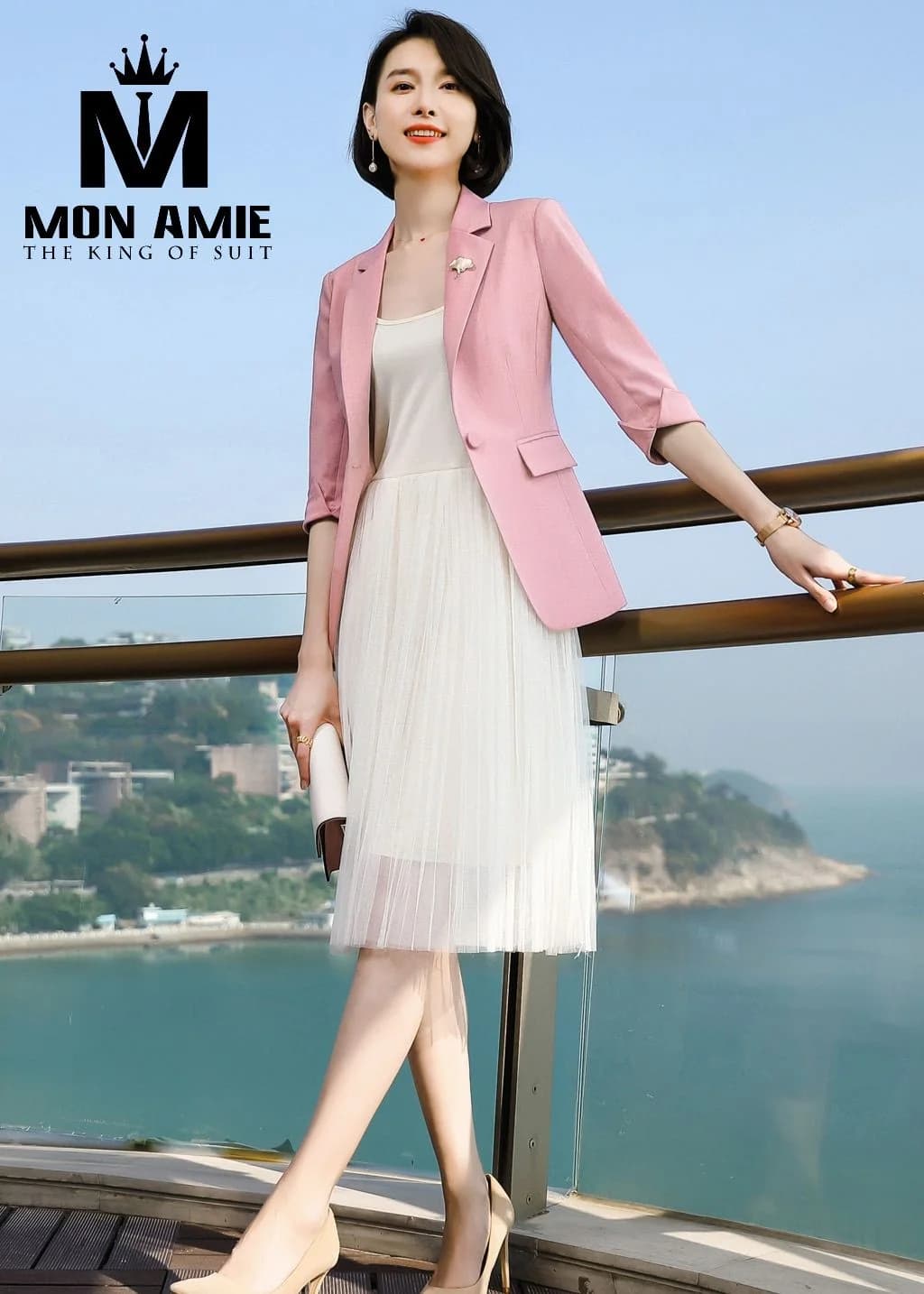
“Is it all right if I wear it a little loose?” This question rings out in the fitting room almost every week, usually with a tug at the hem and an uncertain look in the mirror. In truth, the question of whether a women's blazer should fit tight or loose has no answer that is simply “tight” or “loose”. There is a very specific range of good fit, and six checks are all you need to know where you stand.
Quick answer
Good women's blazer fit means snug at the shoulders, comfortable at the chest and waist, and roomy enough to raise your arms without the jacket riding up. Buttoned, it must not strain into an X-shaped crease, nor hang loose and shapeless. A loose cut looks good only when it is intentional, not when you have chosen the wrong size.
6 checks for women's blazer fit
1. Shoulders: the most important point
The shoulder seam must sit exactly on the shoulder bone, where the shoulder ends and the arm begins. If the seam drops onto the upper arm, the jacket is too wide in the shoulders. If it rides up towards the neck or is pulled taut, it is too tight. The shoulders are almost impossible to alter while keeping the shape, so choose a jacket by its shoulders first.
2. Chest: check with the button fastened
Fasten the button and stand straight. If creases radiate from the button in an X shape, the jacket is tight across the chest. If the front panels gape and sag in folds, it is loose. About two to three fingers of breathing room between jacket and chest is reasonable.
3. Waist: shaping the figure
The waist should follow the body lightly to create a curve, yet still let you sit and breathe deeply. A blazer shouldn't squeeze the waist like a corset. If you have a straight figure, you can choose a straight-cut style with a straight waist, rather than forcing a waistline that isn't there.
4. Sleeves: length and width
Blazer sleeves should reach the wrist bone or be slightly longer, letting about one centimetre of shirt cuff show if you wear a shirt underneath. The upper arm must be wide enough to bend the elbow comfortably. If the sleeve is so close-fitting that raising your arm drags the whole jacket with it, you need more room in the upper arm.
5. Hem: length and drape
On a standard-cut blazer, the hem usually falls around the fullest part of the hips, or shorter if you choose a cropped style for a more modest height. The hem should fall straight, without curling up or flaring out at the sides.
6. Buttoned and in motion
Try three movements: reach both arms forward as if holding a steering wheel, raise your arms high, then sit down. A jacket that fits rides up very little, makes no sound of strained stitching, and when you sit, the fastened button isn't yanked.

How does an intentional oversized cut differ from a wrong size?
This is where many women hesitate. Two jackets can both be loose, yet one looks stylish and the other looks borrowed from someone else. The difference lies in intent:
| Criterion | Intentional loose cut (oversize) | Wrong size |
|---|---|---|
| Shoulders | Evenly wide, the shoulder line designed to drop | Sagging, uneven, creased |
| Proportion | Wide on top, neat below: slim or straight-leg trousers | Wide both top and bottom |
| Cut lines | Sharp creases, hem falls well | Sagging folds, flaring hem |
| Fabric | Good drape, holds its shape | Limp or stiff as board |
| Feel when worn | Comfortable but neat | Constantly tugging and adjusting |
An easy rule to remember: a loose cut is balanced by everything else. A roomy, straight-cut blazer should go with neat straight-leg trousers or a fitted skirt, with a thin, lightly fitted top underneath. If both the outer jacket and the inner top are loose, you will be “swallowed” by your clothes.
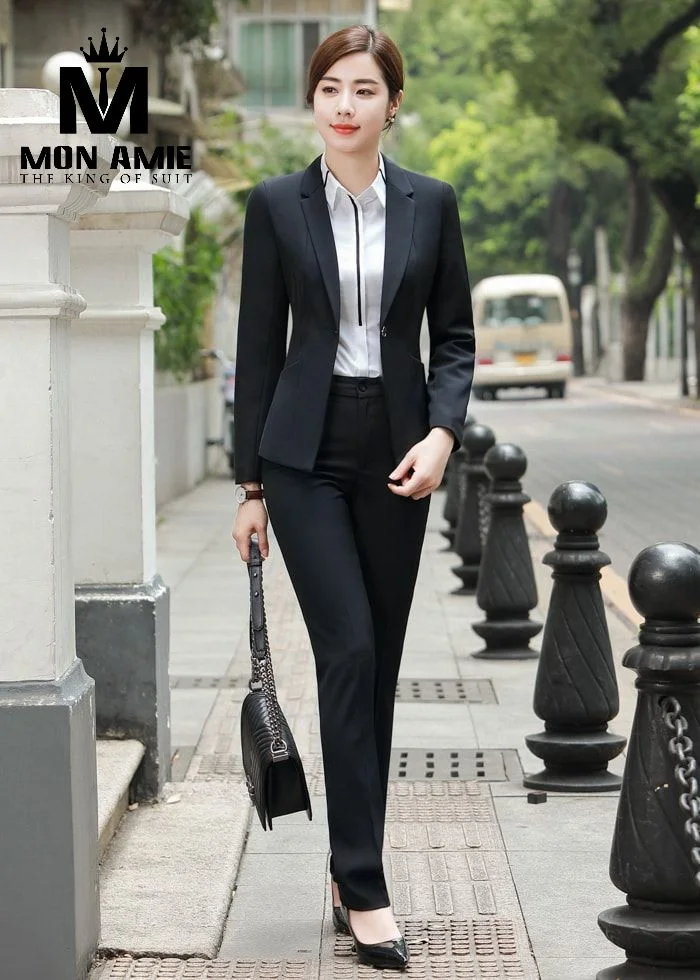
Women's blazer fit for each body shape: tight or loose?
- Petite figures: choose a jacket that fits at the shoulders, with a short hem around the waist or upper hip. Avoid jackets that fall below the hips, as they make the legs look shorter.
- Tall figures with broad shoulders: a straight or rectangular cut suits very well; you can choose single-breasted or double-breasted styles.
- Fuller figures at the chest or hips: choose the size by the fullest part, then take in the waist to fit. Don't choose a smaller size to “shape” the figure and then put up with it.
- Pear-shaped figures: pay attention to the hem line so it covers the hips, keep dark colours below, and choose a blazer that ends at the hip.
Common mistakes
- Choosing a size by the number on the label instead of by the shoulders. Every manufacturer has a different size chart.
- Trying the jacket on without wearing what you would wear underneath to work. A thin T-shirt and a thick sweater feel very different.
- Wearing a loose jacket for fear of tightness. A jacket that is too wide in the shoulders looks untidy faster than one that fits.
- Wearing a jacket that is too tight to “flatter the figure”. A tight jacket reveals every crease instead of flattering anything.
- Not testing it seated. You don't stand all day in the office, and the jacket has to be fine when you sit in a meeting.
A tip from Mon Amie's master tailors
Tailors often say: “The shoulders can't be altered; everything else can be adjusted.” So you can accept a jacket that is slightly loose at the waist or body, to be taken in, but don't accept shoulders that don't match. And if you have a distinctive build, such as one shoulder lower, or a narrow back but a fuller bust, made-to-measure is the most natural solution, because each measurement is calculated individually. With Mon Amie's bespoke service, you have more than 30 measurements taken and baste fittings until the fit is right.
Once you have a jacket that fits, see what trousers to wear with a women's blazer to get the proportions right, or the article on women's business suits in the power-suit style if you need a strong image for the office.
Frequently asked questions
How should a women's blazer be worn correctly?
A blazer should fit at the shoulders, have its top button fastened when you stand (on a two-button jacket, fasten only the top button), and be unbuttoned when you sit so the jacket isn't pulled taut. The sleeves reach the wrist bone, and the hem lies flat with no twisting creases.
Is an oversized women's blazer still smart?
Yes, provided the loose cut is a designed style rather than a wrong size. Balance it with neat straight-leg trousers and a lightly fitted top underneath, and choose a cloth with enough body for the jacket to keep its lines.
Who suits a straight-cut women's blazer?
A straight cut suits tall women, those with level shoulders, or those with a straight figure. If you are petite, choose a shorter hem and make sure the shoulder seam doesn't drop onto the upper arm.
Does a loose-fitting women's blazer make me look bigger?
It can, if the cloth is thick or the whole outfit is loose. To avoid this, choose a cloth with good drape, a single colour, and keep the lower half neat to create a slim line.
An invitation
If you are still unsure whether a women's blazer should fit tight or loose on your figure, or you are torn between a fitted and a straight cut, the quickest way to settle your women's blazer fit is to try both side by side. You can book a measuring appointment at a Mon Amie showroom in Ho Chi Minh City so a stylist can compare them with you in person, or browse styling ideas in the lookbook before you come.