

Saigon has no winter, only a few mornings cool enough to make you start thinking about adding a layer. Da Lat is the real thing: after dark the wind bites and mist settles on your shoulders. The same man, the same suit, yet how to wear a suit in winter differs sharply between the two places. The five approaches below run from light to heavy, so that you can choose the right layer for the right place without turning yourself into a dumpling.
The short answer
Wearing a suit in winter in Vietnam means thin layers, not heavy clothes: a thin V-neck knit under the jacket, a three-piece with a waistcoat, a long overcoat on top, a turtleneck in place of a tie, and warm wool in deep tones. Saigon needs only one or two layers; Da Lat adds an overcoat and a scarf.
1. A thin V-neck knit under the suit: a warm layer without bulk
This is the easiest approach and is usually enough for Saigon. Choose a thin V-neck knit in grey, navy or beige, and wear it between the shirt and the jacket. A moderately deep V lets the tie sit neatly with the shirt collar still visible, while the body of the knit tucks fully inside so the jacket does not bulge. In Saigon, this layer is needed only on early mornings or in meeting rooms where the air conditioning is turned up too far; by noon you can take off the jacket and still look tidy. In Da Lat, it is the middle layer that leaves room for an overcoat outside.
The big caveat is the fit of the jacket. A suit cut close to the body will strain at the armholes and buttons when you add knitwear. If you know you will wear it this way, bring the very knit you plan to use to the baste fitting so the tailor leaves the right amount of ease, rather than forcing it in afterwards. With Mon Amie's Bespoke service, the baste fitting is when this gets done. And there is one familiar mistake: a thick crew-neck knit makes the shirt collar pop up, and knit sleeves that run longer than the shirt sleeves show at the jacket cuff.
2. The three-piece suit: the waistcoat is the warm layer that never shifts
A knit slips out of place; a waistcoat does not. It wraps the chest and stomach, where heat escapes when you take your jacket off, without adding bulk at the shoulders or sleeves. That is why a three-piece suits Saigon evenings with parties and air conditioning, and suits Da Lat too when you only go from the car to the restaurant.
A waistcoat should fit like skin: it must not ride up when you sit, the bottom button is left open by convention, and the tie tail stays tucked inside. If you want a change of look, a waistcoat in a different colour from the suit still works when both are in the same cool range, for example a silver grey waistcoat under a navy suit. The trap to avoid is wearing a three-piece in heavy cloth in the Saigon midday sun; in this weather, choose a thin, open-weave wool and take the jacket off, keeping only the waistcoat.
3. A long overcoat over the suit: the outer layer for Da Lat evenings
In Da Lat, the layer that decides things is not the suit but the outer coat. A straight-cut wool overcoat keeps the whole body warm without your changing anything underneath. Two measurements need attention. One is length: the hem of the overcoat should fall clearly past the hem of the jacket, usually at the knee or just above, so the jacket does not peek out below. Two is the shoulder: the overcoat's shoulder needs to be a little wider than the jacket's so the jacket sits quietly inside, but not so wide that it droops down the arm.
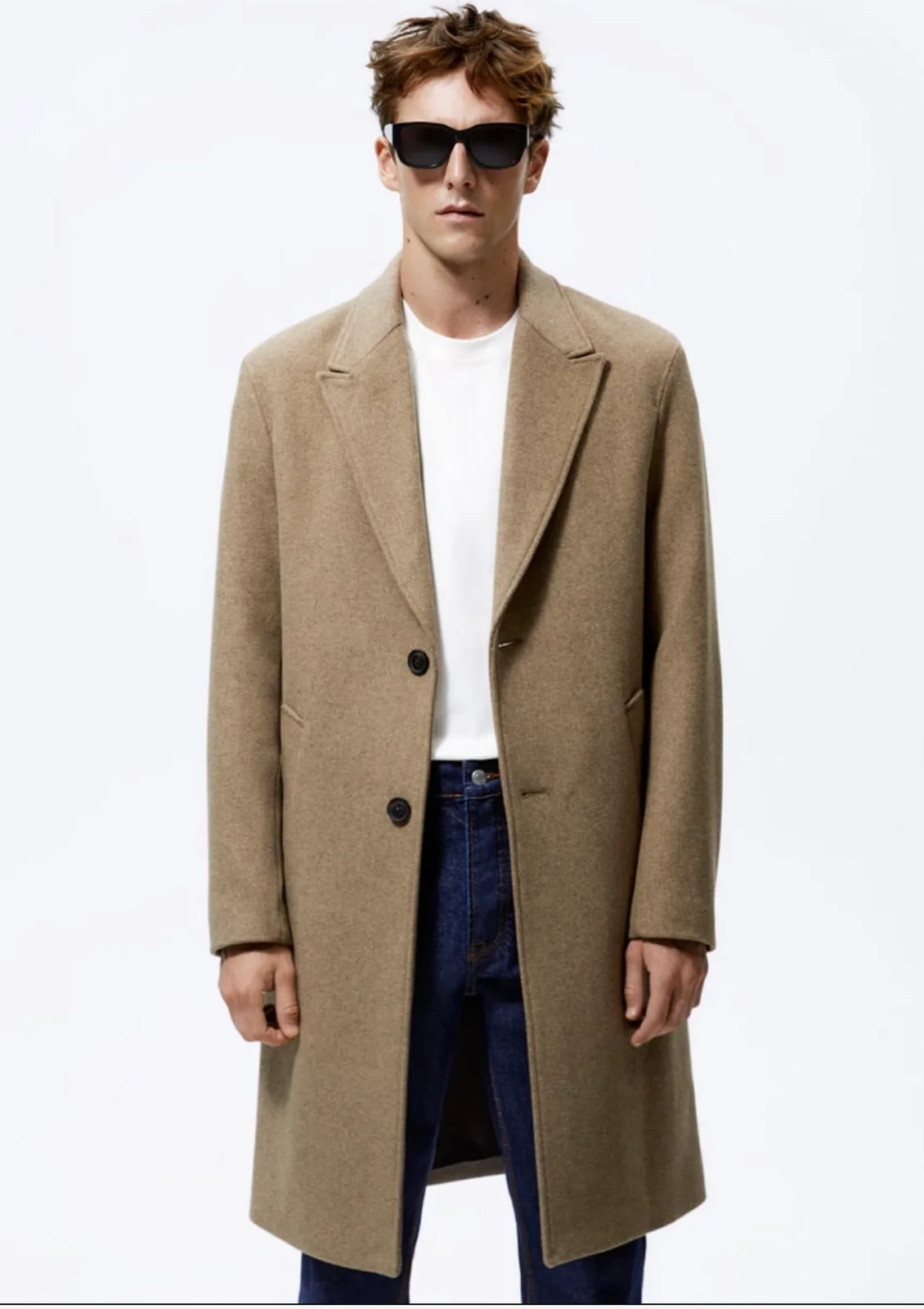
The beige wool straight-cut wide-shoulder overcoat in the photo is of this kind; the beige, light camel tone goes with almost any dark suit. In Saigon, an overcoat is mostly for carrying over your arm when you fly somewhere cold; wearing it for a whole evening would be too hot.
4. A thin turtleneck in place of a tie: less formal, still polished
On a leisure trip to Da Lat or an evening coffee in a cool Saigon, a tie is no longer required. Replace the shirt with a thin turtleneck under the jacket and you have a warm layer around the neck and nape, where the wind gets in fast. Choose a plain colour: cream, light grey, black or navy; under a dark jacket the whole look is neat and has depth. The turtleneck should be fine wool or thick-woven cotton, fitting the neck just enough, and you should avoid fuzzy kinds because the fibres will catch on the jacket lapel.
Pair it with trousers from the same suit and suede shoes or loafers, and that is enough. This look suits meeting friends, dinners and strolling the city; for a meeting with a strict dress code, a shirt and tie remain the safer choice. In Saigon, choose a thin cotton turtleneck; thick wool here will only make you hot.
5. Warm tones and wool with body: decide at the moment of tailoring
The last approach works from the root: choosing the suit itself. Dressing warmer does not mean more layers, but the right cloth and the right colour. Copper brown, copper-sheen orange-brown, silver grey and deep navy are tones that look deep when it is cold, while pastel or light cream looks thin. As for cloth, wool of medium to heavy weight (roughly 280 g/m² and above) feels warm and holds its shape; weaves such as herringbone or soft brushed wool add thickness to the surface.

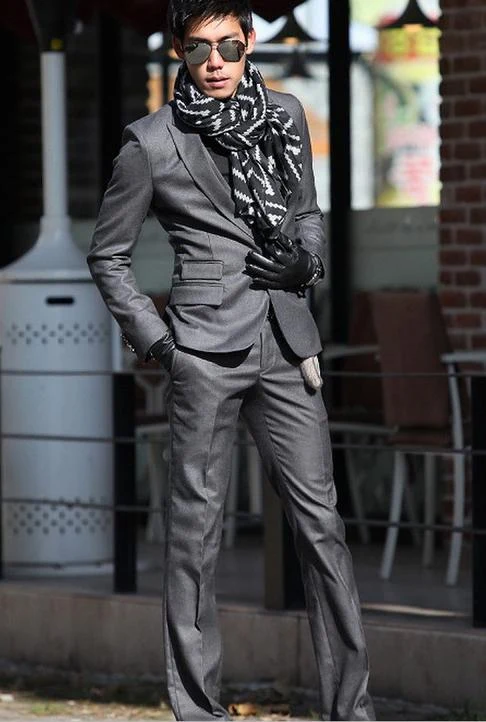
The two suits above, Copper-Sheen Orange-Brown and Pudong Silver Grey, show two directions: one warm, one cool and sleek. In Saigon, step back one notch in weight, because indoors it is hot. The Mon Amie cloth library is organised by line and wool composition; just say in advance where the suit will be worn, and the stylist will choose the weight to suit.
Quick summary table
| Approach | Suits | Remember |
|---|---|---|
| 1. Thin V-neck knit | Early Saigon mornings, middle layer in Da Lat | Bring the knit to the baste fitting to leave ease |
| 2. Three-piece | Evening parties, restaurants, cold meeting rooms | Waistcoat fits like skin, bottom button open, thin wool for Saigon |
| 3. Long overcoat | Da Lat evenings, trips to cold places | Hem longer than the jacket, shoulder wider than the jacket's |
| 4. Thin turtleneck | Evening coffee, meeting friends, occasions without a tie | Plain colour, neck fits moderately, avoid fuzzy wool |
| 5. Warm tones, wool | A newly made suit | Copper brown, silver grey, deep navy; medium weight for Saigon |
Tips from Mon Amie's master tailors
- Layer from thin to thick, and each layer must fit inside the outer one without straining the armholes or buttons.
- Try the suit with the exact layers you plan to wear underneath (shirt plus knit), not when wearing only a T-shirt.
- Fold a thin scarf in half and slip it inside the overcoat collar; do not knot it tight under the suit lapels, as it will lift the collar.
- Da Lat is damp and hilly: leather soles or thin rubber soles that grip, with thin wool socks, keep your feet dry and warm.
- After a trip, hang the suit on a wide-shoulder hanger in an airy place and let the wool dry completely before putting it away.
Frequently asked questions
How do women wear a suit in winter?
Keep the same spirit of layering: a women's jacket over a thin turtleneck or V-neck knit, straight-leg trousers or a wool skirt, with a long overcoat on top. In Da Lat, thick socks or low-cut boots keep the feet warm while staying neat. Mon Amie also makes women's suits to measure, so you can plan the inner layer in advance for fitting.
How is a summer suit different from a winter suit?
A summer suit leans towards thin, breathable wool, lighter colours and less lining. A winter suit uses heavier wool, with enough ease for the layers underneath, and deeper tones. See 9 tips for wearing a suit in summer in Saigon's heat to see how the two compare.
Do I need a separate winter suit in Saigon?
No. One suit of medium-weight wool in navy or charcoal grey, plus a thin knit or a waistcoat when it is cool, is enough all year round. A separate suit is worth it only if you go to Da Lat or to cold places often.
What colour winter suit works for both work and leisure?
Deep navy or charcoal grey as the base, because it pairs with any inner layer. Copper brown or silver grey are the colours for extra personality. To see ways of wearing many layers, read 7 ways to style a men's suit jacket in winter.
Conclusion
Staying warm and neat is a matter of proportion: thin inner layers, an outer layer wide enough, deep colours and wool with body. If you are about to go to Da Lat, or want a suit for the cooler months, you can book a measuring appointment and bring the inner layer you plan to wear to try on at the showroom.