
The moment the jacket goes on, a diagonal crease appears from the nape down to the shoulder tip, the two lapel edges flare slightly, and the collar seems to swallow a neck that was not long to begin with. The scene is so familiar that many people assume the fault lies in their build. In fact it is only a sign that the suit is the wrong style and the wrong shoulder slope. For a suit for sloping shoulders and a short neck, choosing the right lapel, the right button point and the right amount of shoulder padding is enough to change the whole silhouette. Here are five styles that Mon Amie's tailors often suggest to customers with these two traits.
Quick answer
Those with sloping shoulders should choose a suit with medium shoulder padding and a peak lapel to make the shoulders look fuller; those with a short neck should choose a deep V neckline and a moderate lapel to make the neck look longer. Five styles to consider: a medium-width peak lapel, a deep-V single button, a structured cut with medium padding, a three-piece with a low-V waistcoat, and a medium check or fine stripe.
Sloping shoulders means the line from the base of the neck out to the shoulder tip drops more steeply than average, so a jacket cut on a standard pattern struggles to "stand" on the shoulder. A short neck means there is little space from chin to shoulder, and the collar easily reaches the ears. The two often go together and call for the same approach: build structure at the shoulder, and open up more space at the neck.
1. Medium-width peak lapel: draws the eye up and outward
A peak lapel has its point aimed diagonally up toward the shoulder. This diagonal line pulls the eye upward and outward, exactly the area where sloping shoulders are lacking. The lapel should be of medium width, about 8–9 cm: wide enough to frame the shoulder, but not so wide that it climbs up toward the chin and shortens the neck further. This style suits meetings, partner appointments and evening events. Pair it with a white or light blue shirt and a 6–7 cm tie with a small knot so as not to fill the V. A common mistake is choosing an oversized peak lapel on the idea that "the wider the lapel, the fuller the shoulder"; the result is that the neck disappears. In made-to-measure, the lapel width is balanced to each person's height and neck length, so the same lapel style gives each person a different proportion.
2. One button, or two buttons fastened low: opening a deep V
A short neck needs a deep V so the eye has somewhere to slide down instead of stopping at the chin. A one-button suit has its fastening point at the natural waist so the V stays long; a two-button suit works too, provided the upper button is set lower than usual and you fasten only the upper one. This style suits people who wear suits every day and like a streamlined silhouette. How to pair it: a spread-collar shirt with a low to medium collar height, slightly open; avoid tall stand collars and button-down collars. Note: a three-button jacket fastened high compresses the V and makes the neck even shorter; a big Windsor tie knot also fills the V. A simple four-in-hand is enough.
3. Structured cut with medium shoulder padding: supporting the sloping shoulder
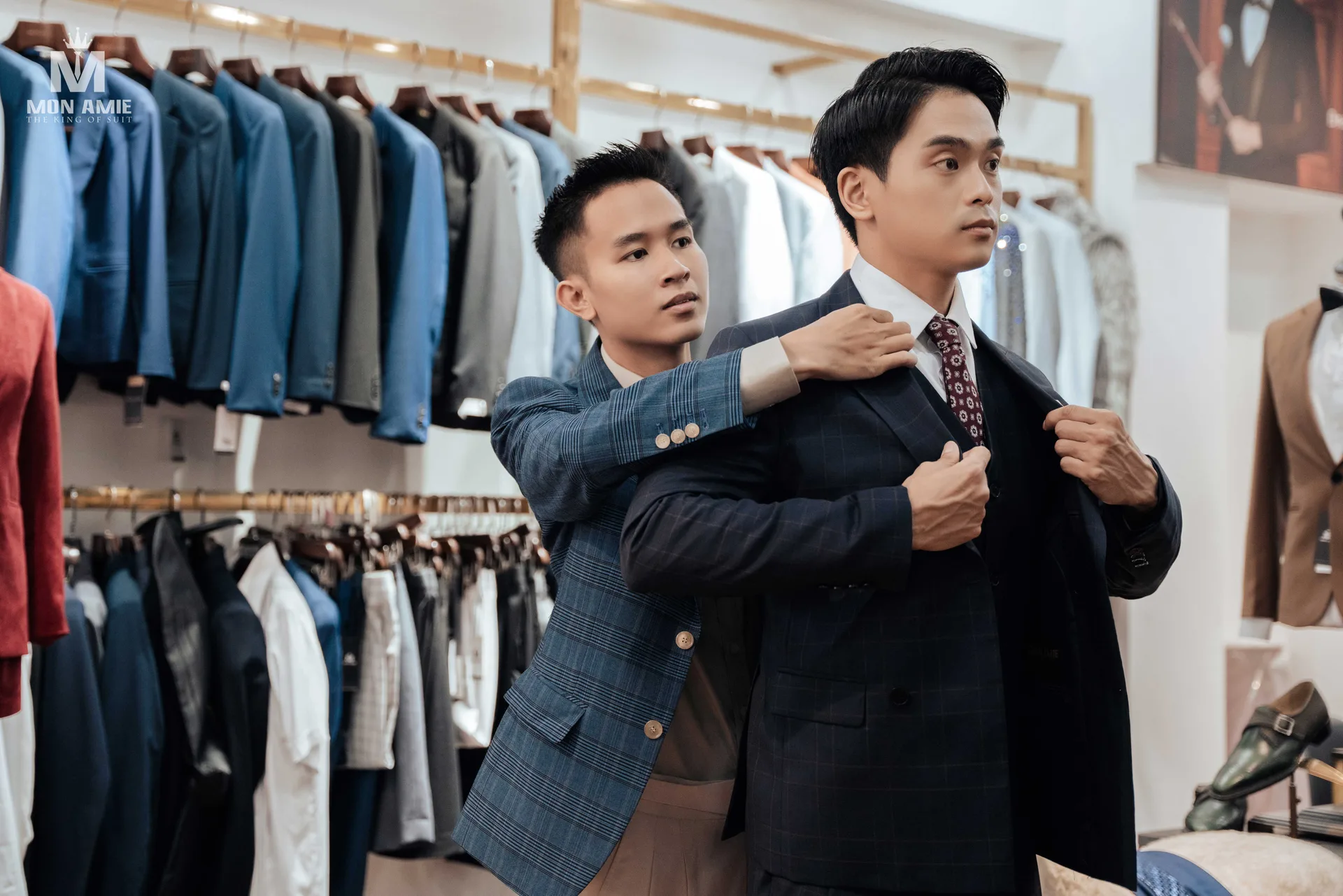
A jacket cut for an average shoulder slope leaves a diagonal crease from the neck to the shoulder tip on sloping shoulders, and the sleeve head droops. A tailor deals with this in two ways: adjusting the shoulder slope right on the pattern, then compensating with shoulder pads a few millimeters thicker on the side with the steeper slope (the two shoulders are usually not equally sloped). A classic structured cut holds a firm frame, suiting people who need a serious look such as managers, lawyers and businesspeople. Note: over-padding makes the shoulder tip stand proud of the real shoulder, looking like a borrowed jacket. The lean, lightly padded shoulder of a Japanese-style men's suit looks good on level shoulders, but needs careful thought for sloping shoulders.
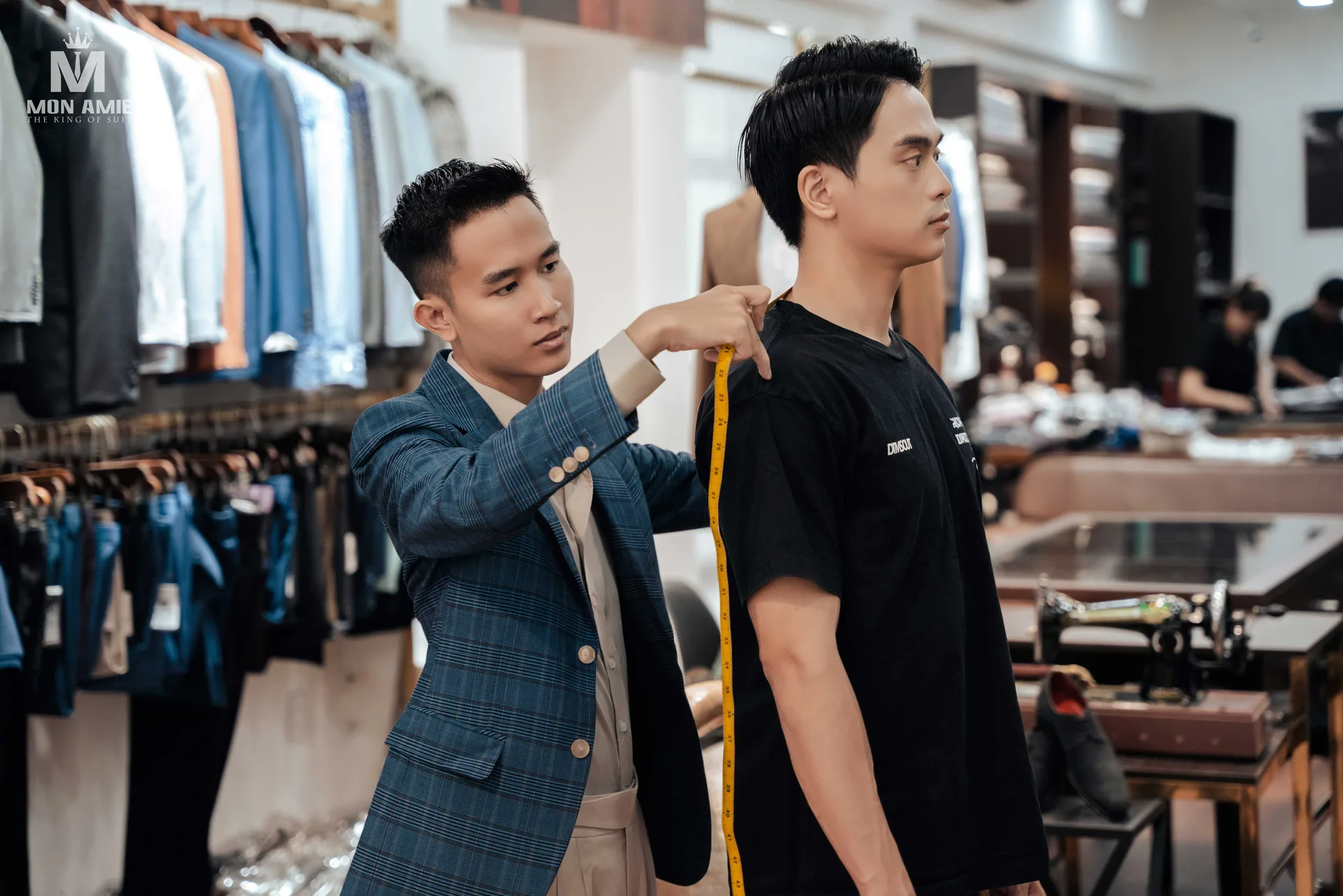
At Mon Amie, the shoulder is measured with a tape measure along with more than 30 other measurements, then a baste fitting is used to adjust the shoulder cut before finishing. To learn how to measure the shoulder correctly, see how to measure the shoulders of a men's suit jacket.
4. Three-piece with a low-V waistcoat: adding a vertical line
A waistcoat adds one more V inside the jacket. Two nested V's pull the eye vertically, so the neck looks longer than with the jacket alone. The waistcoat also streamlines and fills out the upper body, making the shoulders feel less "empty". Choose a low-V waistcoat in the same color as the suit, with the bottom button left undone as is customary. This style suits occasions more formal than the office: board meetings, weddings, events. Note: Ho Chi Minh City is hot, so choose a light fabric, a waistcoat with a light back lining, and don't hesitate to take off the jacket when indoors. A high-necked waistcoat sitting right up against the tie will backfire.
5. Medium check or fine stripe: volume for the shoulders, verticals for the neck
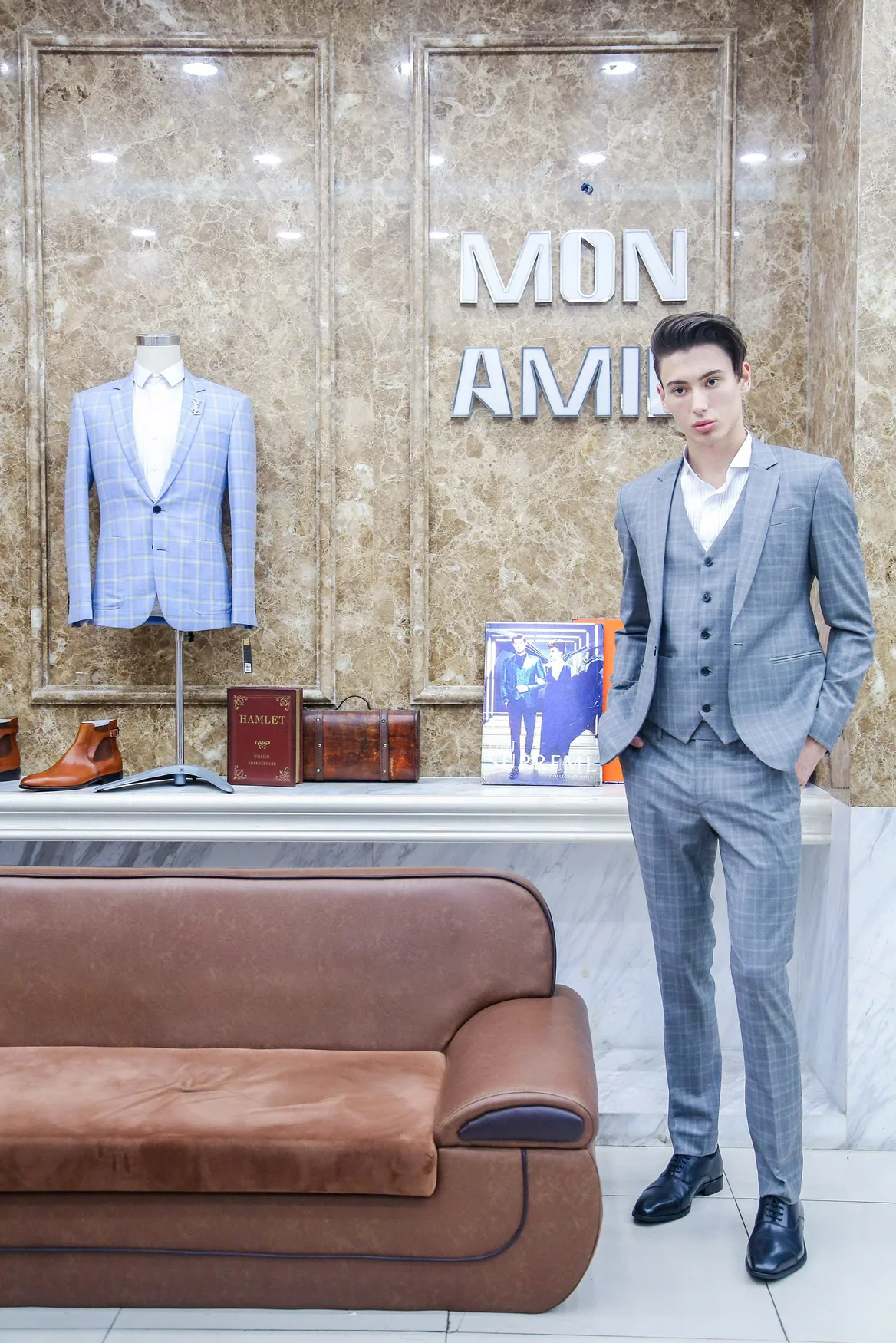
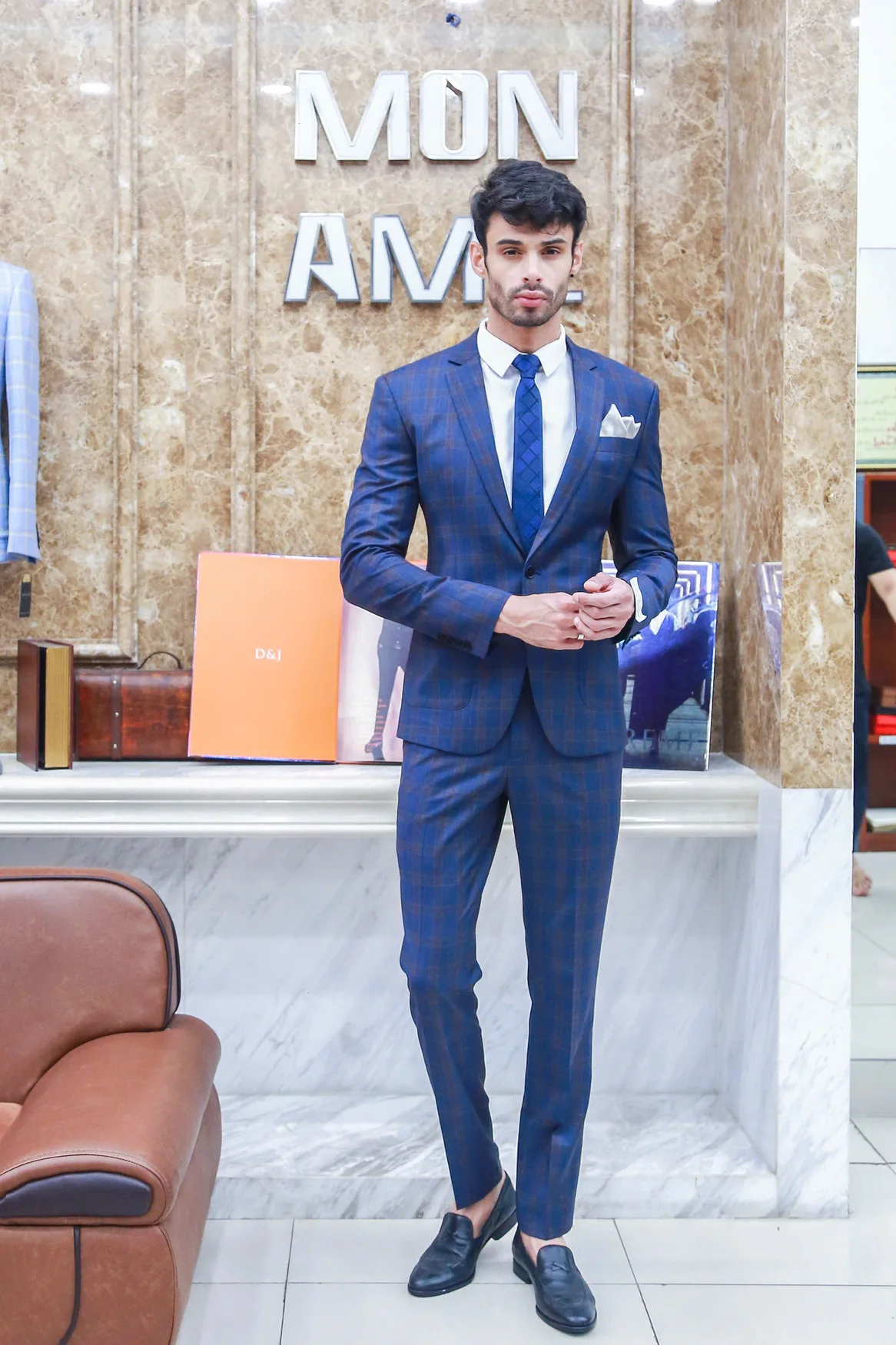
Pattern is a way of adding volume to the shoulders without padding. A medium check spread evenly across the upper body makes the shoulders look fuller; a fine vertical stripe lengthens both the torso and the neck. Choose neutral tones such as grey, navy and beige-brown for easy matching. Avoid checks that are too large because they swallow the silhouette, and avoid horizontal stripes because they make the shoulders slope more. Pair with a plain shirt, a plain or small-dot tie, and add a white pocket square as in the model below. Note: the shoulder and lapel seams need to be matched so the pattern lines up; made-to-measure handles this, whereas ready-to-wear easily misaligns the pattern at the lapel and shoulder.
Quick summary table
| Style | Suited to | Key point |
|---|---|---|
| 1. Medium-width peak lapel | Meetings, partner appointments, events | Lapel 8–9 cm, small tie knot |
| 2. One button / two buttons fastened low | Everyday suit wearers | Deep V, avoid a three-button jacket fastened high |
| 3. Structured cut, medium shoulder padding | Sloping shoulders, especially when uneven | Compensate a few millimeters, don't over-pad |
| 4. Three-piece with a low-V waistcoat | Formal occasions | Light fabric, low-V waistcoat |
| 5. Medium check / fine stripe | Fuller shoulders, longer neck | Avoid large checks, match the pattern at the lapel |
Tips from Mon Amie's master tailors
- Ask the tailor to measure your left and right shoulders separately, standing relaxed, without puffing out your chest. Many people have uneven shoulders, and the side of the dominant hand is usually lower.
- Try the jacket with the exact shirt you will wear. The shirt collar plus the suit collar decides whether your neck looks long or short.
- Put the jacket on, raise your arms, take a few steps and check the mirror. If the diagonal crease from the neck to the shoulder is still there, the padding or the shoulder slope is not yet right.
- Avoid thick scarves and high stand collars; a neat haircut at the nape also helps the neck look longer.
- The shoulder is very hard to fix once the jacket is finished, so settle the shoulder cut at the baste fitting rather than later.
Frequently asked questions
Do people with sloping shoulders need shoulder padding in a suit?
Usually yes, but in moderation. The pad compensates for the slope so that the jacket's shoulder tip lines up with the wearer's shoulder; the thickness is decided by the tailor after measuring the shoulder slope and doing a baste fitting. Some people only need the pattern adjusted without added padding.
What shirt collar should a person with a short neck choose?
A low to medium spread collar, slightly open, with a moderate fit around the neck. Avoid tall stand collars and button-down styles because the space under the chin is narrowed further. Wear a small tie knot, snug but not too tight, and don't let the knot push the collar upward.
How should women with sloping shoulders and a short neck choose a suit?
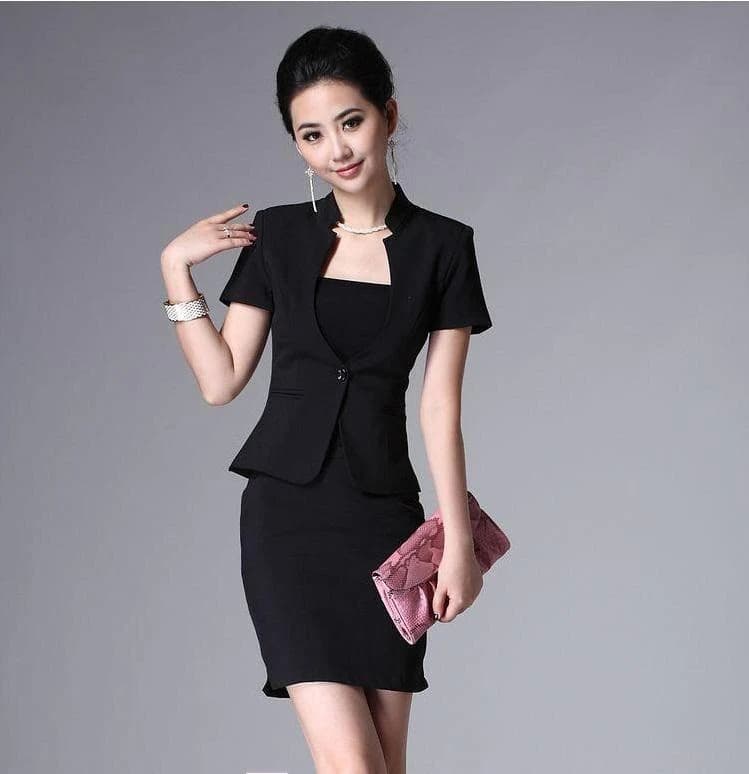
The principle is the same as for men's suits: a deep V, a moderate lapel, thin to medium shoulder pads, and a V-neck or scoop-neck top underneath instead of a high neck. Pieces with a contrasting trim running along the V, such as the black dress with a suit collar and white piping, are also a way of drawing the eye vertically.
Can online made-to-measure measure the shoulder slope?
Mon Amie has online made-to-measure: a stylist guides you through measuring step by step by video, or uses your saved measurements. For sloping shoulders, if you can, visit a showroom once so the tailor can measure and baste-fit in person; your measurements are then saved for future orders.
Sloping shoulders and a short neck are nothing to hide; they only need to be tailored in the right style and the right slope. If you would like to try one of the five styles above, you can book a measuring appointment at a showroom or find out about Mon Amie's bespoke tailoring journey, where the shoulder is measured and adjusted directly on the body.