
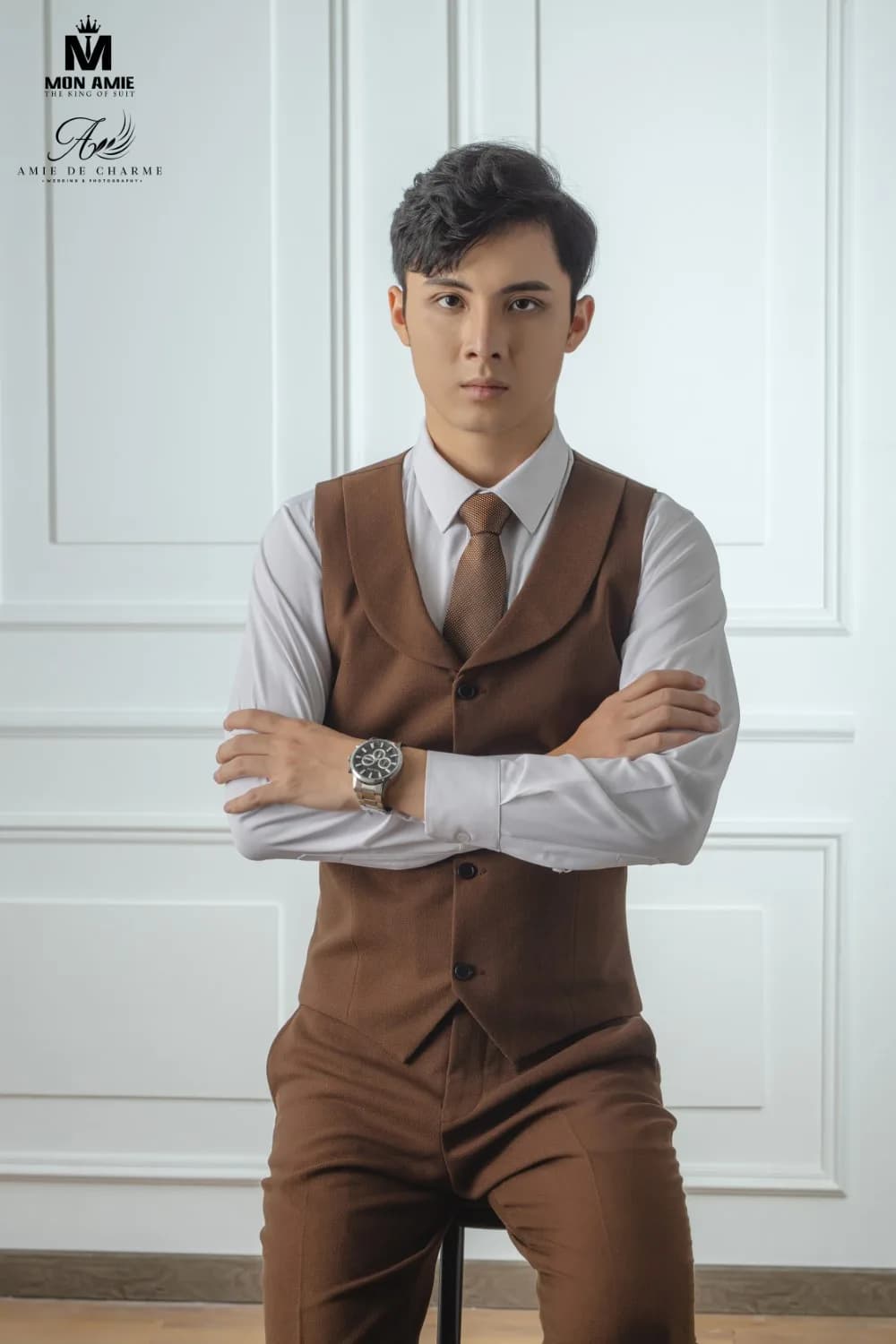
Many men decide to add a waistcoat at the last minute, only to find that the new jacket pulls and the button will not close naturally. The waistcoat is not at fault. The mistake is making a three-piece suit without allowing for the waistcoat from the very first measurement. The waistcoat is the second layer beneath the jacket, and the jacket must be cut to leave room for it. This article spells out the cost, the fabric allowance, when to add a waistcoat and how to brief the tailor.
Quick answer
A three-piece suit takes extra cloth, usually 0.6–0.8 m of fabric 1.5 m wide, plus the labour of making the waistcoat, so it costs more than a two-piece. A waistcoat is worth adding for weddings, evening events or cooler seasons. Most important is to tell the tailor from the first measurement so the jacket still fits closely with the waistcoat underneath.
What the cost of a three-piece suit includes
The waistcoat cost has three parts, and each one rises with the quality of the suit.
- Cloth. The waistcoat is cut from the same bolt as the jacket and trousers so the colour matches exactly. The finer the cloth, the more the extra cloth costs.
- Labour. A waistcoat is small but labour-heavy: lining, back adjuster strap, buttonholes, buttons. A waistcoat uses little cloth but a great deal of work.
- Trimmings. Buttons, back lining, thread, interfacing.
Mon Amie's listed price list is for the full set of jacket and trousers: the Essential line from VND 4.8 to 10 million, Signature from VND 10 to 20 million, and Heritage above VND 20 million. The waistcoat is an additional item whose price depends on the cloth you choose and the waistcoat style, so it is settled when you choose the cloth at the showroom. You can view the general price range at the made-to-measure price list before you come.
Fabric allowance for a three-piece suit
The number of metres of cloth depends on height, chest measurement, cloth width and pattern. These are industry reference figures, with cloth 1.5 m wide:
| Item | Reference allowance |
|---|---|
| Two-piece suit (jacket + trousers) | About 3.0–3.5 m |
| V-neck waistcoat, single-breasted | About 0.6–0.8 m extra |
| Double-breasted waistcoat or one with lapels | Nearly 1 m extra |
| Checked or striped cloth | Extra to match the pattern |
Men taller than 1.80 m or of larger build usually need extra. If you are not sure how many metres to buy, read how many metres of cloth a men's suit needs.
When should you add a waistcoat?
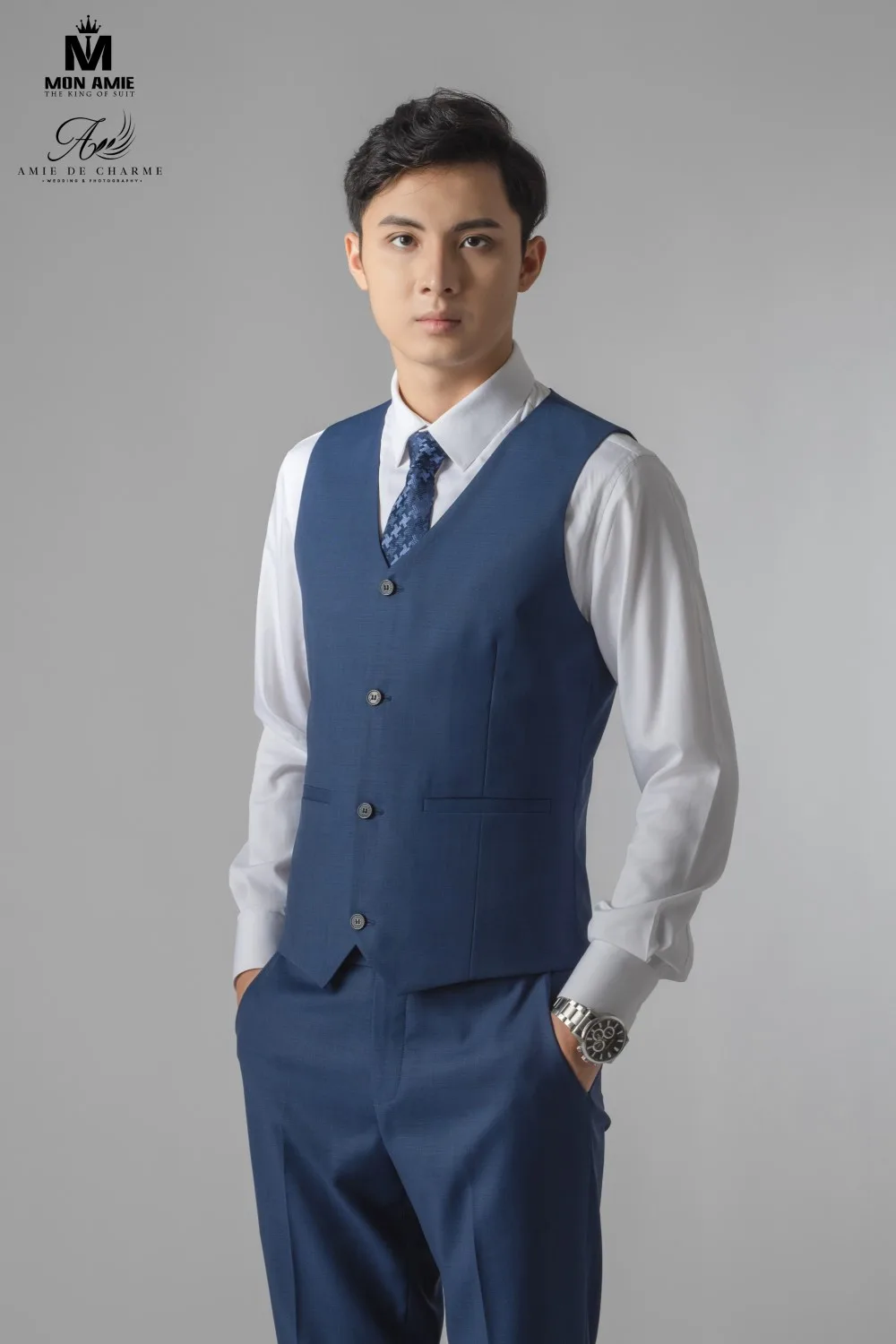
A waistcoat is most worth the money in three situations:
- Wedding day and evening events. A waistcoat gives the groom or a guest an extra layer of ceremony. When it gets hot, you can take off the jacket and not look “bare” in a shirt.
- Cool seasons and air-conditioned rooms. A waistcoat keeps the chest warm without being as thick as a second jacket.
- A suit worn many ways. The full three-piece, the two-piece, or the waistcoat on its own with trousers and a shirt.
But if you live somewhere hot, wear a suit only a few times a year or have a limited budget, have the two-piece made first. Your measurements are kept, so when needed a waistcoat can be made later, provided the cloth is still available or you kept some spare. The article three-piece or two-piece suit, which to have made compares these two options in detail.
Two-piece or three-piece: a quick comparison
| Criterion | Two-piece | Three-piece |
|---|---|---|
| Formality | Standard for office and parties | Higher, suits ceremonial occasions |
| Flexibility | Worn as a full suit or as separates | Adds the option of a separate waistcoat |
| Feel when worn | Airier | Warmer, trimmer at the waist |
| Cloth and labour | Less | More cloth, more waistcoat labour |
| Care | Two pieces | Three pieces, waistcoat hung separately |
Neither choice is absolutely “right”. There is only the choice that is right for how often you wear it, the climate where you live and the occasion you need it for.
How to brief the tailor so the waistcoat sits close under the jacket
This is the part that decides whether a three-piece suit looks good or feels uncomfortable.
- Plan the waistcoat from the first measurement. The jacket needs a little extra at the chest and waist for the waistcoat layer. If a waistcoat is added later without adjustment, the jacket will strain at the button.
- A waistcoat back in thin lining. The front is in the main cloth, and a back in thin satin lining keeps it from being thick and makes it cooler.
- Waistcoat length. The points of the waistcoat must fully cover the trouser waistband but be shorter than the jacket. If the waistcoat is short, the shirt shows between the waistband and the waistcoat, which looks unpolished.
- Depth of the V. The tie must sit neatly beneath the waistcoat. A V that is too deep lets the tie poke out, and one that is too high makes the waistcoat tight at the neck.
- Back adjuster. A short strap or small buckle lets the waistcoat fit the waist correctly even when your weight shifts by a few kilos.
- Leave the last button open. The traditional waistcoat rule: do not fasten the last button.
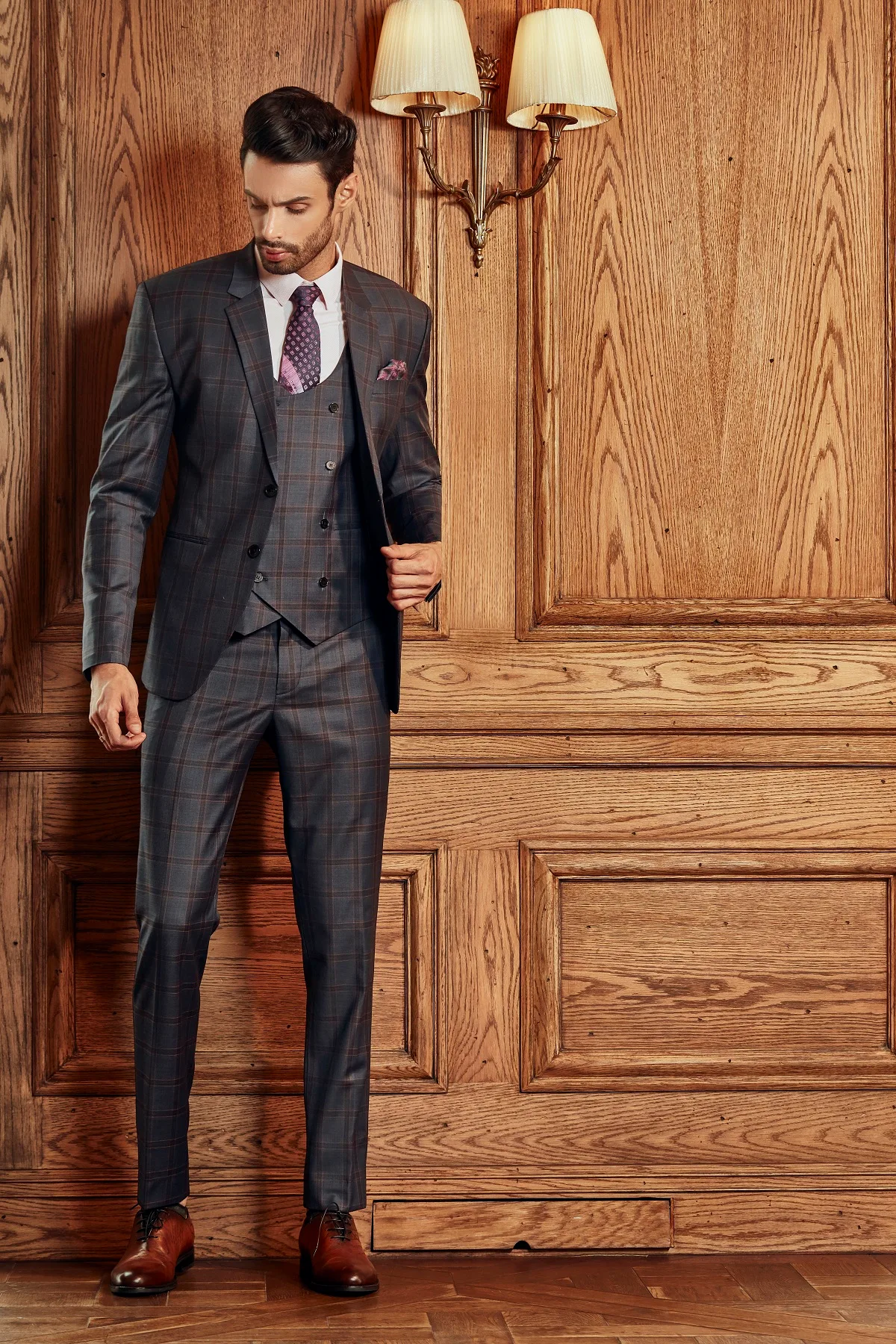
A waistcoat worn on its own, still polished: four conditions
A waistcoat without the jacket still looks good if four conditions are met: a white or pale blue shirt that is flat and crisp, a tie or bow tie sitting neatly beneath the waistcoat, sleeves rolled up evenly on both sides or left long and fastened with cufflinks, and mid-rise trousers so the waistcoat fully covers the waistband. Do not wear a waistcoat over a creased shirt, because the waistcoat shows every crease.
Common mistakes
- Adding the waistcoat later without adjusting the jacket. It strains the jacket and pulls at the shoulders.
- A waistcoat that is too tight. A close waistcoat gives a trim line, but it should leave room to breathe for a three-hour dinner.
- Fastening every button. It makes the waistcoat like a suit of armour and loses its natural curve.
- A waistcoat too long or too short. Showing the shirt or showing the trouser waistband both spoil the proportions.
- A waistcoat in a very different tone. A contrasting waistcoat suits a young groom, but those wearing a suit to work should choose the same cloth as the suit.
A tip from Mon Amie's master tailors
When choosing a three-piece suit, try the jacket together with the waistcoat at the baste fitting, not separately. The tailor adjusts the shoulder, collar and chest width once both layers are stacked. In the bespoke journey, the baste is fitted until the fit is right, so this step is not skipped.
Frequently asked questions
How does a men's three-piece suit differ from a two-piece?
A men's three-piece suit consists of a jacket, a waistcoat and trousers, all in the same cloth. A two-piece has only the jacket and trousers. The waistcoat adds formality, keeps the chest warm and gives you the option of removing the jacket when it is hot.
When is a three-piece worth wearing?
Weddings, evening parties, ceremonial events, photo shoots. For daily work it suits formal settings such as finance and law, or the cool season.
Is a men's three-piece too hot?
It is hotter than a two-piece, but acceptable with a light wool, a satin-lined waistcoat back and by removing the jacket when needed. If you live somewhere hot all year, choose a lightly lined, breathable weave for the waistcoat.
Can the waistcoat for a three-piece be made later?
Yes, if the cloth is from the same bolt. Your measurements are stored, so the previous cut can simply be retrieved. The thing to be careful about is the cloth: keep some spare from the first order so the colour matches.
Can a waistcoat be worn on its own?
Yes. A waistcoat on its own with a shirt and tailored trousers is a familiar look, provided the waistcoat cloth suits the trousers and the shirt is clean and flat.
Deciding with the cloth sample in your hand
The easiest way to know whether a waistcoat suits you is to try it on. You can look at the cloths at Mon Amie's fabric library, then book a measurement so the master tailor can work out the allowance and the waistcoat cut for your body. A one-to-one consultation with the stylist and the master tailor will help you settle between a two-piece and a three-piece.