
Six shirts: that is the number Mon Amie usually suggests for a minimal work-shirt wardrobe, enough for five working days plus one spare for when a shirt is in the wash or hasn't been pressed yet. It sounds like a lot, but if you choose the right men's office shirts, those six will pair with almost every suit, pair of trousers and tie you already own. Choose wrong, and you can own twenty and still not know which one to wear any morning.
Quick answer
Men's office shirts should be long-sleeved, white or light blue, plain or in a fine stripe, with a medium-spread collar and a mid-weight cotton. A minimal wardrobe is six shirts: two white, two light blue, one fine stripe and one other pale color such as pink or grey.
The minimal work-shirt wardrobe: what do six shirts do?
| Quantity | Type | When to wear |
|---|---|---|
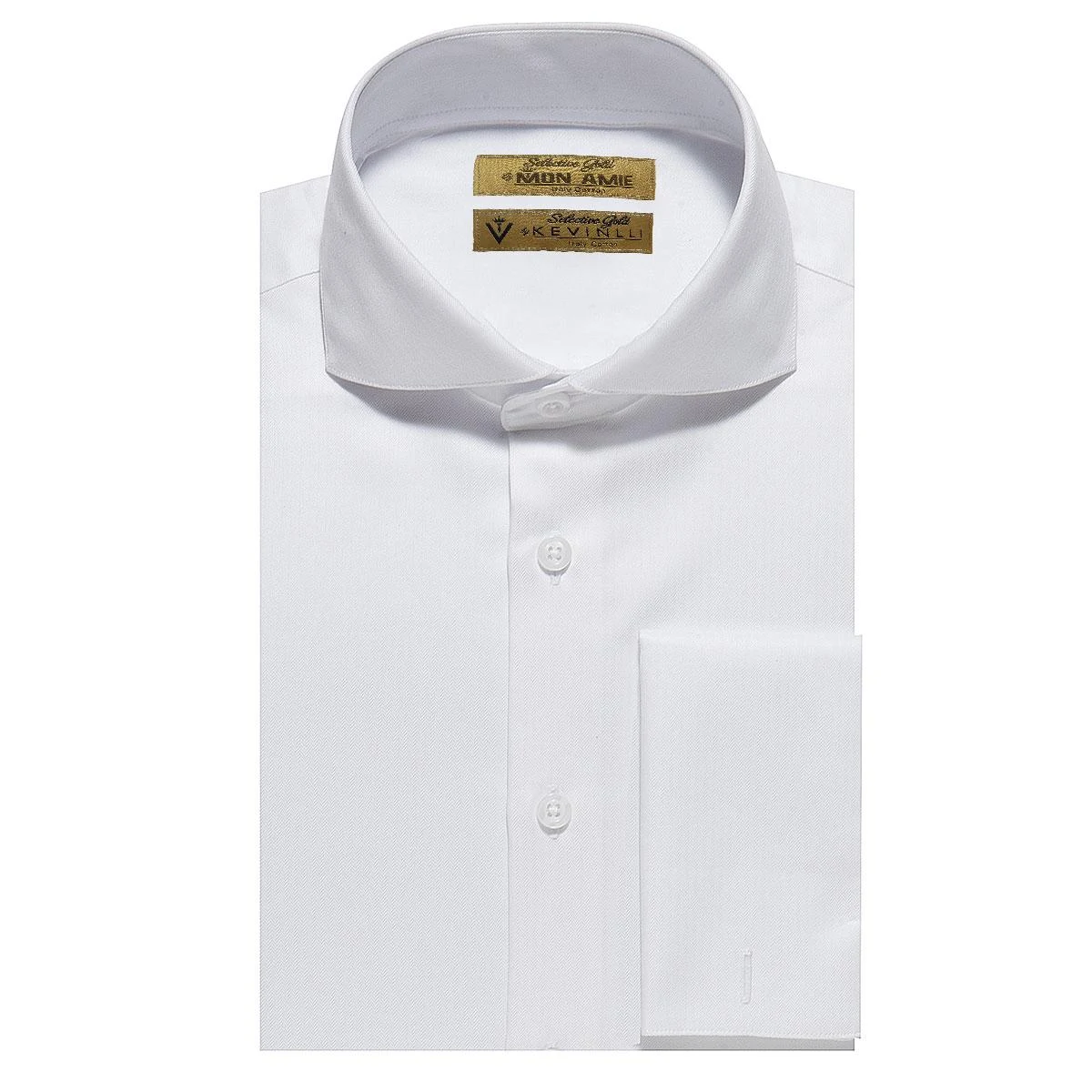
| 2 | Plain white | Important meetings, client meetings, with a suit, interviews |
| 2 | Plain light blue | Everyday wear, suits every suit color, easy to pair with ties |
| 1 | Fine blue or white stripe | A little extra life, suits trousers and a blazer |
| 1 | Another pale color (light pink, grey, beige) | Breaks the monotony, for days without important meetings |
Color is that simple. Quality is what decides whether you look sharp. A good shirt, pressed flat, still looks good after a long day, while a poor one wrinkles after half an hour in a car.
Patterns: plain, striped or checked?
Not every pattern suits the office. Remember the principle: the smaller the pattern, the more formal.
- Plain: the safest and most formal, goes with everything.
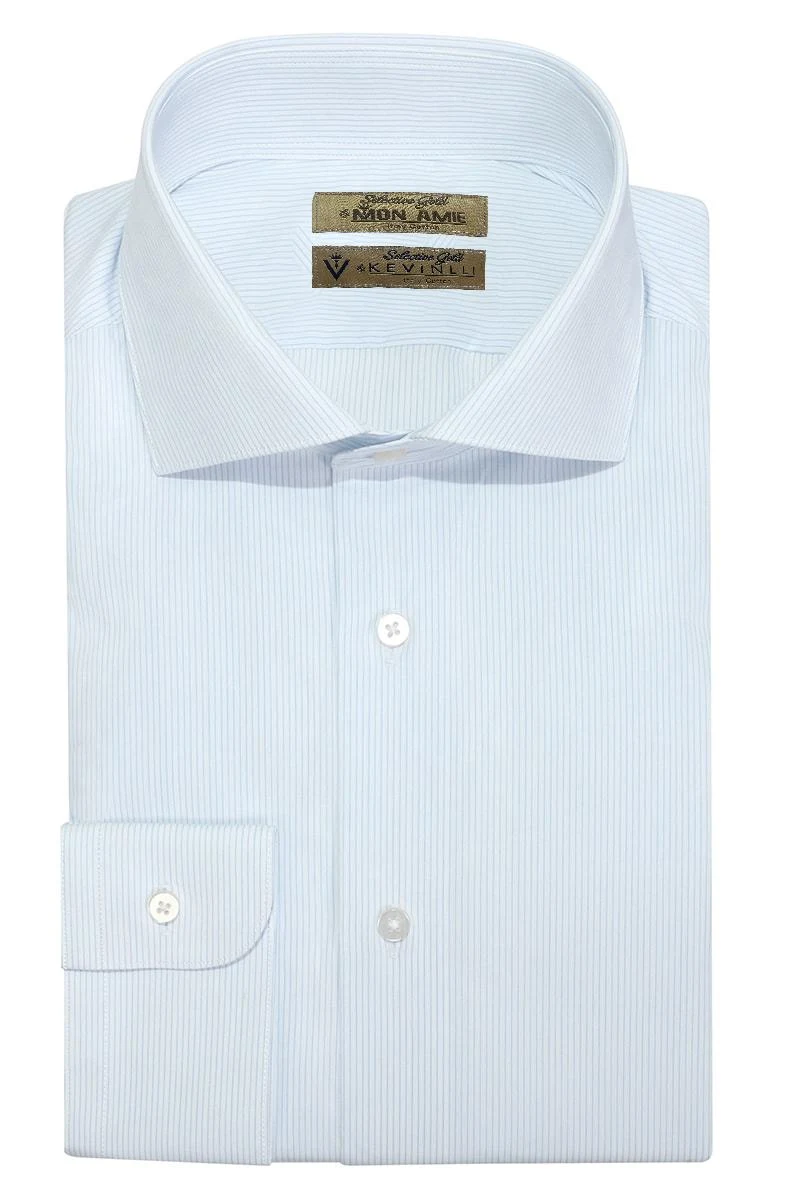
- Fine stripe (pinstripe, small Bengal stripe): almost as formal as plain, suits all year round. The closer the stripes, the more refined.
- Micro check: from a distance it reads almost as plain, lively enough without overdoing it.
- Large check, wide stripe: youthful but less serious, better for the weekend than for a meeting.
- Floral and novelty prints: not suitable for ordinary office wear.
When pairing with a patterned suit or blazer, follow the “one large, one small” rule: a fine-stripe suit takes a plain shirt, and a plain suit takes a shirt with a small pattern.
Collar styles: choose by profession and face shape
| Collar | Features | Suits |
|---|---|---|
| Medium spread (semi-spread, Italian collar) | The two points open to a moderate angle | Most men, goes with any tie style, works with a suit |
| Wide spread (cutaway) | The two points open wide | Slim faces, large tie knots such as the Windsor |
| Button-down | Collar points fastened with buttons | Youthful, works with a blazer, not with a formal suit |
| Band collar, stand collar | No fold-over | Worn without a tie, modern style |
The medium spread is the easiest choice because it works both with and without a tie. If you could choose only one style for all six shirts, choose this one. More detail is in our article on men's shirt collar styles.
Fit: a good fit is what makes you look sharp
What makes an office shirt look “expensive” is not the price but the fit. Check four points:
- Shoulders: the shoulder seam sits exactly at the edge of the shoulder, neither drooping nor pushed up.
- Chest and waist: with every button done up, you should be able to pinch about two to three centimeters of fabric at the chest, with no strain on the buttons and no billowing.
- Sleeves: long enough to reach the wrist bone. Worn under a suit jacket, the shirt cuff should show about one to one and a half centimeters beyond the jacket sleeve.
- Body length: long enough to stay tucked into the trousers without pulling out when you bend or raise your arms.
As for cut, slim, regular and tailored (shaped to the body, with darts) all work. For the office, regular to tailored fits best, comfortable all day yet neat. Try the shoulders and chest first, and only then think about the length.
Shirt fabrics: choose by weather and habits
- Poplin: thin, light and smooth, suited to Ho Chi Minh City's hot, humid weather. Wrinkles more easily than twill.
- Twill: thicker, with a slight sheen, fewer wrinkles and less of the undershirt showing through. Good for days with cold air-conditioning.
- Oxford: coarser, suits a relaxed style and usually comes with a button-down collar.
- Pinpoint: smooth, between oxford and poplin, good for both the office and client meetings.
- Easy-care cotton blend (non-iron): convenient for busy people, needs little ironing but is less breathable than pure cotton.
If you work all day with no time to iron, one or two non-iron cotton-blend shirts are a practical choice. But on important days, use pure cotton, pressed flat.
Choosing men's office shirts by role: young professional or businessman
Office shirts for the young professional
Pastel blue, fine stripes, button-down collar, sleeves rolled up lightly. A tailored fit in oxford or poplin. Pair with trousers or chinos and a blazer that isn't too stiff. Looking youthful doesn't mean looking careless; it means being light and neat, with a small point of interest.
Men's shirts for businessmen
Plain white or light blue, medium-spread collar, twill or pinpoint fabric, button cuffs or double cuffs for cufflinks. Press the collar and cuffs cleanly. For an important client meeting, wear a white shirt with a muted tie and a well-fitted suit.
Made-to-measure shirts: when they are worth it
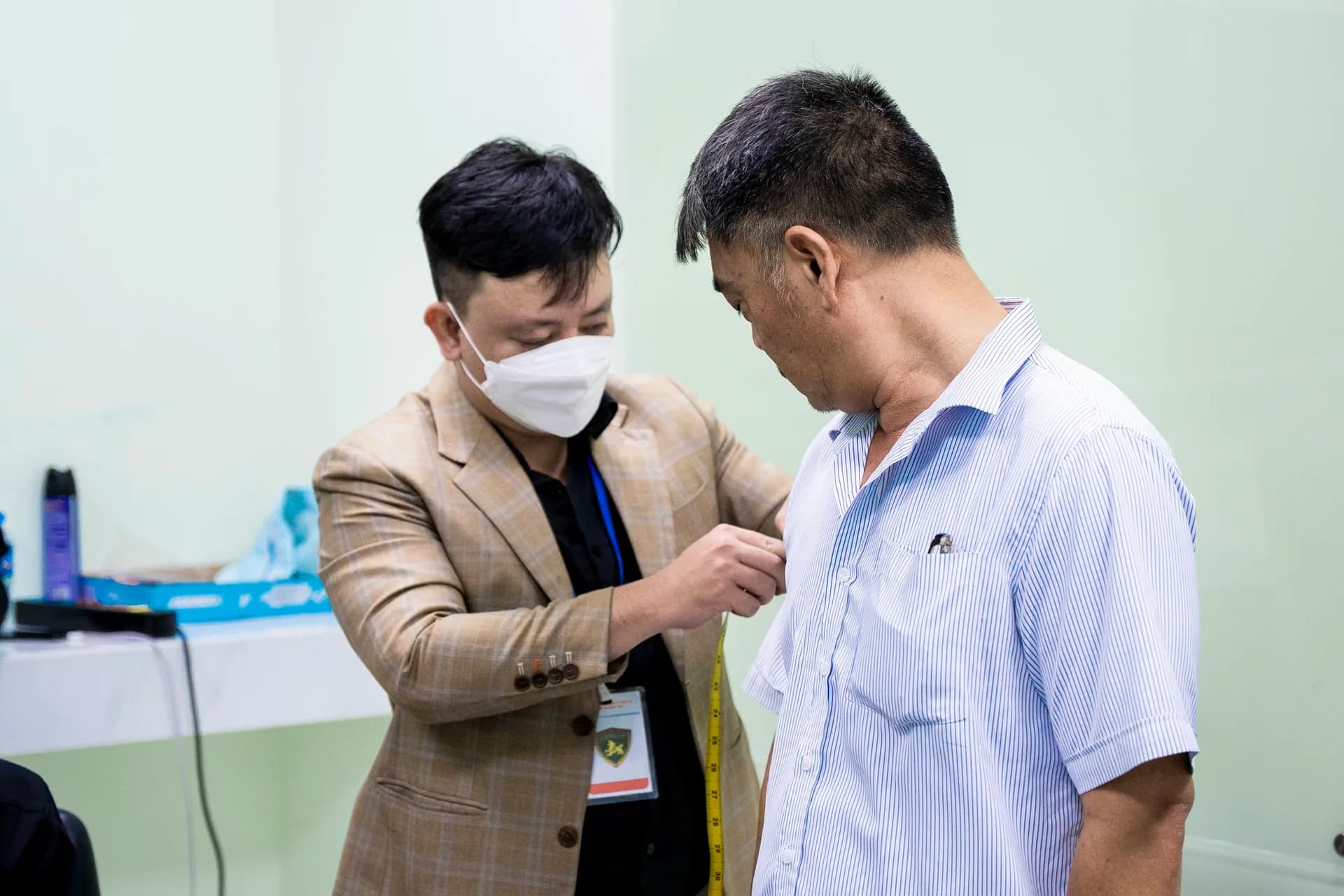
Ready-to-wear shirts are enough for many people. But if you have uneven shoulders, a neck larger or smaller than standard, arms longer or shorter than average, or simply want a shirt that fits exactly, made-to-measure settles it for good. Mon Amie takes made-to-measure shirt orders by measurements alongside suit jackets and suits, so you can coordinate the whole outfit. A made-to-measure shirt also lets you choose the collar, cuff and sleeve length exactly as you like.
Common mistakes
- Buying by size without trying. Every brand and every fit is different, so try the shoulders and sleeves.
- Machine-washing then tumble-drying. Drying shrinks and wrinkles the shirt, leaving it shorter than its original size.
- Ignoring the collar. A wrinkled, stained or curled collar makes the whole look sloppy even on a new shirt.
- Choosing too many bright colors. A wardrobe full of strong colors is hard to pair, so put white and light blue first.
- Wearing a black or dark undershirt under a white shirt. It shows through the fabric, so use a white or skin-tone undershirt.
Tip from Mon Amie's master tailor
The collar is the first part of the shirt the person across from you sees. Choose a moderately stiff collar that doesn't curl, and avoid a soft, limp one. When the tie is on, the knot should sit snug against the collar without a gap. That is the sign of a shirt with the right collar, and also the detail the master tailor measures most carefully when making it. If you would like the master tailor to measure your neck and shoulders so you choose the right size, book a fitting.
Frequently asked questions
Which colors work for men's office shirts?
White and light blue are the two safest and easiest colors to pair. Fine stripes in blue, light pink or pale grey extend the range. Avoid loud colors or large patterns for important meetings.
Should an office shirt be long-sleeved or short-sleeved?
Long sleeves are more formal and can be worn all year, even in air-conditioned rooms. Short sleeves only suit very hot days, relaxed workplaces and going without a tie.
Which fabric should I choose for long-sleeved office shirts?
Poplin for hot weather, twill for cold air-conditioned days or when you want fewer wrinkles, pinpoint for a balance of the two. Choose pure cotton or a cotton blend with a little polyester depending on whether you have time to iron.
How should a young professional style an office shirt?
Choose pastel blue or fine stripes, a button-down collar and a tailored fit, paired with trousers or chinos and a soft blazer. Keep the overall look neat, with no more than two main colors.
What should businessmen pay attention to in a shirt?
Plain white or light blue, medium-spread collar, twill or pinpoint fabric, with the collar and cuffs pressed flat. The most suitable choice is a made-to-measure shirt that fits well, so that when you take off the jacket the whole look is still sharp.
Closing thoughts
Choosing men's office shirts isn't hard once you know what you need: six basics, a good fit through the shoulders, a neat collar and a fabric suited to the weather. You can also read how to choose a men's white shirt to pick the right white shirt, or browse the designs in the products section at Mon Amie.