
On Monday morning you open the wardrobe and pick up a blue shirt. The shirt is fine, but which trousers go with it? Which shoes? Do you need a jacket as well? It sounds like a small question, but asked every morning it costs a few minutes and a little confidence. Men's office attire that looks polished isn't actually difficult; you simply need a clear standard so you don't have to start from scratch every day.
Quick Answer
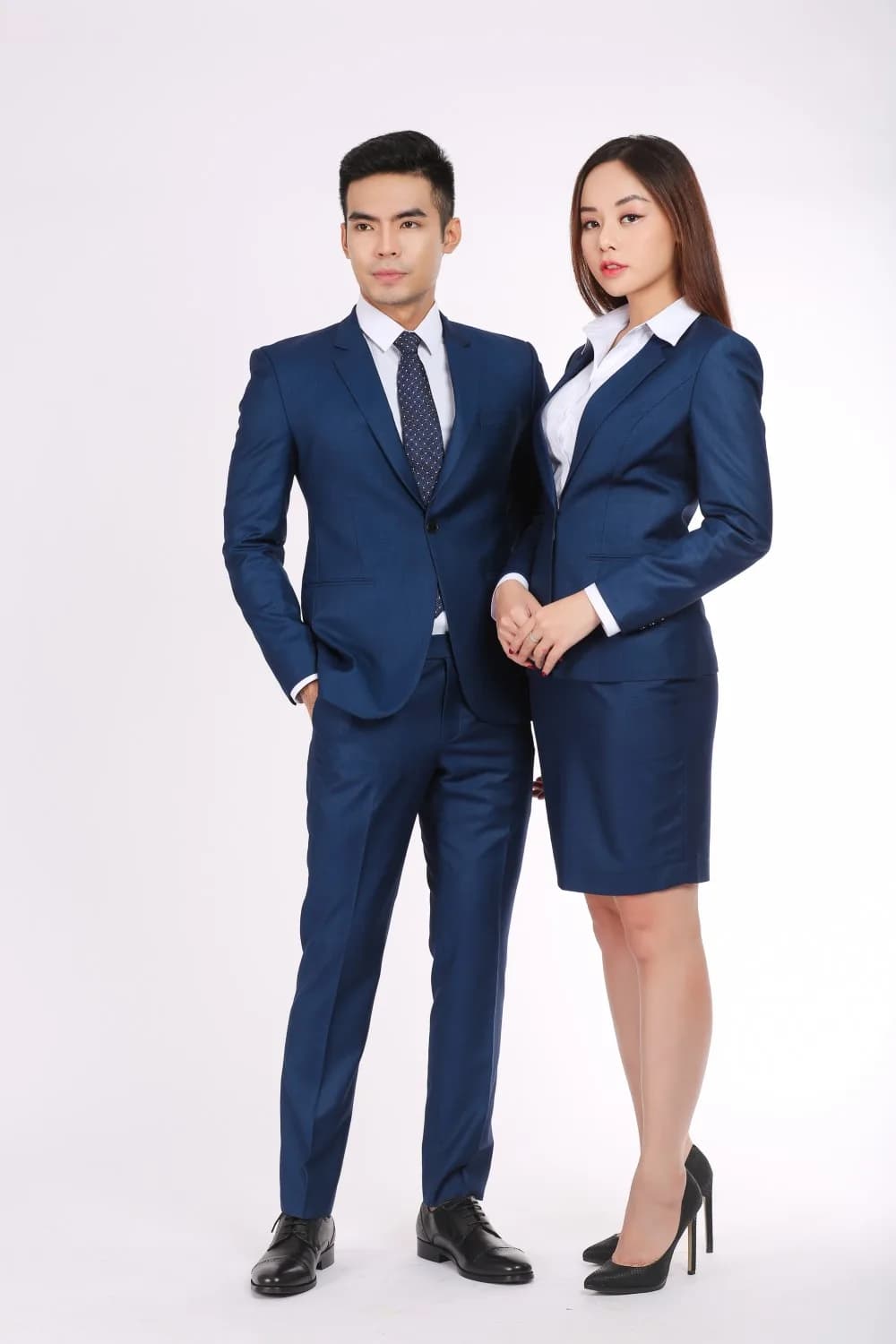
Smart men's office attire at its minimum is a collared shirt, dress trousers, leather shoes or leather loafers, and a belt in a matching tone. For client meetings or important meetings, add a blazer or a suit. Three shared criteria apply: clean and pressed, well fitted, neutral colors. Any piece that meets all three is polished, regardless of price.
What counts as smart office attire?
It isn't a fixed uniform but a level of care: tidy enough that the person across from you doesn't notice your clothes and instead notices what you say. Three simple tests:
- Clean and pressed. Collar free of stains, sleeves not creased, shoes free of dust. This is the test most often skipped, because everyone assumes they are already clean enough.
- Well fitted. The shoulder seam sits at the shoulder point, the trousers aren't baggy, and the hem doesn't pool into folds on top of your shoes.
- Right for the setting. The same outfit can be too formal at a creative agency and too casual at a bank.
The third criterion is exactly why the phrase “smart work attire” is understood differently from one workplace to the next. That's why the four-level table below is more useful than a list of don'ts.
Four levels of smart men's office attire
| Level | What it includes | Suited to |
|---|---|---|
| 1. Smart casual | Collared shirt, dress trousers or chinos, leather shoes or loafers | Relaxed offices, ordinary days, Fridays |
| 2. Business casual | Level 1 plus a blazer (it needn't match the trousers' fabric), tie optional | Internal meetings, meeting familiar partners |
| 3. Business professional | Matching two-piece suit, white or light blue shirt, tie, oxford or derby shoes | Meeting new clients, presentations, banking, law, consulting |
| 4. Business formal | Dark suit (three-piece if you like), white shirt, tie, pocket square, black oxford shoes | Board meetings, signings, formal events |
You don't need to wear level 4 every day. What matters is knowing which level you're at and moving up a notch when the occasion calls for it. When in doubt, lean slightly more formal: being a notch overdressed is rarely held against you, while being a notch underdressed is remembered for a long time. To understand the top level in depth, read more on the business formal dress code.
A men's office attire wardrobe: the eight-piece minimum
You don't need an entire wardrobe. The eight pieces below are enough for two working weeks without repeating an outfit:
- Three shirts: white, light blue, and one with a fine stripe.
- Two pairs of dress trousers: medium grey and navy (or charcoal).
- One navy blazer. The most versatile piece: throw it over a shirt and trousers and you're at level 2 at once.
- One navy or charcoal suit for important days.
- One pair of black leather shoes (oxford or derby) and, if possible, a dark brown pair as well.
- One belt in the same color as the shoes.
- Two or three ties, plain or with a small polka dot.
- Over-the-calf socks in a tone matching the trousers, long enough that no shin shows when you cross your legs.
Three shirts, two pairs of trousers and one blazer already make more than ten different combinations. The key is to choose neutral colors so that every piece goes with every other.
One week of outfits from those eight pieces
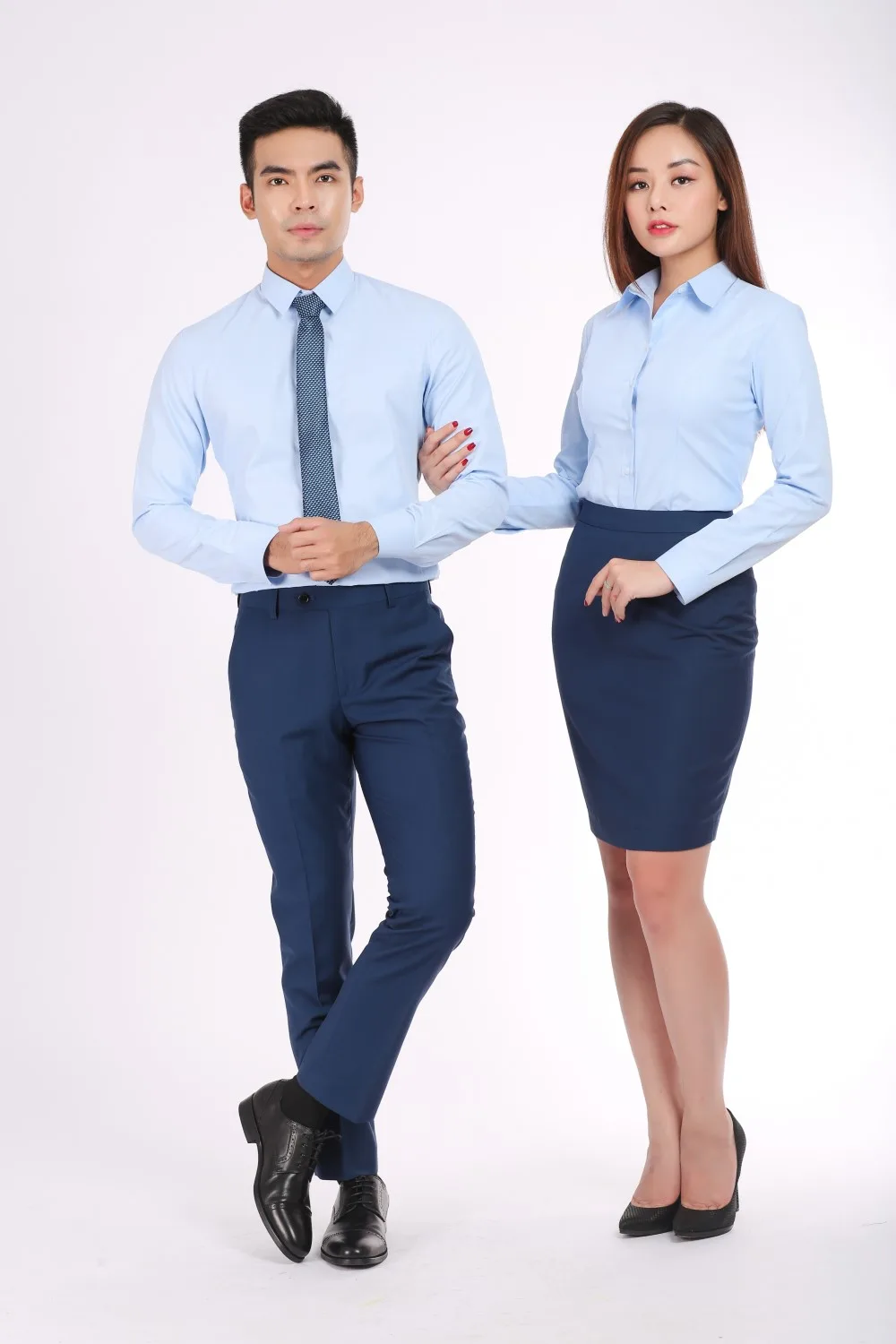
- Monday: white shirt, grey trousers, black shoes. Tidy and safe for the first meetings of the week.
- Tuesday: light blue shirt, navy trousers, plus a polka-dot tie if you have a client appointment.
- Wednesday: striped shirt, grey trousers, navy blazer on top.
- Thursday: navy suit, white shirt, plain tie for a day with partners.
- Friday: light blue shirt, navy trousers, no tie, and switch to the dark brown shoes.
Notice that no piece repeats two days in a row, yet the whole week stays within one color range. That is how a small wardrobe looks like a large one, and also why neutral colors always beat loud ones when choosing clothes for work.
What to keep out of the wardrobe at work
None of these is “bad”; they simply belong somewhere else:
- T-shirts with large prints, or tank tops. Even when the company is relaxed, a plain collared polo is still more polished.
- Ripped or faded jeans, and shorts. Dark, plain, well-cut jeans may be accepted in casual environments; ripped jeans never are.
- Flip-flops, sandals, dusty sneakers. Shoes are the last thing people look at and the thing they remember longest.
- Wrinkled shirts, stained collars, loose threads. An expensive shirt that is wrinkled looks worse than a modestly priced one that is crisp.
- Wide belts and large logo buckles. The office favors discretion.
- Suit jackets or trousers that are too tight or too loose. The most common mistake, and also the easiest to spot from afar.
A tip from a Mon Amie master tailor: polish lies in the fit
We meet many men who buy very expensive clothes yet still look “slightly off” wearing them. Almost every time, the reason lies in these four points:
- Shoulders. The shoulder seam sits exactly at the shoulder point. A shoulder that is too narrow or too wide can't be altered, so choose a jacket by its shoulders first.
- Jacket sleeves show about one to one and a half centimeters of shirt cuff.
- Shirt collar, buttoned all the way, still lets one finger slip in.
- Trouser hem touches the shoe lightly, creating one small break, rather than stacking up folds.
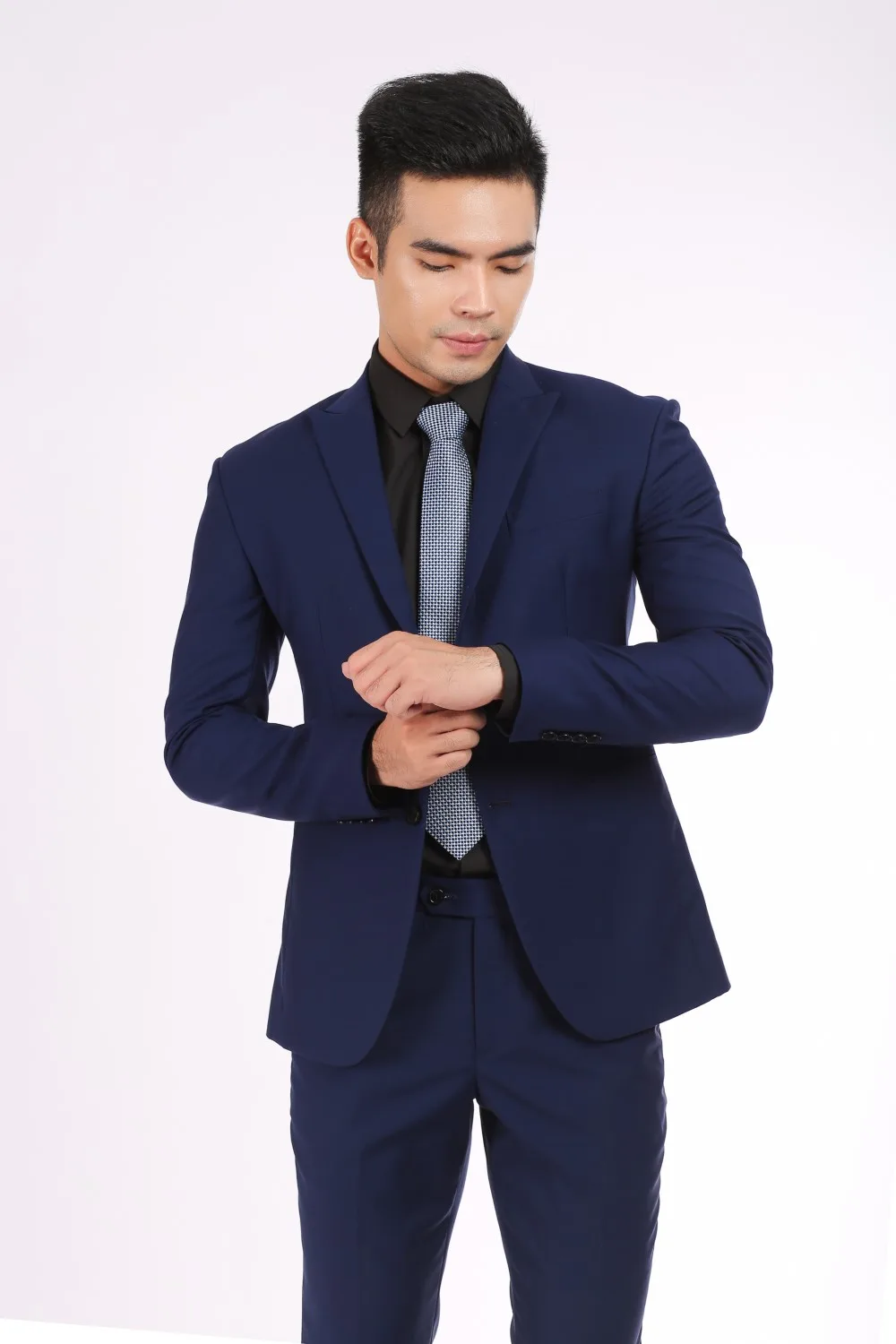
A made-to-measure suit solves three of these four points (shoulders, sleeves, trouser hem), because the tailor takes measurements from your own figure rather than going by ready-made sizes. If you'd like to know where to start, Mon Amie's bespoke tailoring service takes more than 30 measurements and does baste fittings until the fit is right. The Essential line is priced from VND 4.8 to 10 million for a full jacket and trousers; see the full details in the price list.
Frequently Asked Questions
What is smart office attire?
It is dressing in a way that is clean, well fitted and right for the work setting, so the person across from you isn't distracted. For men the minimum is a collared shirt, dress trousers and leather shoes; a step up is a blazer or a suit.
Is a suit mandatory for smart office wear?
No. A suit is required in some industries such as banking, law or consulting, or when meeting important clients. In many companies, a shirt and dress trousers are polished enough. The surest approach is to see what long-standing colleagues wear and dress one notch above them.
How do you stay polished at work on a hot day?
Choose a thin cotton or linen shirt in a light color and lightweight dress trousers, and keep a blazer to put on when needed. A short-sleeved collared shirt is still fine at the smart casual level, but it doesn't suit a tie.
Can you wear jeans to work?
It depends on the company culture. If they're allowed, choose dark, plain, well-fitted jeans, worn with a collared shirt or a blazer and leather shoes. Ripped or faded jeans always fall outside the line of polish.
Final Thoughts
Men's office attire isn't a contest over who dresses more expensively; it's about the person across from you seeing that you take your work seriously. To read more on the concept, see what smart attire is; and if you want a first suit that fits as though it had been drawn for you, you can book a measurement appointment at a showroom any day of the week.