
A good suit usually starts with a recommendation: a friend, a boss, a name you found on Google. The recommendation gets you to the shop door. Whether to pay a deposit is something you decide at the first visit, sitting across from the person who will measure you.
The short answer
A reputable tailor in Ho Chi Minh City states the price before measuring, can say which mill the cloth comes from and what percentage of it is wool, measures carefully and writes it down, and has a clear way of handling a suit that isn't right. Ask the eight questions in this article at the first visit and you will see which place suits you.
Eight questions for the first visit
You don't need to know the trade to judge a reputable tailor in Ho Chi Minh City with these questions. People who have worked in it for a long time usually answer at once, because these are the same things they want customers to understand before the cloth is cut.
| Question | Why ask | A usable answer |
|---|---|---|
| 1. Does the price include VAT, and are there any surcharges? | So you compare the amount you will actually pay | A price list, with VAT and surcharges stated clearly |
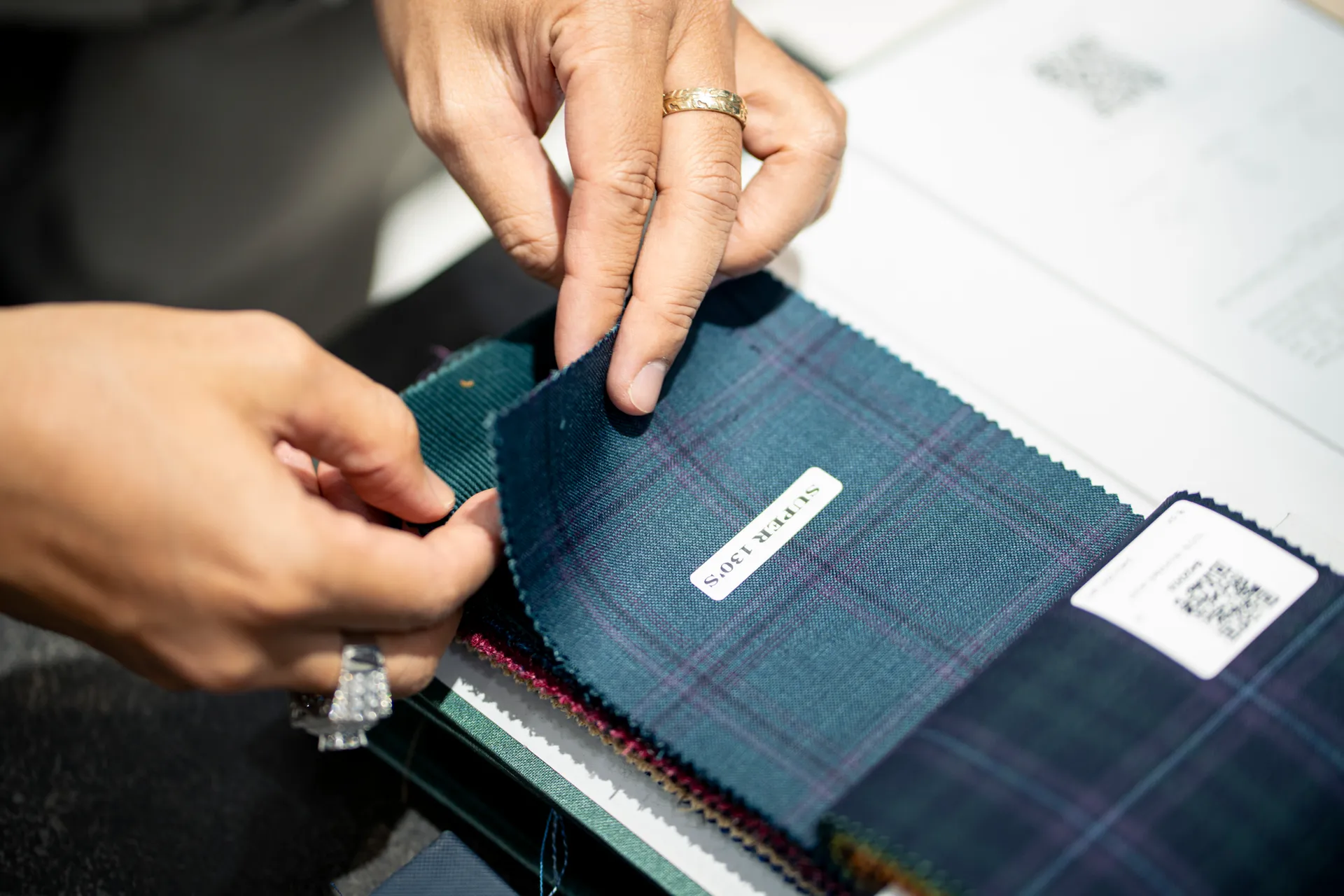
| 2. Which mill is this cloth from, and what percentage of it is wool? | The words “Italian cloth” say nothing about the quality of the cloth | A named cloth line, wool percentage and Super number, with a swatch to look at |
| 3. Where is the workshop, and how does the person measuring work with the tailors? | The closer the person measuring is to the person cutting, the less of what you want gets lost | They can say where the workshop is and how measurements are passed on to the tailors |
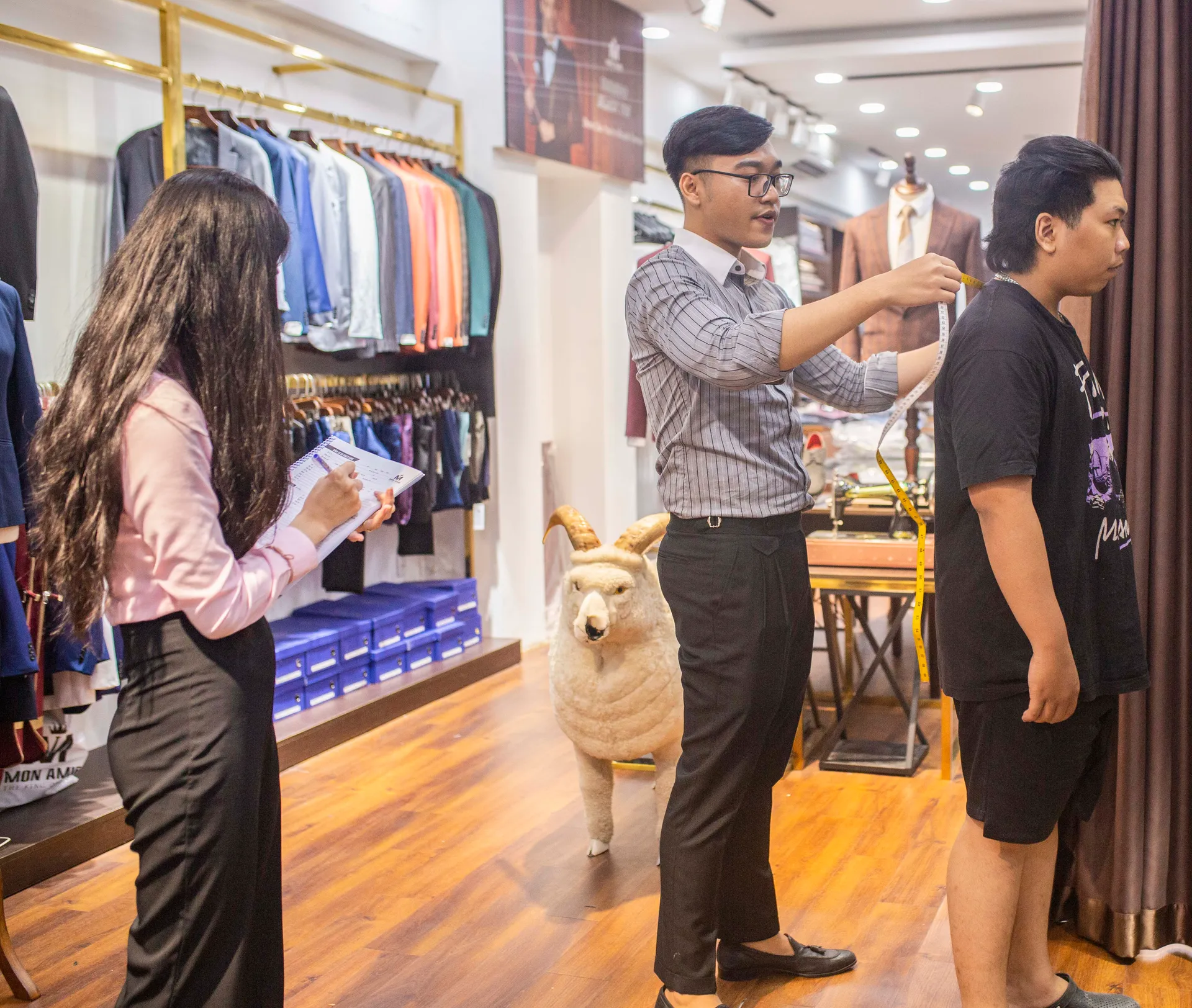
| 4. What will be measured? | Fit comes from the measurements and from reading your posture | Measuring on a card and writing it down, looking at your stance, shoulders and back |
| 5. How many fittings, and how long until the suit is ready? | So it matches the date you need to wear it | States the number of fittings, a range of days and what happens when you need it urgently |
| 6. How much up front, and when is the rest due? | So you can plan your money | States the proportion and the timing clearly |
| 7. What happens if the suit isn't right? | A made-to-measure suit may need adjusting | Can state the order: what is adjusted, how far, and what then |
| 8. What is covered by the warranty, and what is not? | The exclusions matter as much as what is covered | States the term, both what is covered and what is not |
For men's suits specifically, the article on 7 criteria for choosing a suit tailor goes deeper into the fitting. If you need only a single jacket, the article on 7 things to ask when having a blazer made is shorter.
Three things that say more than the answers
After half an hour with the person measuring, you will notice three more things that a price list does not record.
- They ask about you before they offer cloth. What occasion, how many days a week, a motorbike or a car. Someone who asks these questions is choosing a jacket for your actual work, and so usually suggests a cloth tier that is just enough.
- They look at how you stand. Sloping or uneven shoulders, a straight or slightly rounded back, what kind of stomach. The numbers on the card cannot record these.
- They can say when you don't need to have one made. If you need it for a single occasion, rent a suit; if a ready-made one already fits, buy it. When you hear that, you know the person across from you is thinking about your wardrobe.
Comparing two places properly
Comparing the total price between two places often gives the wrong result, because the two quote different cloth and a different number of pieces. Write it into the table below and then compare.
| What to compare | How to compare |
|---|---|
| Cloth | The same wool percentage, the same Super number, and the same mill if there is one |
| Number of pieces | Jacket and trousers, or jacket, trousers and waistcoat |
| Tax and surcharges | Add VAT and the plus-size surcharge for both places before concluding |
| Time | The collection date against the date you need to wear it |
| After collection | The warranty term, its scope, and how adjustments are handled when the suit isn't right |
How to start the first time
- Choose a place that is easy to get to. You will come back to try on, collect and make adjustments later, so the trip there is part of the decision.
- Choose cloth by the number of days you will wear it. A few times a year suits 40–50% wool, the office 1–2 days a week suits 50–60%, and 3 or more days a week suits 60–70%.
- Say the date you need it from the start. The person measuring schedules the work backward from that date, and you know how much time is left for adjustments.
How Mon Amie answers the eight questions
Mon Amie compiled this article, and these are Mon Amie's own answers. It began as the Hoàng Vy tailoring house in 1991; the Mon Amie brand dates from 2011 and has served more than 100,000 customer visits to date.
| Question | Mon Amie |
|---|---|
| 1. Price | Listed on the price list, excluding 8% VAT, the same at all 5 showrooms, with the plus-size surcharge stated up front. The final quote is confirmed by the stylist when taking measurements and choosing cloth |
| 2. Cloth | Vitale Barberis Canonico, Holland & Sherry, Dormeuil, Scabal and Vercelli are available. Kevinlli is held in stock, listed by wool percentage; some other collections are chosen from swatch books at the showroom |
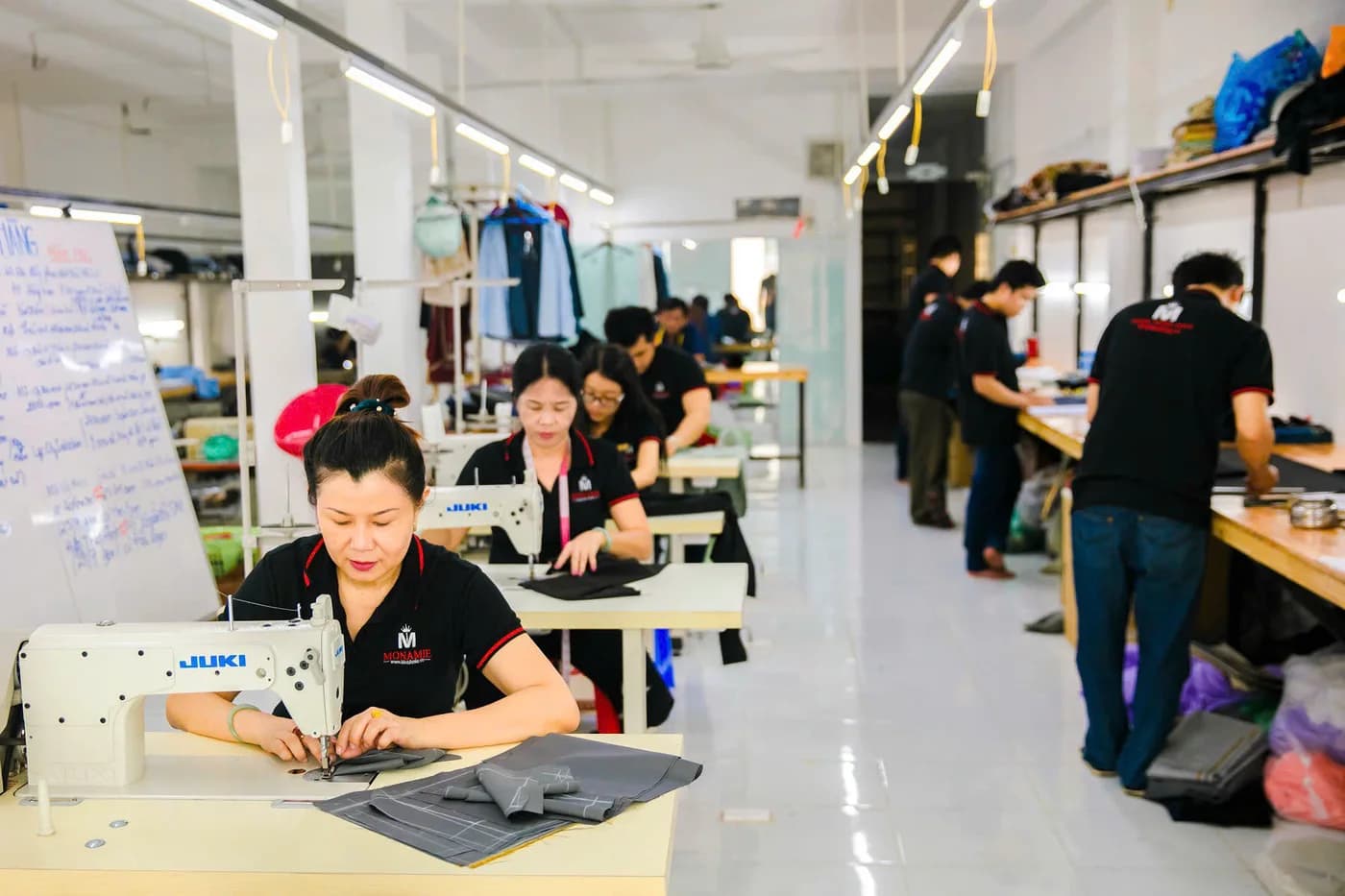
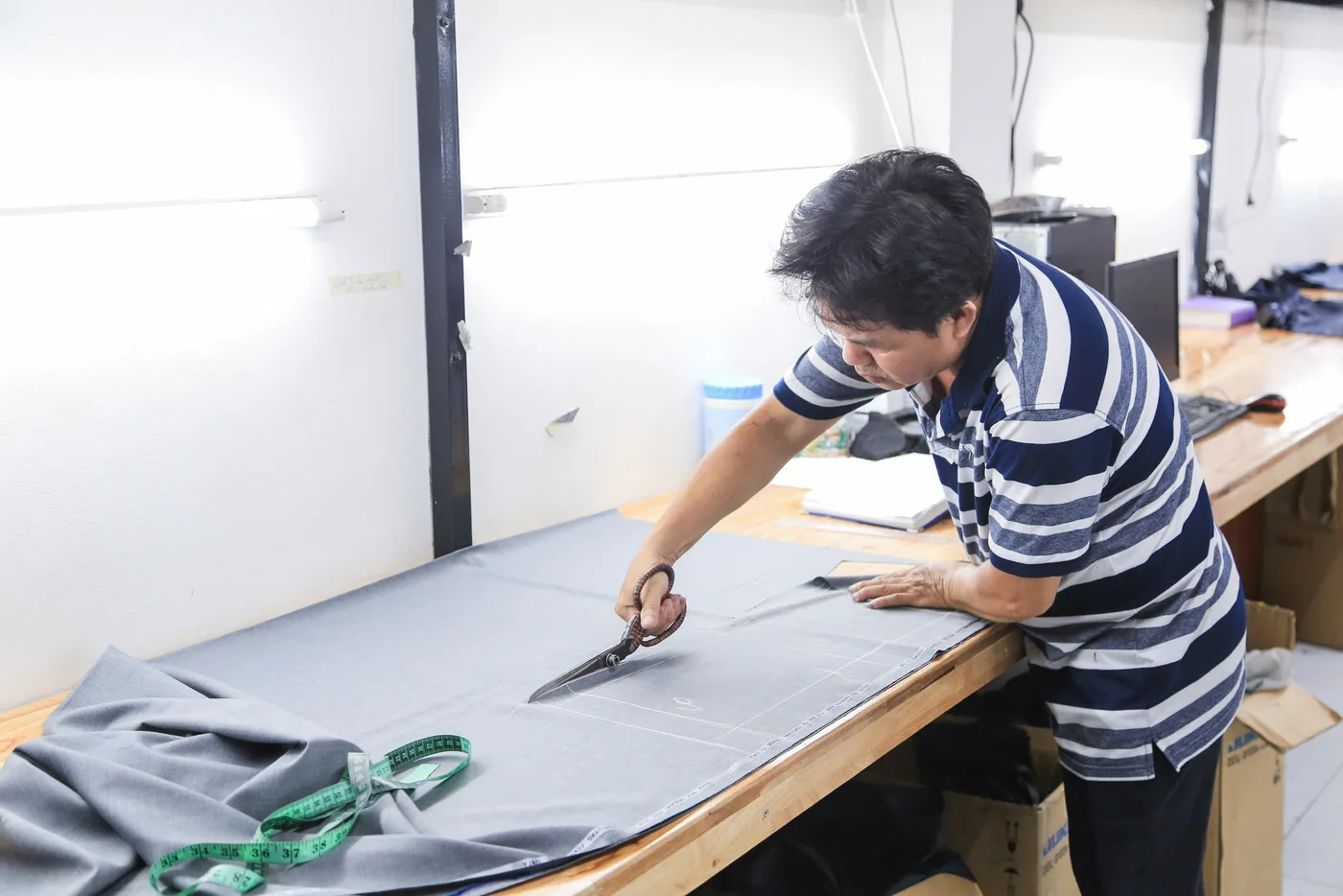
| 3. Workshop | More than 50 tailors, with the workshop at the Đường 3/2 showroom |
| 4. Measuring | Full measurements on an individual measurement card, kept for life. The steps are on the made-to-measure process page |
| 5. Fitting and time | A suit is usually tried on once, or not at all if you prefer. Completed in 3–10 days depending on style, material and whether a fitting is needed; when urgent, as quickly as 24 hours |
| 6. Payment | 50% in advance, the rest on collection |
| 7. When it isn't right | If a suit is unflattering or doesn't match the style agreed, Mon Amie will alter it until you are satisfied; if it still falls short, you get a 100% refund |
| 8. Warranty | Suits carry a free 3-year warranty: adjustments for a weight gain or loss of 3–5 kg; delaminating (fused interlining bubbling), buttons coming off, and tears along the stitching. Not covered: improper care (incorrect washing or drying), tears from knocks or snags, burns from fire or cigarette ash, and fading from chemicals or sunlight |
You can start at the showroom at 80–82–84 Đường 3/2, Hòa Hưng Ward, Ho Chi Minh City (0901.811.116), open 8:30 a.m. – 9:30 p.m. every day. The addresses of the other four are on the showroom page. If it is not convenient to come, the tailoring team can come to your home, office or hotel; book ahead.
Frequently asked questions
An established tailor or a new shop: which should I choose?
The number of years tells you the shop has seen many builds and has lasted long enough for you to come back for alterations later. A new shop can still make good clothes if it can answer the questions above. If you want a place to look after your jackets for the long term, lean toward the one that has been doing this longer.
Should I bring someone along to the first measuring?
Yes, if that person knows what you usually wear and will tell you the truth when you try a jacket on. A companion can see your back and shoulders, which you can't see in the mirror yourself. Too many people makes it confusing, especially when choosing colours.
What should I bring the first time?
The shoes you plan to wear with the suit, a shirt you often wear, and photos of the style you like. If you own a suit that fits, wear it so the person measuring can look at it. These things make the session shorter and leave less to guesswork.
Two places, one afternoon
To choose a reputable tailor in Ho Chi Minh City, pick two places, take the eight questions with you, compare in a single afternoon and only then pay a deposit. If one of the two is Mon Amie, book an appointment so a stylist can set aside time for you.