
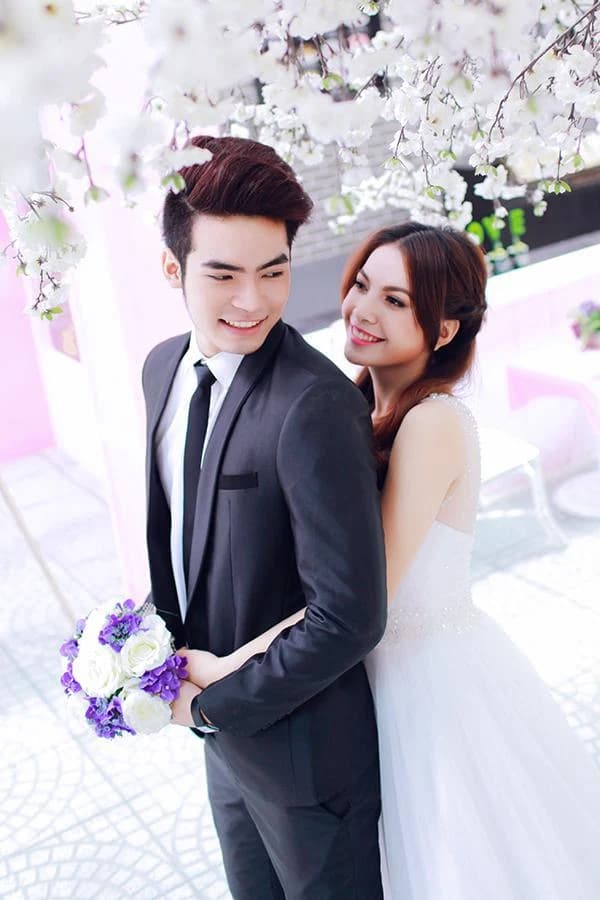
Every groom prepares the rings, the flowers, the car and the speech. Very few practise how to fasten a single button, yet over the dozen or so hours of the wedding day, you will fasten and unfasten it dozens of times, in front of hundreds of pairs of eyes and countless camera lenses. How to wear a groom's suit correctly is not complicated: learn a few rules and standing, sitting, hugging and raising a glass will all look neat from morning to night.
Quick answer
With a two-button suit, fasten only the top button; with a three-button suit, fasten the middle one; a double-breasted jacket is fastened at the outer button. Fasten when standing, unfasten when sitting. Take the jacket off only backstage, during dancing, or when the hosts make it clear that it is fine. Change accessories between the ceremony and the reception, and hang the suit on a shaped hanger whenever you get a chance to rest.
Button rules for each style of suit
This looks simple, yet it is the thing most often done wrong:
| Suit style | Which button to fasten | Which button stays open |
|---|---|---|
| Single-button | The only button, when standing | Open when sitting |
| Two-button | The top button | The bottom button |
| Three-button | The middle button (the top is optional) | The bottom button |
| Double-breasted, 6 buttons | The button with the buttonhole (usually in the middle row) and the inside button that holds the flap | The remaining buttons are only for decoration |
| Waistcoat | Fastened fully from the top | The bottom button of the waistcoat |
The rule throughout: fasten when standing, unfasten when sitting. If you sit down at a table or in a car, unbutton first so that the front of the jacket is not pulled taut and creased across the stomach. When you stand up, fasten it again at once: a small gesture, but guests are very sensitive to it. For double-breasted jackets, you can read more in the 6-button double-breasted groom's suit.
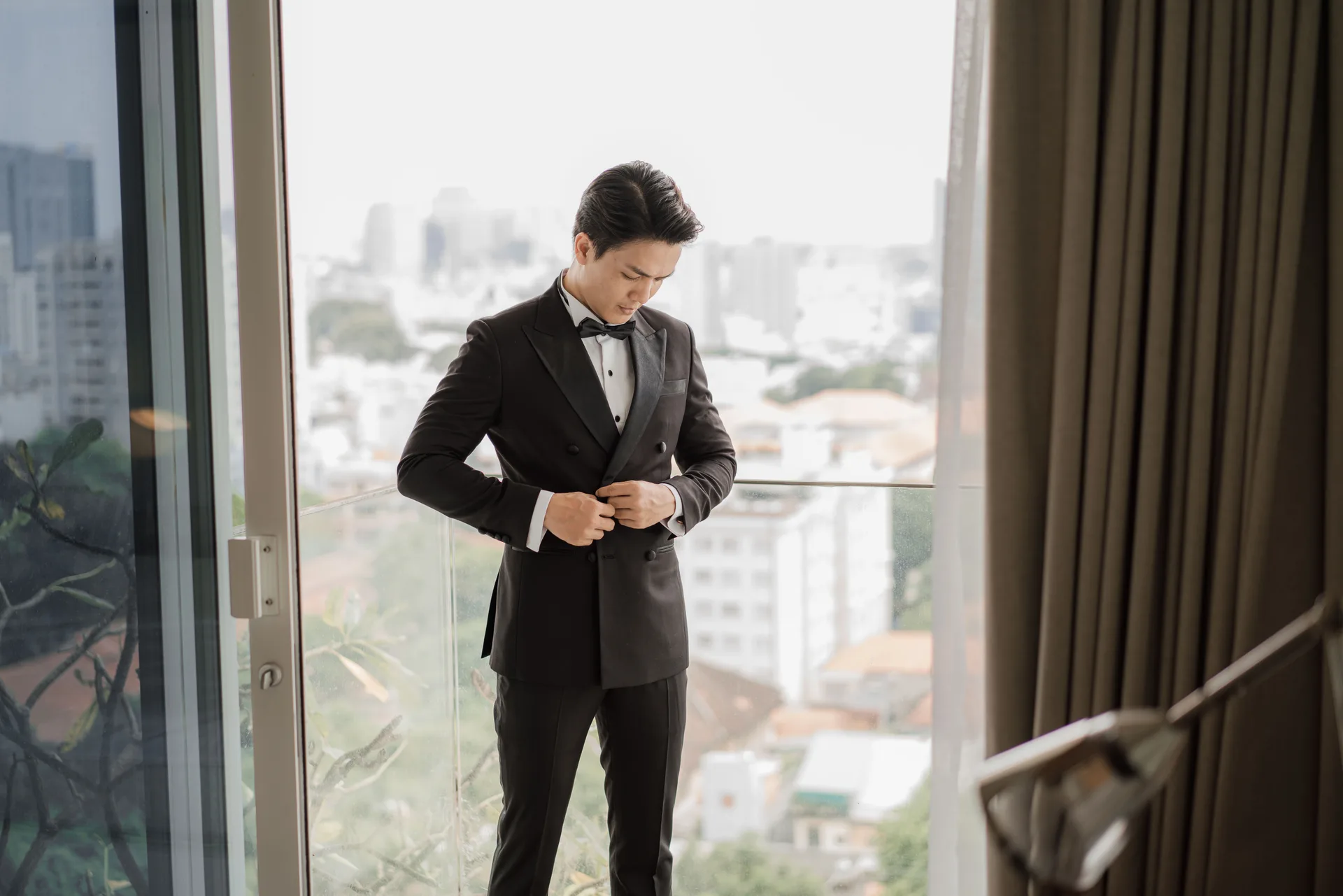
The wedding day stage by stage: what to wear, what to adjust
A Vietnamese wedding day usually passes through several stages, and each one calls for a different way of adjusting the suit.
| Stage | Suggested outfit | Details to remember |
|---|---|---|
| Collecting the bride, ancestral ceremony (morning) | Navy or grey suit, or an áo dài if the family rite calls for it | Button up fully, boutonniere, clean shoes |
| Wedding ceremony, photos | Full suit, white shirt, tie or bow tie | Smooth the jacket before every photo |
| Lunch or evening reception | Swap accessories; may change to a tuxedo for an evening reception | Keep the jacket on when greeting tables, unbutton when seated |
| Dancing, mingling | Take the jacket off if needed | Ask a groomsman to keep it on a hanger |
If the groom wears a suit while the bride wears an áo dài at the ancestral ceremony, choose a suit in the same colour family as her áo dài, then repeat that shade in the tie or pocket square so that the two of you look like a pair.
When you can take the jacket off
This is a question many grooms are shy of asking. An easy rule to remember:
- Do not take it off when going round the tables, welcoming guests or taking family photos. This is when you represent both families.
- You may take it off when you go backstage to rest, or when dancing and mingling.
- If it is hot, take it off once you are seated at your own table, but only when the hosts or the bride are already relaxed. Do not be the first person in the room to take the jacket off.
- When you take it off, hand it to a groomsman to hang on a shaped hanger. Do not drape it over the back of a chair, because the shoulders will crease.
This decision matters most at hot outdoor receptions, where thick wool becomes a burden. If you know in advance that the reception will be outdoors, tell your stylist when you are measured so that a lighter cloth can be chosen.
Swapping accessories between the ceremony and the reception
Many grooms have only one suit for the whole day. The way to make it look “different” without changing the jacket is to swap accessories:
- Tie to bow tie. A tie for the ceremony and a bow tie for the evening, especially when the suit turns into a tuxedo.
- Pocket square. White or in the colour of the wedding concept for the ceremony; switch to a patterned silk square for the reception.
- Boutonniere. Fresh flowers for the ceremony, replaced with a small pin once the flowers have wilted.
- Cufflinks and lapel pins. Small, discreet and extremely effective.
Pack the replacement accessories into a small bag and ask a groomsman to hold it. For the full list, see the groom's suit accessories checklist.
Keeping the suit crisp all through the wedding day
Ten hours of standing and sitting makes a suit crease easily. A few things the master tailor usually advises:
- Unbutton whenever you sit down, and gently pull the back skirt free of your seat so that no sitting creases form.
- Do not stuff your wallet, phone or keys into the jacket pockets. Give them to a groomsman to keep. Full pockets make the suit bulge and pull off the shoulder.
- Hang the suit on a shaped hanger whenever you get a break.
- When getting into the car, unbutton, lift the back skirt, and do not sit on the tail of the jacket.
- Carry a small steam spray. A light spritz and a smoothing of the hand will make light creases disappear before the photos.
For light creases, steam plus smoothing by hand is usually more effective than anything else, and it does not make the cloth shiny.
Pairing a groom's suit: what a complete set includes
A complete groom's set includes:
- Jacket and trousers in the same cloth, plus a waistcoat if you want a more formal look.
- A white or off-white shirt, with a well-fitting collar and sleeves long enough to show 1–1.5 cm.
- A tie or bow tie, in a tone that coordinates with the bride's accessories.
- A pocket square and a boutonniere.
- Polished leather shoes, in the same tone as the belt.
- A simple watch, not flashy.
Safe suit colours are navy, charcoal grey and charcoal black, because they photograph well and never go out of fashion. To choose a colour that suits your skin tone and build, try a few shades in front of the mirror at the fitting, because the lighting in a showroom and the lighting at a wedding reception differ quite a lot.
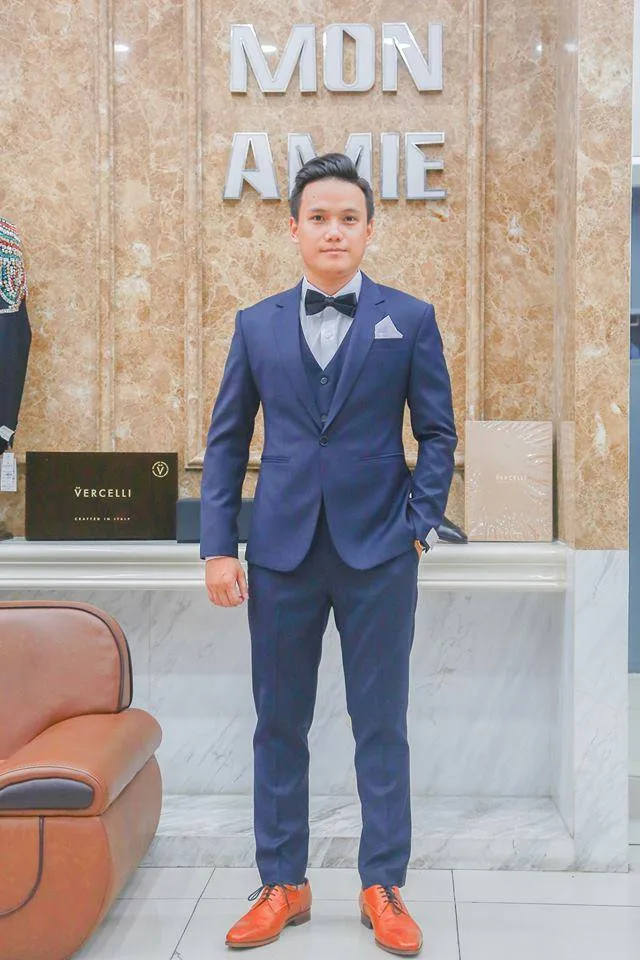
Common mistakes
- Fastening every button of a two-button suit. The bottom button always stays open; fastening it makes the front of the jacket flare.
- Sitting without unbuttoning. The front is pulled taut and creases.
- Draping the jacket over the back of a chair. The shoulders crease and the lapels shift.
- Stuffing the jacket pockets. The sides bulge and the silhouette is thrown off.
- Fitting too close to the wedding. There is no time left for adjustments. Count back from the wedding date so that there is room for at least two fittings.
Tips from Mon Amie's master tailor
Master tailors often tell grooms to wear the entire outfit at least once before the wedding: standing, sitting, raising an arm to wave, bending for a hug, raising a glass. Wherever it pulls, wherever it is tight, whichever skirt flares, it can be adjusted right away while there is still time. You should also wear the suit you have tried on with the very shoes you will wear on the wedding day, because the length of the trouser hem depends on those shoes.
Frequently asked questions
Is wearing a double-breasted groom's suit any different?
Yes. A double-breasted jacket is fastened at the button with the buttonhole together with the inside button that holds the flap, and it should be fastened fully when standing. It can be opened when seated. The front must lie close and not spring open. A double-breasted jacket demands a better shoulder fit than a single-breasted one.
When can a groom take his jacket off?
Take it off when going backstage to rest, when dancing, or when seated at your own table once the mood is relaxed. Do not take it off when going round the tables, taking family photos or welcoming guests. When you do take it off, ask a groomsman to hang it on a shaped hanger.
How do I match a groom's suit with the bride's áo dài?
Choose a suit in the same colour family as the áo dài, or in a complementary tone, and repeat one detail in the tie or pocket square. Avoid having the suit and the áo dài both in a hot tone, which can easily look like one block.
What does a groom's suit set include?
Jacket, trousers, shirt, tie or bow tie, pocket square, boutonniere, leather shoes, belt and watch. A waistcoat is an addition for formal occasions.
Closing thoughts
Knowing how to wear a groom's suit correctly is a small gift you give yourself, so that on the wedding day only the smile remains and you no longer think about the jacket. Mon Amie has a Groom Styling service with made-to-measure groom's suits, options for the groomsmen and coordinated accessories. You can also browse the lookbook or book a fitting when you are ready.