

The question we hear most often at the showroom is not about price or fabric, but this: “I need to wear it on that date. Will it be ready in time?” How long it takes to make a suit has no single figure that fits everyone, but there is a clear enough schedule for you to work out the latest date to place your order. This article breaks that schedule into stages, so you can see where the time goes and where there is still some give.
Quick answer
A handmade made-to-measure suit usually takes about 2–4 weeks from the first measuring session to pickup, because it has to go through cutting, basting, at least one fitting and adjustments. To be safe, place your order about 4–5 weeks before the day you need to wear it, and leave one extra week as a buffer.
To be clear about one thing: the 2–4 week range is what is typical for handmade made-to-measure tailoring in general, not a promise from any one tailor. Your own date is set after you have chosen the fabric and the style, and it is written down so both sides can follow it.
How long does it take to make a suit, stage by stage
A suit goes through six stages. The times below are a guide; how long each stage runs depends on the style of the jacket and the fabric.
| Stage | What happens | Typical time |
|---|---|---|
| 1. Consultation, fabric choice, measuring | You choose the fabric, lapel and button style; the master tailor takes over 30 measurements and observes your posture | One appointment |
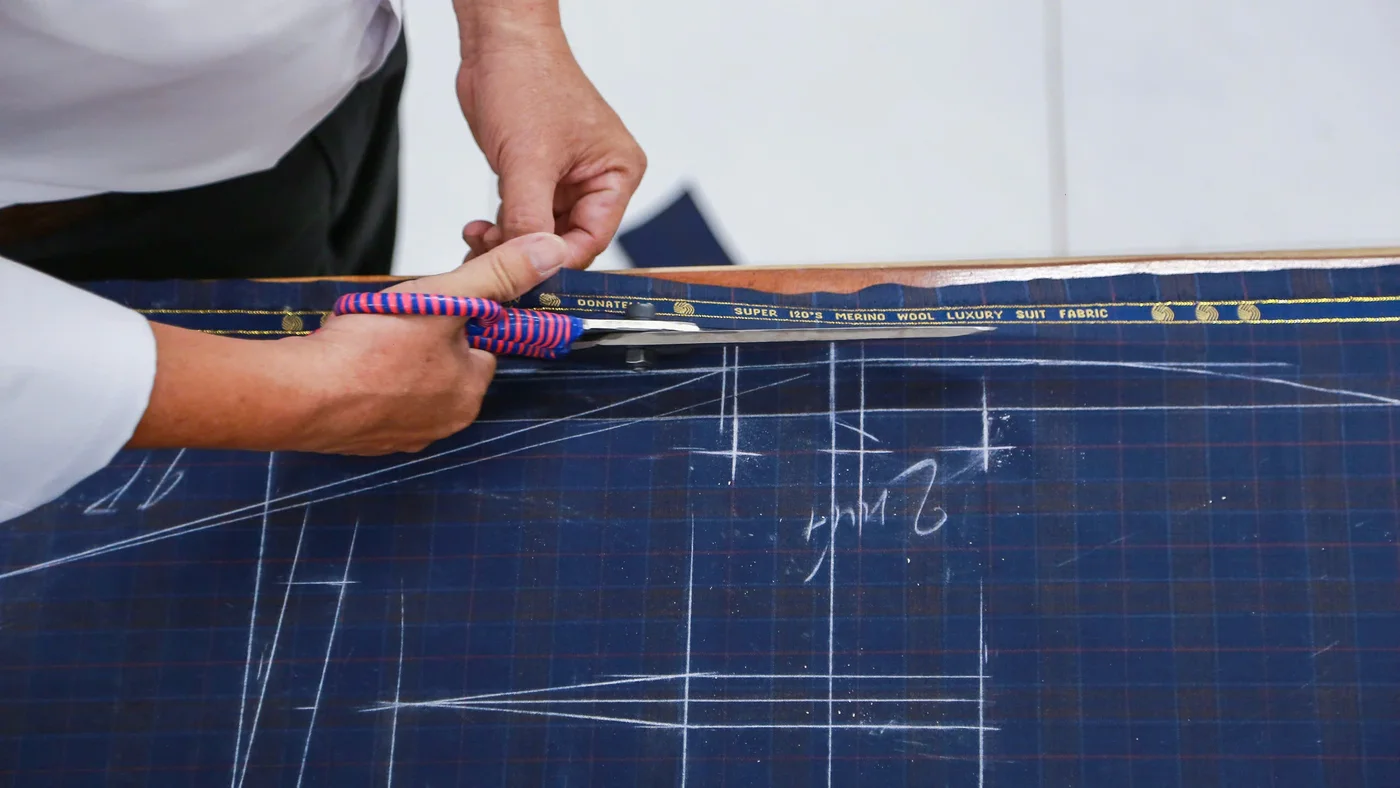
| 2. Cutting and basting | The cloth is cut to your own pattern and loosely assembled to make a “draft” of the suit | A few days |
| 3. First baste fitting | Adjust the shoulders, chest, waist and sleeve length; mark the places that need correcting | One fitting, about 30–45 minutes |
| 4. Sewing to the adjusted pattern | The tailor corrects the pattern, sews the lining, attaches the buttons and makes the buttonholes | About a week, sometimes longer |
| 5. Second fitting, final adjustments | Check the drape, the fit and the trouser length | A shorter fitting |
| 6. Finishing and pressing | Press the shape, check every line of stitching, hand over the suit | One to a few days |
The baste fitting is the part many people find fussy, but it is exactly why a made-to-measure suit fits better than ready-to-wear. The shoulder is the hardest part to alter, so it is settled early, at the first fitting.

What lengthens or shortens the schedule
Not every suit takes the same time. The following four factors change the schedule most:
- Fabric in stock or on order. Fabric already in stock can be cut straight away. Fabric that has to be ordered from the mill adds waiting time.
- Complexity of the style. A basic two-button suit is quicker than a double-breasted jacket, a three-piece with a waistcoat, or a tuxedo with satin lapels.
- Number of fittings. A balanced build usually needs only two fittings. Uneven shoulders, a stooped back or a protruding belly need one more, so the master tailor can get it right.
- Peak season. Year-end, wedding season and the season of shop openings are when the master tailors’ diaries are fullest. Booking a week earlier is usually easier than asking for a rush.
If you live far away or your diary is full, made-to-measure by video call or made-to-measure at your home saves you the travel for the measuring and fitting sessions. The sewing time stays the same, because craftsmanship cannot be shortened.
How to count back from the day you need it
The simplest way is to work backwards from the day you need to wear the suit:
- Fix the day you need it, for example a wedding day, the day you take up a new post, or the day you sign a contract.
- Subtract one week as a buffer. This is a cushion for an alteration that comes up or an unexpected business trip. Your pickup date should be a week before the day you wear it.
- Subtract 2–4 weeks for making. Take the low end for a simple suit, the high end for a three-piece or a double-breasted jacket.
- Subtract a few more days to choose the fabric and book the measuring appointment. People who are measured in a hurry tend to choose fabric in a hurry, and that is the kind of decision most easily regretted.
An illustrative example: you need to wear the suit on 20 December. Going back one buffer week gives 13 December; going back another 3–4 weeks of making takes you to early November; subtract a few more days for choosing the fabric, and late October is when you should visit the showroom. For a wedding, the schedule also has to account for the groomsmen, so the starting point is earlier still. That is why Mon Amie’s groom wedding suit service plans the fitting schedule backwards from the wedding day.
When the schedule slips: signs to ask about
Even when the schedule is fixed from the start, there are a few signs that you should ask about your date rather than wait in silence:
- The planned baste fitting date has passed and nobody has told you a new fitting slot.
- The fabric you chose has to be ordered and you have had no notice that it has arrived.
- You change the style or add a piece (a waistcoat, a second pair of trousers) after the order has been confirmed, since this always lengthens the schedule.
- Your measurements change noticeably (weight gain or loss) while the suit is being made.
Asking a week early is always easier to handle than asking close to the date. A good tailor does not mind that question, because they want the suit ready on time just as much as you do.
Tips from Mon Amie’s master tailors
- Come to the measuring session with the date you need it. Say the date right at the start so the stylist can choose a style and fabric that fit the time available, rather than finding out late and having to rush.
- Bring reference photos. One or two photos of the style you like help the stylist settle on the style faster, and save you spending the first session looking for common ground.
- Wear the shirt and shoes you plan to wear on the day. Your shoulder measurement and trouser length depend on these two items.
- Keep your build steady while the suit is being made. Gaining or losing a few kilos after the measuring session is something the master tailor cannot predict. If you are losing weight, say so clearly.
- Do not push the fittings up against the date. The last fitting should be at least a few days before you wear the suit, to leave room for a stitch that needs correcting.
- A common mistake: ordering when only two weeks remain and then demanding that everything be perfect. Fast and perfect rarely go together, so choose one and plan accordingly.
Frequently asked questions
How long until a suit is finished?
For handmade made-to-measure work, usually about 2–4 weeks from the first measuring session, including cutting, basting, fittings and adjustments. The exact date depends on the fabric, the style of the jacket and the tailors’ schedule when you order. Ask for a specific date when you settle on the fabric.
How long does a suit take if you need it in a hurry?
It can be shortened, but the fitting stage should not be cut, because that is the step that keeps the jacket fitting your body. Tell your stylist early so they can advise an approach that suits the style and fabric you choose, rather than guessing and missing the date.
How long does it usually take compared with buying a ready-to-wear suit?
A ready-to-wear suit can be taken home the same day, but it rarely fits the shoulders and sleeves as well as a jacket made for you alone. Made-to-measure takes a few weeks; in return you get a suit cut to more than 30 of your measurements, and those measurements are kept for life, so later orders are quicker and more accurate.
Does measuring online or at home make the schedule faster?
The sewing still takes the same time. These two options save you the travel for the measuring and fitting sessions, so they suit people who are busy or live far away.
Conclusion
How long it takes to make a suit is really a question about the schedule, not about speed: know the day you need to wear it, count back a few milestones and you have the date to order. You can look at the step-by-step made-to-measure process or book a measuring appointment at the nearest showroom to fix a specific date. If you are thinking of a wedding, the article on the fitting schedule for a wedding suit will help you plan in more detail.