
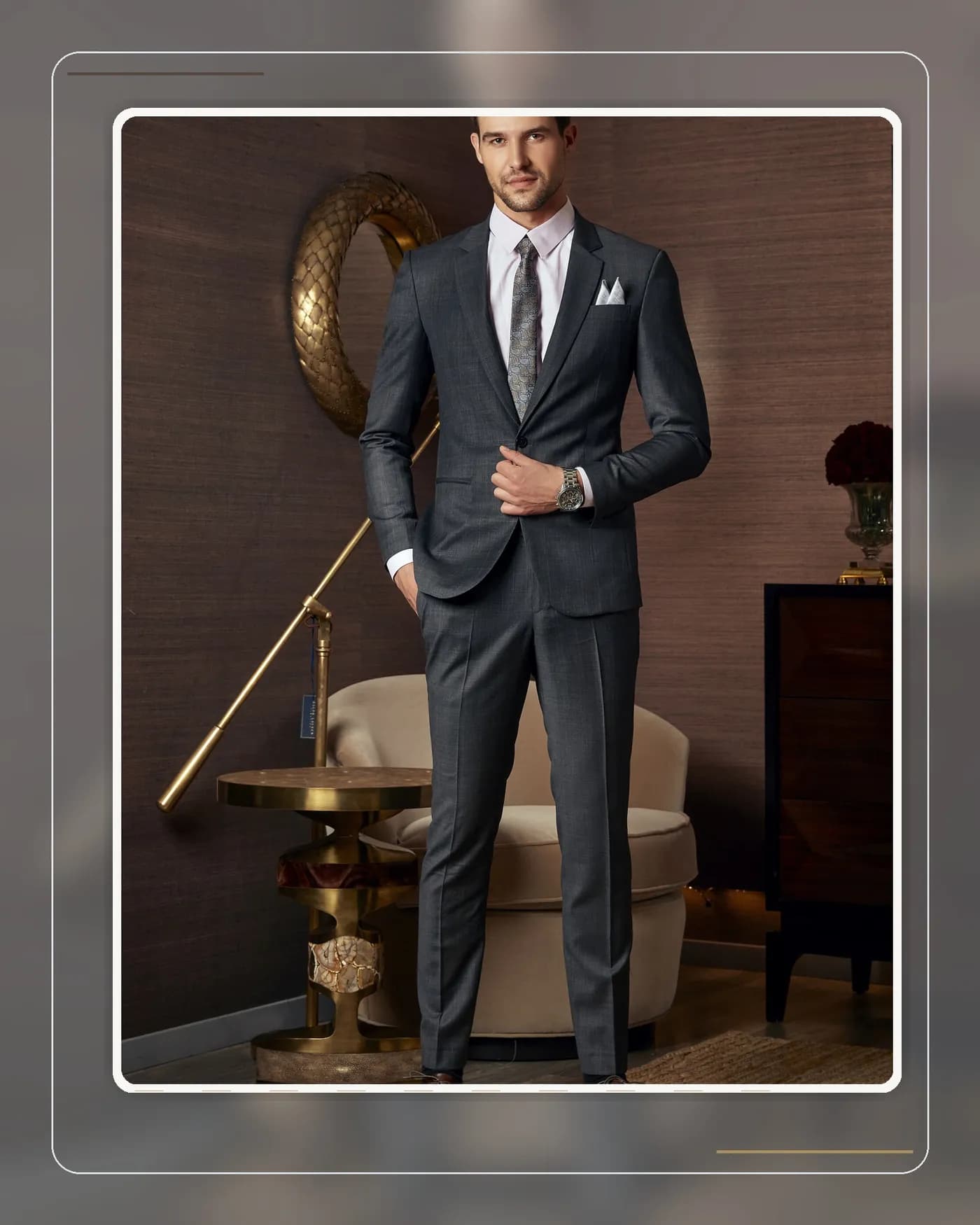
"What Super number is this cloth?" is a question Mon Amie hears every day. But after years in the fitting room, we can say this with certainty: no one has ever complimented a suit for its Super number — people compliment a suit that looks born for its wearer.
The short answer
Proper fit matters more than the fabric name because the eye reads silhouette long before it can touch cloth: shoulders, chest, waist and lengths create 80% of the impression at normal conversational distance. A suit in ordinary cloth that hugs the body correctly always beats Super 150s wool with crooked shoulders and a wrinkled chest. Expensive cloth only delivers its value when cut correctly — it is a multiplier, not a starting point.
What does the eye see from three metres?
At handshake distance, no one can tell Super 120s from Super 150s wool. What people see is: whether the shoulder line is clean, whether the chest sits flat when buttoned, whether the waist creates a V-shape, whether fabric pools at the trouser hem. All of that is fit. Cloth is only "read" up close or by touch — after the first impression has already formed.
Expensive cloth is even less forgiving of bad fit
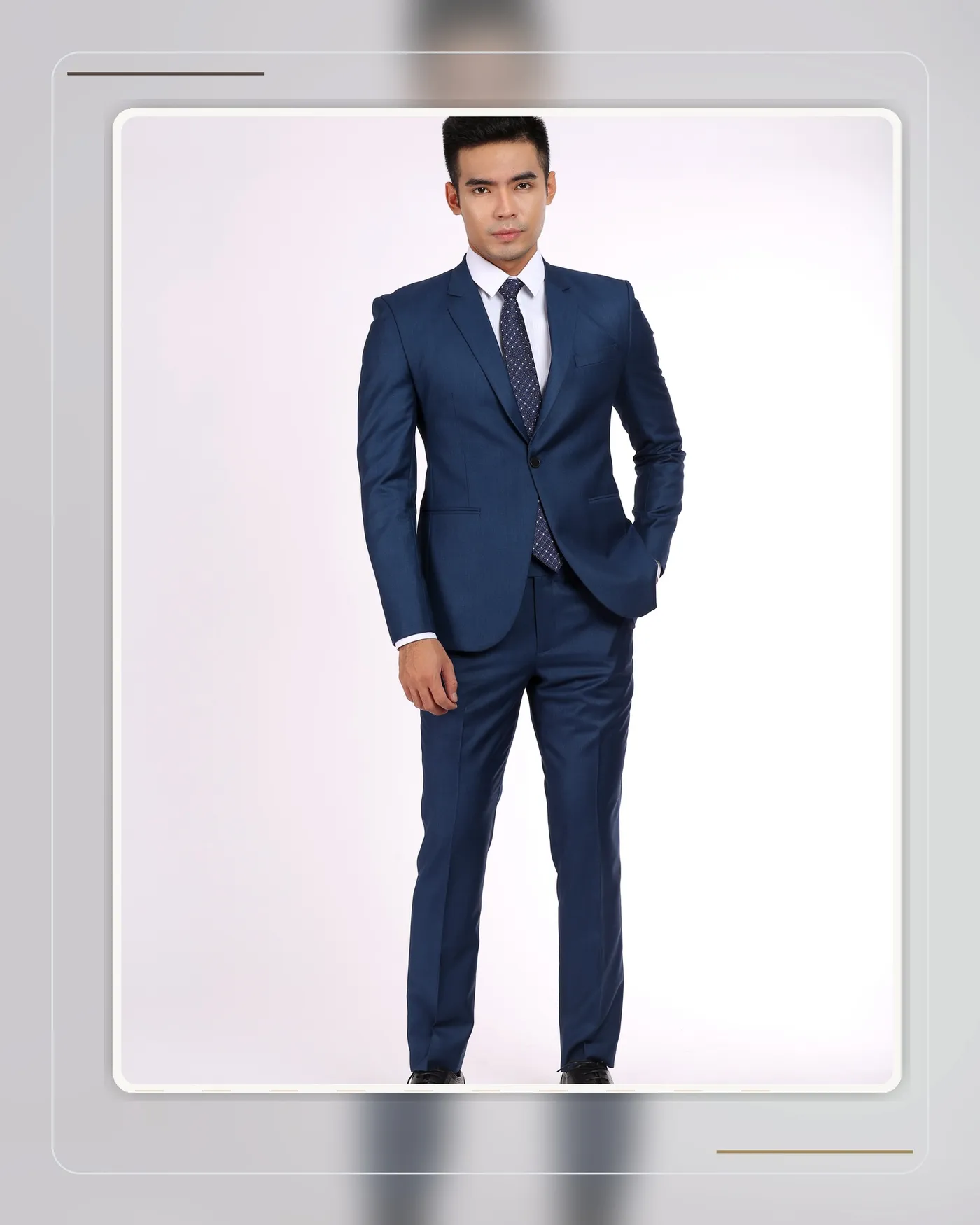
A paradox few know: the finer the yarn (the higher the Super number), the softer the cloth — and the more readily it wrinkles and exposes every flaw in the cut. A badly fitted Super 150s suit wrinkles worse than a Super 110s with the same flaws. In other words, expensive cloth amplifies both the tailor's rights and wrongs — it doesn't hide mistakes, it magnifies them.
How to split the same budget?
- Priority 1 — the cutting and making: choose a tailor who takes full measurements and holds a basted fitting to adjust before finishing.
- Priority 2 — durable, shape-holding cloth: Super 110s–130s wool from a reputable mill is the ideal balance of hand-feel, durability and shape retention in Vietnam's climate.
- Priority 3 — upgrade gradually: once your pattern is established and your measurements are on file, later suits are the time to indulge in finer cloth.
Common mistakes
- Pouring the whole budget into a fabric name, then rushing the make and skipping the mid-way fitting.
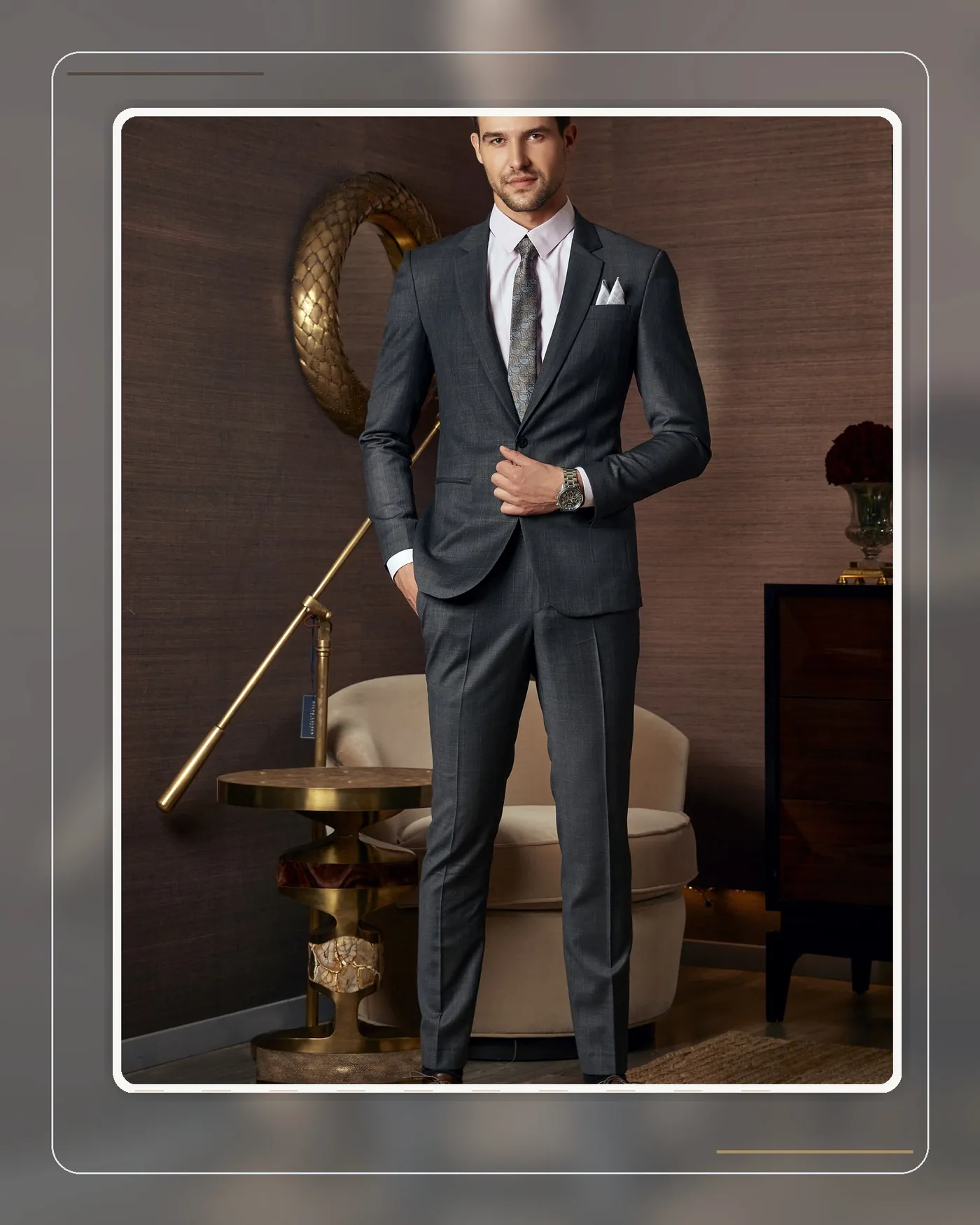
- Believing premium cloth will "look good on its own" — when fine luxury cloth actually exposes fit flaws most clearly.
- Comparing tailors' prices by fabric name alone without asking about measuring, canvassing and the number of fittings.
A word from Mon Amie's artisans
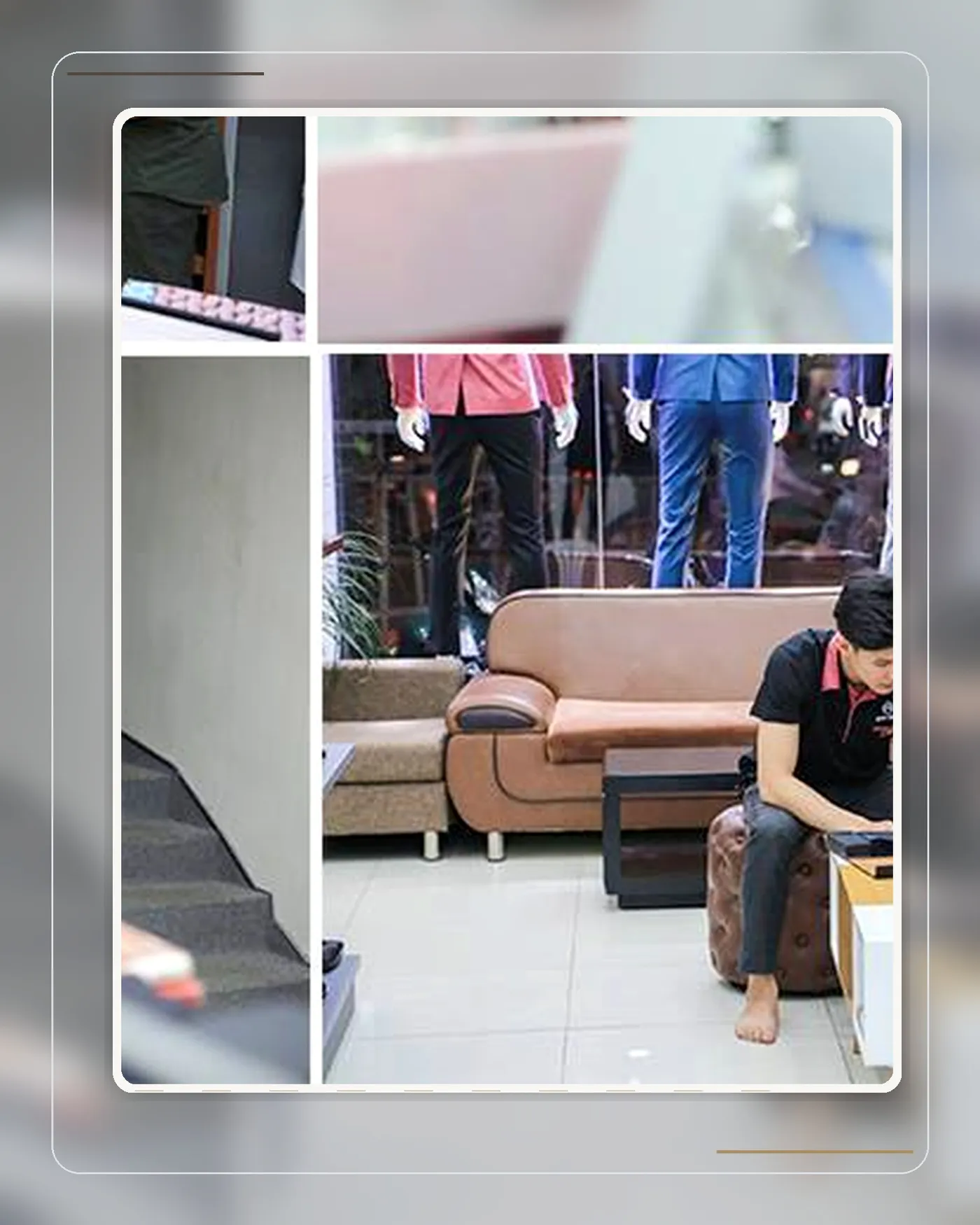
Our master tailor has a favourite saying: "Cloth is the skin, the cut is the bones — if the bones are crooked, no skin can stand straight." That is why our process always begins with more than twenty measurements and a basted fitting, before any talk of which mill's cloth you'll choose. Once the cut is right, even mid-range cloth drapes surprisingly well — and only then does beautiful cloth become truly worth its price.
Frequently asked questions
What does the Super number on cloth mean? It measures the fineness of the wool yarn — the higher the number, the finer the yarn and the softer the cloth, but also the more delicate and wrinkle-prone.
What are the most important points of a proper fit? Shoulders ending exactly at the shoulder bone, a flat chest when buttoned, a gently shaped waist, 1–1.5 cm of shirt cuff showing, and trousers meeting the shoe with minimal break.
Can an altered off-the-rack suit fit as well as a tailored one? Sleeves, waist and hems can be altered, but shoulders and chest — the two most decisive areas — are nearly impossible to fix; that is the fundamental advantage of tailoring.
Conclusion
The fabric name is printed on the selvedge, but the fit is printed in the eyes of everyone you meet. To start with the bones of your suit, book an appointment with Mon Amie and see the tailoring process.