
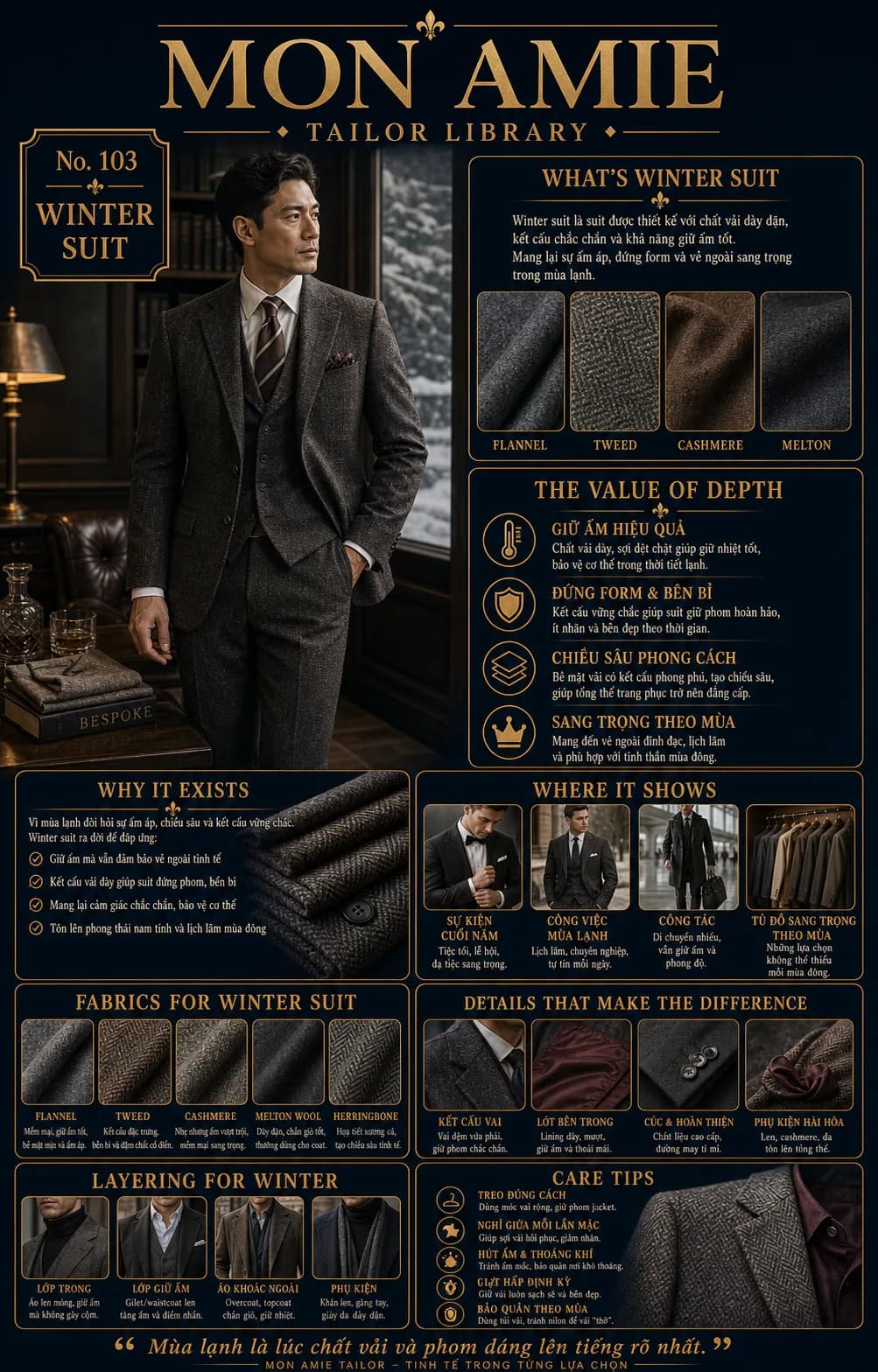
A winter suit is one made specifically for cold weather, cut from substantial cloths such as flannel, tweed, cashmere or melton, with a firm construction and genuine warmth. Unlike an ordinary four-season suit, a winter suit delivers three things at once: warmth, a silhouette that holds, and the particular elegance of the season. If you attend year-end functions, travel to colder cities, or simply want a wardrobe with more depth, this is a piece worth investing in.
What a winter suit is, and why it came about
Cold weather makes demands that lightweight suits cannot meet: the body needs warmth, the outfit needs visual depth, and the cloth needs enough body not to collapse in a cold wind. The winter suit answers all of that:
- Warmth without resorting to bulky extra layers, and without losing refinement.
- Heavier cloth that holds the silhouette and endures across many seasons.
- A reassuring, enveloping feel on the body.
- The distinctly masculine, polished bearing that suits the season.
Put another way, a winter suit is not merely "a suit worn in winter" — it is a different approach to material and construction.
The value of depth in cloth
What most distinguishes a winter suit is the surface and weight of its fabric. Mon Amie calls this the value of depth, and it shows in four ways:
- Real warmth: heavier cloth with a tight weave retains heat and protects the body in cold conditions.
- Structure and durability: a firm construction keeps the suit's shape immaculate, creases less and ages beautifully.
- Depth of style: richly textured surfaces — the soft nap of flannel, the woven pattern of tweed — create visual depth that lifts the whole outfit well above flat, smooth cloth.
- Seasonal luxury: a composed, elegant appearance in keeping with the spirit of winter.
The classic winter suiting cloths
Every cold-weather fabric has its own character, and choosing the right one accounts for most of a suit's success:
- Flannel: soft, warm, with a smooth surface and a gentle nap — the classic choice for a cold-weather business suit.
- Tweed: distinctive texture, hard-wearing and thoroughly classic; suited to heritage style, blazers and three-piece suits.
- Cashmere: light yet exceptionally warm, the softest and most luxurious of the natural fibres.
- Melton wool: dense and wind-resistant, usually reserved for overcoats and outer layers.
- Herringbone: a subtle woven pattern that lends refined depth to both suits and coats.
Where a winter suit earns its place
A well-made winter suit follows you through many settings:
- Year-end events: dinners, celebrations and formal receptions — the moment when heavy cloth and a proper cut speak loudest.
- Cold-season work: elegant, professional and confident at the office every day.
- Business travel: long days on the move, especially in colder cities, without losing your composure.
- A seasonal luxury wardrobe: an essential piece that lets your wardrobe change rhythm with the weather.
Details that make the difference, and how to layer
On a winter suit, technical details matter even more, because heavier cloth demands greater skill:
- Shoulder construction: moderate padding that holds the line firmly without becoming stiff.
- Interior lining: a substantial, smooth lining that adds warmth while staying comfortable all day.
- Buttons and finishing: fine materials and meticulous stitching — on heavy cloth, careless seams show clearly.
- Harmonious accessories: wool, cashmere and leather are the three materials that complete a winter look.
For layering, build from the inside out: a fine knit close to the body for warmth without bulk; a gilet or wool waistcoat as the insulating layer, which adds warmth and a point of interest; an overcoat or topcoat on the outside to block wind and hold heat; and finally the accessories — a wool scarf, gloves, thick-soled leather shoes — to finish the whole.
Caring for a winter suit properly
Cold-weather cloths are heavy and valuable, so proper care will keep the suit handsome for years:
- Hang it correctly on a broad-shouldered hanger to preserve the jacket's shape.
- Rest the suit between wearings so the fibres recover and creases fall out.
- Keep the storage space dry and well ventilated to prevent mould.
- Dry clean periodically rather than washing, to keep the cloth clean and durable.
- Store seasonally in a breathable cloth bag, never plastic, so the fabric can breathe.
A word from Mon Amie's artisans
Cold weather is when cloth and cut speak most clearly — lightweight fabric can hide a few imperfect seams; flannel and tweed cannot. For a winter suit, then, Mon Amie recommends made-to-measure over ready-to-wear: heavy cloth needs the shoulders, chest and closeness of fit balanced to your actual body before it will stand well and still feel comfortable. If you commission only one, choose a charcoal flannel three-piece — warm enough, formal enough, and easy to wear across nearly every year-end occasion.
A winter suit is a worthwhile investment for a season full of events: warm, structured and seasonally elegant. Mon Amie carries cold-weather cloths from Kevinlli (full suits from VND 4.8 million) through the Canonico, Holland & Sherry, Dormeuil and Scabal collections at five showrooms in Ho Chi Minh City, with post-delivery alteration warranty and lifetime record of your measurements. We invite you to book an appointment to handle the cloth in person, or to read Mon Amie's tailoring process first.