
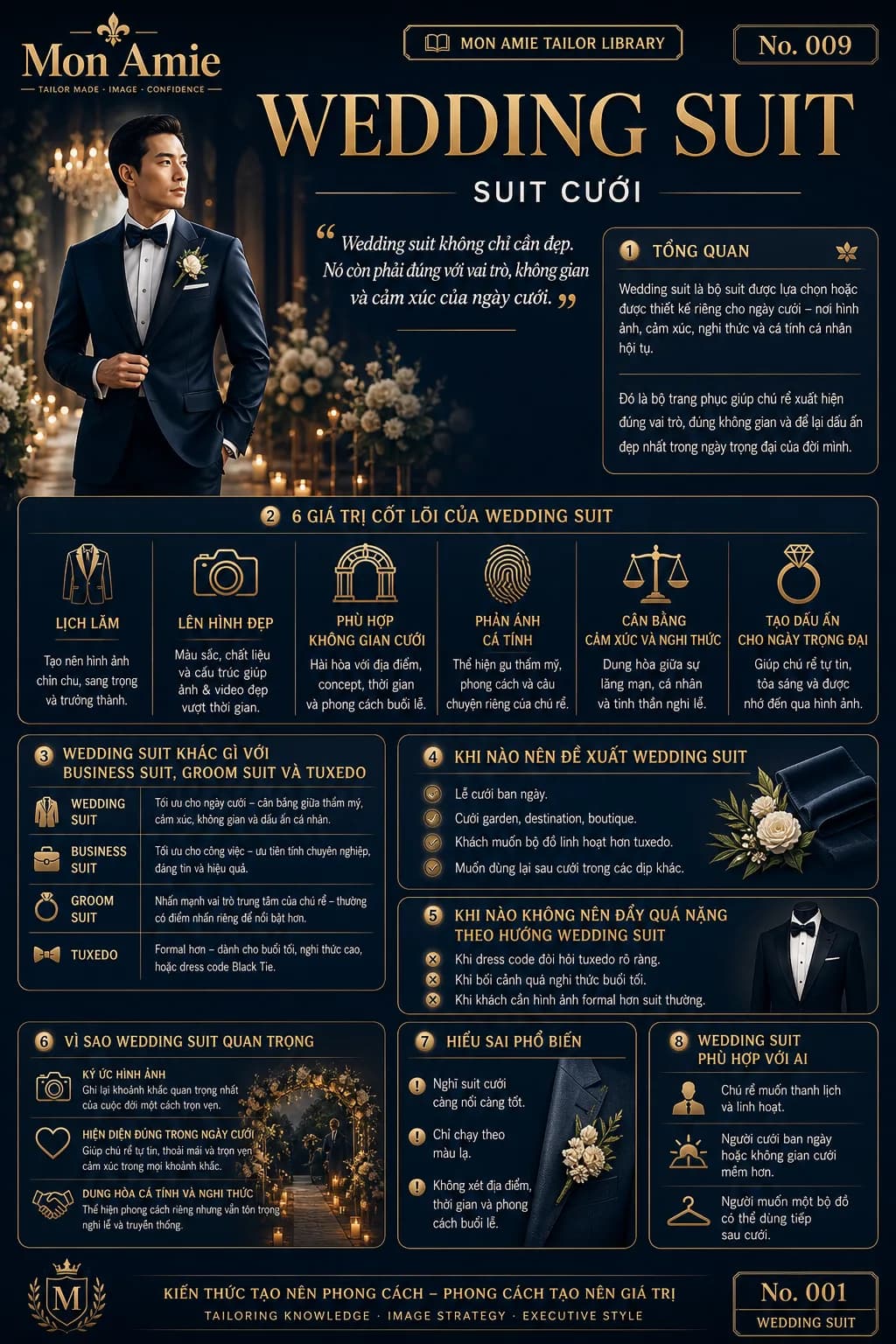
A wedding suit is a suit chosen or designed specifically for the wedding day, where image, emotion, ceremony and personality all converge. A true wedding suit must be more than handsome; it must be right for the role, the setting and the feeling of the occasion. It is the garment that places the groom at the centre where he belongs, and leaves the finest impression on the most important day of his life.
How a wedding suit differs from an ordinary suit
Structurally, a wedding suit is still a suit — jacket, trousers, perhaps a waistcoat. The difference lies in purpose: a business suit is optimised for work, prizing professionalism, credibility and efficiency; a wedding suit is optimised for the wedding day, balancing aesthetics, emotion, the setting of the ceremony and the groom's own signature.
So when cutting a wedding suit, the tailor weighs factors a business suit rarely considers: the photographic setting, the light at the ceremony, the decorative palette, and the couple's own story.
Six core values of a wedding suit
In Mon Amie's experience, a proper wedding suit must do six things:
- Elegance — it gives the groom a polished, refined and mature presence.
- Photographs beautifully — colour, cloth and construction that keep the photographs and film handsome for decades, never dated on a later viewing.
- Suits the venue — in harmony with the location, the concept, the time of day and the style of the ceremony.
- Reflects personality — it expresses the groom's taste, style and personal story.
- Balances emotion and ceremony — reconciling romance, individuality and the spirit of ritual.
- Marks the occasion — it lets the groom feel confident, shine, and be remembered in the images.
Wedding suit versus business suit, groom suit and tuxedo
These four terms are often used interchangeably, but each has its own role:
- Wedding suit: optimised for the wedding day — balancing aesthetics, emotion, setting and personal signature. Versatile, and wearable again afterwards.
- Business suit: optimised for work — professionalism, credibility and efficiency first; usually minimal in detail.
- Groom suit: emphasises the groom's central role — often with a distinguishing touch such as a different lapel, a waistcoat or a deeper tone to set him apart from guests and groomsmen.
- Tuxedo: the most formal of all — for the evening, high ceremony or a Black Tie dress code, with silk-faced lapels, a bow tie and a formal shirt front.
When to choose a wedding suit over a tuxedo
A wedding suit is the sensible choice when:
- The ceremony takes place during the day — the tuxedo is by tradition evening dress.
- The wedding is a garden, destination or boutique affair — softer, more intimate, full of natural light.
- The groom wants something more versatile than a tuxedo, easier to combine and easier to wear again.
- He intends to wear the suit again after the wedding for other important occasions — a worthwhile investment rather than a single-use outfit.
Conversely, do not push too far towards a wedding suit when the dress code clearly calls for a tuxedo, when the setting is a formal evening ceremony, or when the client needs a more formal image than an ordinary suit provides. Reading the occasion correctly matters as much as choosing a flattering cut.
Common misconceptions about wedding suits
Three mistakes Mon Amie meets regularly when advising grooms:
- Believing the bolder the better. A groom stands out through his role and his polish, not through attention-seeking colour. A suit that shouts dates quickly in the album.
- Chasing unusual colours. A colour that looks striking online may not suit your complexion, the light of the ceremony or the decorative concept of your own wedding.
- Ignoring venue, time and style of ceremony. A handsome suit in the wrong context is still the wrong choice — a wedding suit should be chosen from the whole of the occasion, not in isolation.
Ultimately, the wedding suit matters for three reasons: it records the most important moment of a life fully and faithfully in images; it lets the groom stand present, confident and comfortable on the day; and it reconciles individual character with respect for ceremony and tradition.
A word from Mon Amie's artisans
When you come to the showroom to discuss a wedding suit, bring three pieces of information: the venue and hour of the ceremony, the decorative palette, and the dress code set for your guests. Those three factors decide eighty per cent of the cloth colour and formality — personal taste settles the rest. Mon Amie generally advises grooms to choose navy or a deep midnight blue for a daytime ceremony: it photographs durably, is easy to wear again, and still looks dignified when you open the album ten years later. Commission the suit at least three to four weeks before the wedding so there is time for fittings and adjustments as your build changes.
The right wedding suit is one you will still be proud of years later. If you are preparing for your day, please book an appointment with Mon Amie for a consultation at one of our five showrooms, or read about the tailoring process first.