
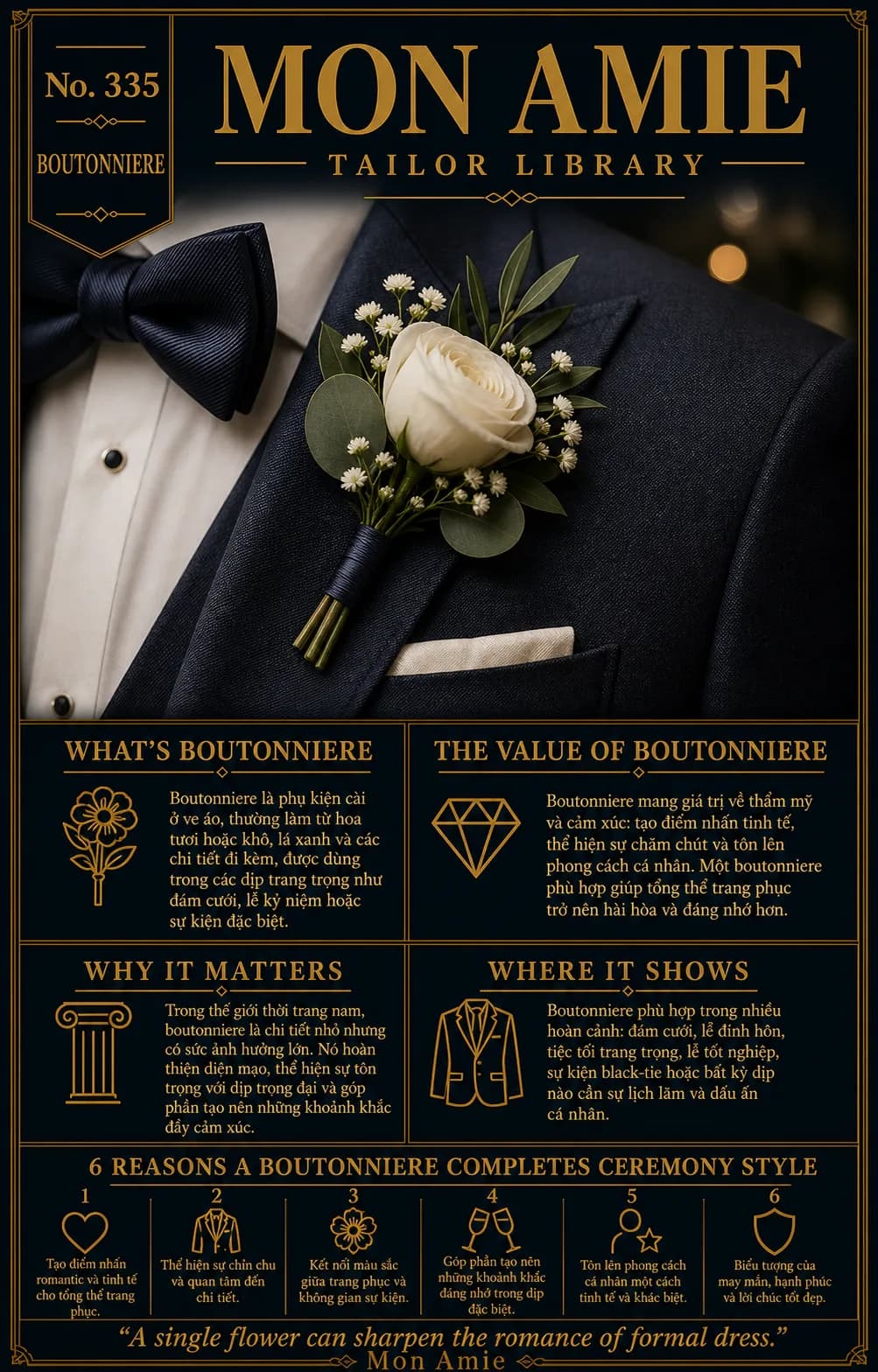
A boutonniere is a flower worn on the lapel, usually made from fresh or dried blooms combined with greenery, and worn on formal occasions such as weddings, anniversaries and special events. A single small flower, placed correctly, can make an entire formal outfit feel alive and full of feeling. In this article, Mon Amie invites you to discover why tailors hold this modest detail in such high regard.
What a boutonniere is and where it comes from
The French word "boutonnière" means "buttonhole" — the very hole on the left lapel that many people today assume is purely decorative. Originally it was made to hold a fresh flower. The tradition took hold across nineteenth-century Europe, when a gentleman heading out or attending a party would pin on a small bloom as a mark of polish and romance.
A complete boutonniere usually comprises:
- One principal bloom: a rose, carnation, orchid or dried flower, depending on the style
- Greenery and small accent flowers, most often eucalyptus and white baby's breath
- A stem wrapped in ribbon or thread toned to the outfit
What a boutonniere adds to the whole outfit
A boutonniere carries two kinds of value: aesthetic and emotional. Aesthetically, it creates a refined focal point against suiting cloth that is usually plain — a white bloom on a deep navy lapel is a classic contrast you will not find in any other accessory. Emotionally, it shows the care the wearer brings to the occasion: you are not only dressing well for yourself, you are honouring the hosts and everyone present.
The right boutonniere makes an outfit more harmonious and more memorable — especially in wedding photographs, where the groom and groomsmen are recognised at once by the flower on the chest.
Why such a small detail matters
In menswear, the boutonniere is a small detail with outsized influence. A man's suit offers little room to express personality — cut and colour both follow convention. That is precisely why details such as the boutonniere, the pocket square and the cufflinks become the wearer's private language. The boutonniere completes the look, expresses respect for a significant occasion and helps create moments full of feeling — from the instant the bride pins the flower on the groom to the family photograph at the close of the ceremony.
The occasions a boutonniere suits
The boutonniere appears naturally in many settings:
- Weddings: the groom, the groomsmen and both fathers — the groom's flower should stand out a little more
- Engagement ceremonies and formal dinners
- Graduations and award ceremonies
- Black-tie events, or any occasion calling for elegance and a personal signature
The general rule: the more formal the occasion, the more restrained the flower — one principal bloom, modest in size, pinned to the left lapel, with the stem neatly concealed.
6 reasons a boutonniere completes formal style
- It brings a romantic, refined focal point to the outfit as a whole.
- It shows the wearer's polish and eye for detail.
- It ties the colours of the outfit to the setting — the lapel flower can echo the bridal bouquet or the table arrangements.
- It helps create memorable moments on a significant day.
- It elevates personal style in a subtle, distinctive way.
- In Western tradition it symbolises luck, happiness and good wishes.
A word from Mon Amie's artisans
At Mon Amie, when we make formalwear we always cut a working lapel buttonhole — never a decorative imitation — so that you can wear a boutonniere properly on the day that matters. A lapel with the correct canvas and press also helps the flower stand upright without dragging the cloth out of shape. A small bloom only looks beautiful when the cloth and lapel beneath it are firm enough — that is the tailor's quiet share of the work.
If you are preparing for a wedding or an important event, let Mon Amie make you formalwear worthy of the flower on your chest. You are welcome to book an appointment at one of Mon Amie's five showrooms, or to learn more about our bespoke service — hotline 0888.111.118.