
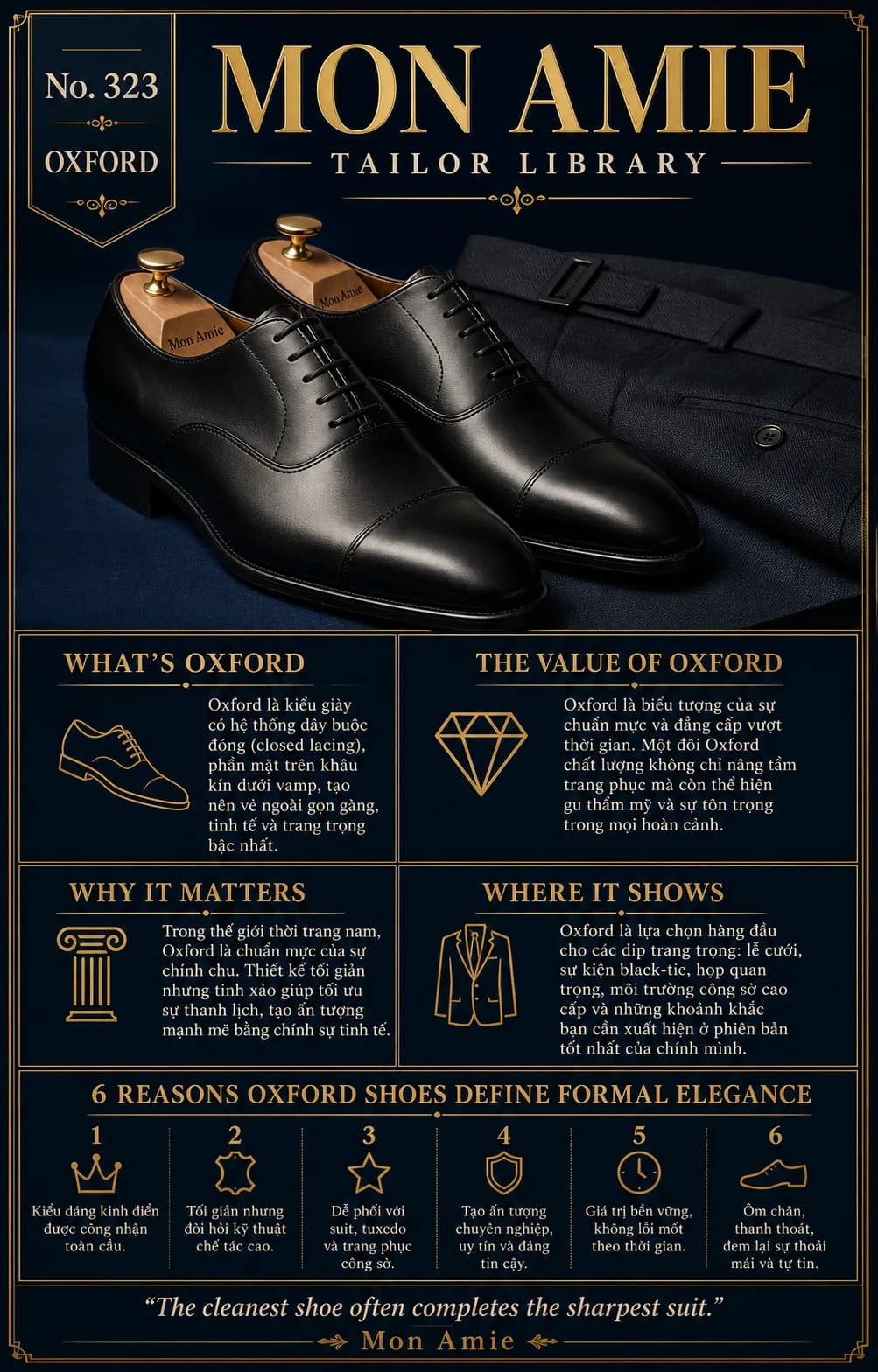
An Oxford is a shoe with a closed lacing system, the facings stitched beneath the vamp to give a clean, refined and thoroughly formal appearance. It is the shoe that every serious wardrobe requires. Mon Amie invites you to look at what makes it the standard.
What an Oxford is
The identifying mark lies in how the leather is joined: the two lacing facings are stitched underneath the vamp, so that when the shoe is laced the two edges meet flush in a single unbroken plane. This construction is known as closed lacing, and it is precisely what separates the Oxford from every other laced shoe.
Because the upper closes completely, the Oxford hugs the instep with little gapping, producing a slender line seen from above. That is why the style always sits at the highest level of formality.
The value of a good pair
The Oxford is a symbol of correctness and of timeless distinction. A well-made pair not only lifts an outfit but shows taste and respect in any setting — respect for the occasion you are attending, and for the people sitting across from you.
It is also worth the investment in plain economic terms. A well-made shoe, properly cared for, will serve you for many years without losing the spirit it had on the first day.
Why the Oxford matters
In menswear, the Oxford is the benchmark of polish. Its design is minimal yet exacting, refining elegance to its essence and making its impression through restraint rather than ornament.
Here is the point many men overlook: however well a suit is made, if the shoe sits at the wrong level of formality the whole is immediately out of balance. The shoe is the end of a line that runs from the shoulder to the floor, and the Oxford keeps that line unbroken to the last.
Where the Oxford belongs
The Oxford is the first choice for formal occasions:
- Weddings, when absolute polish is required.
- Black-tie events and dinners under a classic dress code.
- Important meetings, negotiations and signings.
- Senior corporate environments.
- Any moment when you need to appear as the best version of yourself.
As for colour, black is the most formal and all but obligatory for black tie or a traditional wedding. Dark brown is more versatile and sits well with navy or grey suits for daily business.
Six reasons the Oxford defines formality
- A classic form recognised the world over, needing no explanation anywhere.
- Minimal yet demanding in its making, since closed seams allow no mistakes.
- Easily worn with suits, tuxedos and business dress.
- It conveys professionalism, authority and trustworthiness.
- Lasting value, never dating with time.
- Close-fitting and slender, giving both comfort and confidence.
Within the Oxford family, the cap-toe — with its seam across the toe — is the most balanced version between formality and everyday use. The plain-toe is more formal still, reserved for tuxedos and evening dress.
A word from Mon Amie's artisans
At every fitting, Mon Amie's artisans ask you to bring the very shoes you will wear on the day. Sole thickness and heel height bear directly on trouser length and on the break at the hem — a single centimetre changes the line visibly. It is a small detail, but it decides whether a suit looks well fitted or slightly short.
If you are preparing a suit for an important occasion and want every proportion to work with the shoes you love, you are welcome at one of Mon Amie's five showrooms in Ho Chi Minh City, or call 0888.111.118. You may read about the tailoring process first, then book an appointment to be measured and advised in person.