
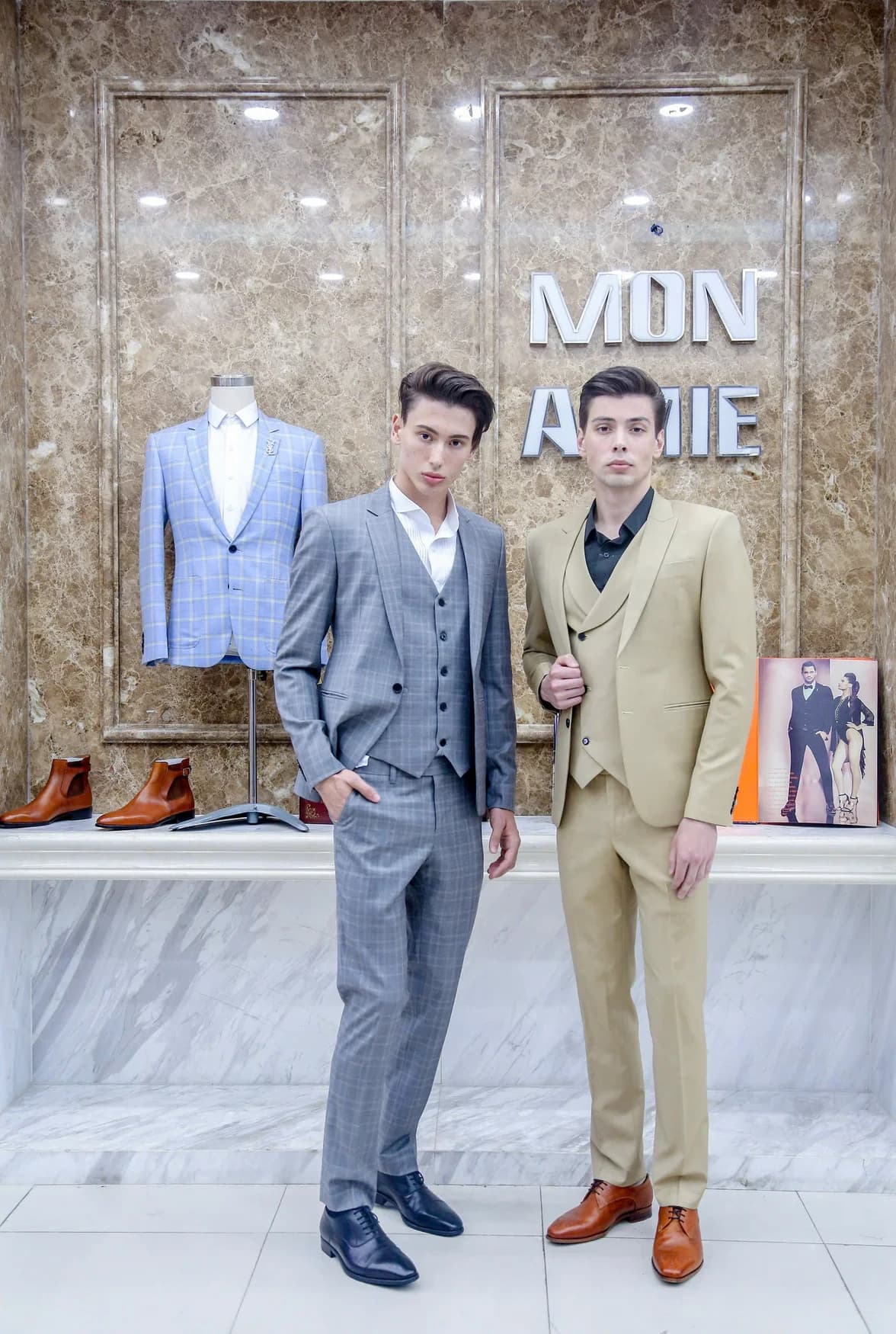
A suit made for a three-year-old at the start of the year may already be short in the sleeve before Lunar New Year (Tết). Children grow without warning, so choosing boys' suits by age means choosing by the strength of each stage: a 1–2-year-old needs something soft, light and easy to change, while a 9–12-year-old can already wear a cut almost like a grown-up's. The five styles below follow five age groups, each with notes on cloth, measurements and occasion.
The short answer
Boys' suits by age at a glance: ages 1–2, a soft waistcoat with elastic-waist trousers; ages 3–4, a short checked jacket with a bow tie; ages 5–6, a lined single-button jacket; ages 7–8, a compact cut like a grown-up's suit; ages 9–12, a slim cut with a tie. Pastel blue, grey check and navy are the three colours easiest to wear again.
1. Ages 1–2: soft waistcoat, elastic-waist trousers, small bow tie
At this age a child crawls, sits on the floor and won't stand still for anyone fixing his jacket, so the suit has to be comfortable before it is handsome. The right choice is a waistcoat or a short jacket with no shoulder padding, worn with a soft cotton shirt and elastic-waist trousers, or a waist with adjustment buttons to make nappy changes easy. A ready-attached bow tie replaces the tie, because a cord around the neck bothers a toddler and gets tugged. Soft, refined colours such as beige, pale blue and pale grey suit a first-birthday party and family photos.
The big note is that a baby grows fast: measure as close to the day of wearing as possible, and leave room in the trouser hem and sleeves so they can be let out. Avoid thick or multi-layered cloth, because babies overheat easily and get sweaty backs. Mon Amie children's suits are made to each child's measurements, with the price depending on size and quoted at the fitting.
2. Ages 3–4: short checked jacket, bow tie and dark long trousers
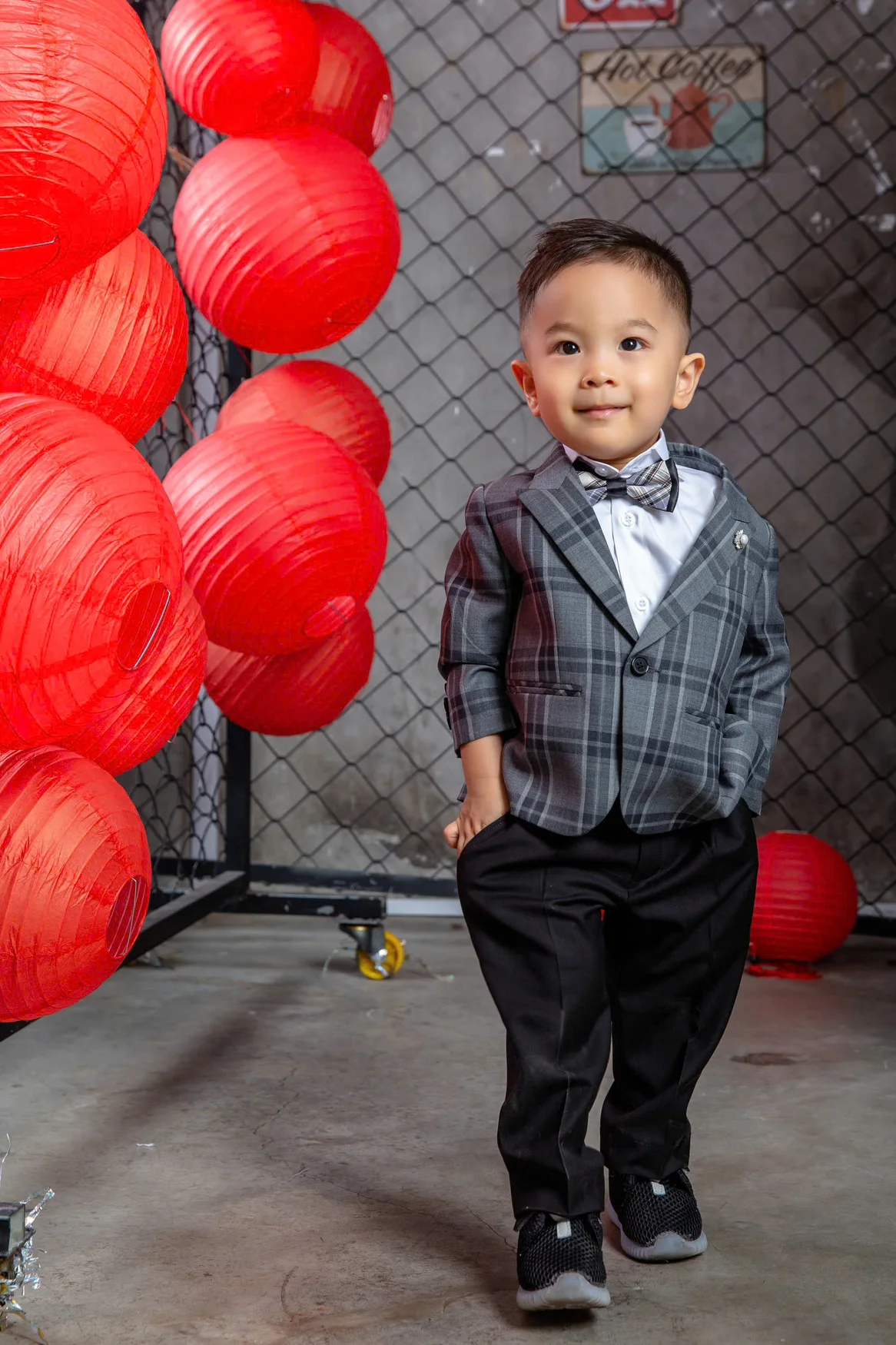
The child now walks steadily, likes copying Dad and is starting to pose for the camera. A short single-button jacket, long enough to just touch the seat, is easy to run around in because the front panels don't get in the way. A small grey check pattern like the one in the photo photographs well without ageing him, paired with a bow tie and black or charcoal trousers. It suits Tết photos, birthdays, and the little boy carrying the offering tray or holding flowers at a relative's wedding.
A common mistake is having real flap pockets made, then the child stuffs them with toys, so the jacket bulges and loses its line. Choose faux pockets, or ask him to leave toys in Mum's bag. The shirt collar must also be soft with flat seams, because that is the first place a child tugs at.
3. Ages 5–6: single-button lined jacket in pastel
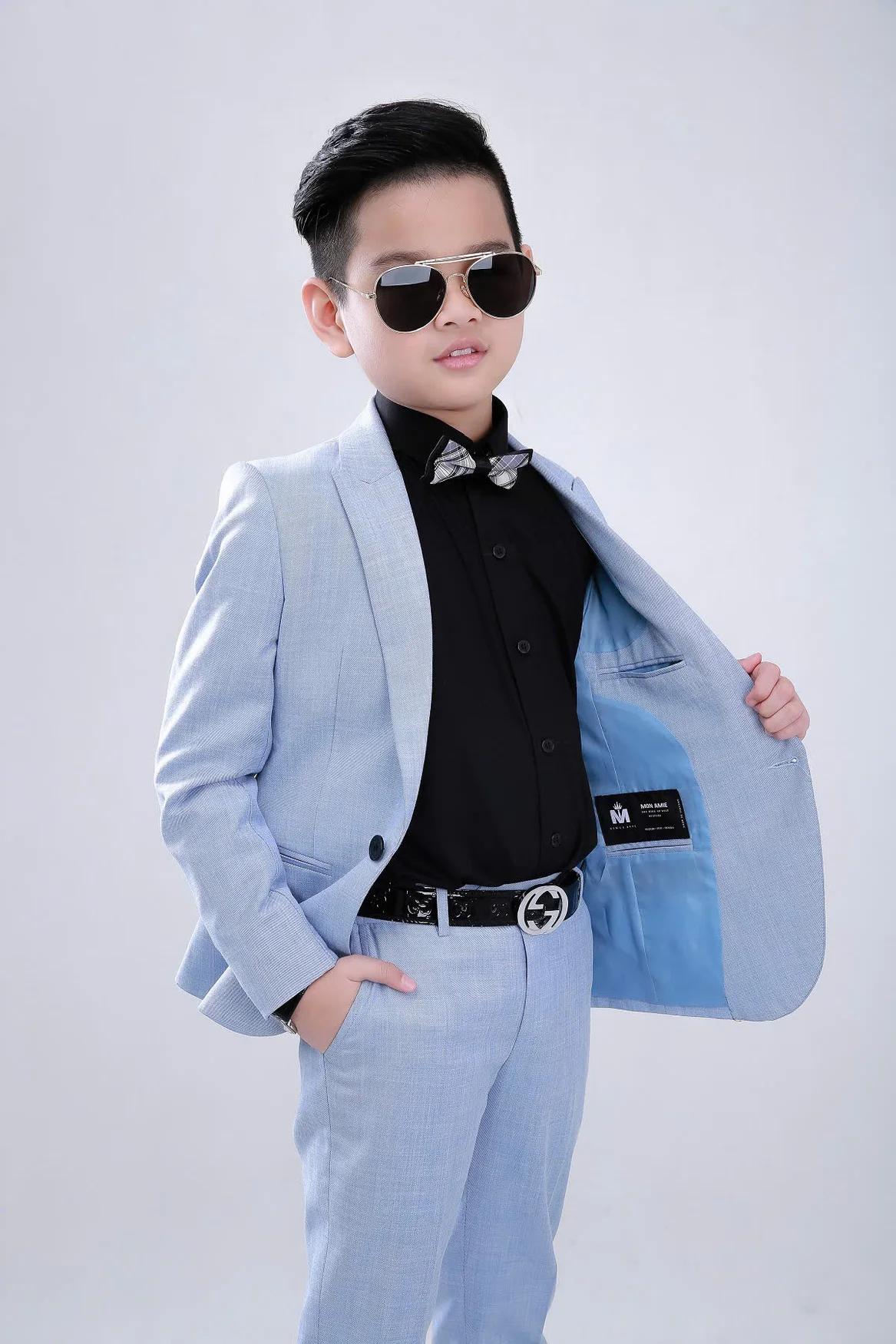
This is the age of starting Grade 1: the school-opening ceremony, school shows, friends' birthday parties, the weddings of aunts and uncles. He starts to have opinions about colour, so filter two or three cloth samples in advance and let him pick one. A single-button, lined jacket in pastel blue with a black shirt, as in the photo, is a formula quite different from the familiar white shirt: youthful, a little cool and still polite.
A contrasting lining is the detail he loves to show off, like the open front panel in the photo. The sunglasses are only a prop for the frame, not part of the outfit. The armhole seams and neckline must be gentle: a 5–6-year-old will abandon the suit at once if it itches.
4. Ages 7–8: a compact cut like a grown-up's suit
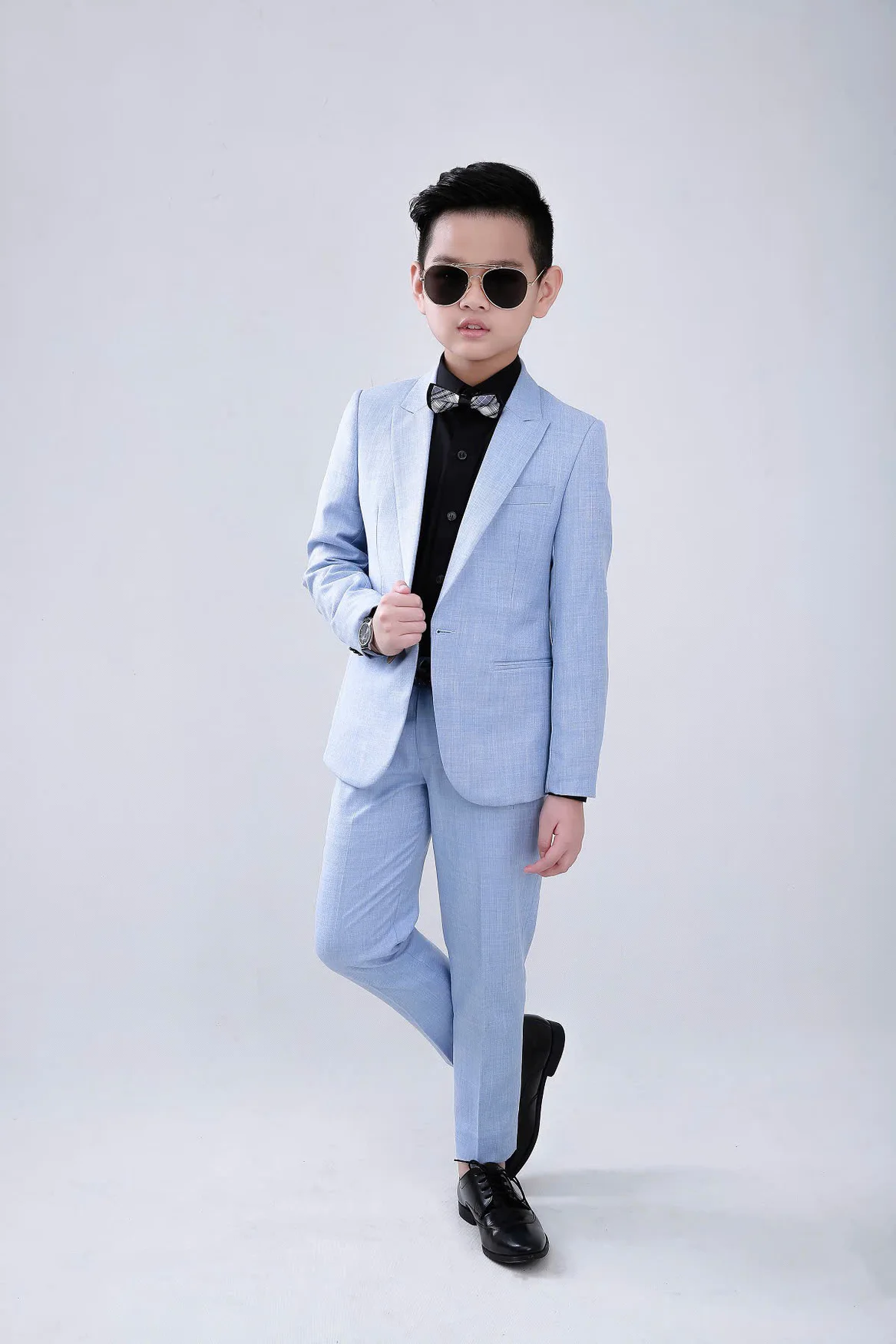
From age 7 a boy can stand straight for a long time and tolerate a suit with structure: balanced lapels, real flap pockets, trousers with an inner adjustable waistband that can be let out as his weight changes. Navy and charcoal work for many occasions, while a check bow tie on a dark shirt, as in the photo, adds nuance without changing the whole suit.
At this age boys are often invited to be a junior groomsman, so the suit should match the palette of the whole party; Mon Amie's Groom Styling service has options for groomsmen groups and coordinated accessories. A common mistake is having the suit made two sizes large to wear for two years: the shoulders sag, the sleeves cover the hands, and it looks borrowed. The jacket sleeve should leave about a centimetre of shirt cuff showing.
5. Ages 9–12: slim cut, tie instead of bow tie

A 10-year-old starts to notice how he looks in photos. This is the moment to swap the bow tie for a real tie (a smaller size than an adult's), choose a slim cut that fits the shoulder, straight-leg trousers, and leather shoes or loafers instead of trainers. The pastel blue with white shirt formula in the photo is a palette father and son can wear together, in harmony without being identical. It suits end-of-year ceremonies, parties with his parents and yearbook photos.
The growth spurt has begun, so measure close to the day of wearing and have him walk, sit and raise his arms. Boys this age dislike stiff suits and wear them once, then give up. To choose cloth for both father and son, read the article men's suit fabrics by occasion and age.
Quick summary table
| Style | Suits | Remember |
|---|---|---|
| 1. Ages 1–2 | First birthday, family photos | Soft waistcoat, elastic waist, ready-attached bow tie; measure close to the day |
| 2. Ages 3–4 | Tết photos, birthdays, tray-bearer at a wedding | Short jacket in a small check, bow tie, faux pockets so the jacket doesn't bulge |
| 3. Ages 5–6 | School opening, school shows, relatives' weddings | Single button, lined, let him choose from a few cloths |
| 4. Ages 7–8 | Junior groomsman, end-of-year ceremonies | Adjustable-waist trousers, don't make it two sizes large |
| 5. Ages 9–12 | Parties with his parents, yearbook photos | Slim cut, a real tie, re-measure close to the day |
Tips from Mon Amie's master tailors
- Measure your child when he is relaxed, after waking up or eating, and bring a familiar toy. When a child is cranky, his posture tightens too and the measurements are less accurate.
- Before collecting the suit, have him raise both arms over his head, squat and run a few steps. Any jacket that blocks these movements needs adjusting.
- Prioritise a soft lining and flat seams at the collar and underarms. If a child itches, he won't wear it.
- Choose colours to be worn again: one navy or grey suit with a change of shirt and bow tie works for many occasions, more convenient than three unusual colours worn once.
- Tell the stylist in advance when the suit will be used (photos, a ceremony, a party) so you can choose a soft stretch cloth or a structured one.
Frequently asked questions
Which style suits boys aged 1 and 2?
Choose a waistcoat or a short jacket with no shoulder padding, a cotton shirt, elastic-waist trousers and a ready-attached bow tie, in soft colours such as beige, pale blue and pale grey. Put softness and easy changing before looks, and measure close to the day of wearing because babies grow very fast.
On what occasions does a 3- or 4-year-old wear a suit?
This age suits Tết photos, birthdays and relatives' weddings. A short single-button jacket in a small grey check or pastel blue, with a bow tie, is the familiar choice. Choose faux pockets so the child can't stuff things in and make the jacket bulge.
How do suits for a 6-year-old and an 8-year-old boy differ?
A 6-year-old still needs a soft, lined suit with gentle seams. An 8-year-old can wear a more structured cut: balanced lapels, real flap pockets, trousers with an adjustable waistband. Both should be made to real measurements rather than made large to last longer.
Is a suit for a 10-year-old boy like a grown-up's?
Nearly, but neater and smaller: a slim cut that fits the shoulder, a small-size tie, leather shoes or loafers. He can match his father's palette. Mon Amie children's suits are made to each child's measurements, with the price depending on size and quoted at the fitting.
Conclusion
A boy's suit is good when he forgets he is wearing one: he can run, he can sit, and nothing itches. If you are still unsure which of these boys' suits by age fits your son, you can book a fitting so a stylist can see him and choose cloth right at the showroom, or visit a Mon Amie showroom near you.