
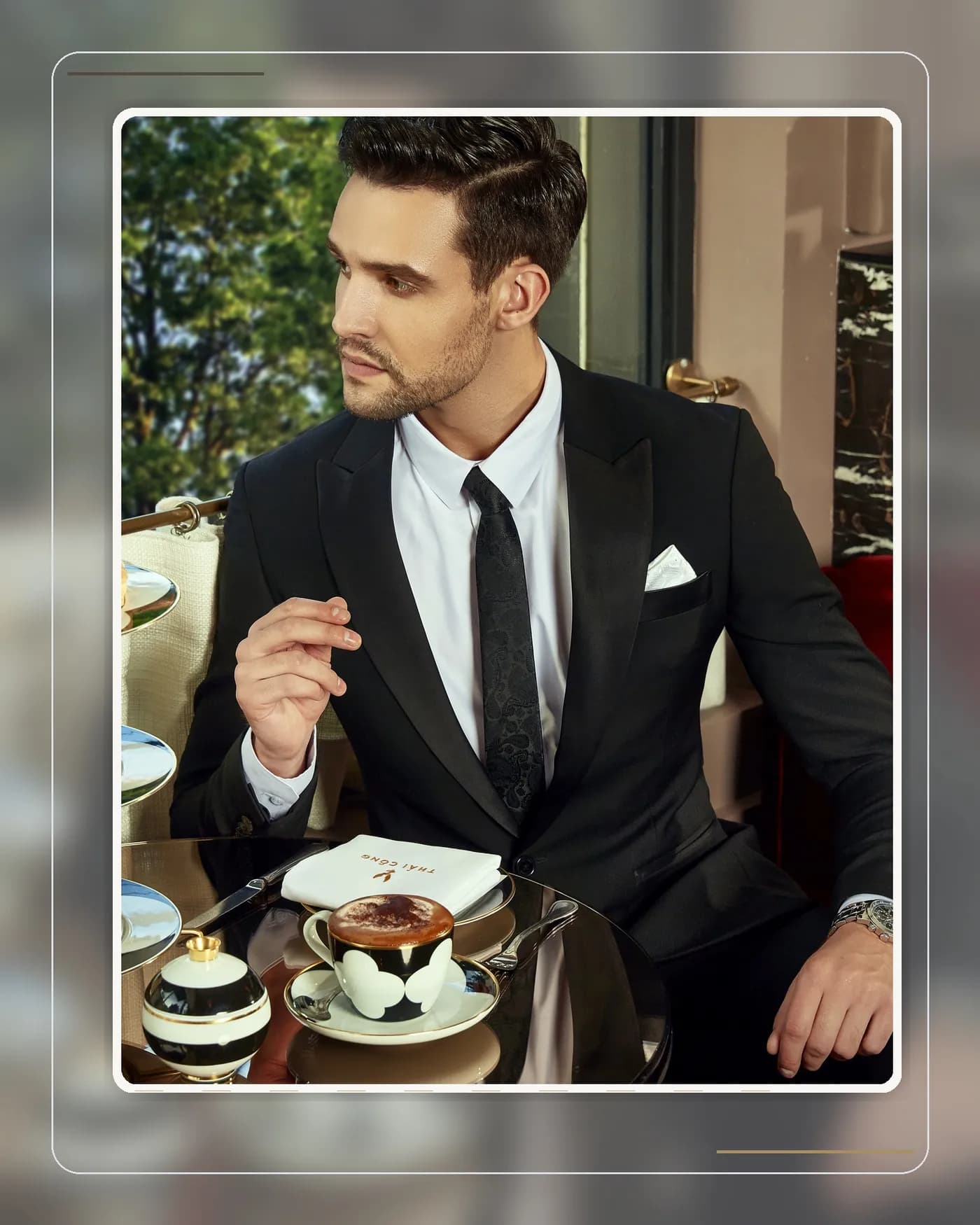
Have you ever noticed how two men can wear the same navy suit, yet one looks like an executive and the other looks like he borrowed it? That gap rarely comes down to the suit's price — it lives in the small details the eye picks up within the first three seconds.
The short answer
A suit looks expensive thanks to five groups of details: a proper fit through the shoulders and chest, jacket and trouser lengths in the right proportion, clean finishing (lapel line, working cuffs, no pulling wrinkles), restrained accessories in one palette, and well-cared-for shoes and belt. None of these requires the priciest cloth — they require diligence and a tailor who understands your proportions.
Shoulders and chest — where the eye lands first
The shoulder is the fastest giveaway. The seam should end exactly at your shoulder bone, neither collapsing nor jutting out at an angle. The chest must sit flat when buttoned, with no X-shaped pull at the middle button. A suit in modest cloth with clean shoulders and a flat chest always looks richer than Italian wool with rumpled shoulders.
Lengths and proportion — rarely adjusted, always noticed
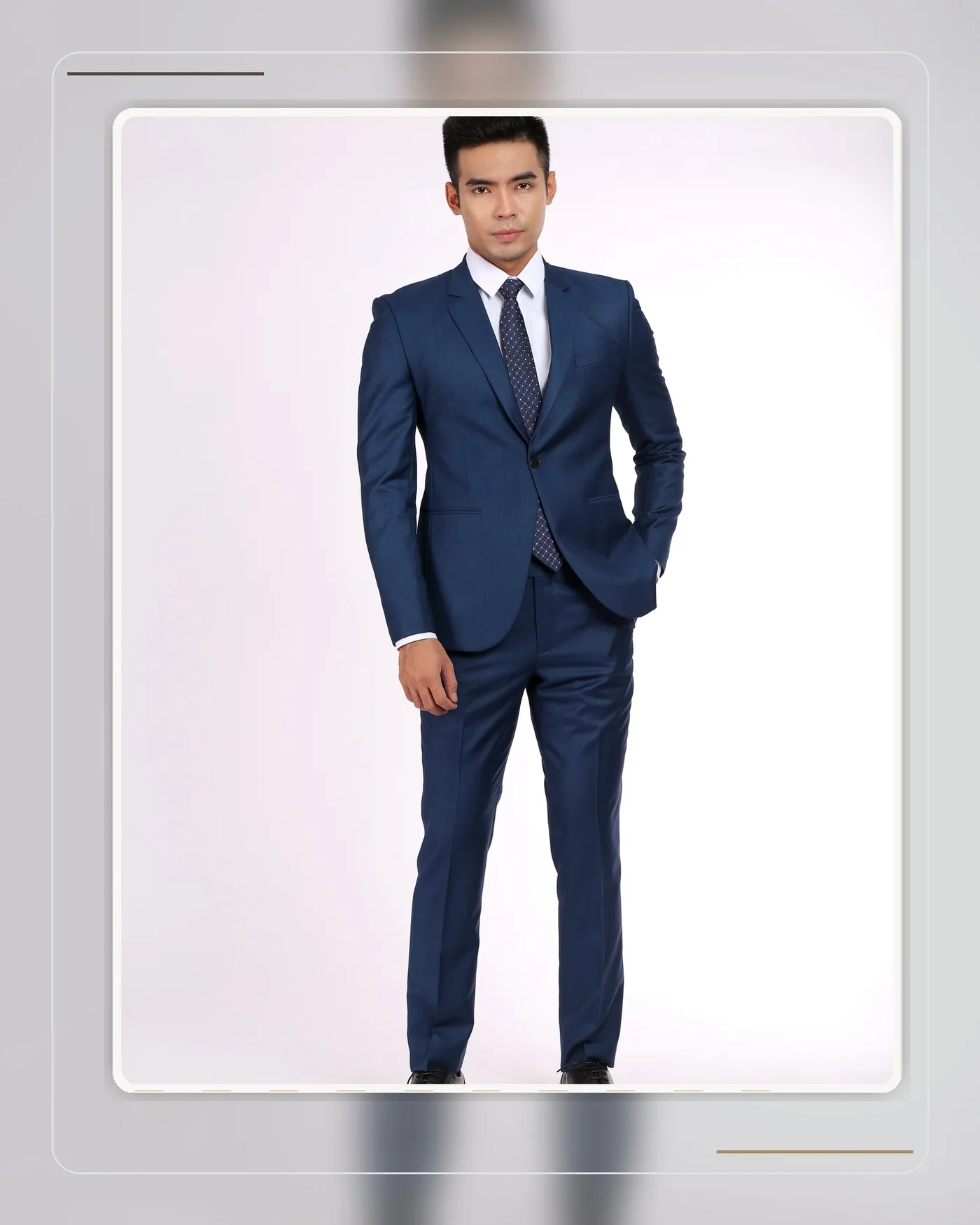
The jacket should cover the seat; the jacket sleeve should reveal about 1–1.5 cm of shirt cuff. Trousers should touch the shoe with a slight break, or none if you prefer a trimmer line. Simply hemming trousers correctly and adjusting sleeves noticeably upgrades an existing suit — a tiny cost for a large effect.
The finishing marks of tailored clothing
- Working cuffs (surgeon's cuffs): functional sleeve buttons are a familiar hallmark of bespoke; those in the know spot them instantly.
- Lapel roll: a lapel that rolls softly instead of lying pressed flat — the result of a hand-sewn canvas interlining.
- Stitching and buttons: firm, even buttonhole stitching; horn or shell buttons instead of shiny plastic.
- Flat pockets: don't stuff wallets and phones into them; the breast pocket is for a pocket square only.
Accessories: few, but right
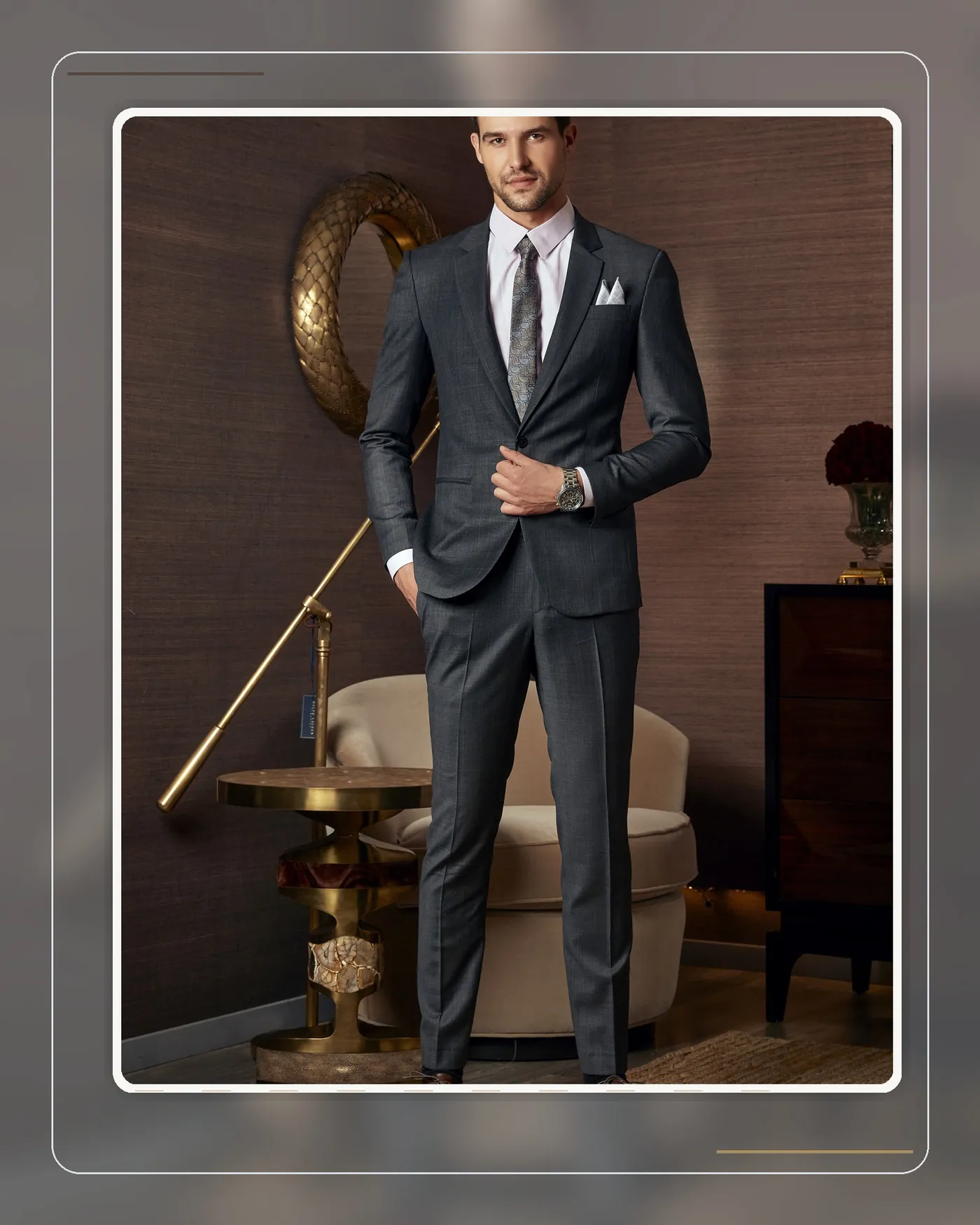
A slim watch, a belt matching the shoes, a woven silk tie rather than a glossy one, a simply folded pocket square. The rule is one focal point — add a second and the whole look starts to cheapen. And shoes: one well-polished pair of leather shoes rescues an entire outfit; a scuffed pair ruins the most expensive suit.
Common mistakes
- Assuming pricier cloth automatically looks more luxurious — when fit is what truly decides.
- Wearing suits too tight or too short for the trend, so the jacket wrinkles with every movement — wrinkles are the number-one enemy of an expensive look.
- Stacking focal points: a patterned tie, a loud pocket square, glasses, an oversized watch — the eye doesn't know where to rest.
A word from Mon Amie's artisans
In the workshop we like to say: the client never sees the canvas inside, yet everyone feels it in the roll of the lapel and the way the jacket hugs the chest when buttoned. A suit's expensive look is the sum of dozens of small decisions — the waist position, the lapel angle, one centimetre of trouser hem. That is why Mon Amie takes more than twenty measurements and always schedules a basted fitting before finishing.
Frequently asked questions
Which detail is worth investing in most on a limited budget? Fit — especially shoulders, chest and lengths. Altering an existing suit or having one made to your measurements delivers more than any fabric upgrade.
Are working cuffs really necessary? Not mandatory, but they are the tell-tale sign of tailored clothing that discerning eyes always look for; if you are going bespoke, ask for them.
How much do shoes affect the overall look? Enormously — shoes are the end point of the whole silhouette. A clean, well-polished pair matching your belt can elevate a mid-range suit by a full class.
Conclusion
An expensive look cannot be bought with a logo — it is sewn in, detail by detail. If you want your next suit finished to the centimetre, book an appointment with Mon Amie and explore our bespoke service.