
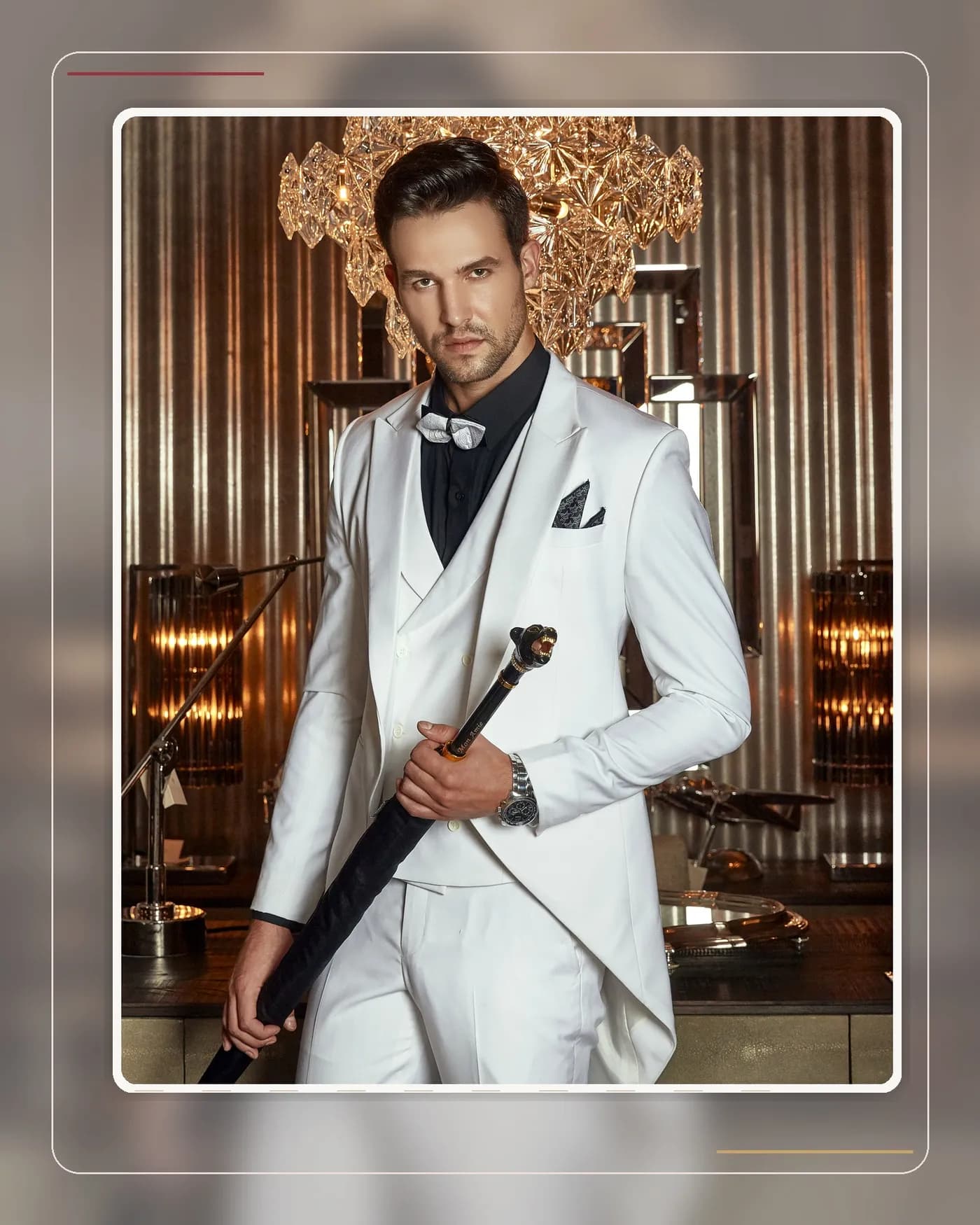
Peak or shawl lapel for the wedding jacket — the lapel fills the frame in every portrait shot, so this is no small question. Mon Amie will walk you through it with the same logic a tailor uses at the cutting table.
The short answer
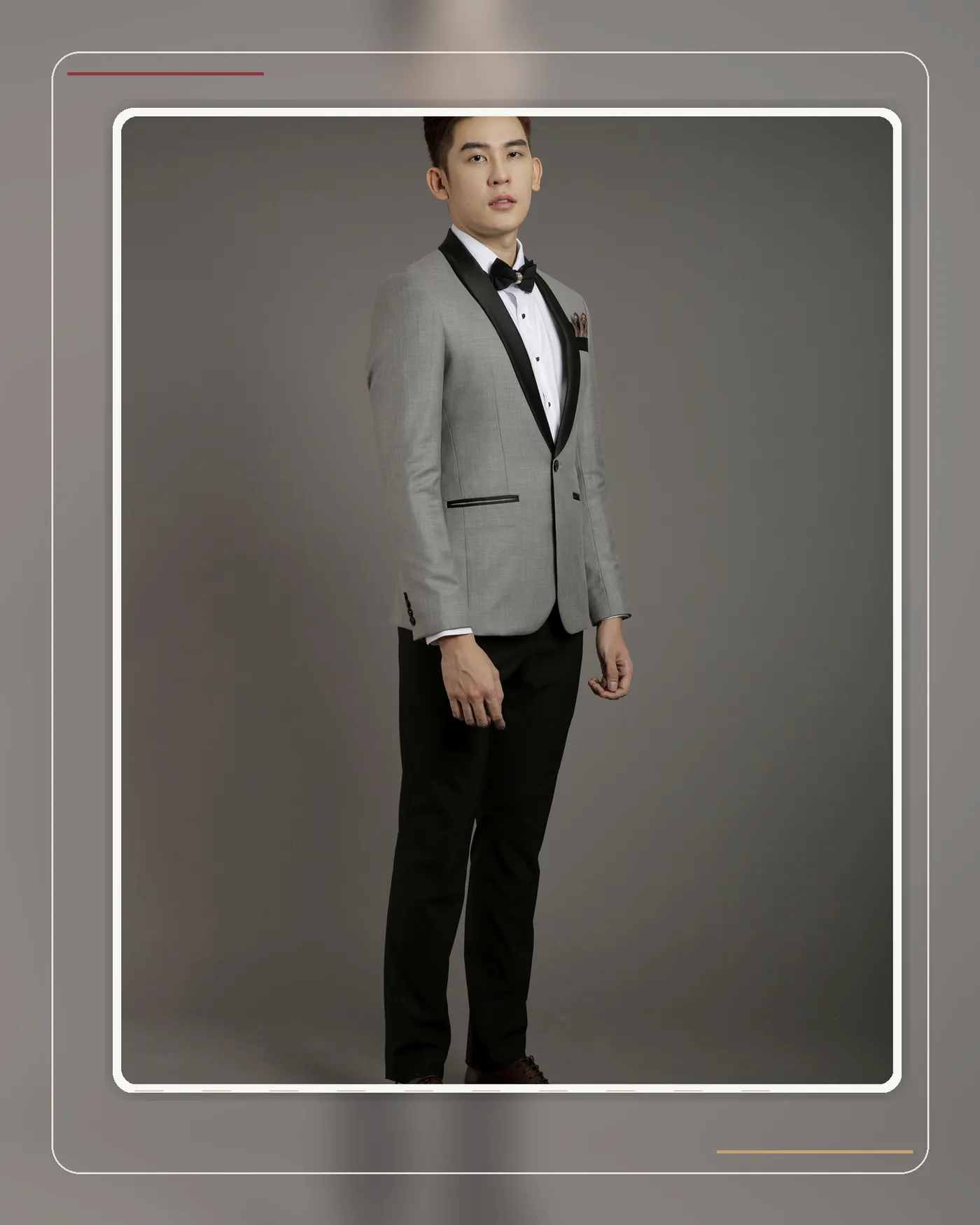
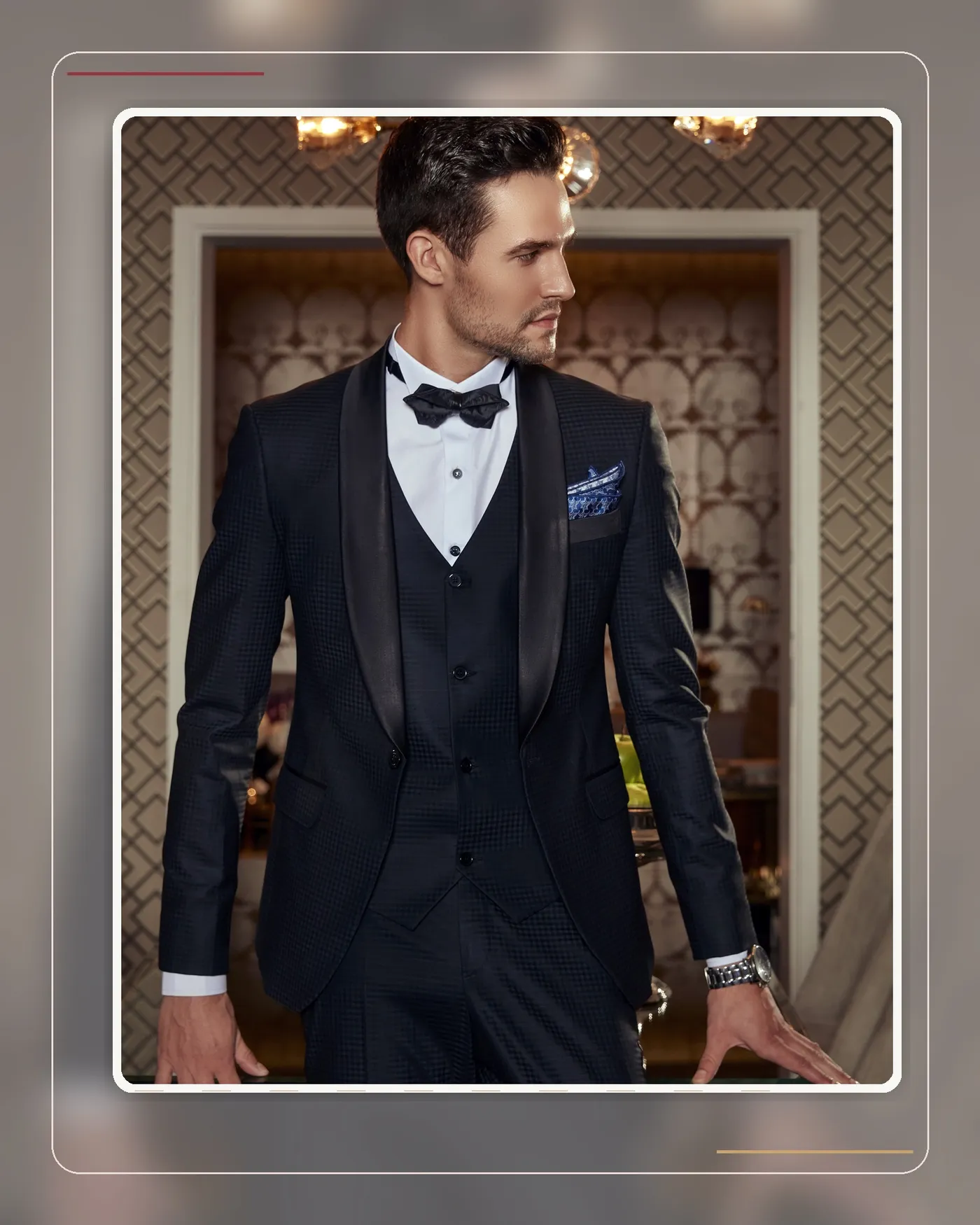
The peak lapel (with its upward-pointing tips) is for the groom who wants sharpness and presence: the rising line broadens the shoulders and makes the torso look taller and leaner — and it works on both suits and tuxedos. The shawl lapel (one smooth, unbroken curve) is soft and romantic, the privileged collar of the tuxedo and dinner jacket, at its best at an intimate evening reception. The rule: let the spirit of the ceremony and your shoulder line decide first; the lapel facing (satin or self-cloth) comes second.
What to weigh up
- The peak is the most formal lapel in tailoring: if your wedding leans classic, with a large guest list and stage ceremony, the peak delivers the clearest "man of the hour" presence in full-length photos.
- The shawl has no notch, so it catches light as one continuous curved band — stunning in close-ups under warm light, but it belongs only on a tuxedo or dinner jacket; a shawl on an ordinary suit can read as service-staff uniform.
- Shoulders and face: sloped shoulders and rounder faces benefit from the peak's upward diagonal; square shoulders and angular features are softened and balanced by the shawl.
Putting it into a real outfit
At the fitting, judge the lapel against your chest proportions: a wedding peak should be medium to wide (8–9.5 cm for a man of average Vietnamese build) — too narrow and it loses gravitas, too wide and it swallows the chest. A shawl must hug the neck and lie flat on the chest in every posture; a shawl gaping at the collar is a flaw that shows instantly in portraits. If you choose a satin peak on a tuxedo, keep everything else minimal — covered buttons, no flap pockets — because the lapel itself is already a strong enough statement.
Common mistakes
- Choosing a lapel from a model's photo while ignoring your own shoulder line — a lapel that flatters someone else's shoulders may not flatter yours.
- Ordering a shawl lapel on a suit you plan to rewear for work — a shawl is almost impossible to reuse outside evening events.
- Following fast-fashion trends into an ultra-slim lapel, leaving the wedding jacket underpowered for the scale of the occasion.
A word from Mon Amie's artisans
In the Mon Amie workshop, peak lapels are hand-padded so the roll breaks crisply yet still hugs the chest — a lapel lifting even a millimetre shows straight away in portraits. For shawl lapels, we recommend a one-piece satin facing cut on the same grain so the band of light runs unbroken from collar to button. After many wedding seasons our observation is consistent: grooms who want stature choose the peak, grooms who want refinement choose the shawl — and both are right when the lapel is cut to their shoulders.
Frequently asked questions
Can a peak-lapel jacket be worn again after the wedding? Yes — a peak lapel in self-cloth (not satin) serves well for galas, evening events and formal occasions for years.
Does a shawl lapel work on a regular suit, or only on a tuxedo? Properly, the shawl belongs only on tuxedos and dinner jackets; on an everyday suit it unbalances the garment's formality.
How wide should a wedding lapel be? For an average Vietnamese build, 8–9.5 cm is the safe zone: enough presence for a wedding without overwhelming the chest.
The best way to choose is to see both lapels draped against your own shoulders in the mirror — book an appointment with Mon Amie and our artisans will mock up both during a bespoke service consultation.