
Same man, same metre of navy cloth, but give it to two tailors from two different schools and you get two entirely different suits. One has square shoulders and a full chest, looking as if it has stepped out of a boardroom in London. The other has soft shoulders and a short body, and is as light as a shirt. All those differences lie inside the phrase men's suit styles, and knowing which style suits you is the first step towards making the right first suit.
Quick answer
The six common men's suit styles are classic British, relaxed Italian, modern minimalist, young Korean, smart casual and unconventional. Choose by three things: your build, your working environment and how much comfort you want. If you are new to suits, start with modern minimalist or classic British, which are easy to wear and stand the test of time.
Six men's suit styles at a glance
| Style | Characteristics | Suits | Typical occasions |
|---|---|---|---|
| Classic British | Padded shoulders, structured body, double vents at the back | Standard or larger builds, people with formal workplaces | Meetings, negotiations, big events |
| Relaxed Italian | Soft shoulders, short body, light cloth | People who move around a lot, hot climates | Relaxed office, outdoor parties |
| Modern minimalist | Clean lines, neutral colours | Most builds | Office, interviews, everyday work |
| Young Korean | Close-fitting body, short jacket, straight-leg trousers | Slim builds, young men | Creative offices, parties, photo shoots |
| Smart casual | Blazer, no tie, chinos | People who need comfort but still want to look polished | Weekends, coffee with partners |
| Unconventional | Colour, pattern, velvet, layering | Confident people who already have the foundations | Creative events, evening parties |
The characteristics of each style
1. Classic British
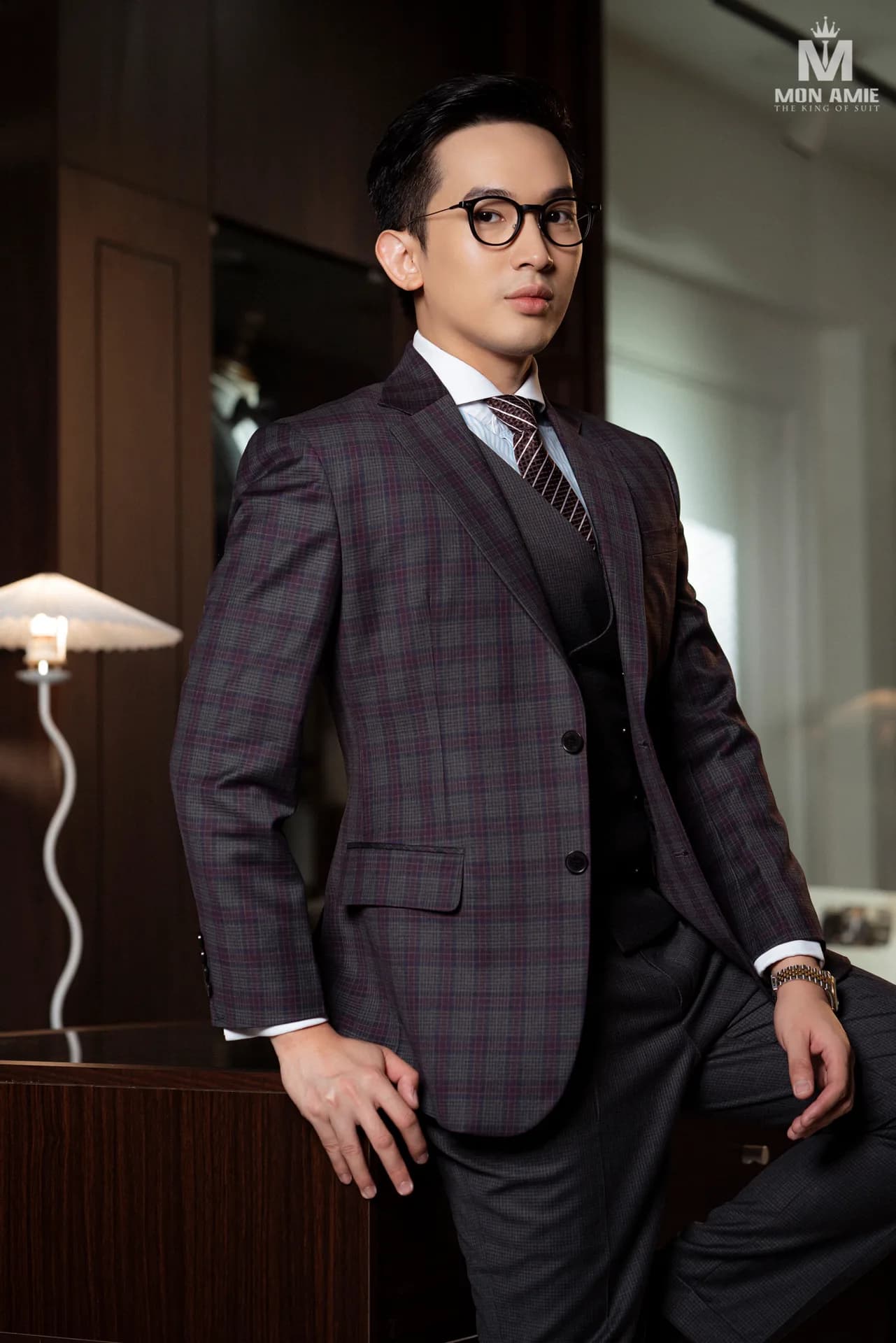
This is the root of the modern suit. The shoulders are padded for structure, the body is clearly structured, the waist is moderate, and double vents at the back let the jacket move easily. Colours are usually navy and charcoal, with chalk stripe or houndstooth patterns. The three-piece suit with a waistcoat is its emblem. This style gives the wearer a defined, upright silhouette, and suits men of standard to fuller build and anyone whose work calls for formality.
2. Relaxed Italian
Italians like comfort. The shoulders are soft with almost no padding, the jacket is shorter, the cloth is thin and light, and the way of wearing it is very natural. This style suits hot climates, so it adapts easily to Saigon. It suits people who are always on the move and those who like a jacket that feels like "a second skin". One point to note: a soft jacket depends heavily on the craftsmanship of the tailor, because there is no shoulder padding to hide flaws.
3. Modern minimalist
Clean lines, medium lapels, neutral colours such as grey, navy and black, plain cloth or very subtle patterns, discreet buttons. This is the easiest style to wear and the one that lasts longest, because it doesn't chase trends. If you want a first suit that you can still wear five years from now, this is the safe direction.
4. Young Korean
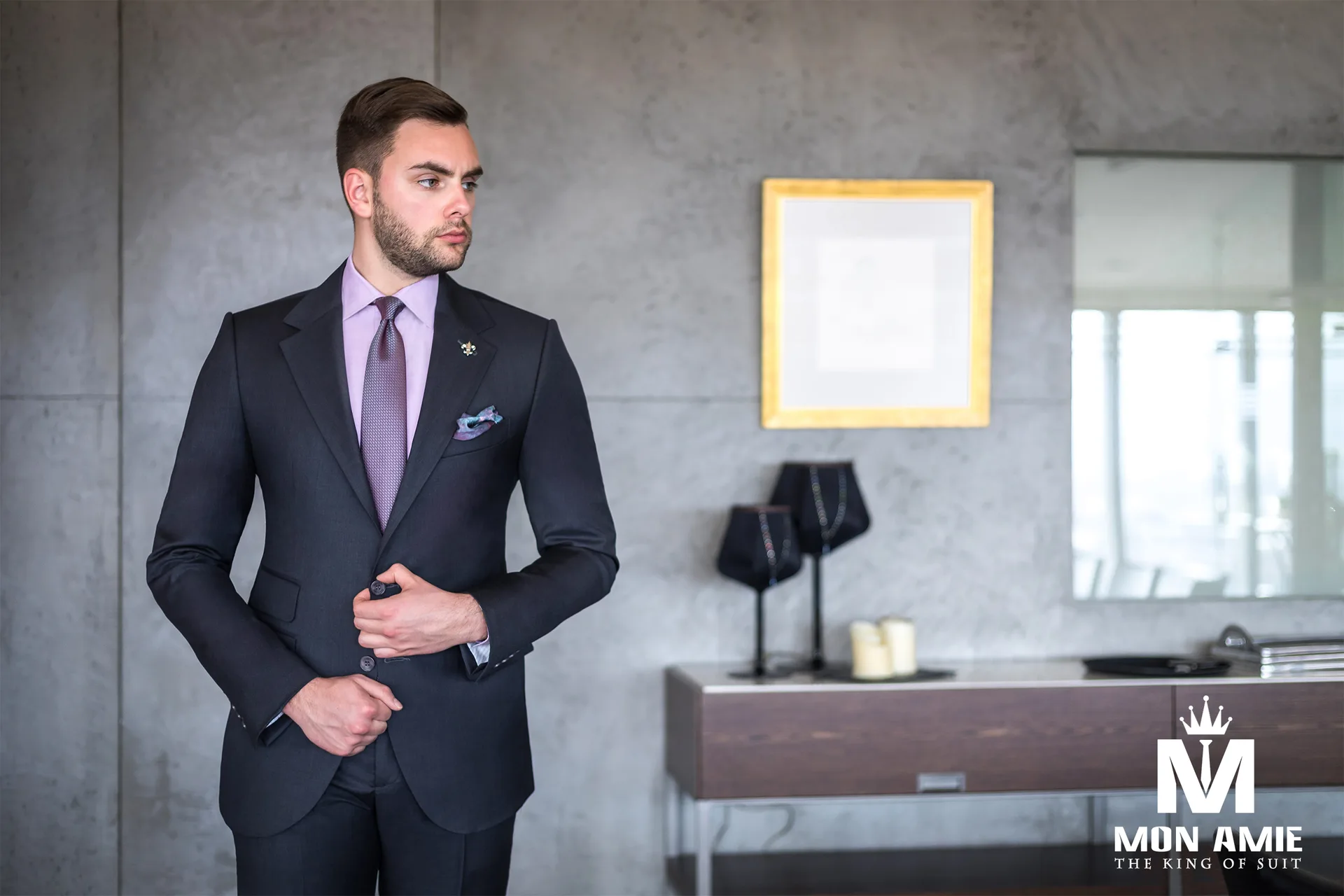
Narrow shoulders, a close-fitting body, a slightly shorter jacket, and straight-leg trousers that end just above the ankle. Colours are usually light and can be pastel. This style suits young men with slim builds. The thing to watch is the fit: too close a fit on a man with a belly pulls the jacket tight and sets creases. If you are interested, the article Korean-style suits: 6 defining features of the cut analyses each detail closely.
5. Smart casual
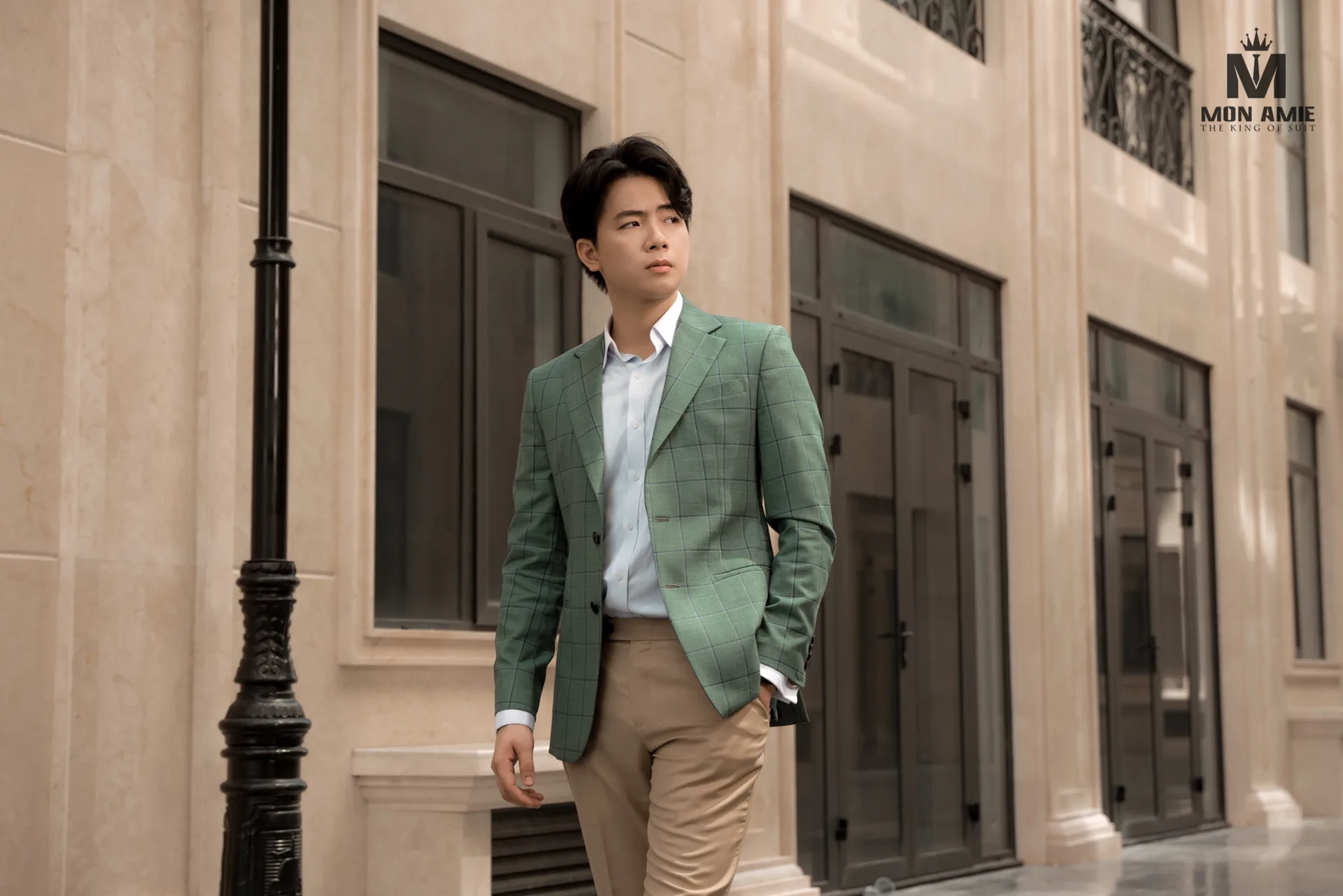
A blazer worn with chinos or trousers in a different colour, a shirt or a polo, no tie, loafers or neat leather sneakers. This is how someone dresses who needs to look put-together but doesn't want to be too formal. The keys are a correct fit, quality cloth, and not mixing in too many casual elements.
6. Unconventional
Strong colour, pattern, velvet or unusual layering. This isn't a starting point but a place to arrive at once you have mastered the fundamentals. An unconventional look succeeds through one controlled focal point, not through many things at once. We have written a separate article on wearing a suit with a twist with eight ways to do it without going over the top.
How to choose the style that suits you
1. By build. Larger men suit classic British because the structured shoulders and body help create balance. Smaller men suit minimalist or Italian because the lines are clean and don't emphasise bulk. Slim men suit Korean or minimalist.
2. By working environment. Banking, law, consulting: classic British or minimalist. Creative companies and media: smart casual, Korean or Italian. Conferences and evening events: classic, tuxedo or unconventional.
3. By climate and how you get around. Saigon is hot, so the soft shoulders and light cloth of the Italian style help. If you ride a motorbike every day, consider a style with little padding that moves easily.
4. By the suit's lifespan. If you only make one or two suits a year, lean towards minimalist or classic, because they date less. If you like variety, start with a foundation suit and then add a blazer or an unconventional suit.
Can you mix styles?
Yes, and that is a big advantage of made-to-measure. One suit can take the soft shoulder cut of the Italian style, the classic British cloth and the clean lines of modern minimalism. When you have a bespoke suit made, you can talk directly with the stylist and master tailor to choose each detail: shoulders, lapels, jacket length, vent style, number of buttons. You can also try a suit of your own design on the online suit design tool before you come to a showroom.
Common mistakes when choosing a men's suit style
- Chasing trends and ignoring your build. A close-fitting cut that looks good on a model may not suit you.
- Mixing too many styles in one suit. British shoulders, Korean trousers and sneakers together make the whole look muddled.
- Ignoring the occasion. A style that looks good in a café doesn't necessarily suit a meeting room.
- Choosing a fabric that doesn't suit the style. Thick, stiff cloth ruins the soft Italian drape; cloth that is too thin loses the structure of the British style.
Frequently asked questions
What are the popular men's suit styles today?
The six most common styles are classic British, relaxed Italian, modern minimalist, young Korean, smart casual and unconventional. Of these, modern minimalist is chosen most often for everyday work because it is easy to wear and lasts.
Which suit style suits middle-aged men?
Classic British or modern minimalist. Both have a defined shoulder cut and a well-fitted body, which cover the changes in a man's figure with age while still looking elegant.
Which men's suit style suits the Saigon climate?
The relaxed Italian style with soft shoulders and light cloth, or modern minimalist with a thin lining. A thin, open-weave wool and a light lining make the suit more comfortable in the heat.
How does the Korean suit style differ from the British style?
The Korean style is slim, fitted, short and lighter in colour; the British style has a structured shoulder, a longer body and deeper colours. Korean is youthful and light, British is formal and steady.
Conclusion
Choosing a style isn't choosing a trend; it is choosing how you want to be seen every day. If you would like to see each style on a real jacket, open the Mon Amie lookbook or visit a showroom, where a stylist can let you try each shoulder cut and listen to what you want.