

A watch is practically the only piece of jewelry a man wears with a suit, and it reveals itself at the most important moments: a handshake, a signature, a raised glass. Mon Amie would like to share how to pair a dress watch so it speaks the same language as your suit.
The short answer
A proper dress watch for a suit needs four things: a slim case (under 10mm) that slides cleanly beneath the shirt cuff, a moderate diameter (36–40mm), a minimal dial free of busy sub-dials, and a leather strap matched to your shoes — black with black, brown with brown. The case metal should be consistent with your belt buckle and cufflinks: silver with silver, gold with gold.
Why a dress watch is not a sports watch
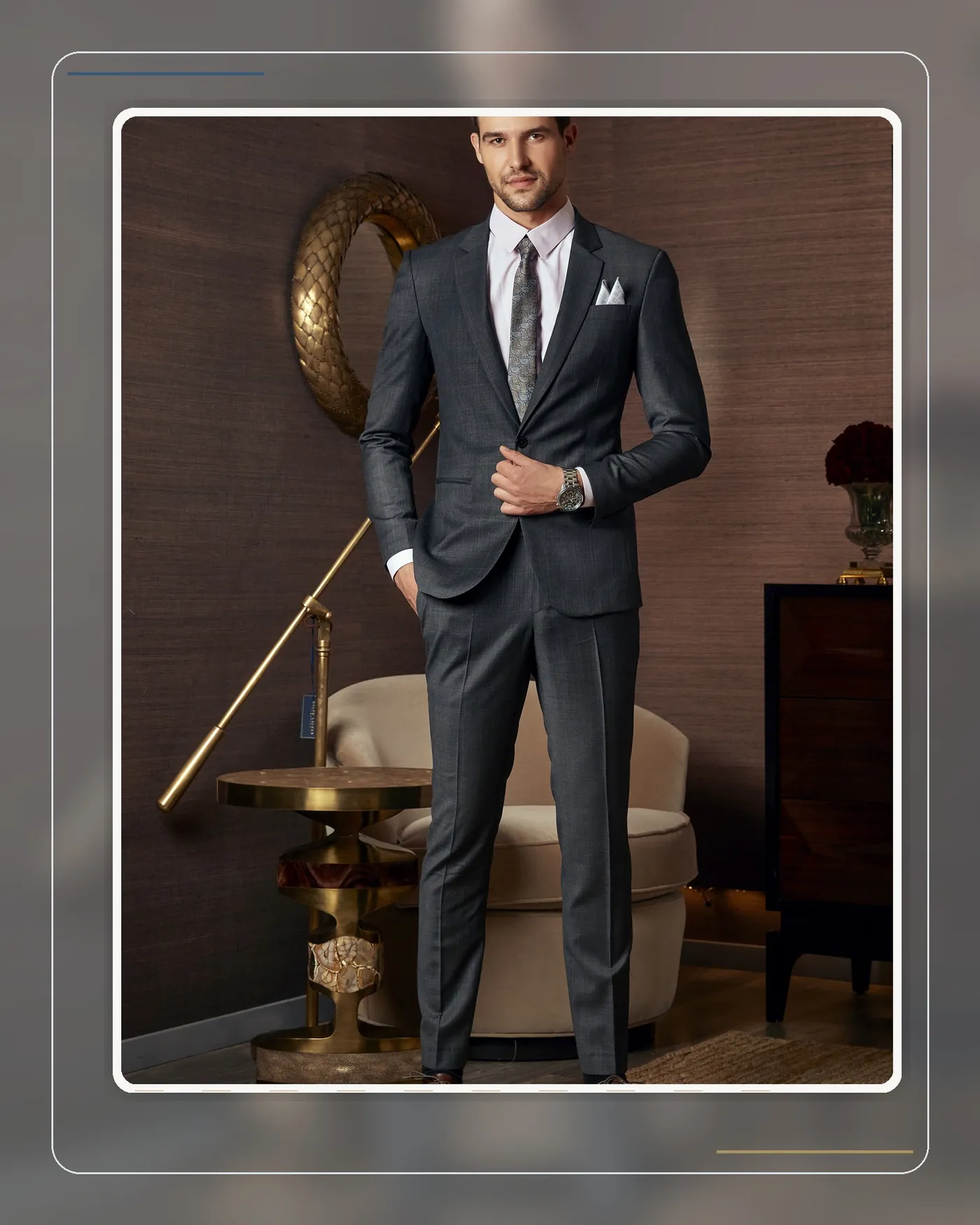
Dive watches, chronographs, and smartwatches are thick and heavy — they bulge under the cuff, force a wider cuff opening, and spoil the wrist line your tailor measured so carefully. A dress watch is built to do the opposite: sit flat, stay hidden under the shirt, and appear only when you choose to check the time. The tailoring standard is 1–1.5cm of shirt cuff showing beyond the jacket sleeve, and the watch must live neatly inside that space.

Pairing by occasion
- Everyday office wear: black or dark brown leather strap, a white or silver dial, a steel case — versatile with most navy and grey suits.
- Formal events and black tie: the thinnest dress watch you own, black strap, absolutely minimal dial; or, in the classic tradition, no watch at all.
- Brown suits, tweed, smart casual: a brown strap with a cream or navy dial adds depth while staying restrained.
A fine metal mesh bracelet is acceptable with business suits, but rubber and NATO fabric straps belong to the weekend.
Common mistakes
- Wearing a thick sports watch with a suit — the cuff rides up awkwardly.
- A brown strap with black shoes, or a gold case with a silver buckle — mismatched metals.
- An oversized dial (above 42mm) that swallows the wrist and breaks the sleeve's proportion.
- Wearing the watch over the shirt cuff — the watch always sits underneath, never on top.
A word from Mon Amie's artisans
When measuring sleeves, Mon Amie's artisans always ask which wrist you wear your watch on and how thick it is — on the watch side, the cuff needs a few extra millimeters so the sleeve falls straight without catching. It is a small detail only true tailoring accounts for, and one reason a slim dress watch always photographs beautifully with a properly cut suit.
Conclusion
Pairing a dress watch with a suit is not about price — it is about being slim, discreet, and consistent: strap matched to shoes, metal matched to accessories, size matched to your wrist. If you would like a suit measured with your watch in mind, book an appointment with Mon Amie or discover our bespoke service.
Frequently asked questions
Can I wear a smartwatch with a suit? Acceptable for everyday office wear, but for formal events switch to a leather-strap dress watch — a smartwatch visibly lowers the formality.
Which wrist should the watch go on with a suit? The non-dominant wrist, by convention. More importantly, tell your tailor so that cuff can be eased accordingly.
What dial size suits a suit? 36–40mm is the safe range for most wrists; above 42mm the sleeve's proportions start to break.