
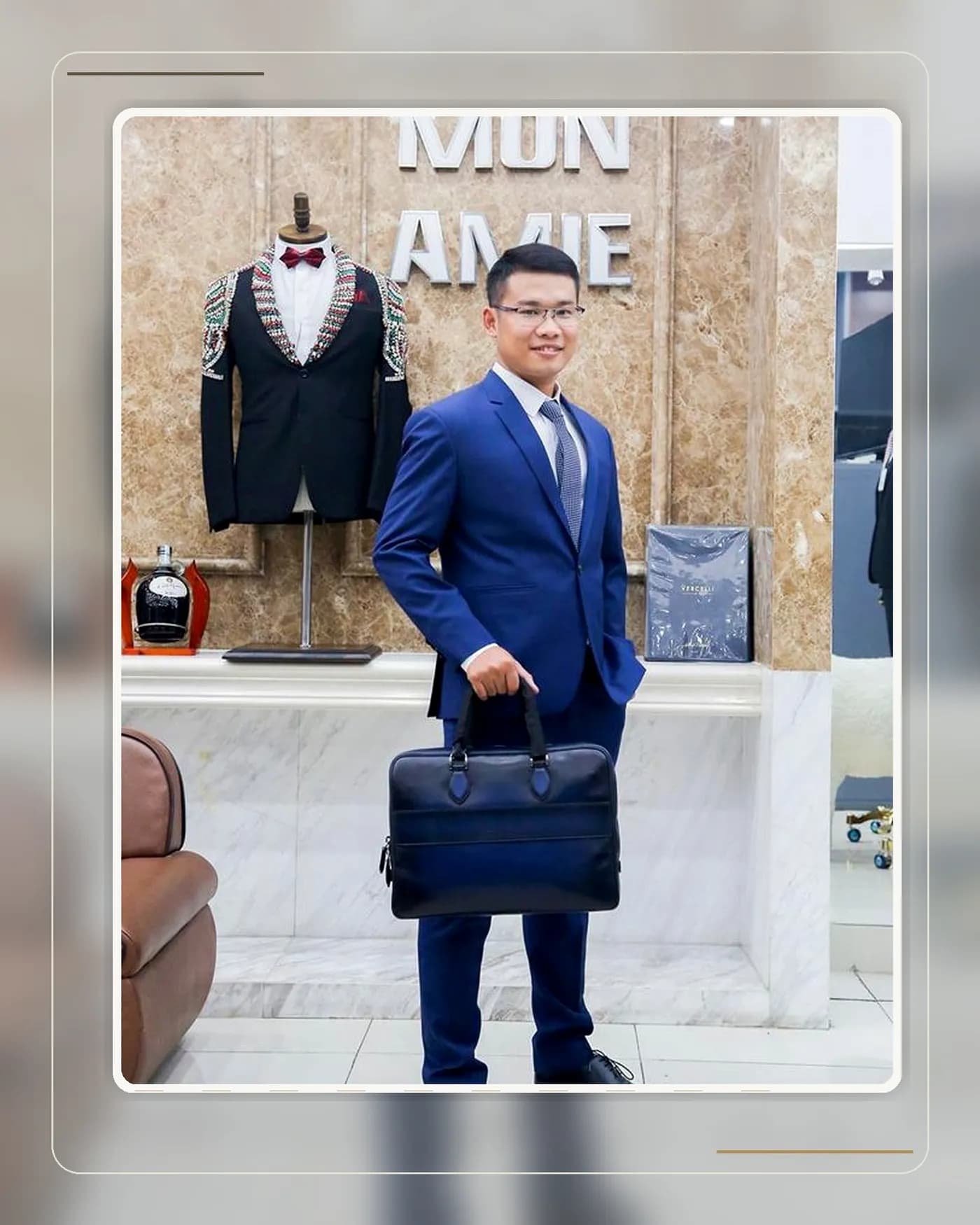
How slim should a suit jacket fit before it stops being flattering? Seven out of ten clients at Mon Amie ask this, especially since the slim-fit wave took over social media. The line between "fitted and flattering" and "tight and unforgiving" is only a few centimetres wide — and it can be measured and tested with very concrete checks.
The short answer
A beautiful jacket follows the body without gripping it: buttoned, you can still slide a flat hand between chest and jacket; the front lies smooth with no X-shaped creases radiating from the button; the waist is shaped but the front edges do not gape apart; and when you extend your hand for a handshake, the shoulders do not bind and the back does not strain. Any tighter, and the jacket starts working against you — spotlighting every line instead of flattering the frame.
Four mirror tests
You can check the fit yourself in two minutes:
- The hand test: button up and slide a flat hand into the chest. If it fits comfortably, the fit is right; if you have to force it, too tight; if a fist fits, too loose.
- Watch the button: wrinkles fanning into an X around the fastened button mean the waist is too tight — the most visible flaw in photographs.
- Check the back skirt: from the side, the jacket's tail should fall straight over the seat; too tight, and it flips outward like a swallowtail.
- Real movements: shake hands, cross your arms, sit down. A proper fit allows all three without fabric pulling at the back and armpits.
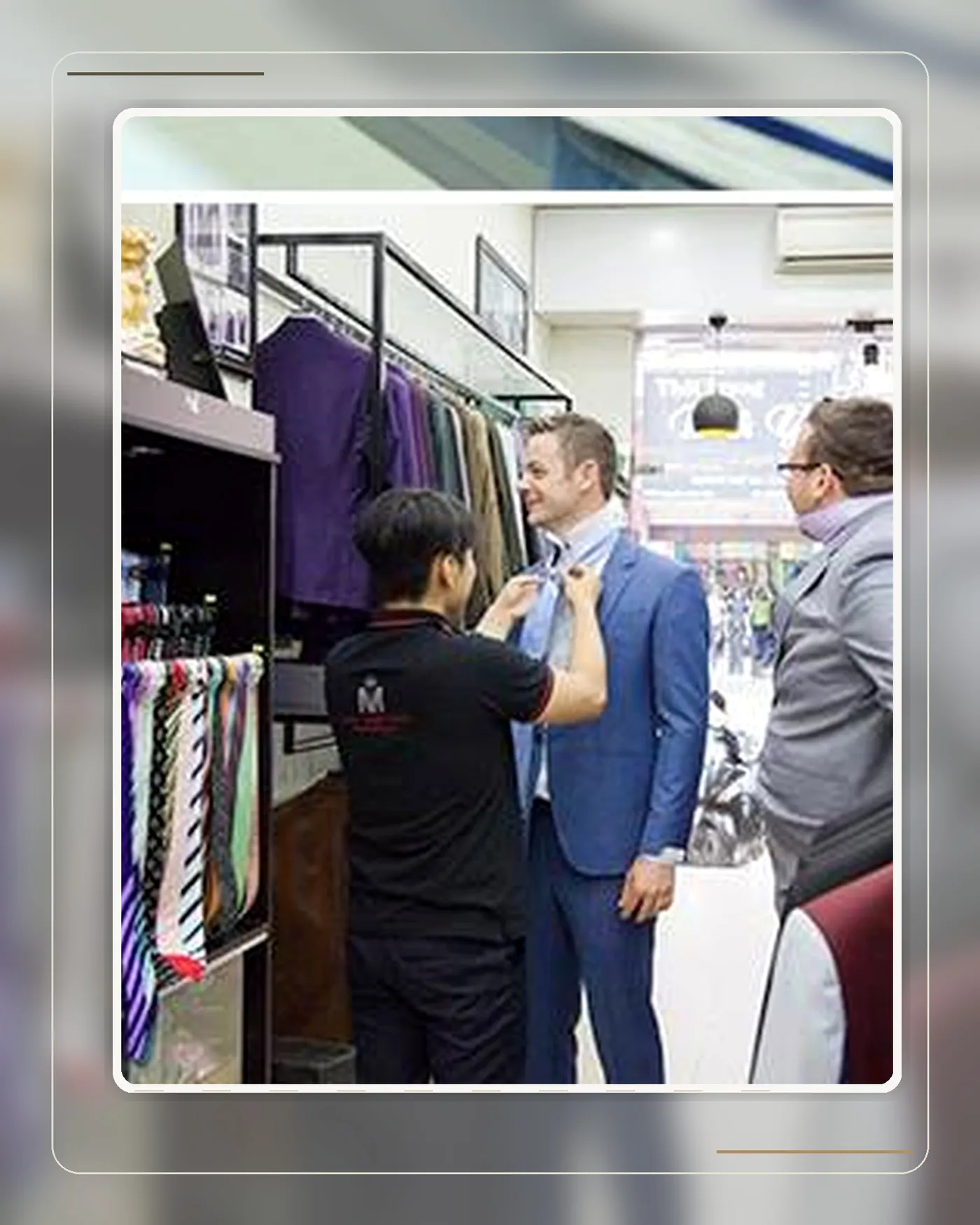
Fitted where it matters, easy where it counts
The secret of a jacket that looks trim yet wears comfortably is that the closeness is not evenly distributed:
- Shoulders and chest: must fit precisely — this is where the silhouette is made, and mistakes here are nearly impossible to fix.
- Waist: shaped for a clean line, but with 6–8 cm of ease over your actual waist measurement.
- Armholes: cut high and trim — counterintuitively, a high armhole moves better than a deep one, because the jacket body stays put when you raise your arm.
- Sleeves: tapered to the arm, showing 1–1.5 cm of shirt cuff; skin-tight sleeves are the most common flaw of ready-to-wear slim fit.
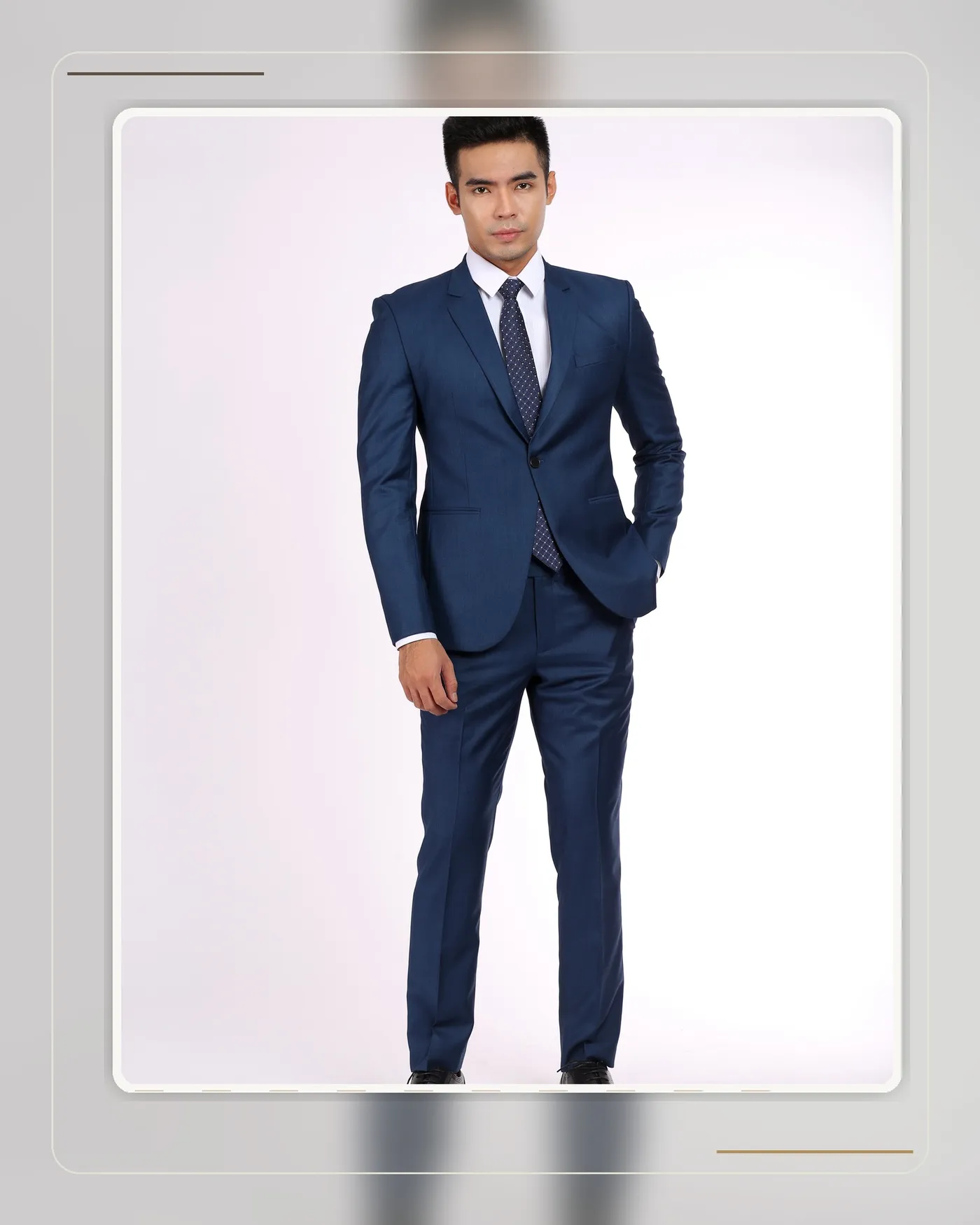
Slim men should ease the fit slightly so the jacket builds volume; fuller men should never size down to "look trimmer" — strained fabric only amplifies what it is trying to conceal.
Common mistakes
- Believing tighter equals more modern — a modern suit is a clean cut, not fabric shrink-wrapped to the body.
- Checking only the front and ignoring the back — horizontal tension lines across the back are a tightness signal the wearer never sees.
- Buying tight with the idea that "it will stretch with wear" — canvassed wool does not stretch like knitwear.
- Judging the fit in one stiff standing pose, without testing sitting, driving, and shaking hands.
A word from Mon Amie's artisans
At Mon Amie we like to tell clients: the best jacket is the one you forget you are wearing. Fitted enough to look sharp in photographs, easy enough to stand through a whole wedding or sit through a full meeting without wanting to unbutton. That is why in our fittings the tailor asks you to shake hands, take a seat, and pull a phone from your trouser pocket — the right fit has to survive every one of those movements, not just one pose in front of a mirror.
Frequently asked questions
Are slim fit and skin-tight the same thing? No. Slim fit is a tapered cut with calculated ease for movement; skin-tight is wearing less room than your body needs. A properly cut slim fit still passes the flat-hand test.
Can a loose jacket be altered to fit closer? Within limits: taking in the waist and body is a common, effective alteration; but a wrong shoulder essentially requires remaking the jacket — which is why shoulders are priority one at any fitting.
How should gym-built men choose their fit? Fit the chest and shoulders first, then suppress the waist; choose cloth with a little natural stretch and high armholes so nothing strains in motion — do not showcase muscle by going tight.
Conclusion
A jacket looks its best when it follows the body at the shoulders, chest, and waist while leaving room to live: a flat hand at the chest, no X-creases, no binding shoulders. That level of fit has no universal measurement — it must be cut for your body and the way you move. Book an appointment for a Mon Amie artisan to build your exact fit, or read about the tailoring process with fittings tested through real movement.