
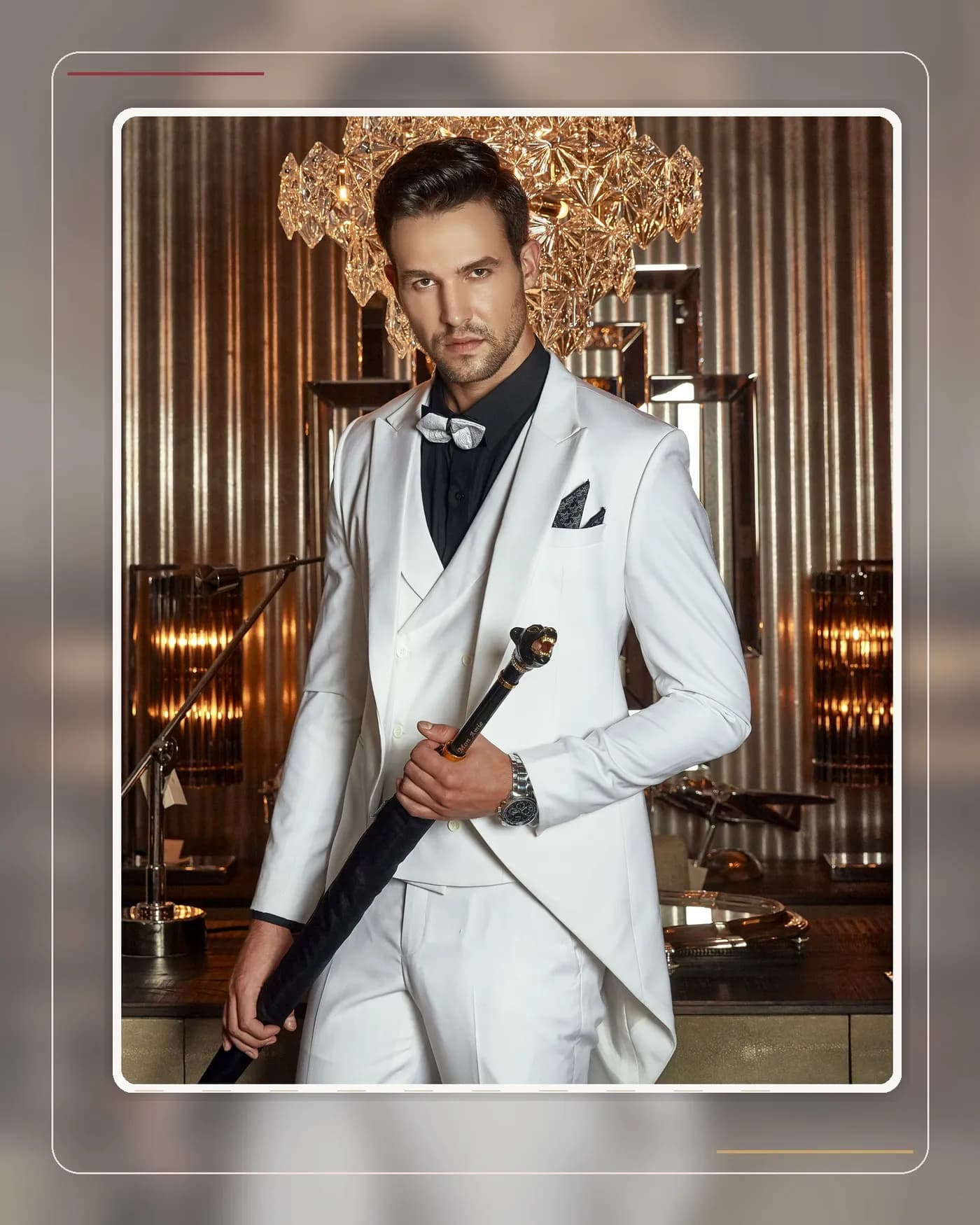
Should a groom prioritise a slim fit or a comfortable fit to wear all day — this is the question Mon Amie hears most often at wedding fittings. Some grooms fear a slim cut will feel restrictive; others worry a relaxed cut will look sloppy in photographs. In truth, "slim or comfortable" is a false choice between two extremes — and bespoke tailoring exists precisely so you never have to make it.
The short answer
The right answer is a calculated tailored fit: trim at the points that define your silhouette — shoulders, chest, jacket waist — so photographs look sharp and elegant, but eased in exactly the right places — armholes, back panel, thigh — so you can raise your arms, embrace guests, kneel for the ring exchange and sit through the banquet without strain. A wedding day runs 8–10 hours with hundreds of handshakes and bows; a suit that only looks good standing still is a suit that was made wrong.
Why an overly slim fit backfires on the wedding day
A skin-tight lookbook fit only works in one pose: standing straight, arms down. A wedding day is the opposite — you are constantly in motion. A jacket that is too tight pulls X-shaped creases at the button, digs into the shoulders when you greet guests, and by banquet time the pressure across the chest steals your ease at the very moment you need to look your best. Overly slim trousers are riskier still: the seat seam takes several times the load when you kneel or step onto the stage.
Why an overly loose fit ruins the photo album
A loose cut feels easy but pays for it in pictures: collapsed shoulders, billowing cloth, and in full-length shots — the bulk of any wedding album — the groom looks smaller and less composed than he really is. Trouser legs pooling over the shoes are another detail the camera catches mercilessly.
How tailoring solves the "both" problem
In a calculated tailored fit, the craftsman treats each zone differently:
- Shoulders and chest: fitted close, because this zone drives 80% of the photographic impression and involves little large-range movement.
- Armholes: cut high but with rotation allowance — counter-intuitive, yet a properly high armhole lets you raise your arms without the jacket body lifting.
- Jacket waist: suppressed just enough for a V-shaped line, with 1.5–2 cm of ease reserved for sitting and the banquet.
- Thigh and knee: eased slightly beyond the static measurement so kneeling, sitting and stage steps stay comfortable while the leg still tapers cleanly.
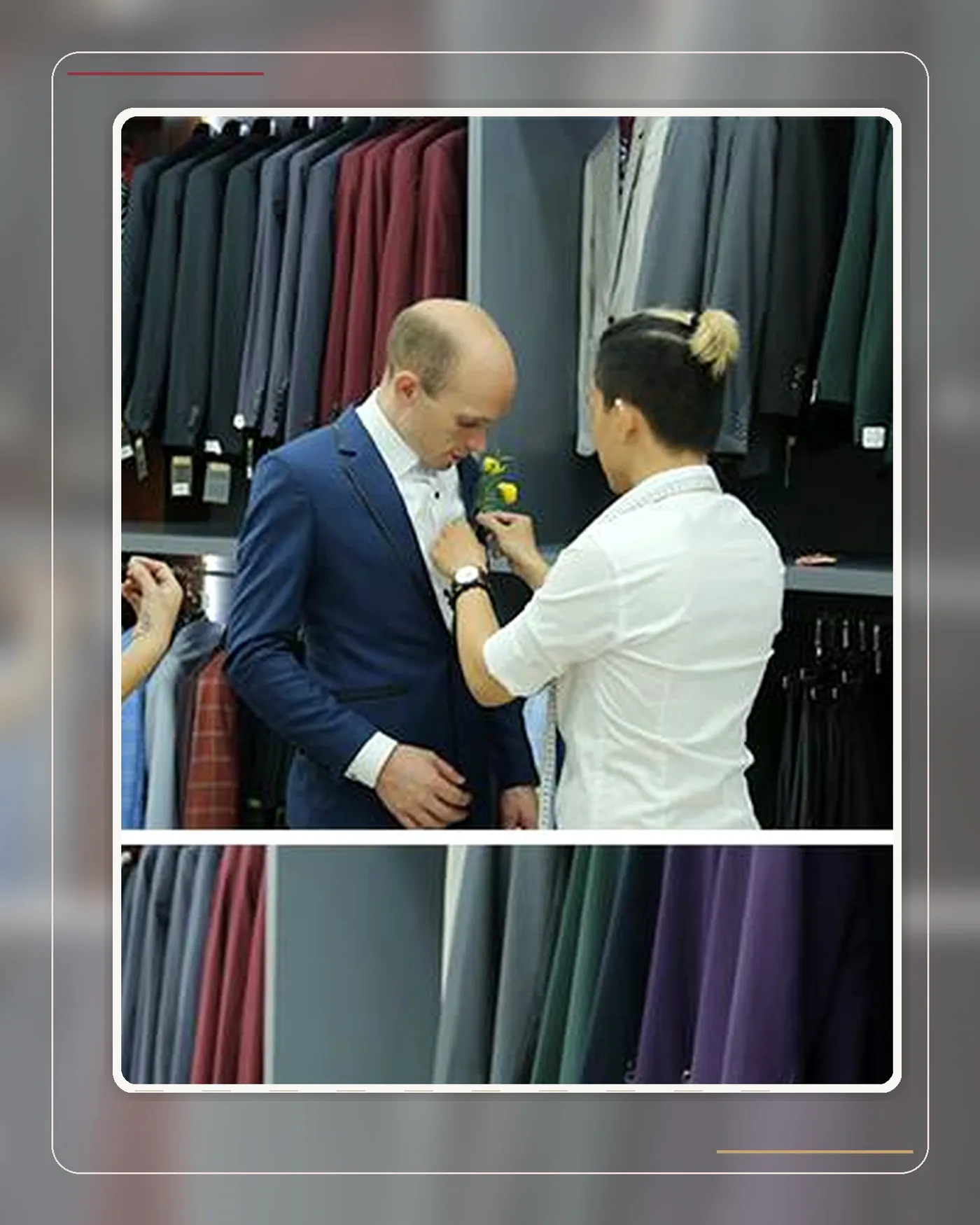
At the fitting, don't just stand in front of the mirror. Sit down, raise both arms, cross them over your chest, mime the ring exchange — if the suit follows every one of those positions and still holds its line, that is the right fit.
Common mistakes
- Going maximum-slim because "the photos matter more", then suffering from the family ceremony to the last toast.
- Being measured at your thinnest, or planning to lose weight before the wedding — have the suit made to your real body at the final fitting.
- Trying the suit for a few minutes standing still instead of walking, sitting and turning the way a real wedding day demands.
A word from Mon Amie's artisans
Mon Amie's artisans like to tell grooms: the best wedding suit is the one you forget you are wearing by the end of the reception. That is why at every fitting we ask you to sit, raise your arms, even hug the family member who came along — the strain lines that appear in motion are what the tailor needs to correct, not the static pose in the mirror.
Frequently asked questions
Will a tailored fit make a slim man look lost in the suit? No — the opposite. For a slender frame, a properly built shoulder and gentle waist suppression create structure far better than a skin-tight cut, which only exposes a narrow frame.
How many suits should I have if the day involves several ceremonies? If the budget allows, one formal suit for the main ceremony and a lighter one for the evening reception is ideal; with a single suit, a tailored fit in breathable cloth is the safest route.
How long before the wedding should the final fitting be? About 1–2 weeks before the day, once your weight has stabilised — close enough for accurate measurements, far enough to allow final adjustments.
Conclusion
Don't choose between slim and comfortable — choose a suit made to look good in every position your wedding day demands. That is the whole point of tailoring: trim where the silhouette needs it, easy where movement needs it. Book an appointment and let Mon Amie's artisans measure and advise on your fit, or read about the tailoring process first.