

“Employees are expected to dress appropriately.” For quite a few businesses, that single line is the entire dress code, right up until the sales director emails HR: a colleague walked into the meeting room in a T-shirt and flip-flops while clients were sitting there. The person in a suit and the person in a T-shirt both believe they have dressed appropriately. That is when a business needs a more specific dress code policy for employees.
Quick answer
A good dress code policy has six parts: purpose, scope, attire levels by role, Fridays or special days, what is not allowed, and how violations are handled. Write it concretely, with “allowed / not allowed” examples, give reminders in private, and pair it with in-house training instead of relying only on penalties.
Why do businesses need a dress code policy?
The reason is not about controlling individuals but about three practical points:
- Image in front of clients and partners. Clients usually judge a business by the person who receives them in the first few minutes.
- Staff shouldn't have to guess. The clearer the standard, the less awkward it is for newcomers to ask, and the less time longer-serving staff spend arguing.
- Fairness. The same position gets the same level, which avoids the feeling of “this person is allowed, that one gets reminded.”
The six-part framework of a dress code policy for employees
- Purpose: one or two sentences on why (a professional image, comfort, workplace safety where relevant).
- Scope: who it applies to, where (the office, the showroom, when meeting clients, at events) and when.
- Attire levels: divided by position or situation (see the table below).
- Special days: Fridays, days with clients, company events.
- What is not appropriate: listed clearly to avoid arguments.
- Handling violations and feedback: a process of reminders, documentation and support.
Attire levels by role
| Level | For | Men's attire |
|---|---|---|
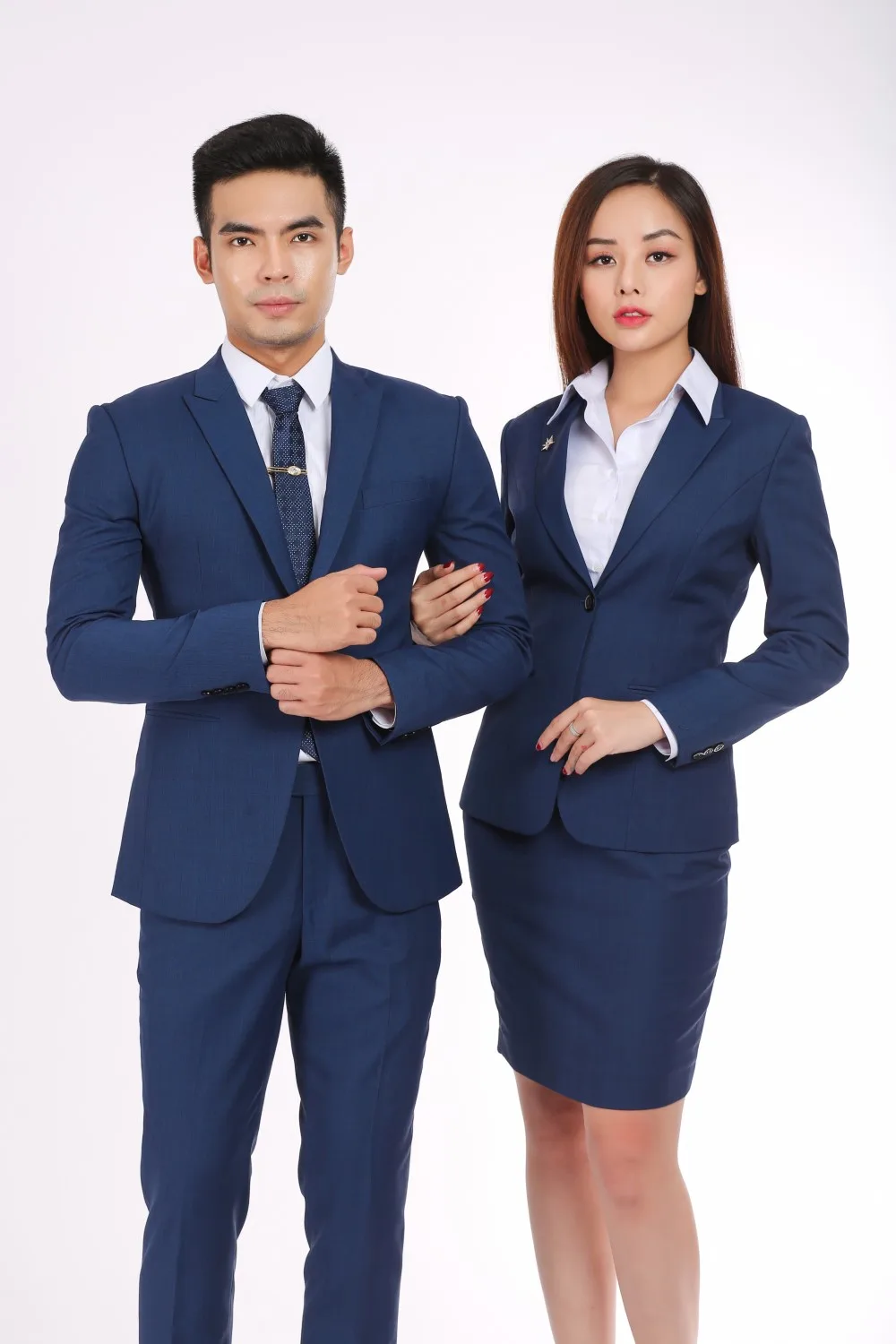
| A. Formal | Executives, meetings with partners, formal events | Full suit, shirt, tie, leather shoes |
| B. Business | Office staff on regular days, receiving clients | Long-sleeved shirt, dress trousers, leather shoes or loafers; jacket optional depending on the day |
| C. Smart casual | Fridays, days without clients | Polo or shirt without a tie, chinos, loafers or clean leather sneakers |
| D. Uniform | Reception, sales, technical, operations | Company uniform by department |
Companies usually run at least two or three levels at once. What matters is that each level is tied to a clear situation, not only to a job title. For example, a director with no meetings that day can still dress at Level C, while a staff member with clients that day steps up to Level B.
Fridays and special days
Many companies allow “Friday casual.” To keep it from turning into a “wear whatever you like” day, spell it out:
- Allowed: polo shirts, shirts without a tie, chinos, dark jeans without rips, clean leather sneakers.
- Not allowed: T-shirts with large lettering, shorts, flip-flops, sports trousers.
- Exception: on days with clients or partner meetings, dress at Level B, whatever the day of the week.
- Events: follow the dress code stated in the invitation.
For more detail on the relaxed levels, see our articles on the casual dress code for men and the smart elegant dress code.
A sample men's dress code to adapt
This is a reference framework; adjust it to your industry and your company culture:
MEN'S EMPLOYEE DRESS CODE POLICY
- Purpose. To maintain a professional image and comfort for every employee.
- Scope. Applies to all employees when working at the office, receiving clients and representing the company outside it.
- Level B (regular days). Long- or short-sleeved collared shirt, dress trousers or chinos in neutral colors, leather shoes or loafers, belt in the same tone as the shoes.
- Level A (meeting partners, events, leadership). A suit, or a jacket paired with dress trousers, shirt, tie, leather shoes.
- Level C (Fridays, days without clients). Polo or shirt without a tie, chinos, clean leather sneakers.
- Not appropriate. Flip-flops, tank tops, shorts, T-shirts with offensive images or text, torn, wrinkled or smelly clothing.
- Uniform. Departments with uniforms wear their uniform.
- Feedback. The direct manager gives a private reminder first, then documents it and offers support if needed.
- Exceptions. Cases involving religion, health or physical condition are considered individually.
If you plan to add this policy to your internal labor regulations, consult your legal department or a lawyer to make sure it fits current regulations.
Handling violations: a dress code violation shouldn't start with a penalty
A dress code violation should be handled from light to heavy, and always in private:
- A gentle, private reminder from the direct manager, never in public in front of colleagues.
- Written documentation if it repeats, with specific guidance on what to adjust.
- Discussion and support. Sometimes a staff member breaks the policy because they don't understand which level applies, or don't yet have enough clothing. The company can help with uniforms or guidance.
- Consider disciplinary action only after repeated reminders without change, in line with the regulations in force.
The underlying principle: the standard is measured by the image in front of clients, not by a manager's personal taste.

In-house training: a policy that only sits on paper is rarely remembered
However good a dress code document is, it needs three things alongside it:
- “Do” and “don't” photos for each level, so readers understand at a glance.
- An introduction for new staff in their first week.
- Periodic workshops on dress culture, choosing the cut, matching colors and accessories.
Mon Amie's Dressing Etiquette workshop is for businesses, schools and conferences, with content designed around your industry and company culture. If a business wants to go further, from a policy to suit-style uniforms made to each person's measurements, that is the work of bespoke uniforms. Mon Amie has served hundreds of businesses through its network.
Common mistakes when writing a dress code policy
- Too vague: “dress neatly,” “look put-together.” No one knows where the line is.
- So detailed that it scrutinizes every small point, leaving staff feeling watched.
- Written only for men or only for women. The policy should be balanced across all genders.
- Not updated when company culture, the weather or working arrangements change.
- Fining immediately instead of reminding and supporting.
Frequently asked questions
What should a dress code policy for employees include?
Six sections: purpose, scope, attire levels, special days, what is not appropriate, and the process for handling violations. Add an exceptions section for religious or health reasons if needed.
Where can I find dress code policy examples?
You can start from the template in this article and adapt it to your industry. For example, finance usually uses Level A or B all week, while many technology companies choose Level C for most days. What matters is that the policy matches the image the business wants to keep in front of clients.
How should a dress code violation be handled?
Remind the person privately first, document it if it repeats, and talk it through to understand the cause and offer support. Consider disciplinary action only as a last step. Avoid public reminders, since they tend to breed resentment rather than change behavior.
Should employees be allowed to dress casually on Fridays?
It can work, if the policy spells out what is and isn't allowed and makes an exception when clients are present. Friday casual keeps staff comfortable while holding the company's common standard.
Final thoughts
A dress code policy isn't there to constrain people but to give everyone the same understanding of a standard. Write it concretely, remind people gently and back it with training, and the policy will be respected. If your business needs advice on dress policy, workshops or suit uniforms, book a consultation so we can talk through the specifics of your organization.