
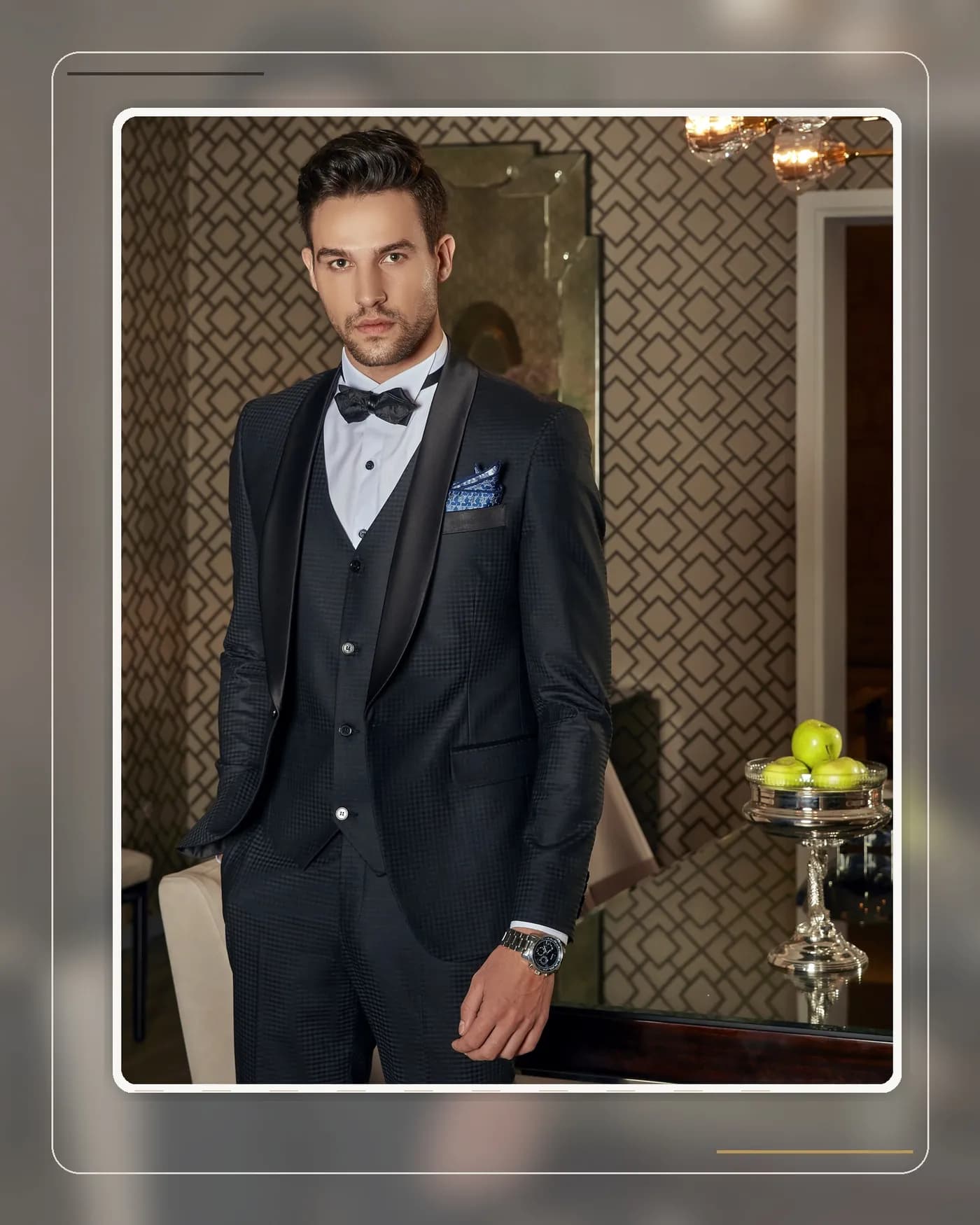
Receive an invitation marked "black tie" and many men still show up in their everyday navy work suit with a necktie — unintentionally becoming the most under-dressed guest in the room. Wearing a tuxedo to a business formal meeting is just as wrong. The two dress codes may look close, but they belong to entirely different worlds.
The short answer
Black tie is a dress code reserved for evening events: it requires a tuxedo (dinner jacket) with satin-faced lapels, trousers with a silk stripe, a formal dress shirt, a black bow tie and polished shoes. Business formal is the highest standard of office attire: a dark two-piece suit (navy or charcoal), a white or light-blue shirt, a silk tie and oxford shoes. The core difference: black tie is a fixed evening ceremony code, while business formal is working attire that allows variation within limits. One cannot substitute for the other.
Where they differ — detail by detail
The jacket. A tuxedo has satin or grosgrain-faced lapels (shawl or peak), covered buttons, and usually a single button. A business formal suit uses a notch lapel, two or three buttons, and matte worsted wool.
Shirt and collar. Black tie calls for a white shirt with a pleated or piqué bib front, a turndown or wing collar, fastened with studs. Business formal only requires a standard white or light-blue shirt with a firm collar.
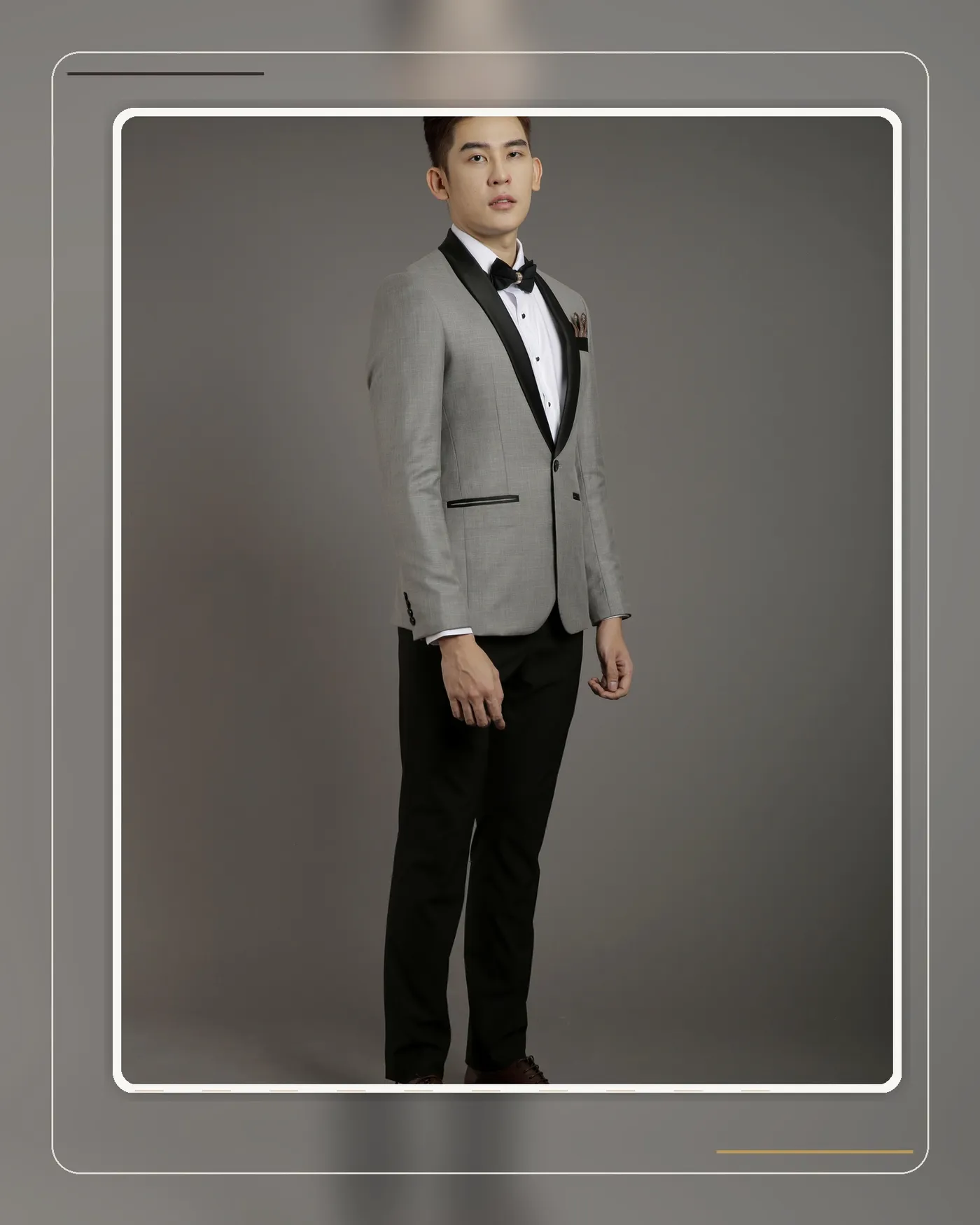
Neckwear. True to its name, black tie goes with a black silk bow tie — never a necktie. Business formal uses a silk tie in muted colours with discreet patterns.
Belt and waist. A tuxedo is never worn with a belt; the waist is covered by a cummerbund or waistcoat. A business suit worn with a leather belt matching the shoes is standard.
Shoes. Black tie: patent leather oxfords or opera pumps. Business formal: well-polished plain black or dark-brown oxfords.
When to wear which
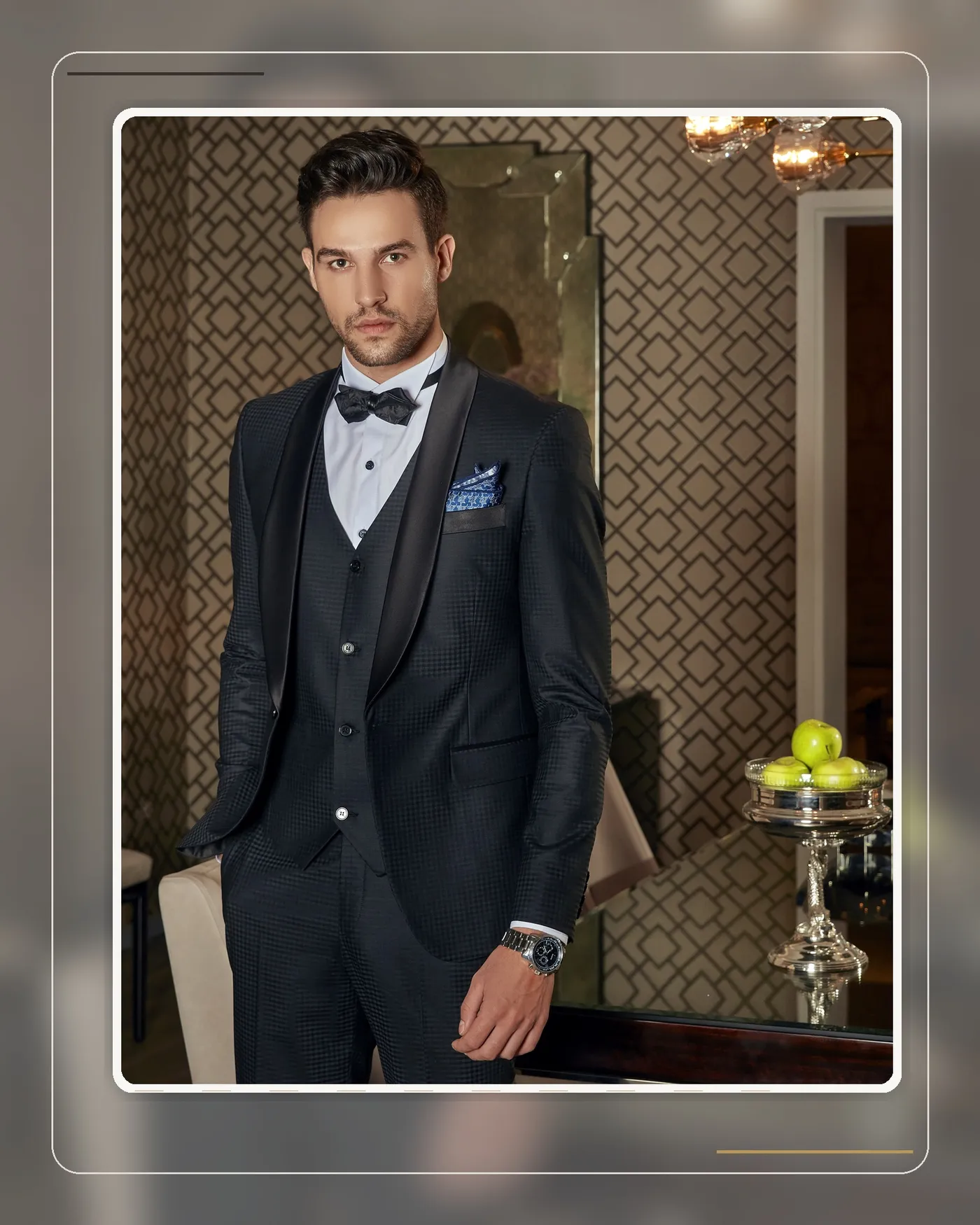
Black tie appears on invitations to galas, upscale evening weddings, award ceremonies and charity balls — always after 6 pm. Business formal is for senior meetings, important client encounters, conferences and executive interviews. If the invitation says "black tie optional", a very dark navy or black suit with a dark tie is acceptable — but if you own a tuxedo, wearing it is always the safer and more gracious choice.
Common mistakes
- Wearing an office suit with a black bow tie and calling it "black tie" — the fabric and lapels give it away instantly under party lights.
- Wearing a belt with a tuxedo, or unpolished matte leather shoes to an evening event.
- Conversely, wearing a tuxedo to a daytime event or the office — the tuxedo was made for evening light, not daylight.
A word from Mon Amie's artisans
In the tailoring trade, Mon Amie always tells clients: a tuxedo is not "a more expensive black suit" — it differs in lapel construction, satin sheen, waist treatment, down to every covered button. Stand next to someone at a gala and you will immediately see who is dressed correctly and who is merely dressed "close enough". If your social calendar includes two or more black tie events a year, a made-to-measure tuxedo is a worthwhile investment — a tuxedo almost never goes out of style.
Conclusion
Black tie and business formal are two parallel systems of rules: one a fixed evening ceremony, the other a flexible office standard. Read the invitation carefully, understand the context, and own the right garment for each world — that is how a well-dressed man stays impeccable everywhere. If you need a properly made tuxedo or business formal suit for your build, book an appointment with Mon Amie or explore our bespoke service.
Frequently asked questions
What should I wear if the invitation says "black tie optional"? A tuxedo is still the best choice if you own one; otherwise a very dark navy or black suit with a dark tie and polished shoes is acceptable.
Can I wear a black suit instead of a tuxedo to a black tie event? Better not — non-satin lapels, trousers without a silk stripe and a necktie instead of a bow tie will make you visibly off-code among correctly dressed guests.
Does business formal have to be black? No; navy and charcoal are the two most correct business formal colours, while pure black is traditionally reserved for funerals and evening wear.