
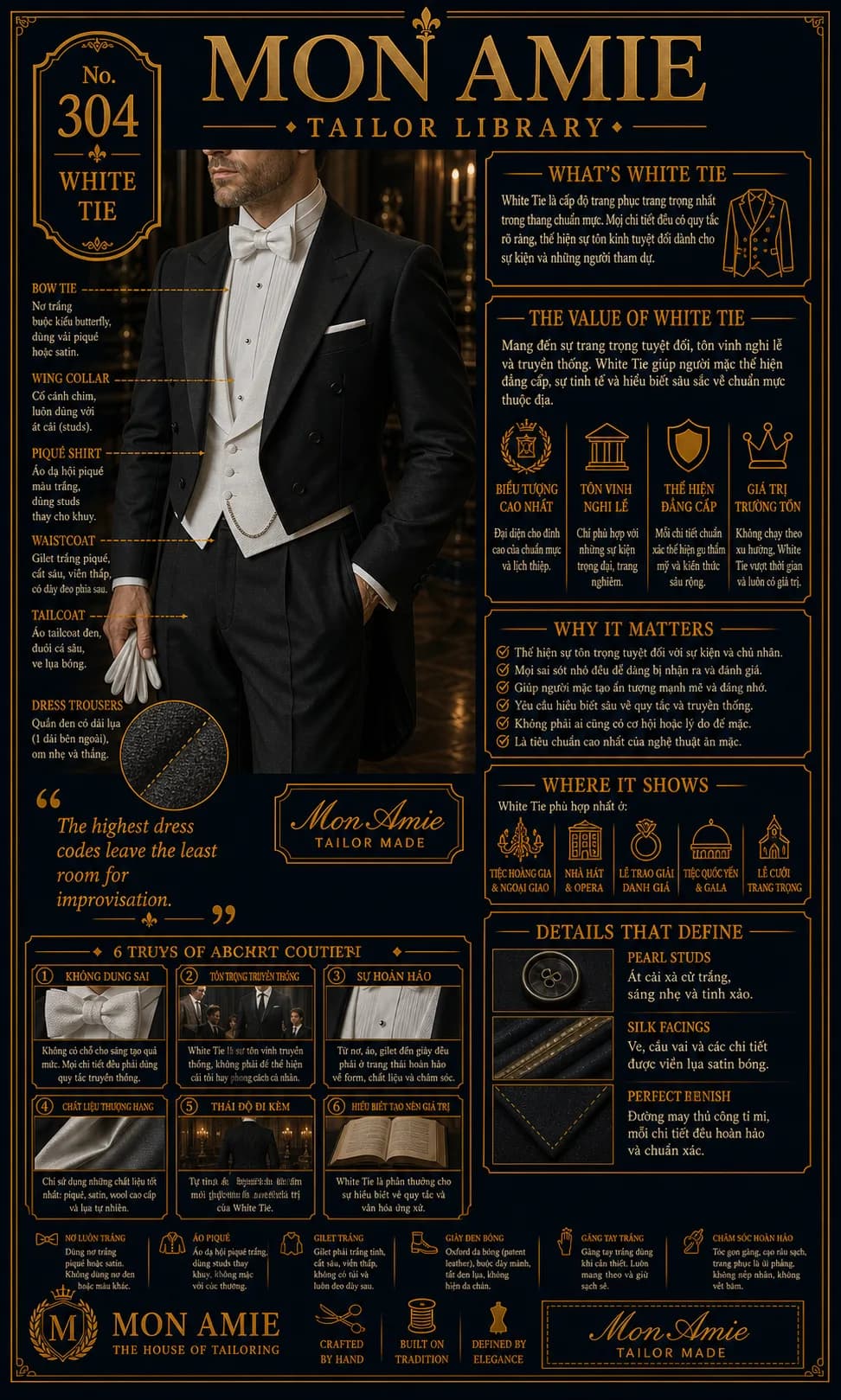
White tie is the highest level of dress in the formal hierarchy. Every detail follows a clear rule, expressing absolute respect for the occasion and everyone attending. If black tie is the summit of ordinary evening entertaining, white tie belongs to ceremony: royal receptions, state banquets, the opera house. Mon Amie will help you understand this rare but most distinguished of dress codes in full.
What white tie is and what it consists of
The highest dress code leaves the least room for improvisation. A correct white tie ensemble comprises six fixed elements:
- Bow tie: a white hand-tied butterfly bow in piqué or satin.
- Wing collar: always worn with studs.
- Piqué shirt: a white piqué dress shirt fastened with studs rather than buttons.
- Waistcoat: a white piqué waistcoat, deeply cut, low at the hem, with a back strap.
- Tailcoat: a black tailcoat with a deep tail and glossy silk lapels.
- Dress trousers: black trousers with a single silk braid down each side, lightly fitted and straight.
The most visible differences from black tie: a tailcoat in place of a tuxedo, a white bow in place of a black one, and a compulsory white waistcoat.
The value of white tie
White tie carries absolute formality, honouring ceremony and tradition while allowing the wearer to express distinction, refinement and a deep understanding of convention:
- The highest symbol: it represents the pinnacle of formality and courtesy.
- Honouring ceremony: it suits only the gravest and most significant occasions.
- Expressing distinction: every correct detail signals taste and broad knowledge.
- Enduring value: untouched by trend, white tie is timeless and always holds its worth.
Why white tie demands such rigour
- It expresses absolute respect for the occasion and the host.
- Even the smallest error is easily noticed and judged.
- It allows the wearer to make a strong and memorable impression.
- It requires deep knowledge of rules and tradition.
- Not everyone has the occasion or the reason to wear it.
- It is the highest standard in the art of dressing.
White tie belongs at royal and diplomatic receptions, at the theatre and the opera, at prestigious award ceremonies, at state banquets and galas, and at the most formal of weddings.
Six principles of white tie
- No tolerance: there is no room for excessive invention; every detail must follow traditional rule.
- Respect for tradition: white tie honours tradition rather than showcasing ego or personal style.
- Perfection: bow, coat, waistcoat and shoes must all be flawless in shape, material and upkeep.
- The finest materials: only the best will do — piqué, satin, fine wool and natural silk.
- Bearing to match: a calm, correct manner is what completes the spirit of white tie.
- Knowledge creates value: white tie rewards those who understand the rules and the culture behind them.
The accessory rules follow: the bow is always white piqué or satin, never black or coloured; the white piqué shirt takes studs rather than buttons; the waistcoat must be pure white, deeply cut, low at the hem and always worn with its back strap; shoes are polished Oxfords with slim laces, worn with black silk hose; white gloves are carried when required and kept immaculate; and grooming must be perfect — hair neat, garments pressed flat, no creases, no marks.
The details that make a correct white tie ensemble
Three details define the standing of the ensemble: white mother-of-pearl studs with their soft, refined lustre; lapels, shoulders and edges finished in glossy satin silk; and meticulous handwork so that every detail sits perfectly and precisely. These are items that almost demand to be made to measure — ready-to-wear rarely achieves the deep cut of the waistcoat or the correct fall of the tail on an individual frame.
A word from Mon Amie's artisans
For Mon Amie's artisans, white tie is the summit of the craft: a tailcoat demands front-to-back balance accurate to the millimetre, because the long tail magnifies every deviation at the shoulder and waist. It is the kind of garment where experience in hand-built construction decides everything. Each ensemble is fitted several times on the client, and the measurements are kept for life to serve the significant occasions still to come.
If you are preparing for a special ceremony — or simply wish to understand formal dressing more deeply — you are welcome at one of Mon Amie's five showrooms in Ho Chi Minh City (Nguyen Trai, Ho Van Hue, 3/2 Street, Caravelle Hotel District 1, Nguyen Thi Thap) or on 0888.111.118. You may book an appointment and read about the tailoring process at Mon Amie.