
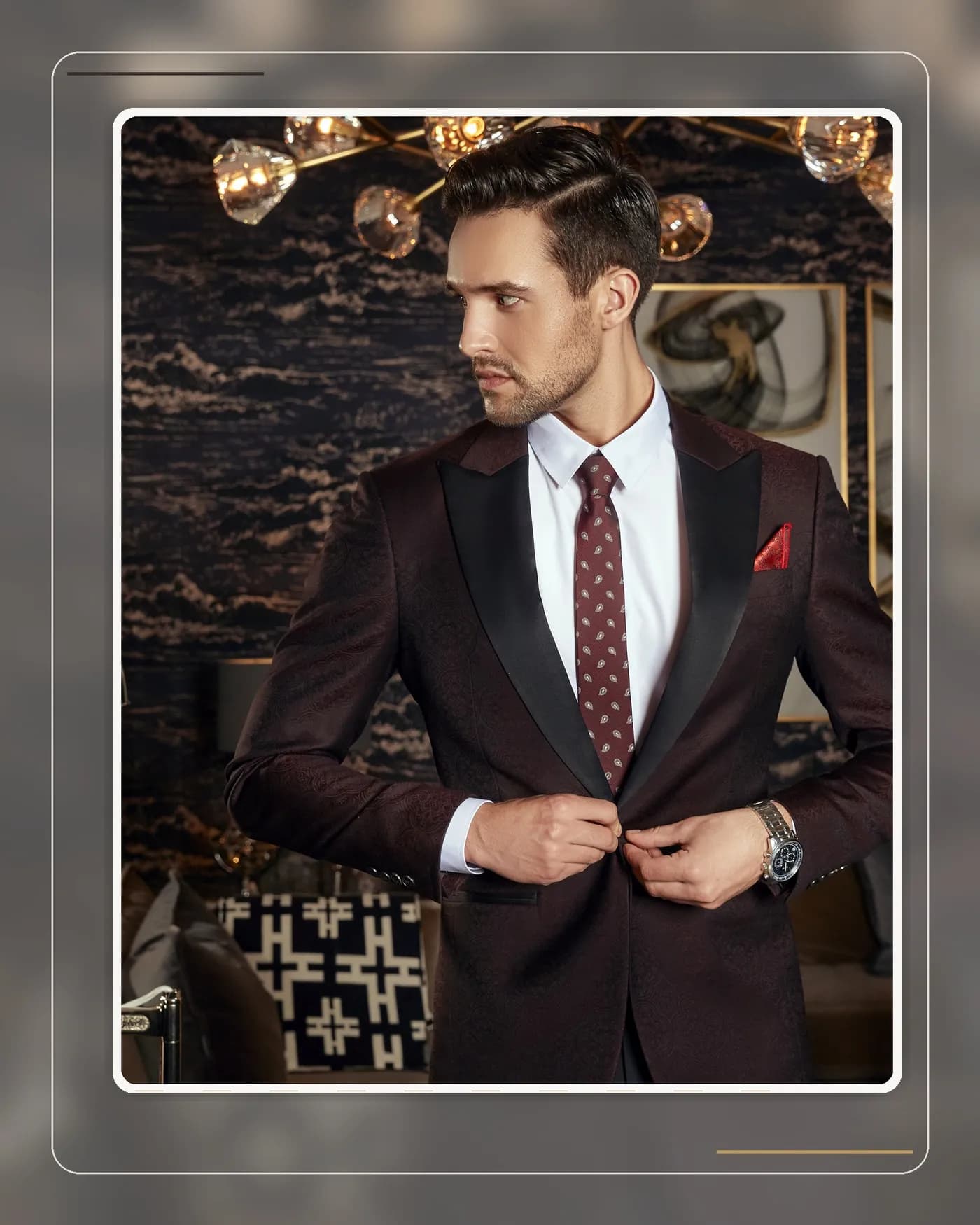
Before an important event — a wedding reception, a corporate gala, an award night — many gentlemen wonder whether the suit in their wardrobe is "formal enough" or whether a tuxedo must be acquired. Mon Amie will answer plainly, because understanding this boundary saves you real money while keeping your image impeccable.
The short answer
A well-fitted, tailored dark suit is enough for almost every formal occasion — unless the invitation explicitly says "black tie". A tuxedo is only mandatory when the dress code names it. In Vietnam, the common dress codes — formal, business formal, cocktail, "smart attire" — are all fully satisfied by a navy or charcoal suit, white shirt, silk tie and oxford shoes. Put simply: when in doubt, a dark suit is almost never wrong; a tuxedo can be wrong if worn in the wrong context.
The principle: read the invitation before opening the wardrobe
The decision does not depend on whether you own a tuxedo, but on what the host asks for:
- "Black tie" — a tuxedo is required. This is the only case where a regular suit falls short.
- "Black tie optional" — a tuxedo is welcome, but a dark suit with a dark tie is perfectly acceptable.
- "Formal" — the dark suit is the standard. A tuxedo here often reads as overdressed, especially when most guests wear suits.
- No dress code stated — a dark suit is always the safest choice; a tuxedo risks putting you out of step with the whole room.
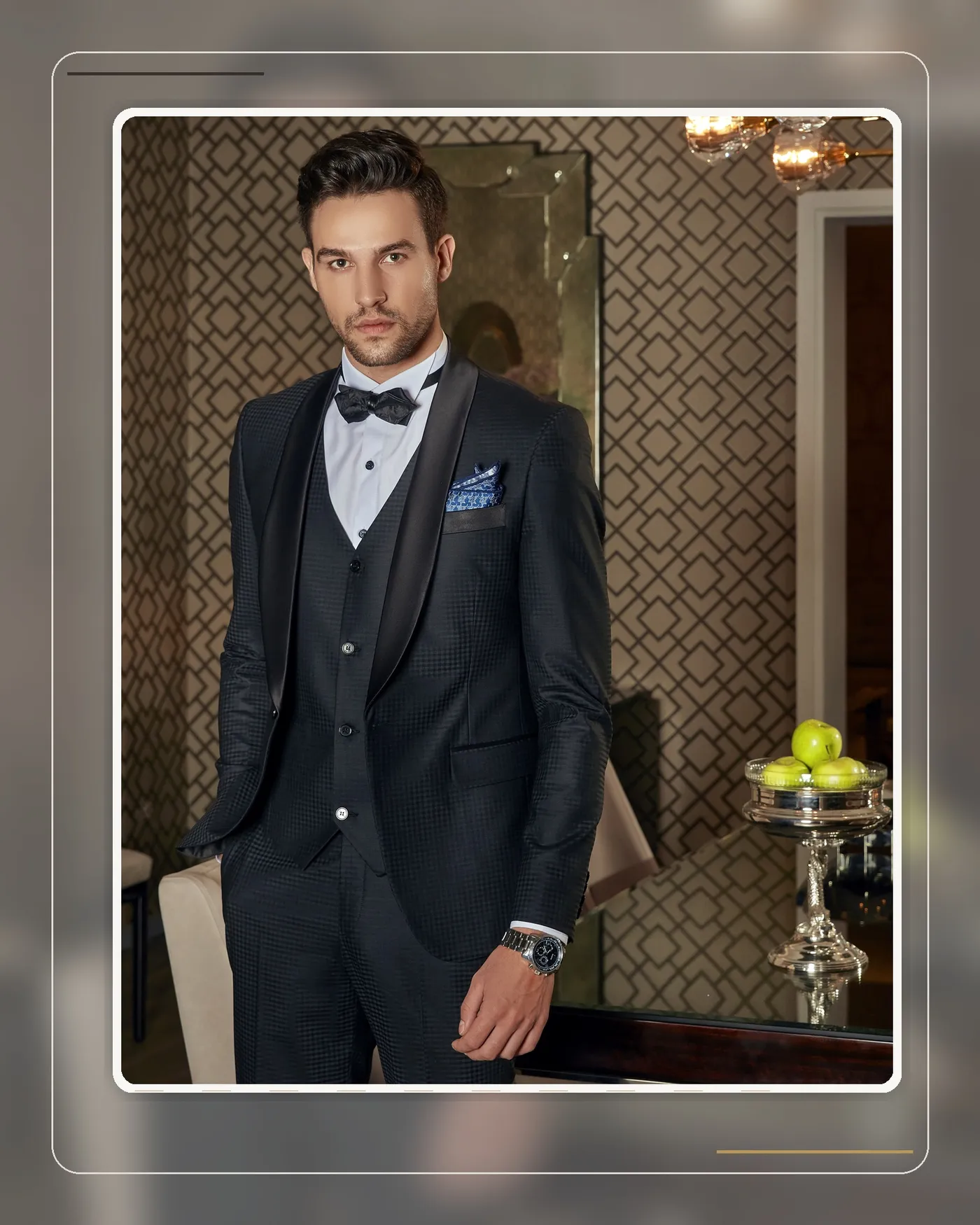
How to elevate a dark suit close to tuxedo territory
When the event matters but does not reach the black-tie threshold, you can raise a suit's formality with details rather than switching garments:
- Add a matching waistcoat — a three-piece is naturally a notch more formal than a two-piece.
- Choose a fabric with a subtle sheen — sharkskin or a fine twill wool catches evening light beautifully without satin's gloss.
- Pare back the accessories — a plain dark silk tie, a flat-folded white pocket square, polished black oxfords. The more restrained, the closer to the spirit of black tie.
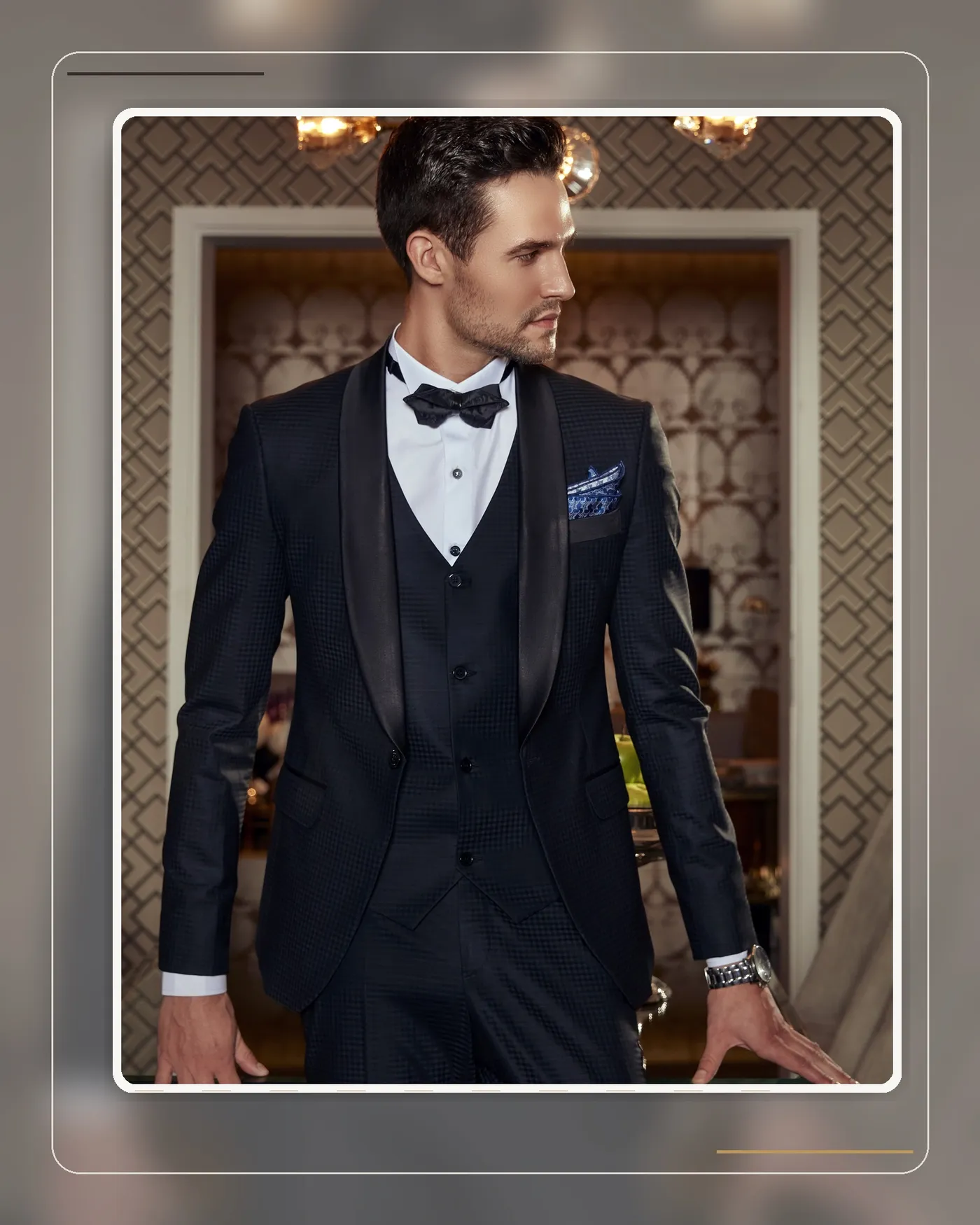
When a tuxedo is genuinely worth the investment
Commission a tuxedo only when at least one of these applies: you attend black-tie events regularly (annual galas, diplomatic functions), you are a groom at an evening reception who wants the strongest possible image, or your work revolves around formal evening occasions. If the occasion comes once every three years, renting — or wearing a three-piece dark suit — is the sounder financial decision, and that budget is better spent on a truly beautiful tailored suit you can wear year-round.
Common mistakes
- Buying a tuxedo before owning a proper dark suit — the investment order is backwards.
- Wearing a tuxedo to an event marked "formal" out of fear of underdressing — the result is standing out the wrong way.
- Faking a tuxedo with a shiny black suit and a bow tie — a discerning eye spots it immediately, and the outfit meets no standard at all.
A word from Mon Amie's artisans
When a client asks Mon Amie to make a tuxedo, our first question is: how many genuine black-tie evenings do you attend in a year? For most clients in Ho Chi Minh City, the answer is one or none — and in that case we usually recommend an impeccably cut three-piece dark suit: formal enough for a gala, versatile enough for work. The right garment is the one that gets worn, not the one waiting in the wardrobe for an occasion.
Frequently asked questions
Is a regular suit enough for an evening wedding reception? Yes, unless the invitation says black tie. A dark suit with a dark silk tie is the most correct guest attire.
What does "black tie optional" mean? It means a tuxedo is encouraged but not required — a navy or charcoal dark suit with a dark tie is entirely appropriate.
Can a black suit replace a tuxedo at a black-tie event? Not quite. A black suit lacks the satin lapels and signature details of a tuxedo; in a black-tie room the difference is easy to spot.
If you are preparing for an important event and unsure which way to go, book an appointment with Mon Amie for advice tailored to your invitation, or read about the tailoring process.