
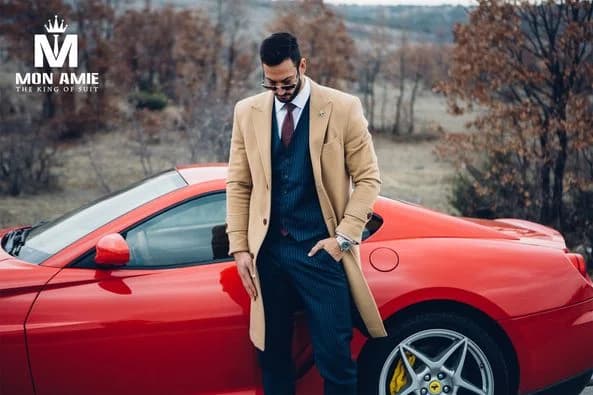
On an evening in the twelfth lunar month up in northern Vietnam, a cold north wind creeps through your collar, while the banquet hall inside is warm with air conditioning. You stand at the door in a bulky puffer jacket over a thin suit, not knowing whether to take it off and be cold, or keep it on and look sloppy. The question of what to wear to a winter wedding for men sounds simple, but the answer lies in layering, not in a single garment.
Quick answer
What to wear to a winter wedding for men? Wear a heavy wool suit in a deep color, add a waistcoat underneath, put a knee-length overcoat on top and a thin wool scarf. The rule: a breathable inner layer, an insulating middle layer, and a wind-blocking outer layer. Once inside, take off the overcoat and scarf and keep the suit and waistcoat.
Why a winter suit must be layered
Thick winter clothing doesn't necessarily mean warm. One very thick garment traps moisture when you step into a warm banquet hall, then quickly makes you hot and sweaty. Layering lets you adjust for yourself: put layers on when cold, take them off when warm, and each layer still looks good standing on its own.
A five-layer formula for a cold-season wedding:
- Base layer: a thin thermal undershirt or a cotton undershirt. Choose a crew neck in white or beige so it doesn't show through the shirt.
- Shirt: medium-weight cotton such as twill or fine oxford, long sleeves, white or light blue.
- Waistcoat: a layer that keeps the chest and abdomen warm without adding bulk to the arms. A waistcoat in the suit fabric or in a contrasting tone both look good.
- Wool suit: a jacket and trousers in thick wool, warm enough while still hanging well.
- Overcoat and scarf: the outer layer that blocks the wind, taken off when entering the reception.
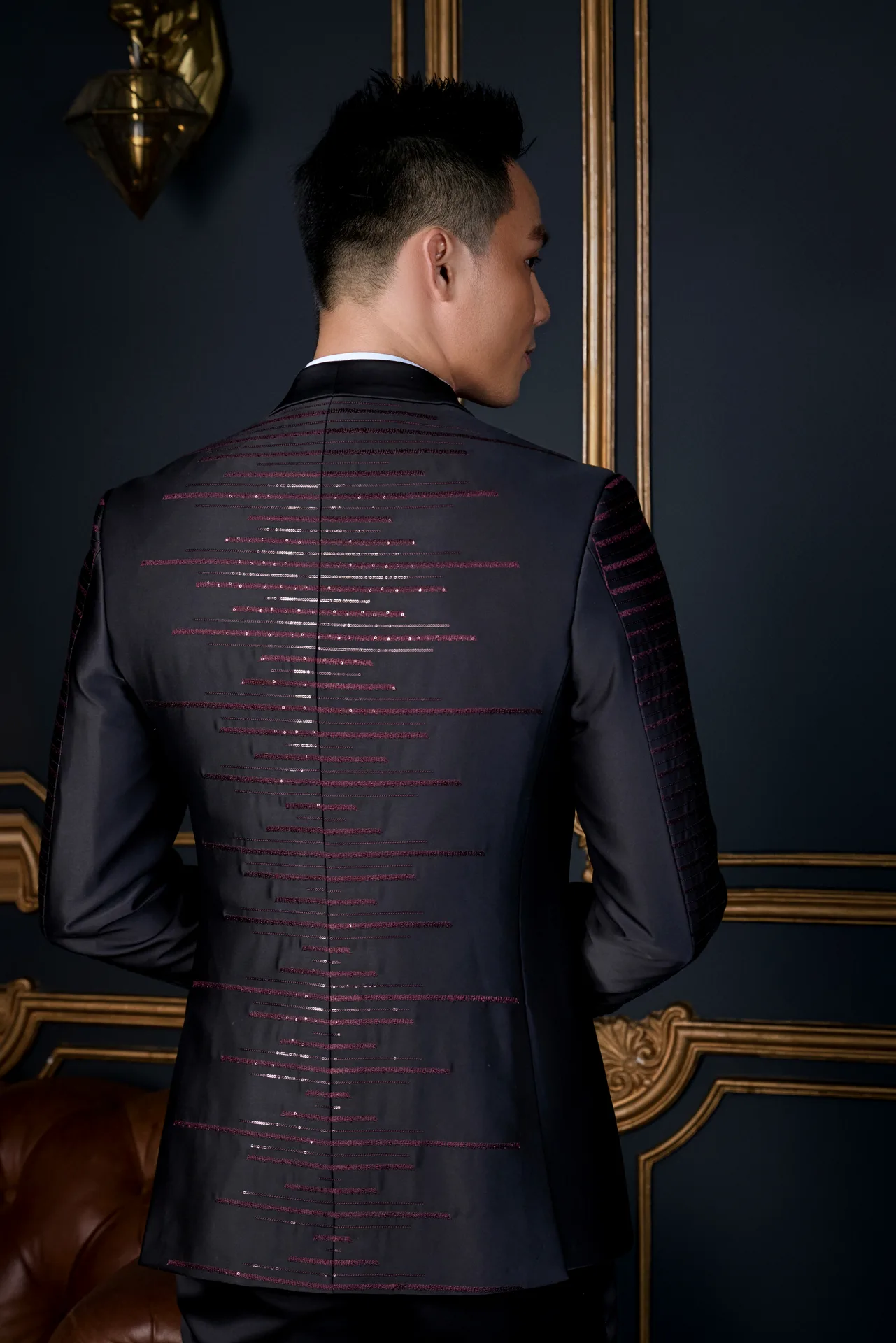
Choosing a wool suit for a winter wedding
What determines a suit's warmth is the fabric, not the thickness of the lining.
- Flannel wool: a slightly soft, brushed surface, retains heat well, suits charcoal gray, navy and moss green.
- Tweed or herringbone wool: textured, warm and masculine, suited to garden weddings or classic-style restaurants.
- Heavy worsted wool: a smoother surface than flannel, more formal, suited to hotel weddings.
- Cashmere blend: soft and gently warm, but needs more careful care.
The tailoring trade usually states fabric weight in grams per linear meter (width about 150 cm). Wool from about 300 grams upward is generally regarded as cold-season fabric, while fabric of about 250 grams or less suits hot weather. Ask the master tailor about this figure when choosing fabric; don't judge by color alone. If you are interested in wool qualities, see more in Mon Amie's fabric library.
Colors to choose: navy, charcoal gray, moss green, earth brown, deep burgundy. Solid black suits an evening reception, but adding a little warm color keeps the suit from feeling heavy in cold weather. Avoid white and ivory since they are the bride's colors, and avoid colors that are too bright or too glossy, which would make you stand out more than the groom.
The waistcoat: a small piece that keeps you very warm
The waistcoat may be the most overlooked item in a man's winter wardrobe. It covers the chest and abdomen, where a lot of heat is lost, without making the sleeves bulky. There are two ways to wear it:
- A matching three-piece suit: waistcoat, jacket and trousers in the same material. Formal, suited to a large wedding.
- A contrasting waistcoat: a gray, brown or burgundy waistcoat with a navy suit. Younger in feel, suited to a garden wedding.
The bottom button of the waistcoat is usually left undone. This is a traditional rule and also helps you sit more comfortably.
Overcoat and scarf: the outer layer sets your bearing
The overcoat is the outerwear that goes best with a suit, since its knee length covers the whole hem of the jacket underneath.
- Color: camel, navy, charcoal gray, black. Camel is warm to the eye and suits a navy or gray suit. Black or navy is more formal and suits evening receptions.
- Length: to the knee or slightly below. Too short and the hem of the suit shows underneath.
- Shoulder size: the overcoat's shoulders should be slightly wider than the suit's so they don't flatten the shoulders of the jacket underneath.
- Fabric: thick wool, tweed or cashmere-blend wool. Avoid puffer jackets and fleece, since they ruin the shape of the suit completely.
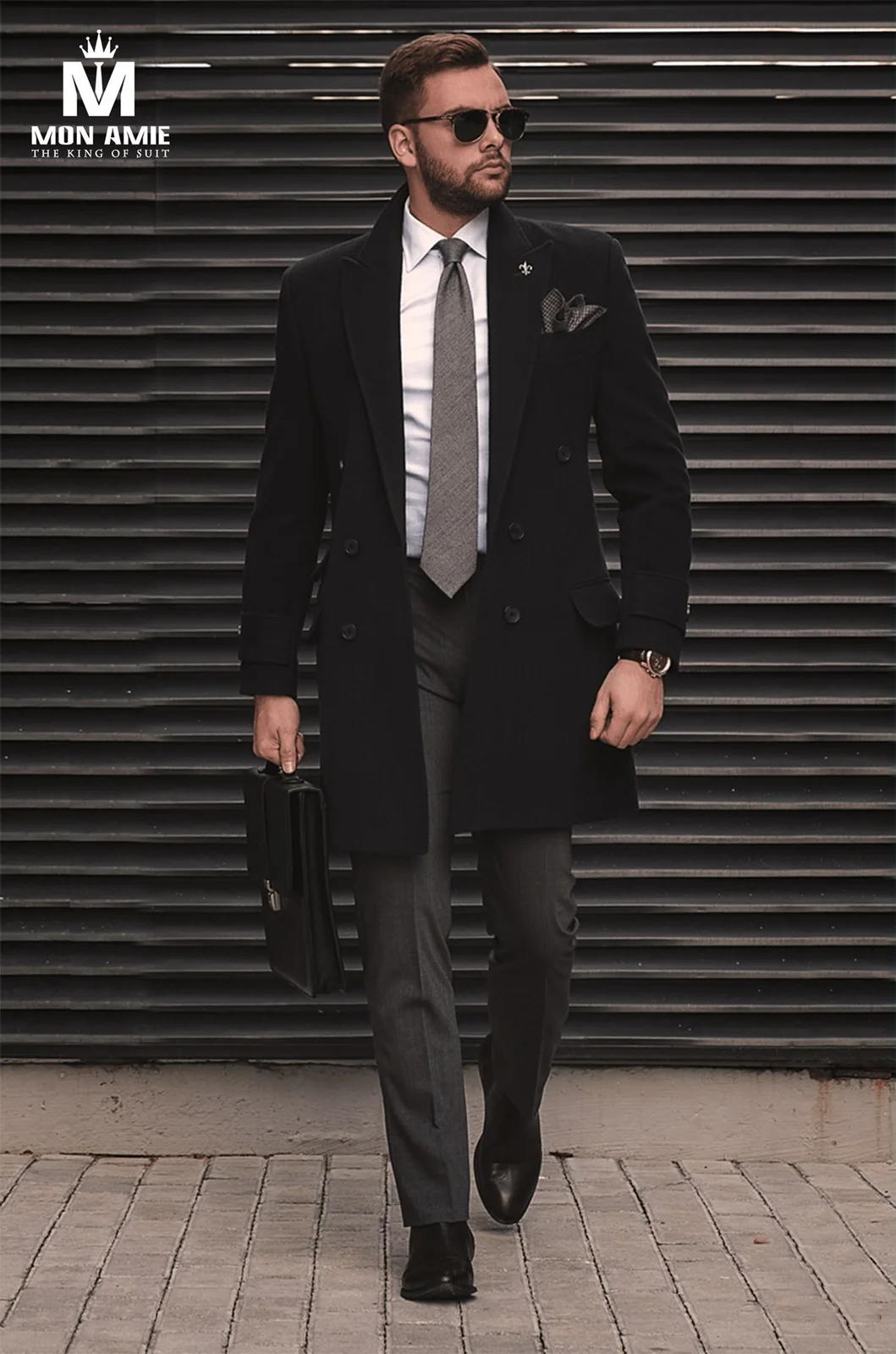
The scarf should be thin wool or a wool-silk blend, in a muted color that goes with the suit and tie. Letting both ends hang inside the overcoat is the neatest way; wrapping it around the neck is only for truly cold days. Thin leather gloves are an extra option for anyone who has to stand outdoors waiting to greet guests.
How to shed layers when entering the reception
Many people overlook this part, but it is what decides how you look throughout the reception.
- Take off the scarf and overcoat in the lobby, leaving them at the coat check or hanging them where guests leave their things. Don't carry them to the table and drape them over a chair.
- Keep the waistcoat and suit on, buttoned when standing to greet guests, unbuttoned when sitting.
- Going on stage or taking photos: rebutton the jacket, straighten the tie and waistcoat.
- Stepping outside to smoke or to take photos in the courtyard: put the overcoat back on before going out, because the temperature difference makes you catch a chill quickly.
Weddings in very cold places or abroad
If you are attending a wedding somewhere deeply cold or abroad, add two things: a better thermal layer underneath, and leather shoes with a warm lining or thin wool socks. You should also bring a spare suit, because thick garments are hard to re-press right before the reception. For clients who live far away, the online made-to-measure service offers video consultations, fabric selection through images, and delivery to your door nationwide and internationally, so you don't have to come back to the showroom just for a fitting.
Common mistakes
- Wearing a thin suit with a puffer jacket over it. A puffer jacket completely ruins the shape of the suit. Use an overcoat instead of a puffer jacket.
- Wearing too many thick layers. A thick turtleneck, then a waistcoat, then a heavy suit makes you hot, restricts movement and wrinkles the shoulders.
- Forgetting shoes and socks. Thin shoes and thin socks make your feet cold fastest. Thin wool socks are worth investing in.
- Choosing an overcoat that is too tight. A tight coat presses on the shoulders of the suit underneath when worn, leaving the jacket wrinkled at the shoulders all evening.
A tip from a Mon Amie master tailor
When having a winter suit made, tell the master tailor that you will wear a waistcoat and an overcoat over it. The shoulders and sleeves need a little extra room so the layers stack without pulling. This is why a made-to-measure suit is always easier to wear than a ready-to-wear suit in cold weather. If you are unsure which fabric to choose for a winter reception, book a measuring appointment so the master tailor can let you feel each fabric by hand and compare them.
Frequently asked questions
What to wear to a cold-season wedding without looking over the top next to the groom?
Choose a suit in a muted color such as navy, charcoal gray or earth brown, and avoid white and ivory. Keep accessories simple, with no floral bow ties or colors more striking than the groom's. An overcoat and scarf in the same muted tone are enough.
What to wear to a wedding in cold weather if you don't have an overcoat?
You can use a hip-length wool coat or a thick wool blazer worn with a waistcoat. If possible, borrow or buy an overcoat in a neutral color, since it can be worn for many years. Avoid puffer jackets because they spoil the shape of the suit.
What to wear to an outdoor wedding in freezing weather?
Use all five layers, and add thin leather gloves and wool socks. Keep the overcoat and scarf on until you go inside, and use a waistcoat to keep your upper body warm.
What to wear to a winter wedding to look good and still be comfortable?
Choose a wool suit with good drape, tailored to fit, plus a waistcoat in the same or a contrasting tone depending on your style. Fit is what makes an outfit look good, so prioritize accurate measurements over choosing the expensive piece.
Closing thoughts
What to wear to a winter wedding for men comes down, in the end, to layering with care. Winter doesn't stop you from attending a wedding looking polished. With a wool suit of the right weight, a warming waistcoat and a clean-lined overcoat, you will go from the north wind into the banquet hall without looking disheveled. You can read more in what men should wear to a wedding and how to style a men's overcoat, or visit a showroom and let the master tailor measure you for a cold-season suit.