
1. Veston
In the world of men's fashion, Veston is often the concept most prone to confusion. In Vietnam, many people use “vest” to mean the whole suit, but in international fashion language, veston (or vest, waistcoat/gile) is in fact only the sleeveless waistcoat worn under the suit jacket and over the shirt. It is usually made from the same material and in the same color as the suit, to create a neat, formal three-piece suit.The veston has a row of buttons at the front and a deep V-shaped neckline that sets off the tie and gives an elegant look. Originally the veston was created to keep warm, but it gradually became a symbol of polish and classic refinement. In English, both “vest” and “waistcoat” are used, but “waistcoat” generally carries a more formal nuance, while “vest” is common in modern, more flexible styles.
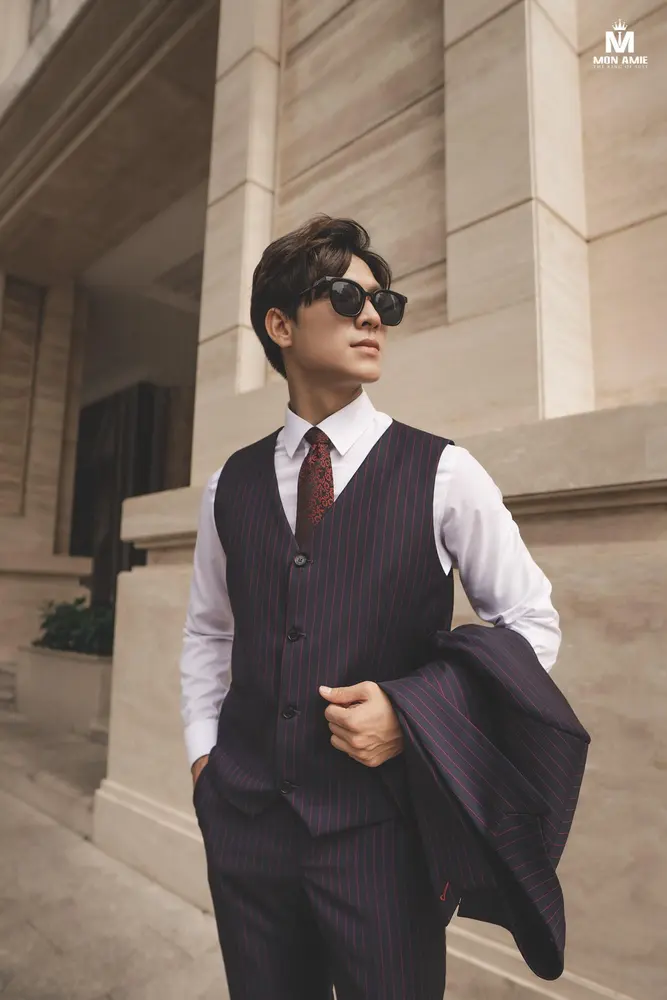
A sleeveless waistcoat, usually worn under the suit to create an elegant accent.
Understanding the veston properly helps you avoid a common mix-up: a “vest suit” does not actually exist, because when speaking of a complete outfit of matching jacket and trousers, the exact term must be Suit. The veston is only a complement, but it is the small detail that makes the Suit perfect as a whole.
2. Suit
Suit (the formal Western-style outfit) is the pinnacle symbol of a gentleman's style, representing neatness, professionalism and class. A proper suit consists of a jacket (suit jacket) and trousers tailored to match from the same fabric, color and pattern, sometimes with a waistcoat (veston/waistcoat) to form a formal three-piece. This uniformity is the soul of the suit, giving a completely harmonious and refined look.
Unlike the veston or blazer, a suit cannot be separated into its component pieces, because without consistency between jacket and trousers it loses the unity that characterizes Western formal wear. Every detail of a suit, from the cut and shape of the jacket to the fit and fabric, is attended to in order to flatter the wearer's figure and presence.
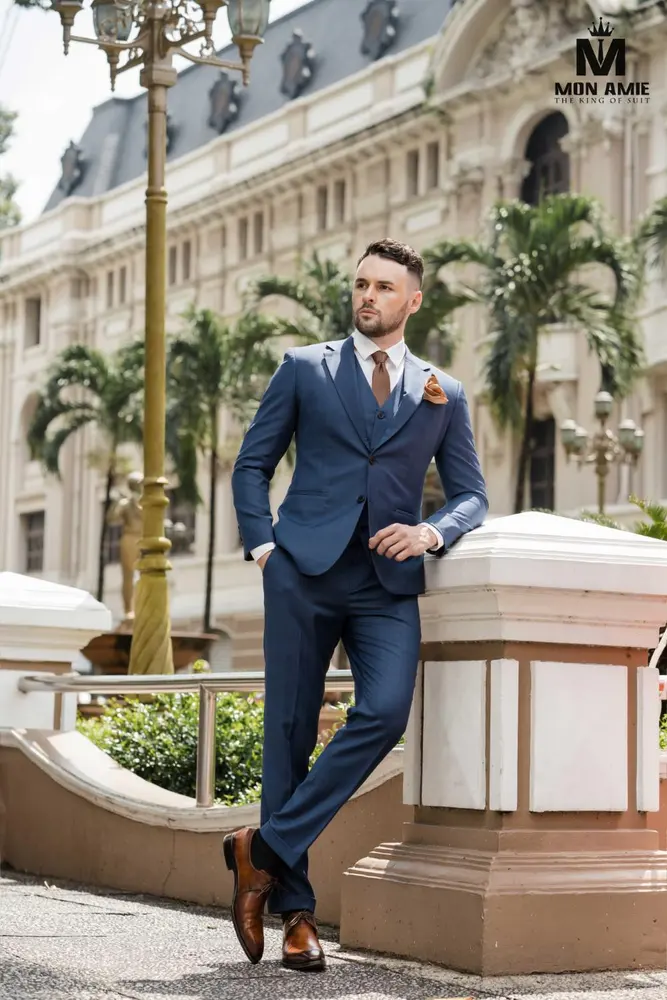
An outfit of matching jacket and trousers, the emblem of a gentleman's presence.
Today, the suit is no longer confined to the office or formal ceremonies; it has become a flexible choice for many occasions, from conferences and partner meetings to evening parties and elegant dates. A precisely made-to-measure suit is the “armor” that lets a man project his confidence, mettle and elegant presence.
3. Blazer
Unlike the veston or suit, the blazer is a jacket with the most free-spirited and flexible spirit of all. If the suit is the “armor” for formal occasions, the blazer is the choice that lets a man show refined style while staying comfortable in any situation.
A blazer does not come with matching trousers; it is designed to be paired with many different outfits, from jeans and chinos to trousers in a different color. This flexibility lets the blazer adapt easily to many settings: a casual get-together, a creative workplace or a semi-formal event.
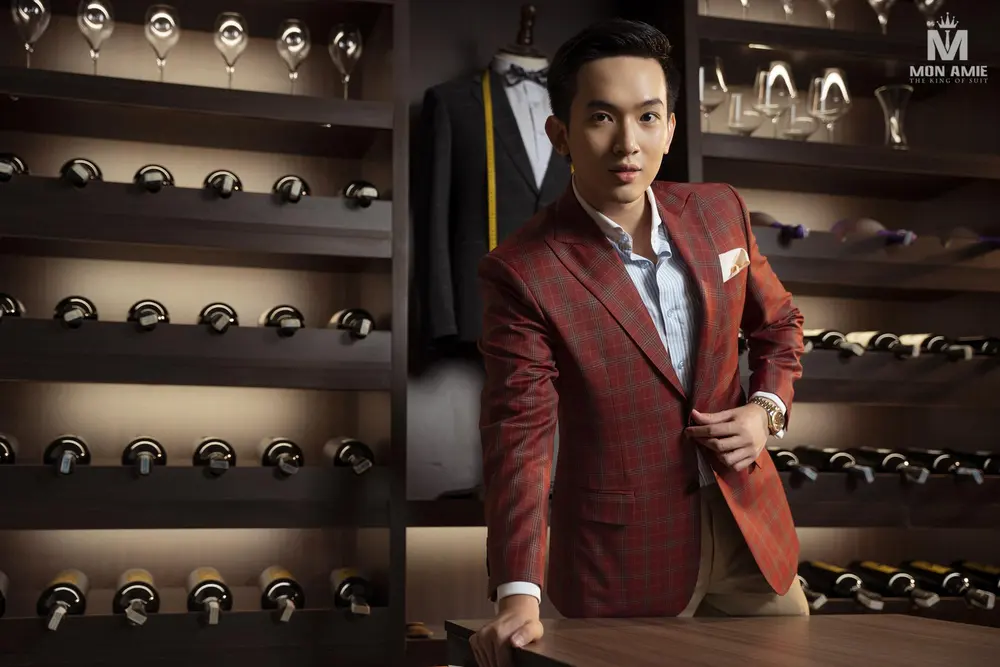
A standalone jacket, easy to pair with many kinds of trousers for a flexible, youthful style.
The blazer's distinguishing point lies in its material and details. Unlike a suit jacket, which usually uses smooth fabric, a blazer is often made from fabrics with more thickness and clear texture, such as brushed wool, flannel or tweed. Details such as metal buttons, elbow patches or large check stripes make it stand out further. Thanks to that difference, the blazer becomes a perfect bridge between elegance and modern style, a “must-have” item in the wardrobe of every gentleman who loves freedom within a framework.
Though all belong to the world of elegant jackets, Veston, Suit and Blazer each have their own distinct “personalities”. When you understand them, choosing clothes becomes easier and more precise, from business meetings and luxurious dinner parties to ordinary days that still call for a touch of refinement. Each item is a “weapon” that helps a gentleman assert his personal mark through his own style.