

A suit rarely gets ruined by being worn. It loses its shape through very small things: a thin plastic hanger, a thick wallet in the breast pocket, an evening spent draping the jacket over a chair back and then wearing it again the next morning. The five tips on how to store a suit so it keeps its shape below don’t take much effort; they only need to become habit. Do all five and your suit stays with you noticeably longer, whatever cloth line it belongs to.
Quick answer
To keep a suit in shape, do five things: hang it on a wide-shouldered hanger of the right size, let it rest a few days between wears, keep heavy objects out of the pockets, clean it by brushing and steaming instead of dry cleaning constantly, and store it in a ventilated wardrobe in a breathable moisture-proof fabric bag.
1. Wide-shouldered hanger: keep the shoulders from bulging
The shoulder is the most carefully built part of a suit, and also the first to be distorted by a hanger. Thin wire hangers or the plastic ones meant for shirts touch only two points, so after a few weeks the shoulders push up into two sharp bumps and the sleeves get creased. Use a wooden or suit hanger with a wide profile of about 4–5 cm, whose ends curve to follow the slope of the shoulder, with a length close to the width of the jacket’s shoulders. Too short and the shoulder sags; too long and the hanger ends push the shoulder out. Trousers should hang from a clip hanger at the hem so the weight of the cloth pulls the crease straight, like the pleated trousers in the photo. Twill trousers such as wool gabardine hold their crease well, but even they only keep it when they aren’t folded in half over a hanger bar.

2. Let the suit rest between wears: let the wool fibres recover
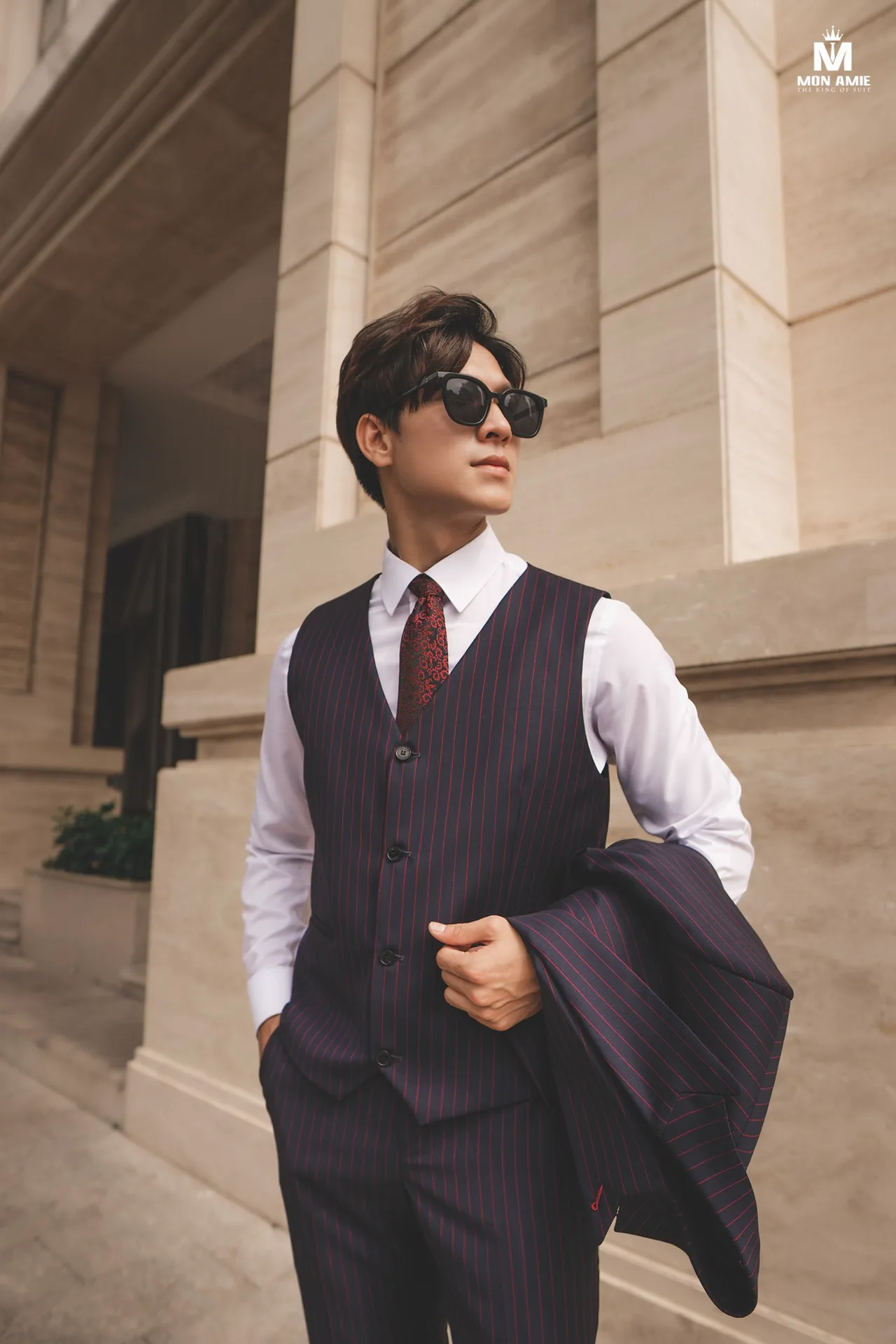
Wool is an elastic fibre, but wear it all day and the elbows, knees and seat are stretched and soaked with sweat and body moisture. Give the suit a day or two on its hanger, somewhere with a light breeze, and the fibres release the moisture and spring back to their old shape. That is why someone who wears a suit daily should have at least two suits in rotation instead of a single “workhorse”. When you get home, hang the jacket on its hanger straight away — not over a chair, not tossed on the bed — and don’t put it in the wardrobe while it is still warm from your body. Let the jacket air for about half an hour with both fronts open, then put it away. When you do need to carry a jacket over your arm, as in the photo below, fold it in half lengthwise with the lining facing out, and carry it only for a short stretch.
3. Keep the pockets light: don’t make the suit carry a wallet and phone
Suit pockets are built to hold things that are flat and light: a pocket square, business cards, a single card. A thick wallet, a phone or car keys drag the pocket mouth down, the body of the jacket slowly goes off-balance, and from the side you see one side sagging. An inner breast pocket stuffed over a long time also makes the lining and interfacing there crumple in patches. Move heavy objects to a bag or briefcase; the trouser pockets should hold only a small key and a few cards. A suit bought ready-made often still has a diagonal basting stitch across the pocket mouths and the back vent, kept to hold the shape in transit; cut it off before wearing, or the thread pulls on the cloth with every movement. With a three-piece suit, the waistcoat pockets are even smaller, meant only for one thin card.
4. Brush and steam regularly, dry-clean in moderation
Dry cleaning too often makes the cloth lose its softness and the interfacing inside slowly stiffen. A tailor’s habit is a light clean after a few wears: brush off dust from the shoulders downward with a soft-bristle brush, following the grain of the cloth, use a lint roller where fibres cling, then steam so the creases release. Dry-clean only when there is a stain, when sweat has soaked into the lining, or when putting the suit away at the end of a season of heavy wear. Pressing directly onto wool at high heat easily leaves a shiny mark, so use a pressing cloth or a steam iron. Detailed guidance for creased, dull or smelly suits is in how to fix a wrinkled, dull or smelly suit in this Top series.
5. A ventilated wardrobe and breathable fabric bags: Saigon’s particular problem
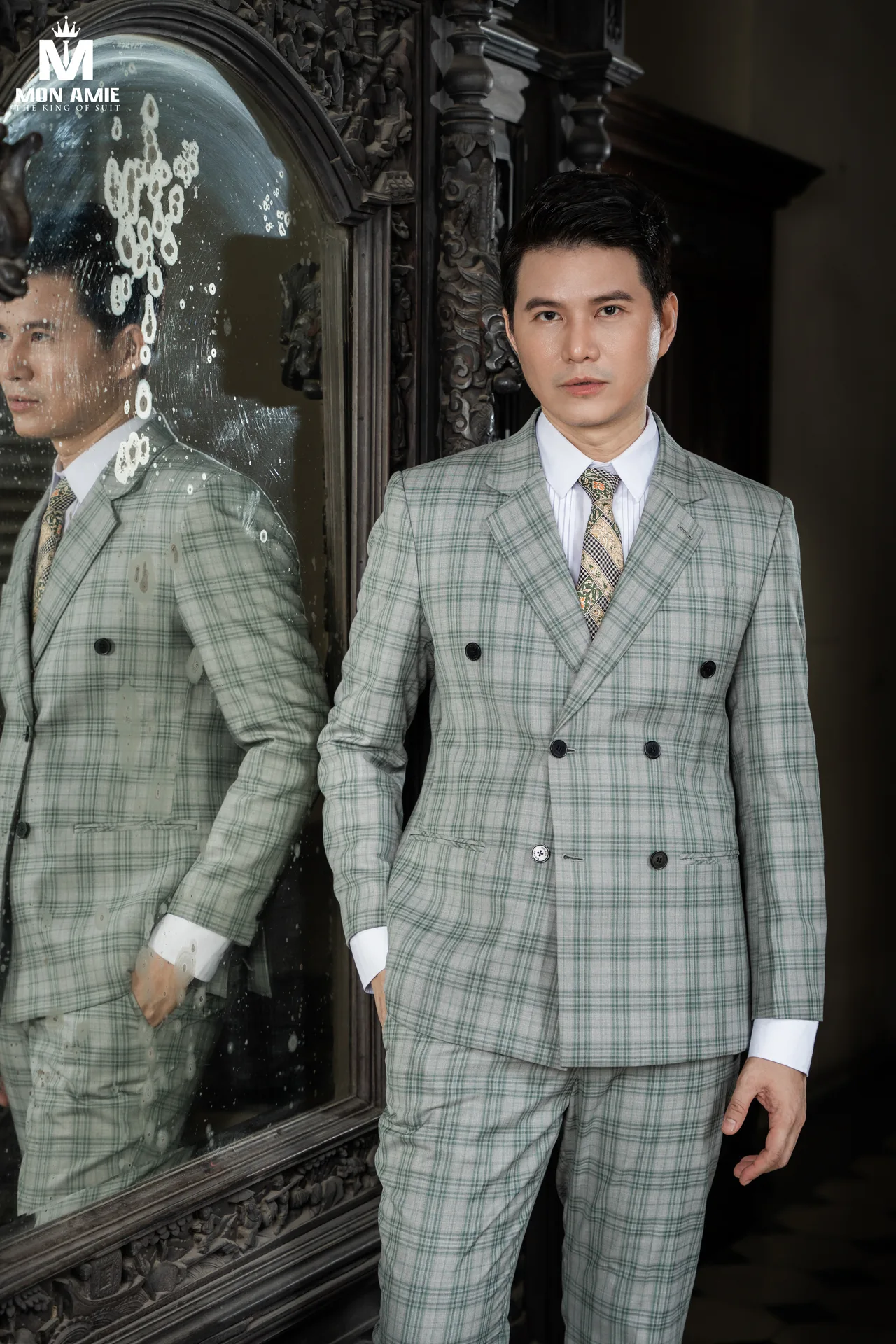
Rainy-season humidity is the culprit behind mould on linings and underarms, and odours that cling to wool fibres. Sealed nylon bags trap moisture inside, so use them only for travel; in the long run use breathable fabric bags, and the article moisture-proof suit garment bags explains how to choose the material. Don’t cram the wardrobe: leave about a hand’s width between jackets so air can circulate. Put a silica-gel pack or activated charcoal at the bottom of the wardrobe, not pressed against the cloth. Open the wardrobe doors for a few minutes every day, and keep suits out of direct sunlight, which fades colour; dark shades and deep blues and greens, like the check suit in the photo, show fade streaks quite clearly.
Quick summary table
| Tip | Suited to | Point to remember |
|---|---|---|
| 1. Wide-shouldered hanger | Every suit, trousers included | A 4–5 cm hanger, length close to the shoulder width; hang trousers by a hem clip |
| 2. Let the suit rest | People who wear a suit daily | One to two days between wears; at least two suits in rotation |
| 3. Light pockets | Anyone who carries a wallet and phone | Heavy items go in the bag; cut the basting thread on the pockets and back vent |
| 4. Brush, steam, dry-clean sparingly | Suits worn regularly | Brush with the grain; press through a cloth; dry-clean only when truly needed |
| 5. Ventilated wardrobe, fabric bags | Humid homes, rainy season | Don’t cram the wardrobe, don’t leave sealed nylon bags on for long, avoid direct sun |
Tips from Mon Amie’s master tailors
- After each wear, feel the shoulders and underarms with the back of your hand. If they are still damp, air them out before putting the suit away.
- When travelling on business, turn the shoulders into each other, fold the jacket in half, and hang it again as soon as you arrive. The bathroom after running hot water is a very effective place to release the creases.
- Buy good hangers once for the whole wardrobe: wide wooden hangers cost far less than a shoulder repair.
- When your weight changes, a suit feels different too. For a suit made at Mon Amie, your measurements are stored for life and there is a long-term alteration service after collection, so don’t try to take in or let out the seams yourself.
- You don’t need an expensive wardrobe; you need one that is dry, has an outlet for air, and isn’t crammed tight.
Frequently asked questions
Should a suit be hung or folded for long-term storage?
Hung. Folding makes hard creases at the shoulders and chest that are hard to get out even with a lot of pressing. Fold only when travelling: turn the shoulders into each other, fold the jacket in half lengthwise, and hang it again as soon as you arrive.
How often should a suit be dry-cleaned?
There is no fixed interval, since it depends on how much you wear it, the season and how much you sweat. The principle is the less the better: brushing and steaming cover most of the time; dry-clean when there is a stain or an odour that brushing doesn’t clear, or when putting the suit away at the end of the season.
What if a suit stored for a long time gets damp or mouldy?
For light mould, take it to a shaded, breezy spot, brush off the mould powder with a soft brush outdoors or on a balcony, then steam it and let it dry fully. If the mould has gone into the lining or has a strong smell, take it to a tailor or a dry cleaner who specialises in suits.
Can drooping shoulders or hanger marks be repaired?
If it is only hanger marks, steam will release them. If the cut has changed because of a change in weight, or the shoulders have sagged over a long time, have a tailor look at it in person. A suit made at Mon Amie can be brought to a showroom to be examined and adjusted.
Conclusion
Looking after a suit isn’t a big job: a hanger of the right size, two days of rest, empty pockets and a corner of airy wardrobe are enough to make a difference. If you’d like a master tailor to see in person where your suit is losing its shape, book a visit to the showroom, or learn how a suit is made from the start through our Bespoke tailoring service.